mass spectrometry (MS)

  • Breaking the Megadalton Barrier: Benchtop CDMS Arrives

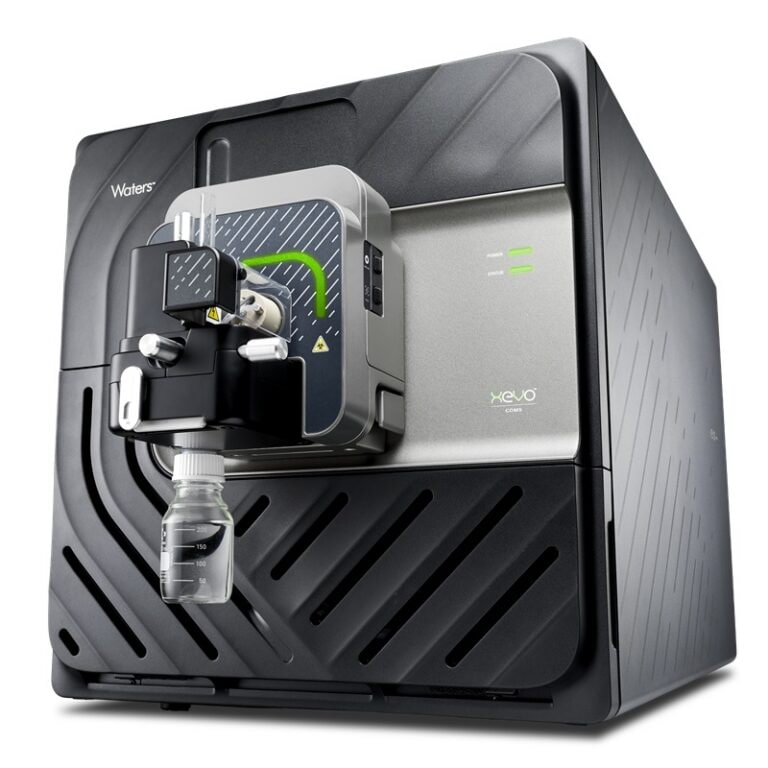
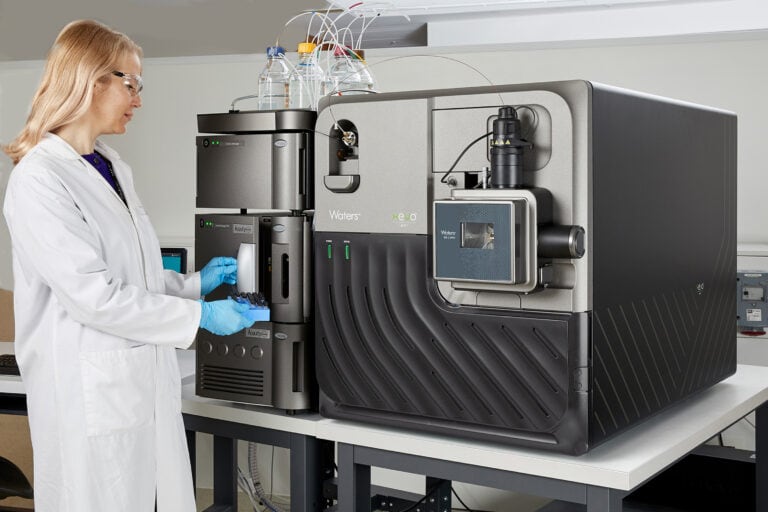
    A recent bioRxiv paper by Dr. Jakub Ujma and colleagues at Waters Corporation, in collaboration with Prof. Martin Jarrold from Indiana University and Megadalton Solutions, describes a major advance—the first commercial benchtop charge detection mass spectrometer (CDMS) based on electrostatic linear ion trap (ELIT) technology. Why does this matter CDMS is uniquely suited for analyzing…

  • What’s Really Happening Inside the Capsid of Norovirus VLPs?

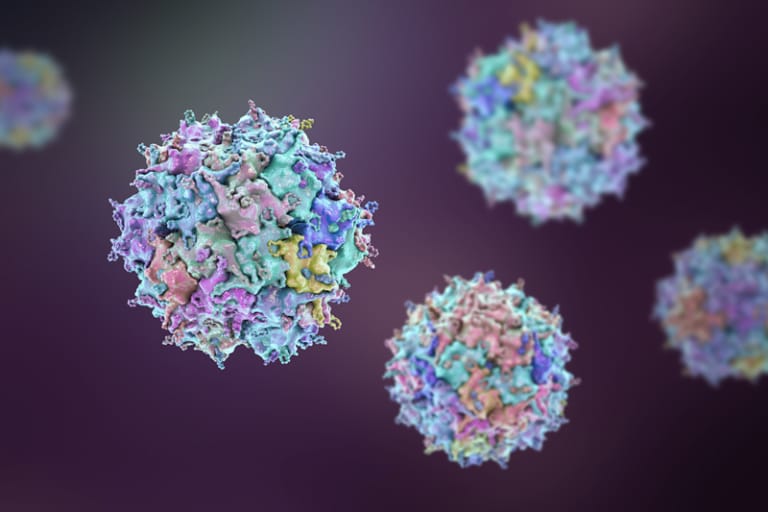
    Norovirus virus-like particles (VLPs) are structurally heterogeneous, built from a single capsid protein that self-assembles into multiple geometries, making full characterization by conventional mass spectrometry (MS) extremely difficult. A recent bioRxiv paper by Dr. Charlotte Uetrecht and colleagues at the Centre for Structural Systems Biology (CSSB) in Hamburg, Germany, in collaboration with Waters scientists, demonstrates…

  • Is it Possible to Have High Analytical Sensitivity and Robustness in Clinical Mass Spectrometry?

    For decades, mass spectrometry (MS) developers and users have lived with a familiar trade‑off. Instruments designed for the highest analytical sensitivity often come with implicit costs: fragility, frequent maintenance, and performance that drifts under the pressures of routine use. Conversely, the most robust systems have sometimes been viewed as blunt tools—reliable workhorses, but lacking the…

  • Reducing Risk, Rework, and Cost Through Chromatographic Stability

    As clinical LC‑MS adoption continues to grow across toxicology, endocrinology, therapeutic drug monitoring, and metabolic testing, laboratories face an increasingly difficult challenge: delivering results that are not only sensitive, but routine, reproducible, and economically sustainable. While investment decisions often focus on mass spectrometry (MS) detection, experience across clinical laboratories shows that chromatography is frequently the…

  • The Hidden Cause of Variability in Clinical LC-MS

    When variability appears in clinical liquid chromatography-mass spectrometry (LC‑MS) data, the mass spectrometer is often the first place that laboratories look. Changes in signal intensity, quantitative drift, or failed batches are frequently attributed to detector performance, ion optics, or acquisition settings. Chromatography is often the root cause of the variability observed at the mass spectrometer….

  • Retention Time Stability: The Foundation of Robust Clinical LC-MS

    In clinical liquid chromatography-mass spectrometry (LC‑MS), sensitivity and specificity often dominate the conversation. But behind every reliable result is a less visible parameter that determines whether workflows scale smoothly or struggle under pressure: retention time stability. As clinical laboratories increasingly rely on LC‑MS for high‑throughput, multi‑analyte testing, retention time stability has become a defining factor…

  • Why Chromatography Still Matters in the Age of More Sensitive Mass Spectrometry

    Mass spectrometry (MS) is more powerful than ever. Modern clinical MS systems deliver extraordinary analytical sensitivity, selectivity, and quantitative performance, opening the door to broader test menus with lower detection limits. With capabilities like these, it’s tempting to ask a simple question: Does chromatography still matter as much as it used to? The short answer…

  • What’s Really Happening to Your rAAV Under Stress?

    Ensuring the stability of recombinant adeno-associated virus (rAAV) vectors remains a central challenge in gene therapy development. rAAV particles are structurally complex, highly heterogeneous, and sensitive to environmental stress, making it difficult to link analytical changes to functional consequences during manufacturing and storage. A recent Journal of Pharmaceutical Sciences study by Prof. Susumu Uchiyama and…

  • Seeing What Others Missed: How CDMS Unlocked Proteasome Function

    Understanding how bacterial proteasomes recognize and process their substrates remains a major challenge in infectious disease biology and drug discovery. In Mycobacterium tuberculosis, this challenge is particularly critical, as the proteasome is essential for bacterial survival inside host macrophages and represents an attractive antibacterial target. A recent Nature Communications study by Prof. Siavash Vahidi and…

  • Toward Redosable Gene Therapy: Engineering AAVs to Evade T‑Cells

    Adeno-associated virus (AAV) vectors are widely used in gene therapy because of their ability to enable long-term transgene expression with favorable safety profiles. However, immune responses to the AAV capsid remain a major barrier, limiting treatment durability and the feasibility of repeat dosing. A recent Nature Communications study led by Dr. Ronit Mazor and colleagues…

  • Solid-Phase Extraction: From Sample Prep Fundamentals to Best Practices

    Chromatography and mass spectrometry sample preparation is one of the most critical (and underrated) steps in analytical chemistry—ensuring samples are clean and concentrated enough for accurate, reproducible analysis. Shortchanging sample preparation can compromise data accuracy, reduce method robustness, and even cause timely downtime of expensive instrumentation when it matters most. What Are the Challenges in…

  • Xevo MRT System in Action: Driving Innovation in Mass Spectrometry 

    Analytical labs today face mounting pressure: ever more complex samples, rising regulatory demands, and the need to generate answers faster than ever. Traditional mass spectrometry approaches can require compromises, either in data quality or in analytical efficiency, making it harder for scientists to meet demanding timelines with full confidence in their results.  Waters XevoTM MRT…