
Breaking the Megadalton Barrier: Benchtop CDMS Arrives
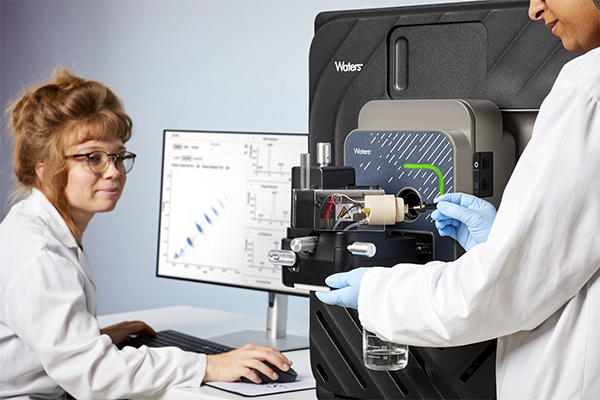
A recent bioRxiv paper by Dr. Jakub Ujma and colleagues at Waters Corporation, in collaboration with Prof. Martin Jarrold from Indiana University and Megadalton Solutions, describes a major advance—the first commercial benchtop charge detection mass spectrometer (CDMS) based on electrostatic linear ion trap (ELIT) technology.
Why does this matter
CDMS is uniquely suited for analyzing very large and heterogeneous biomolecules because it measures both the mass-to-charge ratio (m/z) and the charge (z) of individual ions. Until now, however, high-performance ELIT-CDMS systems have largely been limited to specialized academic laboratories. This new benchtop platform makes high-resolution CDMS more accessible by combining advanced performance with a compact, user-friendly design.
The challenge with large and heterogeneous biomolecules
Traditional native MS works well for many proteins, but it becomes increasingly difficult to analyze very large and heterogeneous particles.
As molecular size increases, charge-state distributions overlap, making accurate mass determination challenging. This challenge is especially important for AAV gene therapy vectors, virus-like particles (VLPs), lipid nanoparticles (LNPs), vaccines, heavily glycosylated proteins, and large protein assemblies.
Alternative techniques, such as analytical ultracentrifugation (AUC), size-exclusion chromatography with multi-angle light scattering (SEC-MALS), and mass photometry, can provide useful information, but often lack the resolution, throughput, or particle-level detail needed for these complex samples.
How CDMS makes a difference
Unlike conventional mass spectrometry, CDMS directly measures individual ions and determines both their charge and m/z value. This allows the mass of each particle to be calculated directly, overcoming the limitations caused by overlapping charge states.
The new ELIT-CDMS platform offers: Ion optics optimized to cover a broad m/z range (up to m/z 250,000), detection of ions carrying up to ~3000 charges, mass measurements extending into the hundreds of megadaltons, real-time data processing and visualization, and high-resolution measurements enabled by charge quantization.
Improved charge precision delivers higher resolution
A key innovation highlighted in the study is the instrument’s ability to achieve highly precise charge measurements. By improving charge precision, the system can accurately assign individual charge states, significantly increasing mass resolution. The researchers demonstrated mass resolutions of up to approximately 160, representing the highest mass resolution reported for a commercially available CDMS platform.
Strong performance for AAV characterization
A major focus of the study was AAV analysis, a critical application in gene therapy development. The platform successfully distinguished empty, full, and overfilled AAV capsids, quantified empty-to-full ratios, resolved partially filled particle populations, analyzed multiple AAV serotypes, and delivered highly reproducible results across repeated measurements
The instrument also showed strong quantitative performance and demonstrated approximately 20-fold higher sensitivity when operating in Target Enhancement Mode (TEM), making it suitable for lower-concentration samples.
Beyond gene therapy: Vaccines and VLPs
The authors also demonstrated the platform’s capabilities using chikungunya and dengue virus-like particles. CDMS revealed intact particles, degradation products, and aggregates across a wide mass range. For chikungunya VLPs, particles with masses up to approximately 350 MDa were observed.
For dengue VLPs, researchers used controlled heating experiments to investigate particle dissociation and stability, gaining structural insights that would be difficult to obtain using conventional approaches.
Looking ahead
As advanced therapeutics continue to grow in size and complexity, analytical technologies must evolve as well. This study demonstrates how commercial benchtop ELIT-CDMS can provide:
- Direct measurement of heterogeneous megadalton assemblies
- High-confidence AAV characterization
- Structural insights for VLPs and vaccines
- Broad mass range coverage
- Ease of use for both industry and academic laboratories
The introduction of a commercial benchtop CDMS platform represents an important milestone for the field. By making high-resolution analysis of very large biomolecules more accessible, CDMS is poised to become an increasingly valuable tool for gene therapy, vaccine development, nanoparticle characterization, and other emerging biopharmaceutical applications.
Read the full paper, “A Charge Detection Mass Spectrometer for the Analysis for Megadalton-sized Molecules”, and see how a new benchtop ELIT-CDMS platform is helping researchers overcome the challenges of characterizing the world’s largest and most heterogeneous biomolecular assemblies.
Related posts
PROTACs Are Different: What Does That Mean for Liquid Chromatography?
As drug discovery moves beyond traditional small-molecule inhibitors, analytical scientists are being asked to characterize increasingly complex molecules. Proteolysis-targeting chimeras (PROTACs) are one example. PROTACs combine two binding elements with a linker to selectively target proteins for degradation. Their larger size, flexibility, and multiple functional groups can create new analytical considerations compared to more conventional…
What’s Really Happening Inside the Capsid of Norovirus VLPs?
Norovirus virus-like particles (VLPs) are structurally heterogeneous, built from a single capsid protein that self-assembles into multiple geometries, making full characterization by conventional mass spectrometry (MS) extremely difficult. A recent bioRxiv paper by Dr. Charlotte Uetrecht and colleagues at the Centre for Structural Systems Biology (CSSB) in Hamburg, Germany, in collaboration with Waters scientists, demonstrates…

Advancing Oligonucleotide Purification with MaxPeak Premier OBD Prep Columns
Oligonucleotide therapeutics continue to grow in complexity, and so do the purification challenges that come with them. Scientists need reliable, scalable solutions for preparative oligonucleotide purification. MaxPeak Premier Oligo OBD Columns provide a powerful solution for these workflows, now expanded to include 19mm ID formats. These columns reduce non-specific adsorption, improve recovery, and enable consistent…
Popular Topics
ACQUITY QDa (17) bioanalysis (13) biologics (17) biopharma (50) biopharmaceutical (59) biotherapeutics (24) case study (22) chromatography (16) data integrity (28) HPLC (17) informatics (12) LC-MS (35) liquid chromatography (LC) (34) mass detection (16) mass spectrometry (MS) (68) method development (16) particle analysis (21) regulatory compliance (16)