
Is it Possible to Have High Analytical Sensitivity and Robustness in Clinical Mass Spectrometry?
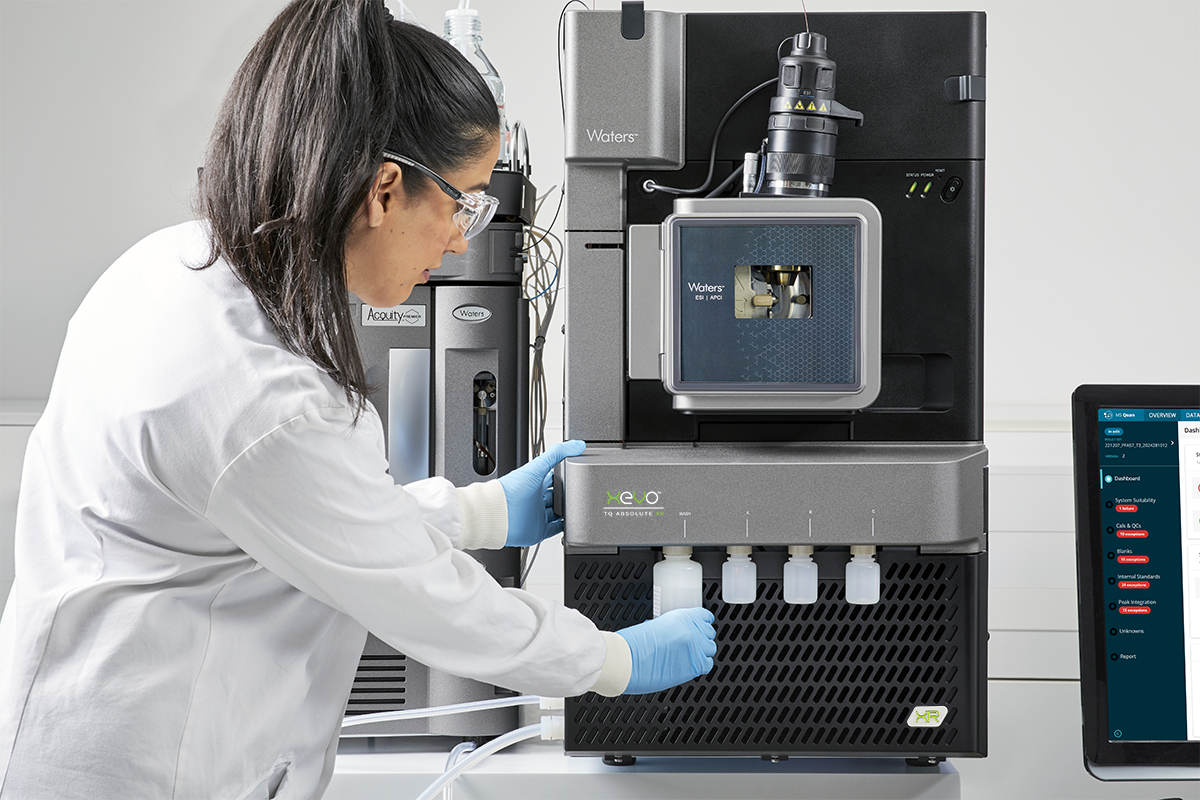
For decades, mass spectrometry (MS) developers and users have lived with a familiar trade‑off. Instruments designed for the highest analytical sensitivity often come with implicit costs: fragility, frequent maintenance, and performance that drifts under the pressures of routine use. Conversely, the most robust systems have sometimes been viewed as blunt tools—reliable workhorses, but lacking the sensitivity demanded by modern clinical assays.
In a research environment, that compromise may be tolerable. In the clinical laboratory, it’s not.
Today’s diagnostic laboratories face relentless pressure: increasing sample volumes, faster turnaround times, strict regulatory oversight, and uncompromising expectations of analytical accuracy. In this context, the question is no longer whether high analytical sensitivity can be achieved, but whether it can be delivered consistently, across thousands of patient samples, by multiple users, day after day.
This is where platforms like the Xevo TQ Absolute XR IVD Mass Spectrometer redefine expectations.
Analytical Sensitivity is only useful if it lasts
Clinical LC–MS/MS has rapidly expanded over the last decade. It is now embedded in routine diagnostic laboratories, supporting endocrine testing, therapeutic drug monitoring, toxicology, and vitamin analysis. Sensitivity underpins these applications, enabling confident quantification at clinically relevant concentrations, often near decision points, and supporting increasingly small sample volumes.
In routine diagnostic laboratories, downtime is one of the costliest failures of an MS system. Whether it manifests as falling analytical sensitivity, failed QC, or unscheduled maintenance, the root cause of the issue is often the same: contamination of critical ion optics by real clinical samples. Clinical laboratories therefore need more than impressive detection limits; they need sustained analytical sensitivity that survives real‑world operating conditions.
The Xevo TQ Absolute XR IVD Mass Spectrometer has been designed with this requirement in mind. Its long‑term robustness and signal stability take priority alongside analytical performance.
Capturing ions, not contamination
At the heart of this balance between analytical sensitivity and robustness is the StepWave XR Ion Guide.
Clinical samples are complex by nature. Even with good sample preparation, they contain large amounts of:
- Neutral species (salts, solvents, or matrix components)
- Phospholipids and other endogenous contaminants
- Chemical noise with no analytical value
In conventional ion guides, both ions of interest and neutral species are transmitted toward the mass analyzer. Over time, the neutrals deposit on lenses, quadrupoles, and detectors, leading to gradual signal loss, increased chemical noise, more frequent cleaning and recalibration, and, ultimately, unplanned instrument downtime.
By using a dual‑stage ion guide design, the StepWave XR Ion Guide selectively captures and focuses analyte ions while efficiently diverting neutral species away from the mass analyzer. This results in up to six times more robustness,1 as fewer contaminants reach critical components.
The result is not just strong initial performance, but analytical sensitivity that remains stable over long analytical sequences and extended operational periods.

Robustness and reliability: The metrics that matter in clinical diagnostics
In clinical laboratories, robustness and reliability are essential factors in delivering on‑time results, reduced troubleshooting, and predictable workflows.
The combination of the StepWave XR Ion Guide with the compact, integrated design of the Xevo TQ Absolute XR IVD Mass Spectrometer directly addresses these demands. Because fewer neutral contaminants reach the ion optics, laboratories can benefit from:
- Longer intervals between source and ion optics cleaning
- Reliable quantitative performance over time
- Reduced frequency of performance troubleshooting
Predictable performance reduces method drift, simplifies quality assurance, and increases confidence in reported results.
By maintaining stable sensitivity with minimal operator intervention, laboratories can focus less on instrument management and more on clinical outcomes. This is particularly important as MS continues to expand beyond specialist centers into broader diagnostic networks.
Designed for real clinical workflows
Clinical laboratories rarely operate under ideal conditions. Sample quality varies, workloads fluctuate, and staff experience levels differ. Systems designed primarily for expert users or tightly controlled research workflows often struggle when exposed to this reality.
The Xevo TQ Absolute XR IVD Mass Spectrometer is designed for routine clinical use. Features, such as the StepWave XR Ion Guide, are not about peak performance in isolation, but about ensuring consistent, dependable results across the full spectrum of everyday laboratory challenges.
Analytical sensitivity you can rely on
In routine diagnostics, the most valuable instrument is not the one that delivers the strongest signal on day one—it is the one that delivers the right result, repeatedly, over months and years of operation.
The Xevo TQ Absolute XR IVD Mass Spectrometer, powered by the StepWave XR Ion Guide, reflects a shift in how clinical MS is engineered, moving away from short‑term optimization toward sustained, reliable performance. It shows that high sensitivity and robustness are no longer competing priorities, but complementary ones.
So, is high sensitivity and robustness in mass spectrometry a myth?
The reality for modern clinical diagnostics is that you can now have both.
Learn more about the Xevo TQ Absolute XR IVD Mass Spectrometer.
References
Related posts

Reducing Risk, Rework, and Cost Through Chromatographic Stability
As clinical LC‑MS adoption continues to grow across toxicology, endocrinology, therapeutic drug monitoring, and metabolic testing, laboratories face an increasingly difficult challenge: delivering results that are not only sensitive, but routine, reproducible, and economically sustainable. While investment decisions often focus on mass spectrometry (MS) detection, experience across clinical laboratories shows that chromatography is frequently the…

The Hidden Cause of Variability in Clinical LC-MS
When variability appears in clinical liquid chromatography-mass spectrometry (LC‑MS) data, the mass spectrometer is often the first place that laboratories look. Changes in signal intensity, quantitative drift, or failed batches are frequently attributed to detector performance, ion optics, or acquisition settings. Chromatography is often the root cause of the variability observed at the mass spectrometer….
Retention Time Stability: The Foundation of Robust Clinical LC-MS
In clinical liquid chromatography-mass spectrometry (LC‑MS), sensitivity and specificity often dominate the conversation. But behind every reliable result is a less visible parameter that determines whether workflows scale smoothly or struggle under pressure: retention time stability. As clinical laboratories increasingly rely on LC‑MS for high‑throughput, multi‑analyte testing, retention time stability has become a defining factor…
Popular Topics
ACQUITY QDa (17) bioanalysis (13) biologics (17) biopharma (50) biopharmaceutical (59) biotherapeutics (24) case study (22) chromatography (16) data integrity (28) HPLC (17) informatics (12) LC-MS (34) liquid chromatography (LC) (33) mass detection (16) mass spectrometry (MS) (68) method development (16) particle analysis (21) regulatory compliance (16)