
Toward Redosable Gene Therapy: Engineering AAVs to Evade T‑Cells
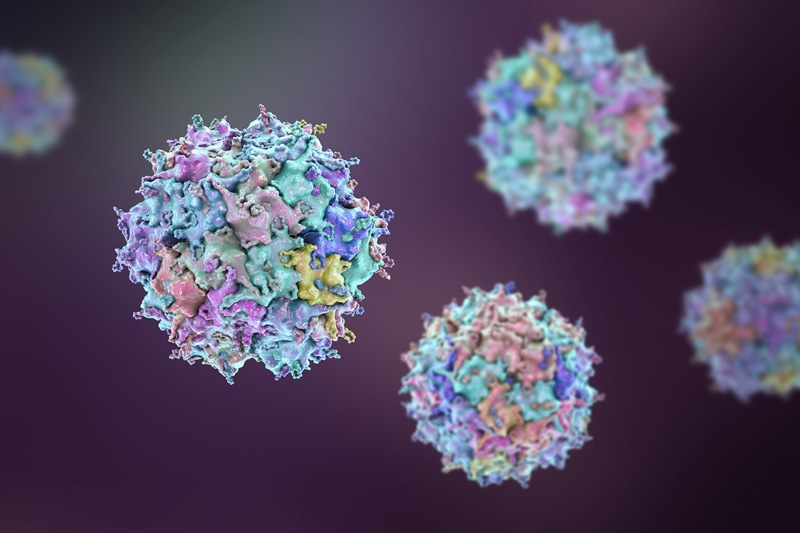
Adeno-associated virus (AAV) vectors are widely used in gene therapy because of their ability to enable long-term transgene expression with favorable safety profiles. However, immune responses to the AAV capsid remain a major barrier, limiting treatment durability and the feasibility of repeat dosing.
A recent Nature Communications study led by Dr. Ronit Mazor and colleagues at the U.S. Food and Drug Administration (FDA), in collaboration with Waters scientists, addresses this challenge by integrating computational immunoengineering with experimental validation. The study introduces a systematic framework for identifying and modifying CD4⁺ T-cell epitopes in the AAV9 capsid while preserving vector function.
Why this study matters
This work provides a compelling proof-of-concept for rational deimmunization of viral vectors. By integrating computational prediction with detailed experimental validation, the study establishes a scalable framework for improving the safety, durability, and re-dosing potential of AAV-based gene therapies.
The core problem: Capsid-driven T-cell responses limit gene therapy
Key questions driving this study included:
- Which regions of the AAV9 capsid act as immunodominant CD4⁺ T-cell epitopes?
- Can these epitopes be disrupted without compromising capsid integrity or transduction efficiency?
- How can candidate mutations be identified systematically rather than by trial-and-error?
Why are conventional strategies not enough
Previous approaches to reducing AAV immunogenicity are limited by:
- Incomplete control over T-cell–mediated immune recognition
- Dependence on naturally occurring non-immunogenic serotypes
- Lack of scalable, systematic methods for epitope redesign
How does computational epitope engineering solve the problem
Using the Epitope Modification and MHC Prediction (EMMP) pipeline, the study demonstrated that:
- A CD4⁺ T-cell epitope centered on residue R312 is immunodominant in the AAV9 capsid
- EMMP can systematically evaluate mutations predicted to reduce MHC class II presentation
- R312H and R312Q emerged as leading candidates for experimental validation
From prediction to biological validation
Experimental testing revealed that:
- The R312Q mutation abolishes CD4⁺ T-cell activation and cytokine production
- Anti-AAV9 antibody responses are significantly reduced
- Vector biodistribution is preserved with only modest reductions in transduction efficiency
Read the full study, “Integrated computational and experimental immunoengineering of adeno-associated virus capsid T-cell epitopes in mice,” and learn more about the latest developments in AAV analysis.
Related posts

AI Maturity in GMP: Accelerating Your Digital Journey at Warp Speed, Safely
Most AI projects fail. The organizations that succeed are the ones that build governance before they build velocity. Written by Tracy Hibbs and Tony Sacchetti, Waters Corporation Artificial intelligence (AI) is poised to take routine work and shift it to fully automated workflows. Currently, 80% of AI projects fail.1 As with most paradigm-shifting technology, it…

Is Your Organization Ready for AI Inspection?
Inspecting AI is not new to regulators. The expectations are already well-established. The key question is whether your organization can reliably demonstrate them. Written by Tracy Hibbs and Tony Sacchetti, Waters Corporation Exploring artificial intelligence (AI) and machine learning (ML) in regulated laboratories governed by Current Good Manufacturing Practices (CGMP) may be new for your…

AI in GMP: Navigating Evolving Expectations for Regulated Labs
Why 2026 marks the shift from guidance to enforcement and what it means for your organization now. Written by Tracy Hibbs and Tony Sacchetti, Waters Corporation Regulators are already inspecting AI use, how prepared is your organization? For years, the pharmaceutical industry has anticipated regulatory clarity on the use of artificial intelligence (AI) and machine…
Popular Topics
ACQUITY QDa (17) bioanalysis (13) biologics (17) biopharma (50) biopharmaceutical (59) biotherapeutics (24) case study (22) chromatography (16) data integrity (28) HPLC (17) informatics (12) LC-MS (35) liquid chromatography (LC) (34) mass detection (16) mass spectrometry (MS) (68) method development (16) particle analysis (21) regulatory compliance (16)