
What’s Really Happening to Your rAAV Under Stress?
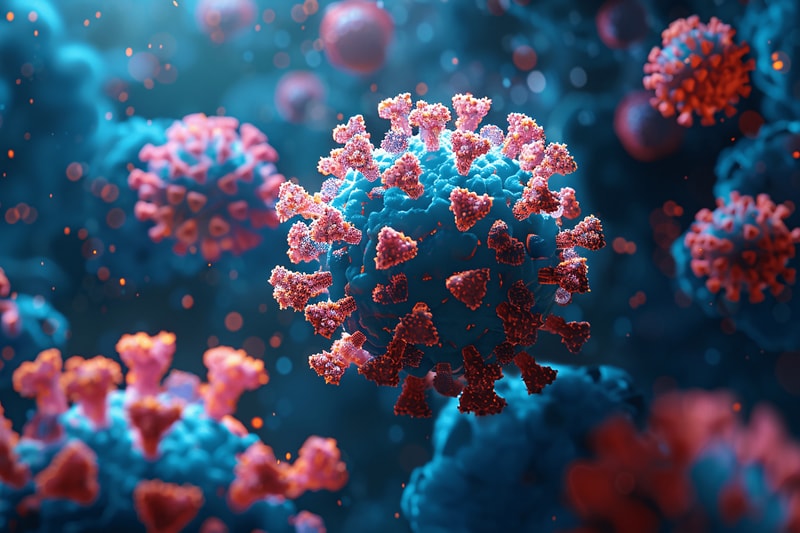
Ensuring the stability of recombinant adeno-associated virus (rAAV) vectors remains a central challenge in gene therapy development. rAAV particles are structurally complex, highly heterogeneous, and sensitive to environmental stress, making it difficult to link analytical changes to functional consequences during manufacturing and storage.
A recent Journal of Pharmaceutical Sciences study by Prof. Susumu Uchiyama and colleaguesat the University of Osaka (Japan), in collaboration with Waters scientists, addresses this challenge by integrating analytical anion-exchange chromatography (AEX) with orthogonal tools including charge detection mass spectrometry (CDMS), mass photometry, LC–MS/MS peptide mapping, and genome integrity assays. Among these, CDMS is pivotal for resolving degradation mechanisms that are otherwise obscured.
Why this study matters
By anchoring chromatographic and spectrometric observations to particle-level measurements, this work demonstrates how CDMS enables confident interpretation of forced degradation data and provides practical guidance for formulation optimization and rAAV quality control.
The core problem: Forced degradation masks multiple pathways
Forced degradation studies are widely used to probe rAAV stability, but similar analytical readouts can originate from fundamentally different molecular failure modes, raising key unanswered questions:
- Which molecular mechanisms underlie changes in AEX retention time and peak area?
- How do pH and temperature redirect rAAV degradation pathways?
- Which degradation processes most strongly impact potency and infectivity?
Why are conventional analytical methods not enough
While analytical AEX is highly sensitive to surface charge changes, interpretation under stress conditions is limited by:
- Similar chromatographic shifts arising from deamidation, aggregation, adsorption, or genome loss
- Mass-averaging techniques that obscure coexisting particle populations
- Increased overlap between empty and full particles as degradation progresses
How does CDMS solve the problem
CDMS overcomes these limitations by directly measuring the mass and charge of individual viral particles. In this study, CDMS revealed that:
- Charge shifts observed by AEX correlate directly with capsid deamidation at the particle level
- Empty and full rAAV particles respond differently to accelerated stress
- Structural rearrangements can counterbalance surface charge changes in genome-containing particles
Distinct degradation pathways across pH conditions
Integration of CDMS with orthogonal techniques revealed sharply distinct degradation regimes:
- Neutral and basic conditions promote deamidation, aggregation, and nonspecific adsorption
- Acidic conditions trigger genome fragmentation, capsid protein cleavage, and rapid titer loss
- A citrate buffer at pH 5.5 provides exceptional thermal stability despite elevated temperature stress
Read the full study, “Forced degradation analysis of recombinant adeno-associated virus serotype 8 based on analytical anion exchange chromatography coupled to orthogonal characterization,” and see how CDMS enhanced rAAV analysis.
Related posts
AI Maturity in GMP: Accelerating Your Digital Journey at Warp Speed, Safely
Most AI projects fail. The organizations that succeed are the ones that build governance before they build velocity. Written by Tracy Hibbs and Tony Sacchetti, Waters Corporation Artificial intelligence (AI) is poised to take routine work and shift it to fully automated workflows. Currently, 80% of AI projects fail.1 As with most paradigm-shifting technology, it…
Is Your Organization Ready for AI Inspection?
Inspecting AI is not new to regulators. The expectations are already well-established. The key question is whether your organization can reliably demonstrate them. Written by Tracy Hibbs and Tony Sacchetti, Waters Corporation Exploring artificial intelligence (AI) and machine learning (ML) in regulated laboratories governed by Current Good Manufacturing Practices (CGMP) may be new for your…

AI in GMP: Navigating Evolving Expectations for Regulated Labs
Why 2026 marks the shift from guidance to enforcement and what it means for your organization now. Written by Tracy Hibbs and Tony Sacchetti, Waters Corporation Regulators are already inspecting AI use, how prepared is your organization? For years, the pharmaceutical industry has anticipated regulatory clarity on the use of artificial intelligence (AI) and machine…
Popular Topics
ACQUITY QDa (17) bioanalysis (14) biologics (17) biopharma (50) biopharmaceutical (60) biotherapeutics (24) case study (22) chromatography (16) data integrity (28) HPLC (17) informatics (12) LC-MS (36) liquid chromatography (LC) (35) mass detection (17) mass spectrometry (MS) (68) method development (16) particle analysis (21) regulatory compliance (16)