
Reducing Risk, Rework, and Cost Through Chromatographic Stability

As clinical LC‑MS adoption continues to grow across toxicology, endocrinology, therapeutic drug monitoring, and metabolic testing, laboratories face an increasingly difficult challenge: delivering results that are not only sensitive, but routine, reproducible, and economically sustainable.
While investment decisions often focus on mass spectrometry (MS) detection, experience across clinical laboratories shows that chromatography is frequently the limiting factor, both scientifically and financially.
When chromatographic performance is unstable, the cost is not confined to poorer data quality. It appears as lost productivity, reanalysis, delayed reporting, and increased operational risk. In this environment, Ultra High Performance Liquid Chromatography (UHPLC) technology is essential for protecting return on investment (ROI) in clinical LC‑MS workflows.
The hidden financial cost of unstable chromatography
In routine clinical laboratories, chromatography must perform reliably across:
- Hundreds to thousands of samples per day
- Complex and variable biological matrices
- Multiple operators and long assay lifetimes
- Regulated and audited workflows
When it does not, the consequences are immediate and costly. Retention time instability and poor chromatographic reproducibility lead to:
- Wider MS acquisition windows
- Reduced dwell time and fewer data points per peak
- Increased risk of missed detections in large analyte panels
- Higher rates of manual data review, reruns, and batch failures
Each of these outcomes consumes analyst time, instrument capacity, reagents, and consumables; eroding throughput and increasing cost per result. Over time, these inefficiencies quietly undermine the financial viability of LC‑MS testing.
Retention time stability drives both performance and productivity
Retention time stability is often discussed as a technical metric, but in clinical LC‑MS it has direct economic implications. Stable retention times allow laboratories to:
- Use narrow, confident MS acquisition windows
- Increase dwell time per transition
- Generate more robust quantitative data per injection
- Reduce uncertainty that forces manual review
When retention times drift, acquisition windows are often widened “just in case.” This precaution reduces MS efficiency and sensitivity, especially for low‑abundance analytes, increasing the likelihood of reanalysis or inconclusive results.
In high‑throughput environments, retention time variability is one of the fastest ways to increase your cost per sample while reducing throughput.
UHPLC as a cost‑containment and risk‑reduction strategy
For clinical laboratories, UHPLC is not simply about achieving better separation—it is about controlling operational and financial risk. Robust, stable UHPLC reduces:
- Missed detections that require repeat analysis
- Batch failures triggered by chromatographic drift
- Analyst time spent on troubleshooting and manual review
- Variability that complicates trending and audit investigations
By stabilizing chromatography, laboratories stabilize workflow efficiency, instrument utilization, and reporting timelines—directly contributing to improved ROI over the assay lifecycle.
ACQUITY UPLC I‑Class PLUS System: Designed for long‑term ROI in clinical labs
The Waters ACQUITY UPLC I‑Class PLUS System was developed with decades of expertise. Rather than prioritizing maximum pressure or speed alone, the system is engineered to deliver:
- Highly stable solvent delivery for consistent retention times
- Precision injection supporting reproducible LC‑MS acquisition
- Robust operation suitable for continuous, high‑throughput use
- Design principles aligned with regulated clinical environments
The result is not simply higher performance, but fewer workflow interruptions, lower rework rates, and more predictable assay behaviour over time.
The takeaway
As clinical LC‑MS testing expands, laboratories must evaluate technology choices not only on analytical capability, but on total operational impact.
Unstable chromatography increases cost per sample, consumes valuable staff time, and introduces unnecessary risk. Stable, clinically optimized UPLC enables higher throughput, consistent performance, and predictable outcomes across the life of the assay.
With systems such as the ACQUITY UPLC I‑Class PLUS System, UHPLC helps ensure that chromatography strengthens the return on investment in modern clinical LC‑MS.
Explore how UPLC can reduce risk and increase efficiency in your clinical lab.
Related posts
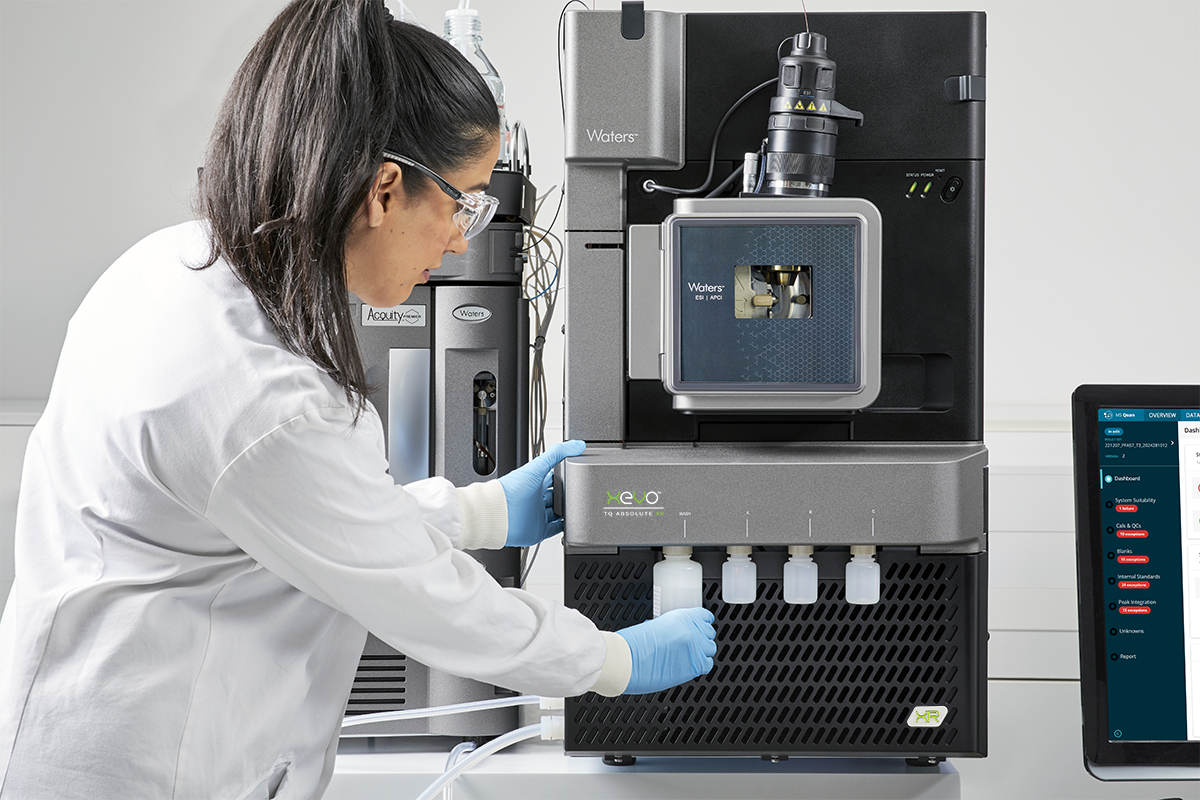
Is it Possible to Have High Analytical Sensitivity and Robustness in Clinical Mass Spectrometry?
For decades, mass spectrometry (MS) developers and users have lived with a familiar trade‑off. Instruments designed for the highest analytical sensitivity often come with implicit costs: fragility, frequent maintenance, and performance that drifts under the pressures of routine use. Conversely, the most robust systems have sometimes been viewed as blunt tools—reliable workhorses, but lacking the…

The Hidden Cause of Variability in Clinical LC-MS
When variability appears in clinical liquid chromatography-mass spectrometry (LC‑MS) data, the mass spectrometer is often the first place that laboratories look. Changes in signal intensity, quantitative drift, or failed batches are frequently attributed to detector performance, ion optics, or acquisition settings. Chromatography is often the root cause of the variability observed at the mass spectrometer….
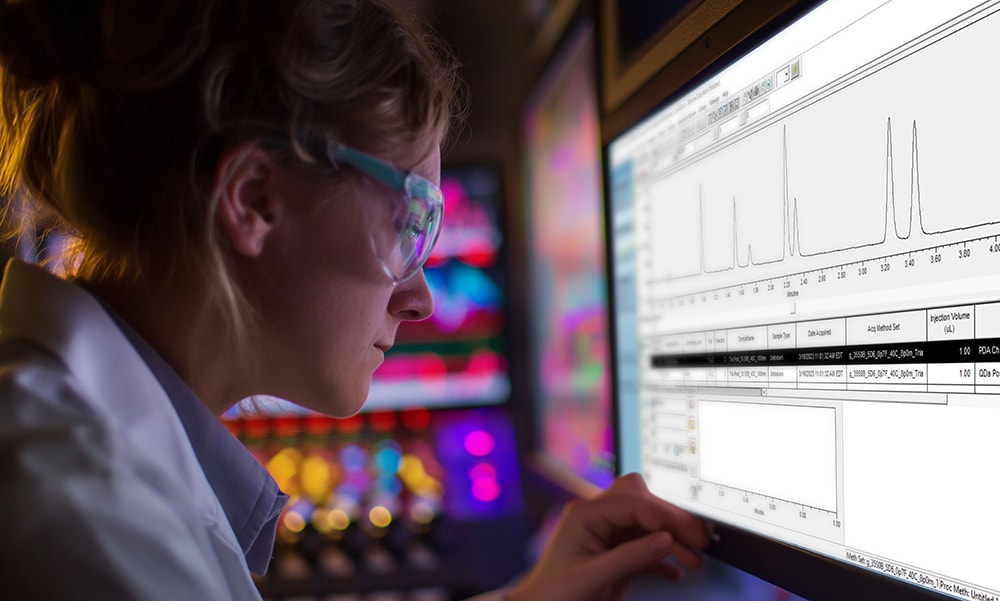
Retention Time Stability: The Foundation of Robust Clinical LC-MS
In clinical liquid chromatography-mass spectrometry (LC‑MS), sensitivity and specificity often dominate the conversation. But behind every reliable result is a less visible parameter that determines whether workflows scale smoothly or struggle under pressure: retention time stability. As clinical laboratories increasingly rely on LC‑MS for high‑throughput, multi‑analyte testing, retention time stability has become a defining factor…
Popular Topics
ACQUITY QDa (17) bioanalysis (14) biologics (17) biopharma (50) biopharmaceutical (60) biotherapeutics (24) case study (22) chromatography (16) data integrity (28) HPLC (17) informatics (12) LC-MS (36) liquid chromatography (LC) (35) mass detection (17) mass spectrometry (MS) (68) method development (16) particle analysis (21) regulatory compliance (16)