Kate Yu

Kate currently is a Global Biologics Marketing Manager within the Biologics Business Unit at Waters Corporation. Kate has been working at Waters with roles from application development to marketing & business development, product marketing, etc. Holding a Ph.D. in Analytical Chemistry, Kate had authored/co-authored 120+ peer reviewed journal articles and application notes, made100+ meeting presentations. Kate was also a columnist for LC.GC North America for the column: “MS: The Practical Art” from 2012 to 2016.
Posts From Kate Yu


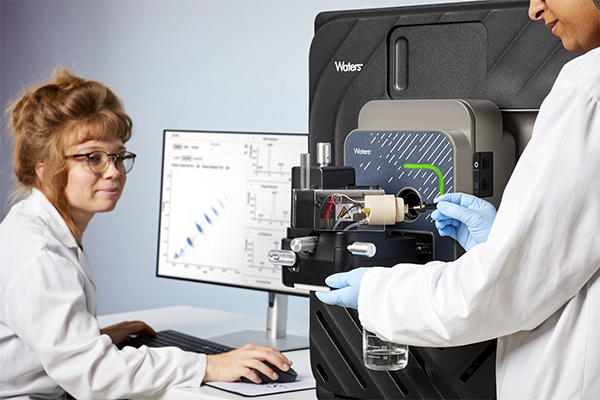
xevo cdms woman on monitor and woman opening reed full res presentation logo sm

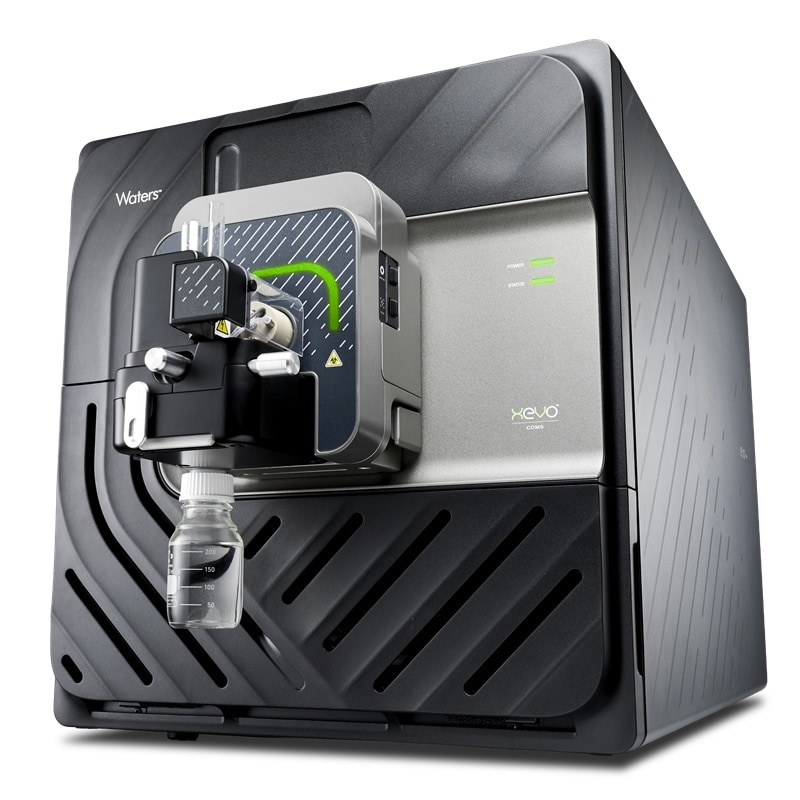
Breaking the Megadalton Barrier: Benchtop CDMS Arrives

A recent bioRxiv paper by Dr. Jakub Ujma and colleagues at Waters Corporation, in collaboration with Prof. Martin Jarrold from Indiana University and Megadalton Solutions, describes a major advance—the first commercial benchtop charge detection mass spectrometer (CDMS) based on electrostatic linear ion trap (ELIT) technology. Why does this matter CDMS is uniquely suited for analyzing…

adeno associated virus (aav), 3d illustration, blue background. a highly detailed and realistic 3d rendering of the adeno associated virus (aav), showcasing its intricate capsid structure

What’s Really Happening Inside the Capsid of Norovirus VLPs?

,

Norovirus virus-like particles (VLPs) are structurally heterogeneous, built from a single capsid protein that self-assembles into multiple geometries, making full characterization by conventional mass spectrometry (MS) extremely difficult. A recent bioRxiv paper by Dr. Charlotte Uetrecht and colleagues at the Centre for Structural Systems Biology (CSSB) in Hamburg, Germany, in collaboration with Waters scientists, demonstrates…

adobestock 767656168 full res presentation ready png

What’s Really Happening to Your rAAV Under Stress?

,

Ensuring the stability of recombinant adeno-associated virus (rAAV) vectors remains a central challenge in gene therapy development. rAAV particles are structurally complex, highly heterogeneous, and sensitive to environmental stress, making it difficult to link analytical changes to functional consequences during manufacturing and storage. A recent Journal of Pharmaceutical Sciences study by Prof. Susumu Uchiyama and…

xevo cdms hero angled left lower view full res presentation ready jpeg

Seeing What Others Missed: How CDMS Unlocked Proteasome Function

,

Understanding how bacterial proteasomes recognize and process their substrates remains a major challenge in infectious disease biology and drug discovery. In Mycobacterium tuberculosis, this challenge is particularly critical, as the proteasome is essential for bacterial survival inside host macrophages and represents an attractive antibacterial target. A recent Nature Communications study by Prof. Siavash Vahidi and…

adobestock 1920105813 full res presentation ready png

Toward Redosable Gene Therapy: Engineering AAVs to Evade T‑Cells

,

Adeno-associated virus (AAV) vectors are widely used in gene therapy because of their ability to enable long-term transgene expression with favorable safety profiles. However, immune responses to the AAV capsid remain a major barrier, limiting treatment durability and the feasibility of repeat dosing. A recent Nature Communications study led by Dr. Ronit Mazor and colleagues…

img

Charge Detection Mass Spectrometry (CDMS):  Unprecedented Direct Measurement for the Characterization of Mega-Mass Biomolecules 

Whether you are analyzing adeno-associated viruses (AAVs) or virus-like particles, nucleic acids such as RNAs or lipid nanoparticles (LNPs), proteins, or protein complexes, simple and fit-for-purpose tools with speed, accuracy, and precision are essential for driving biotherapeutic innovations forward. In recent years, scientists have increasingly turned to charge detection mass spectrometry (CDMS).