
Seeing What Others Missed: How CDMS Unlocked Proteasome Function
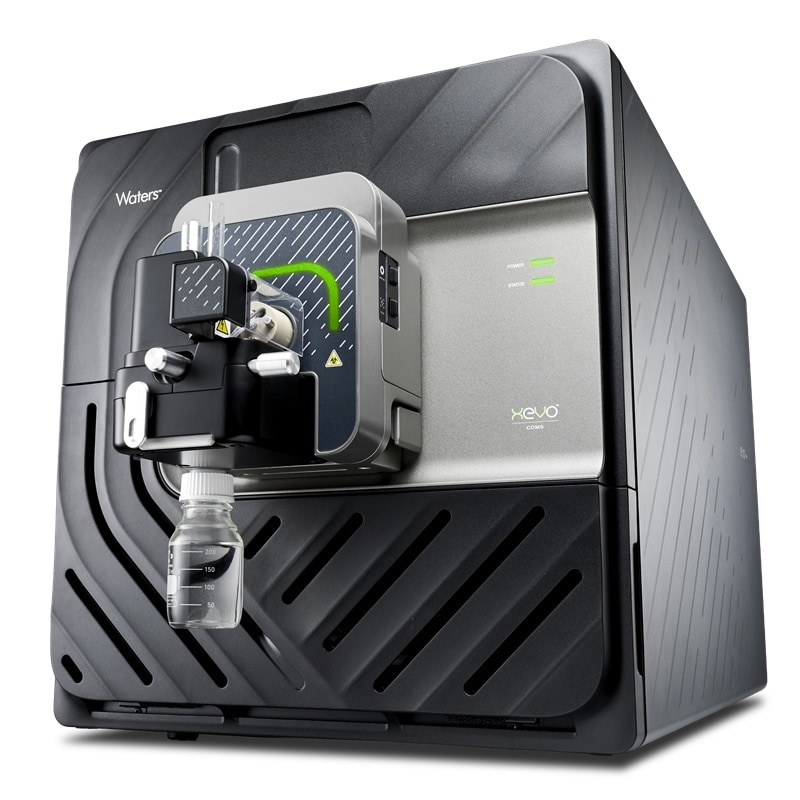
Understanding how bacterial proteasomes recognize and process their substrates remains a major challenge in infectious disease biology and drug discovery. In Mycobacterium tuberculosis, this challenge is particularly critical, as the proteasome is essential for bacterial survival inside host macrophages and represents an attractive antibacterial target.
A recent Nature Communications study by Prof. Siavash Vahidi and colleagues at the University of Guelph (Canada), in collaboration with Waters scientists, addresses this challenge by integrating charge detection mass spectrometry (CDMS) with native MS, hydrogen-deuterium exchange mass spectrometry (HDX-MS), and nuclear magnetic resonance (NMR). Among these techniques, CDMS is pivotal for resolving the structural heterogeneity that previously obscured the functional mechanism of the bacterial proteasome activator Bpa.
The core problem: Structural heterogeneity masks function
Bpa is a large, ring-shaped regulatory particle that activates the mycobacterial 20S proteasome. Although prior studies identified the dodecamer as the active form, key questions remained unresolved:
- Does Bpa exist exclusively as a dodecamer under physiological conditions?
- How dynamic is Bpa oligomerization in solution?
- Which oligomeric state is responsible for substrate engagement?
These questions arise because Bpa exists as a heterogeneous mixture of dimers, tetramers, and dodecamers that interconvert in a temperature-dependent and reversible manner. Conventional tools such as size-exclusion chromatography (SEC) and native MS struggle to accurately quantify these coexisting species due to charge-state overlap and mass-dependent detection bias.
Why is conventional MS not enough?
While native MS revealed multiple Bpa oligomeric states, interpretation was limited by:
- Overlapping charge-state distributions for high-mass complexes
- Under-representation of large assemblies
- Apparent inflation of low-abundance species
As a result, it remained unclear whether Bpa fully assembles into its functional form under activating conditions.
How does CDMS solve the problem
CDMS overcomes these limitations by directly measuring the mass and charge of individual ions, enabling unbiased analysis of heterogeneous, high-mass protein assemblies. In this study, CDMS demonstrated that under physiological conditions:
- Bpa exists almost exclusively as a fully assembled dodecamer
- Signals from dimers and tetramers disappear
This result resolves inconsistencies seen with conventional MS and confirms that the dodecamer is the dominant, biologically relevant species.
From assembly to function
With the active oligomeric state firmly established by CDMS, the authors could confidently connect structure to function. Supporting techniques revealed that:
- Only dodecameric Bpa engages substrates
- Substrates are recognized via short hydrophobic motifs in disordered regions
- Multiple substrates bind per Bpa ring
Together, these findings show that temperature-dependent assembly acts as a molecular switch that controls when Bpa can deliver substrates to the proteasome.
Read the full study, “Structural heterogeneity and substrate engagement mechanism of the bacterial proteasome activator Bpa,” and learn more about the advantages of CDMS.
Related posts

AI in GMP: Navigating Evolving Expectations for Regulated Labs
Why 2026 marks the shift from guidance to enforcement and what it means for your organization now. Written by Tracy Hibbs and Tony Sacchetti, Waters Corporation Regulators are already inspecting AI use, how prepared is your organization? For years, the pharmaceutical industry has anticipated regulatory clarity on the use of artificial intelligence (AI) and machine…

Built on Control and Backed by Data: Why Vigilant Monitoring Matters in Pharma QC
Stage 3 verification: Establishing and maintaining a state of control In pharmaceutical quality control (QC), consistency should mean more than an analyst ending a shift relieved that the results were repeatable and there were no obvious failures. It should mean having enough confidence in the process, the controls, and the data to know that those…

Designing Analytical Methods for Long-Term Audit Readiness
Audit readiness isn’t a last-minute activity triggered by validation or inspection. It’s established much earlier, at method design, through the scientific understanding, risk-based control, and documentation needed to demonstrate that a method is fit for purpose and capable of performing consistently over time. If those elements aren’t built in from the outset, gaps are likely…
Popular Topics
ACQUITY QDa (17) biologics (17) biopharma (50) biopharmaceutical (59) biotherapeutics (24) case study (20) chromatography (16) data integrity (26) food analysis (12) HPLC (17) informatics (12) LC-MS (30) liquid chromatography (LC) (31) mass detection (16) mass spectrometry (MS) (65) method development (16) particle analysis (21) regulatory compliance (13)