Technology

Our expertise drives innovation, development, and application of informatics and software that continue to enable leading pharmaceutical, environmental, food & beverage and chemical materials organizations to accelerate decision-making, improve laboratory effectiveness, and get products to market faster.

  • From Transcript to LNP Formulation: Measuring Intact mRNA with CDMS

    mRNA therapeutics are advancing rapidly, but a major analytical challenge remains: how do you verify that a large, full-length transcript remains intact throughout manufacturing and formulation? A recent Analytical Chemistry article by scientists from Pfizer and Megadalton Solutions demonstrates how charge detection mass spectrometry (CDMS) helped to close this gap. The researchers directly measured intact…

  • From Complex Workflows to Conversation: How Waters is Bringing Governed, Practical AI Into Laboratory Software

    Artificial intelligence (AI) is changing how people interact with software. However, in the lab, innovation must do more than make technology easier to use, it must also support scientific confidence, protect access to data, and fit within established governance. Waters AI Link is designed for that reality, providing a conversational connection to waters_connect Software that…

  • PROTACs Are Different: What Does That Mean for Liquid Chromatography?

    As drug discovery moves beyond traditional small-molecule inhibitors, analytical scientists are being asked to characterize increasingly complex molecules. Proteolysis-targeting chimeras (PROTACs) are one example. PROTACs combine two binding elements with a linker to selectively target proteins for degradation. Their larger size, flexibility, and multiple functional groups can create new analytical considerations compared to more conventional…

  • Breaking the Megadalton Barrier: Benchtop CDMS Arrives

    A recent bioRxiv paper by Dr. Jakub Ujma and colleagues at Waters Corporation, in collaboration with Prof. Martin Jarrold from Indiana University and Megadalton Solutions, describes a major advance—the first commercial benchtop charge detection mass spectrometer (CDMS) based on electrostatic linear ion trap (ELIT) technology. Why does this matter CDMS is uniquely suited for analyzing…

  • What’s Really Happening Inside the Capsid of Norovirus VLPs?

    Norovirus virus-like particles (VLPs) are structurally heterogeneous, built from a single capsid protein that self-assembles into multiple geometries, making full characterization by conventional mass spectrometry (MS) extremely difficult. A recent bioRxiv paper by Dr. Charlotte Uetrecht and colleagues at the Centre for Structural Systems Biology (CSSB) in Hamburg, Germany, in collaboration with Waters scientists, demonstrates…

  • Advancing Oligonucleotide Purification with MaxPeak Premier OBD Prep Columns

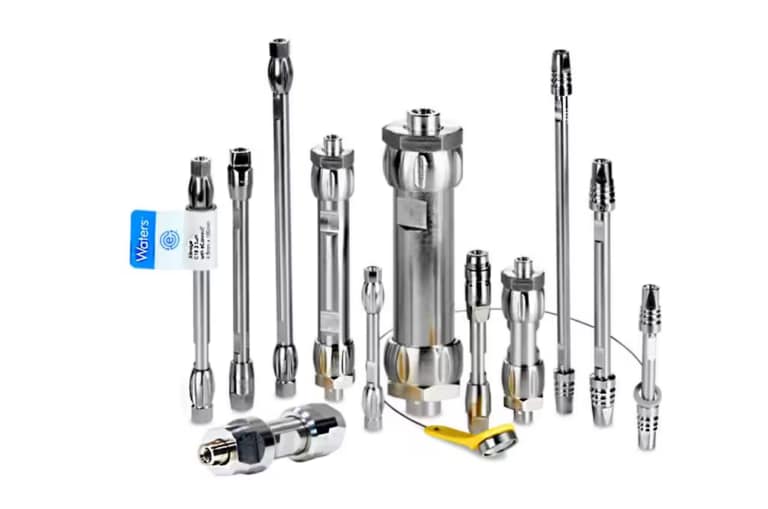
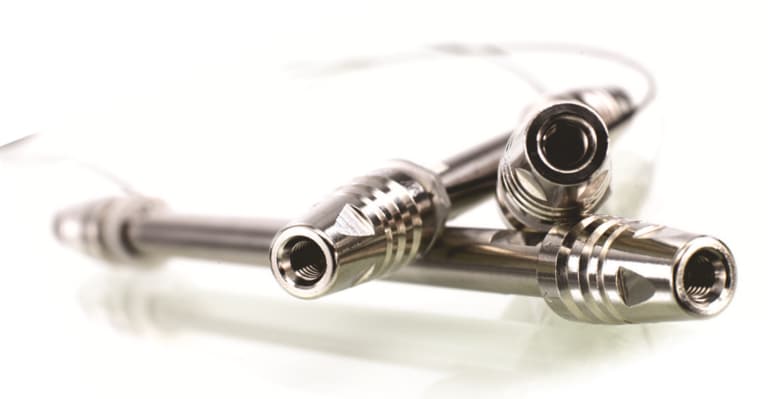
    Oligonucleotide therapeutics continue to grow in complexity, and so do the purification challenges that come with them. Scientists need reliable, scalable solutions for preparative oligonucleotide purification. MaxPeak Premier Oligo OBD Columns provide a powerful solution for these workflows, now expanded to include 19mm ID formats. These columns reduce non-specific adsorption, improve recovery, and enable consistent…

  • Considering Adopting the Cloud in Your Lab? What to Consider When Choosing Cloud Software

    For many laboratories, the conversation around cloud and SaaS software has shifted from if to when. The benefits are well understood—reduced infrastructure, greater flexibility, and continuous updates—but the decision itself is rarely simple. Moving to the cloud is not just a technical change. It reshapes how your lab operates, scales, and collaborates. The key is…

  • Two Truths and a Lie About Solid‑Core Particle Efficiency

    Solid‑core (or superficially porous) particles are the foundation of solid core HPLC columns and have earned a reputation for delivering higher efficiency separations than similarly sized, fully porous particles. Chromatographers see this play out repeatedly across small- and large-molecule applications under a wide range of operating conditions. But why solid‑core particles are more efficient is…

  • Advancing Oligonucleotide Analysis with GTxResolve Microflow Columns with MaxPeak Premier Technology

    As modern biopharma pipelines evolve toward increasingly complex modalities, such as therapeutic oligonucleotides, analytical scientists face a familiar pressure: obtain higher sensitivity from smaller samples, while reducing solvent consumption and workflow burden. Microflow liquid chromatography (LC) has emerged as a powerful strategy to meet these demands, and recent column technology innovations are pushing performance even…

  • Unlocking Faster, More Confident Antibody Analytics with Modern Protein A Affinity Chromatography

    Biologics developers today face unprecedented pressure: tighter timelines, increasingly complex antibody formats, and a growing need for real-time process understanding. Yet many analytical workflows still rely on methods that can’t deliver the speed, sensitivity, or depth required for modern bioprocessing. That’s where advances in Protein A (ProA) affinity chromatography are making a meaningful difference, reshaping…

  • Why More Laboratories are Choosing Empower Subscription Bundles

    For more than three decades, Waters Empower Chromatography Data System (CDS) has been the trusted foundation for chromatography data management. Empower Software enables laboratories to address regulatory requirements, deliver consistent results, and scale operations. But the pace of change in today’s scientific world is unprecedented- unlike anything labs have experienced before. Global supply chains, the…

  • Enzymatic Digestion: Accelerating Bioseparations with Novel Enzymes

    The Role of Enzymes in LC-MS Analysis of Modern Biotherapeutics  Enzymes are nature’s catalysts, enabling precise and efficient biochemical transformations. In analytical workflows, enzymatic digestion is a cornerstone technique for breaking down complex biomolecules into smaller, more manageable fragments. This process is critical for applications such as peptide mapping in protein characterization and oligonucleotide mapping…