
Data Integrity and Compliance in a Laboratory Environment – Best Practices
Data integrity requires laboratories to handle data consistently from beginning to end, with measures like encryption, access controls, and regular backups to maintain compliance with regulatory standards such as GDPR, HIPAA, and SOX.
The introduction of new technologies within the scientific world further highlights the need for strong regulations and compliance when dealing with the data of individuals, especially within a laboratory environment.
New technologies help laboratories better adapt to new practices that support data integrity and simplify complex actions. This article explores the key data integrity challenges labs face today and outlines technology-driven approaches that support compliance.
Why do we need data integrity within a laboratory environment?
Laboratories store and share large amounts of data at any given time. Ensuring you have a data-compliant organization is essential, especially within the research field.
Data integrity is a crucial part of laboratory operations. When data is recorded accurately and is easily accessible, laboratories can better manage and analyze it. Incomplete and unreliable data can call the accuracy of your analysis into question, which could lead to detrimental consequences, especially if data is linked to patient safety.
It’s also important from an ethical and legal standpoint to ensure you have data integrity.
Following are the top best data practices to help you have a regulatory-compliant organization
- Create clear standard operating procedures (SOPs) – Develop strong laboratory processes. They should be clear, concise, and easy to follow. Your procedures need to adhere to industry standards and be accessible to all staff.
- Regular updates: By capturing updates to your processes and procedures, all staff will be aware of any updates or new procedures.
- Implement data management control – Streamlining data collection helps laboratories minimize the risk of human error through the use of laboratory information management systems (LIMS).
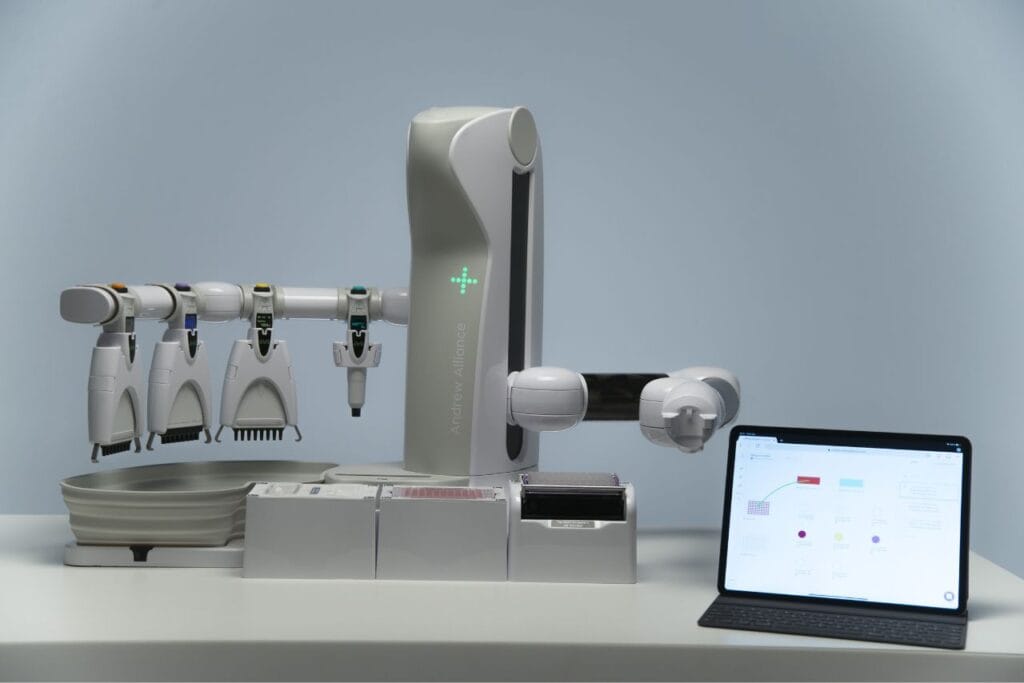
- Integration and automation: Integrating automation within a lab environment reduces manual data entry and minimizes the risk of research errors. For example, the Andrew+ Robot can connect to a LIMS system through OneLab Software’s enterprise deployment option.
- Establish security procedures for data management – Data management in a laboratory environment relies on clear procedures to ensure security measures are followed.
- Best practices: Appoint an elected member of staff as an on-site compliance officer. This allows your organization to prepare for an on-site audit and implement best practices across your lab.
- Conduct on-site audits – Clear audit trails help create a culture of integrity within a laboratory environment. It is important for laboratories to conduct on‑site audits regularly. These audits help to identify any compliance issues before they become serious problems.
- External audits: Regular external audits conducted by a qualified person (QP) identify any operations, data management, or equipment issues requiring rectification. These third-party auditors verify that laboratories meet standards and regulations.
OneLab Software includes user management, audit trails, and sample tracking as core features to support compliance-readiness.
- Maintain SOP development and management – In any lab setting, maintaining SOPs is one of the main ways to ensure data integrity. Creating clear documentation that explains how tasks are regulated, developed, and maintained is equally important.
- Reporting: Providing regular training on how data should be collected and reported is also integral to any organization involved with scientific research projects. Laboratories should prioritize consistent compliance with all regulations associated with the research being conducted and the data being maintained.
- Implement contingency planning – Implementing backup protocols ensures that data loss will be prevented in the case of a system failure or disaster. By regularly backing up your data, you decrease the risk of data loss if a system failure does occur. By having these plans in place, you help ensure your data is stored securely.
- Recovery plan: By having a recovery plan in place, you mitigate any additional risk to data integrity in the instance of a security breach.
OneLab Software can be either cloud hosted or installed on-site with expanded storage and backups.
- Incorporate quality control (QC) – Data integrity and QC go hand-in hand within any organization, and this is even more true within a laboratory environment. By incorporating QC procedures, you can effectively monitor the management of your data.
- Quality programs: By having a QC program within your organization, you can measure areas that need improvement and, in the instance of an audit, you will have clear documentation to present.
- Create accessible data management policies – Having a clear outline of your organization’s policies and ensuring they are accessible is key. The policies should detail how to collect, store, and process your data. It is also essential that you know when your data needs to be archived or deleted.
- Roles and responsibilities: Having a team member manage and update the data policies is also a good idea for any organization. This person/team would be responsible for maintaining the policies and rolling them out to other personnel.
- Monitor regulatory changes – Being up to date on regulations within your organization is important, especially within a laboratory setting. You need to be clear on regulations that pertain to your organization, such as Good Laboratory Practices (GLPs), ISO 17025, and 21 CFR Part 11. You need to be sure that your laboratory aligns with these regulations.
- Workshops: Having on-site regular workshops with personnel to run through key regulatory updates is another way to stay current and ensure consistency within your organization.
Waters OneLab Software includes compliant-ready controls such as electronic records and electronic signatures compliant with regulations such as 21 CFR Part 11, ISO 17025 or EU Annex 11.
To learn how your laboratory can strengthen data integrity and compliance, please visit Waters.com.
Related posts
PROTACs Are Different: What Does That Mean for Liquid Chromatography?
As drug discovery moves beyond traditional small-molecule inhibitors, analytical scientists are being asked to characterize increasingly complex molecules. Proteolysis-targeting chimeras (PROTACs) are one example. PROTACs combine two binding elements with a linker to selectively target proteins for degradation. Their larger size, flexibility, and multiple functional groups can create new analytical considerations compared to more conventional…
Breaking the Megadalton Barrier: Benchtop CDMS Arrives
A recent bioRxiv paper by Dr. Jakub Ujma and colleagues at Waters Corporation, in collaboration with Prof. Martin Jarrold from Indiana University and Megadalton Solutions, describes a major advance—the first commercial benchtop charge detection mass spectrometer (CDMS) based on electrostatic linear ion trap (ELIT) technology. Why does this matter CDMS is uniquely suited for analyzing…
What’s Really Happening Inside the Capsid of Norovirus VLPs?
Norovirus virus-like particles (VLPs) are structurally heterogeneous, built from a single capsid protein that self-assembles into multiple geometries, making full characterization by conventional mass spectrometry (MS) extremely difficult. A recent bioRxiv paper by Dr. Charlotte Uetrecht and colleagues at the Centre for Structural Systems Biology (CSSB) in Hamburg, Germany, in collaboration with Waters scientists, demonstrates…
Popular Topics
ACQUITY QDa (17) bioanalysis (13) biologics (17) biopharma (50) biopharmaceutical (59) biotherapeutics (24) case study (22) chromatography (16) data integrity (28) HPLC (17) informatics (12) LC-MS (35) liquid chromatography (LC) (34) mass detection (16) mass spectrometry (MS) (68) method development (16) particle analysis (21) regulatory compliance (16)