
PROTACs Are Different: What Does That Mean for Liquid Chromatography?
As drug discovery moves beyond traditional small-molecule inhibitors, analytical scientists are being asked to characterize increasingly complex molecules. Proteolysis-targeting chimeras (PROTACs) are one example.
PROTACs combine two binding elements with a linker to selectively target proteins for degradation. Their larger size, flexibility, and multiple functional groups can create new analytical considerations compared to more conventional small molecules.
When developing methods, the question isn’t whether liquid chromatography still works. It does. The question you should ask is how to approach method development when the molecule itself is more complex.
Complexity changes the method development challenge
A PROTAC can behave differently from a traditional small molecule in ways that are not always predictable from molecular weight alone. Retention, selectivity, peak shape, recovery, and reproducibility become even more critical to monitor.
This is particularly relevant as the pharmaceutical industry explores new therapeutic modalities and is working to establish reliable analytical workflows for development, stability testing, and quality control.
For analytical scientists, that can mean moving beyond incremental changes to a single chromatographic condition.
A systematic approach can help identify what works rather than relying on what you expect to work.
A case study in systematic method development
Our recently published application note on PROTAC ARV-825 provides an example with the method developed in just over two days.
ARV-825 is a heterobifunctional molecule containing pomalidomide and birabresib connected by a polyethylene glycol linker. To evaluate its stability, the compound was subjected to forced degradation conditions, generating additional components that needed to be separated and characterized.
Rather than optimizing one chromatographic condition through trial and error, the study applied a systematic approach.
The process began by evaluating retention at different pH conditions. Low-pH conditions provided better retention of lower-level degradants, while the primary ARV-825 peak was relatively unaffected. This information dictated the mobile-phase conditions for the next stage of screening, low-pH mobile phase additives.
The next step was to deliberately introduce chromatographic selectivity by screening multiple stationary phases and mobile-phase combinations.
This distinction is important. Changing the gradient changes how compounds move through the column. Changing the stationary phase can change how they interact with the column in the first place.
For complex molecules and unknown degradation products, that difference can be critical.
Look beyond the chromatogram
The ARV-825 work also highlights why LC-MS can be valuable during method development.
When degradation products are not available as individual standards, UV detection alone may not provide enough information to confidently track what is being separated. In the study, mass detection was used to help identify and track components by their mass, providing additional information during the separation process.
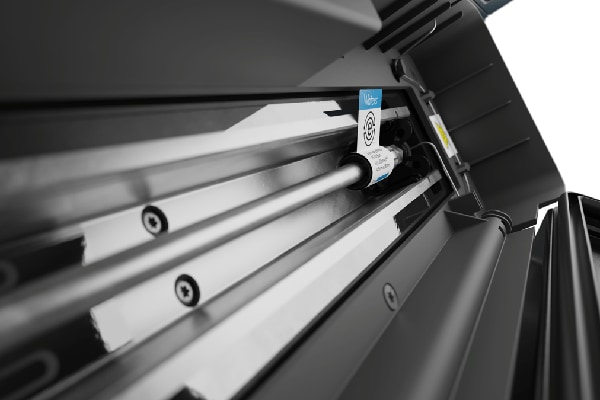
The study also evaluated against standard stainless-steel hardware using the same stationary phase. Differences in retention and selectivity were observed for some degradants, demonstrating that interactions with metal surfaces can become another variable in the chromatographic equation. The MaxPeak Premier Columns also demonstrated improved peak-area reproducibility in the study.
For complex molecules, controlling variables early in method development can help reduce the risk of having to revisit the method later.
A more deliberate path to robust methods
The ARV-825 example demonstrates a broader principle for analytical scientists working with emerging drug modalities.
When the molecule is different, the method-development strategy may need to be different too.
A systematic workflow can provide a logical path from retention and pH screening to stationary-phase selectivity to optimization and detection, while creating a more traceable basis for the final method.
In the ARV-825 study, the combination of systematic screening and MaxPeak Premier Columns produced baseline resolution of the detected degradants and the main ARV-825 peak, with the method developed in just over two days.
As drug discovery continues to expand into more complex molecular architectures, analytical workflows will need to evolve alongside them. The goal is not to make chromatography more complicated. It is to make method development more deliberate, reproducible, and efficient.
For scientists characterizing PROTACs and other emerging small-molecule modalities, the right combination of systematic screening, chromatographic selectivity, surface control, and complementary detection can help turn molecular complexity into a manageable analytical challenge.
Ultimately, better analytical methods help provide the reliable information needed to advance new therapies and, in turn, accelerate the benefits of pioneering science to improve human health.
Learn more about how MaxPeak Premier Solutions can enhance your PROTACs analysis.
Related posts
Breaking the Megadalton Barrier: Benchtop CDMS Arrives
A recent bioRxiv paper by Dr. Jakub Ujma and colleagues at Waters Corporation, in collaboration with Prof. Martin Jarrold from Indiana University and Megadalton Solutions, describes a major advance—the first commercial benchtop charge detection mass spectrometer (CDMS) based on electrostatic linear ion trap (ELIT) technology. Why does this matter CDMS is uniquely suited for analyzing…
What’s Really Happening Inside the Capsid of Norovirus VLPs?
Norovirus virus-like particles (VLPs) are structurally heterogeneous, built from a single capsid protein that self-assembles into multiple geometries, making full characterization by conventional mass spectrometry (MS) extremely difficult. A recent bioRxiv paper by Dr. Charlotte Uetrecht and colleagues at the Centre for Structural Systems Biology (CSSB) in Hamburg, Germany, in collaboration with Waters scientists, demonstrates…

Advancing Oligonucleotide Purification with MaxPeak Premier OBD Prep Columns
Oligonucleotide therapeutics continue to grow in complexity, and so do the purification challenges that come with them. Scientists need reliable, scalable solutions for preparative oligonucleotide purification. MaxPeak Premier Oligo OBD Columns provide a powerful solution for these workflows, now expanded to include 19mm ID formats. These columns reduce non-specific adsorption, improve recovery, and enable consistent…
Popular Topics
ACQUITY QDa (17) bioanalysis (13) biologics (17) biopharma (50) biopharmaceutical (59) biotherapeutics (24) case study (22) chromatography (16) data integrity (28) HPLC (17) informatics (12) LC-MS (35) liquid chromatography (LC) (34) mass detection (16) mass spectrometry (MS) (68) method development (16) particle analysis (21) regulatory compliance (16)