
From Transcript to LNP Formulation: Measuring Intact mRNA with CDMS
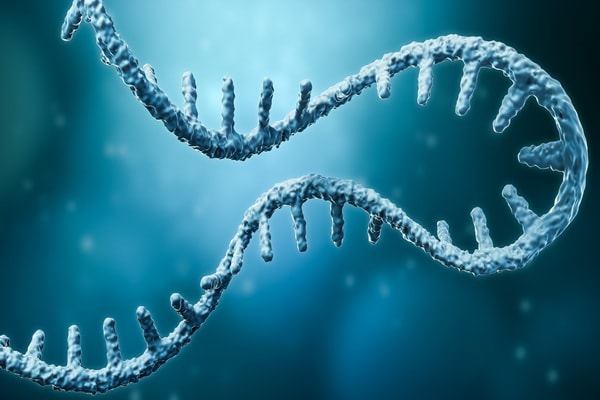
mRNA therapeutics are advancing rapidly, but a major analytical challenge remains: how do you verify that a large, full-length transcript remains intact throughout manufacturing and formulation?
A recent Analytical Chemistry article by scientists from Pfizer and Megadalton Solutions demonstrates how charge detection mass spectrometry (CDMS) helped to close this gap. The researchers directly measured intact mRNA constructs up to 4522 nucleotides, while simultaneously assessing sequence integrity, nucleotide modifications, poly(A) tail length, and the impact of lipid nanoparticle (LNP) formulation.
Why does this matter
As mRNA therapeutics expand beyond vaccines into gene editing, oncology, and other advanced modalities, developers need analytical tools that provide a more complete picture of the molecule itself.
This study shows that CDMS can bridge a long-standing gap by offering direct measurements of intact mRNA while simultaneously providing information on several critical quality attributes (CQAs). Rather than replacing established methods, CDMS complements them by providing something they cannot: a direct view of the whole therapeutic molecule.
The analytical challenge
Standard workflows digest mRNA into small fragments before MS analysis—useful for confirming sequence composition, but blind to whether the full-length transcript survived intact. That blind spot grows with size: many therapeutic mRNAs exceed 4000 nucleotides, and their highly charged phosphate backbones attract counterions that broaden signals and collapse the charge-state resolution that conventional MS depends on.
Native MS has been pushed to mRNAs around 800 nt, and single-ion Orbitrap methods to roughly 2100 nt, but overlapping charge states and adduct formation still obscure the low-abundance truncated species that quality assessment depends on finding.
What did CDMS find
CDMS overcomes these limitations by measuring both mass and charge for individual ions, eliminating the need for conventional charge-state resolution. With this approach applied to four constructs, eGFP, luciferase, β-galactosidase, and Cas9 transcripts, the researchers showed that CDMS delivered:
- Confirm intact mRNA length and integrity, measuring constructs from 997 to 4522 nucleotides with approximately 0.5% uncertainty, while measured mass tracked nucleotide count with an R² of 0.99998.
- Verify chemical modifications, accurately detecting the mass shifts associated with methoxyuridine incorporation. For luciferase mRNA, an 8.3 kDa shift was observed, closely matching the 8.2 kDa theoretical value.
- Differentiate poly(A) tail lengths, resolving hemagglutinin mRNA constructs containing tails from 0 to 74 nucleotides with an uncertainty of approximately ±8 nucleotides, supported by orthogonal CE and LC-MS measurements.
- Assess formulation integrity, showing that mRNA extracted from LNPs was statistically indistinguishable from the original material, indicating that encapsulation did not measurably alter the mRNA cargo
A practical insight
The study also identified conditions that improved performance. Ammonium-based buffers consistently produced more accurate mass measurements than water alone, while higher-charge mRNA populations delivered the most reliable and highest-resolution results. These insights provide useful guidance for future nucleic acid analyses.
The key takeaway
A single CDMS workflow can confirm intact mRNA length, assess sequence integrity, verify nucleotide modifications, differentiate poly(A) tail lengths, and evaluate the impact of LNP formulation, all through direct measurement of the intact molecule.
Read the full study, “Advancing Charge Detection Mass Spectrometry for Characterizing Large, Intact mRNA Constructs”, to discover how, with mRNA therapeutics continuing to grow in complexity, CDMS is emerging as a powerful addition to your analytical toolbox.
Related posts

From Complex Workflows to Conversation: How Waters is Bringing Governed, Practical AI Into Laboratory Software
Artificial intelligence (AI) is changing how people interact with software. However, in the lab, innovation must do more than make technology easier to use, it must also support scientific confidence, protect access to data, and fit within established governance. Waters AI Link is designed for that reality, providing a conversational connection to waters_connect Software that…
PROTACs Are Different: What Does That Mean for Liquid Chromatography?
As drug discovery moves beyond traditional small-molecule inhibitors, analytical scientists are being asked to characterize increasingly complex molecules. Proteolysis-targeting chimeras (PROTACs) are one example. PROTACs combine two binding elements with a linker to selectively target proteins for degradation. Their larger size, flexibility, and multiple functional groups can create new analytical considerations compared to more conventional…
Breaking the Megadalton Barrier: Benchtop CDMS Arrives
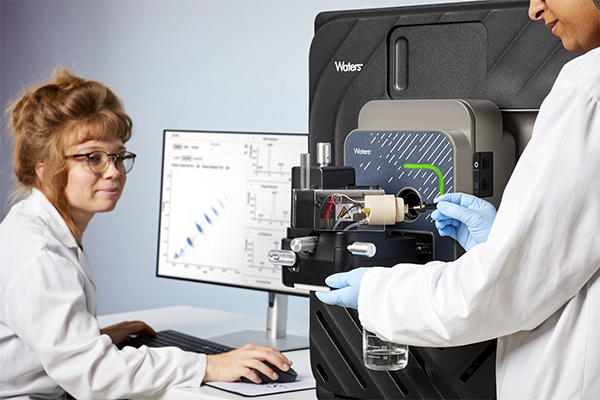
A recent bioRxiv paper by Dr. Jakub Ujma and colleagues at Waters Corporation, in collaboration with Prof. Martin Jarrold from Indiana University and Megadalton Solutions, describes a major advance—the first commercial benchtop charge detection mass spectrometer (CDMS) based on electrostatic linear ion trap (ELIT) technology. Why does this matter CDMS is uniquely suited for analyzing…
Popular Topics
ACQUITY QDa (17) bioanalysis (14) biologics (17) biopharma (50) biopharmaceutical (60) biotherapeutics (24) case study (22) chromatography (16) data integrity (28) HPLC (17) informatics (12) LC-MS (36) liquid chromatography (LC) (35) mass detection (17) mass spectrometry (MS) (68) method development (16) particle analysis (21) regulatory compliance (16)