
-
A Toxic Pollutant, a Surprising Polymer, and the CDMS Data That Connected the Dots
Water microdroplets can convert carbon disulfide (CS₂), a toxic industrial pollutant, into a solid polymer at room temperature and without a catalyst. It is a striking example of green chemistry: transforming harmful waste into useful materials under exceptionally mild conditions. But a compelling hypothesis still needs proof. Did a polymer really form, and how did…
Recent Posts
USP <326>: What the New SEC-MALS Chapter Means for Vaccine Labs
What is USP <326>? A new General Chapter is about to become official in the United States Pharmacopeia–National Formulary and, if your lab touches polysaccharide vaccines, it’s worth clearing space on your calendar for it. USP <326>, “Molar Mass Determination of Bacterial Polysaccharides Used in Human Vaccines by Size Exclusion Chromatography with Multiangle Light Scattering...

What Is Your Data Really Being Asked to Do?
Your data is more than just the chromatogram on the screen or support for a simple pass/fail review. In the best data systems, it is a well-orchestrated series of structured information that offers deep insight into your efficiencies, data integrity, and decision quality. In regulated laboratories, especially quality control labs, as you accumulate years of...
The Monoclonal Antibody Aggregate Was Never Just One Aggregate
A high-molecular-weight (HMW) aggregate peak often appears as a single population. But what if it isn’t? In a recent bioRxiv preprint, scientists from WuXi Biologics, Zhejiang University (China), and Waters Corporation used charge detection mass spectrometry (CDMS) to take a closer look at a complex antibody aggregate fraction. What appeared to be one broad aggregate...
Beyond the SOP: Rethinking Consistency in Endotoxin Testing
What if simpler sample preparation could help make endotoxin testing more consistent—without compromising throughput? In a recent webinar, Guillaume Mignard from Waters and Paola Vigilanza, PhD, and Luca Di Bello from bioMérieux demonstrated how to simplify endotoxin testing by combining ready-to-use assay plates with automated sample preparation. The webinar explored assay simplification, standardized preparation and...
A Toxic Pollutant, a Surprising Polymer, and the CDMS Data That Connected the Dots
Water microdroplets can convert carbon disulfide (CS₂), a toxic industrial pollutant, into a solid polymer at room temperature and without a catalyst. It is a striking example of green chemistry: transforming harmful waste into useful materials under exceptionally mild conditions. But a compelling hypothesis still needs proof. Did a polymer really form, and how did...
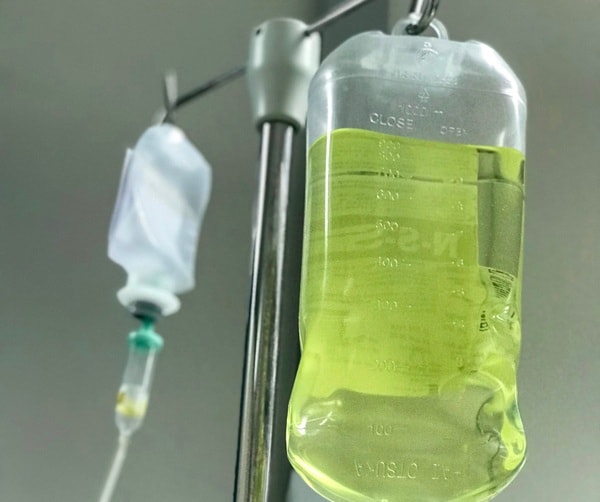
The Next Frontier in Nitrosamines Testing: Detection and Risk Assessment in Packaging and IV Infusion Bags
Nitrosamine analysis continues to push analytical labs to new levels of sensitivity, while the evolving regulatory landscape is expanding the conversation beyond traditional testing. As attention turns to other N-nitroso species (i.e., o-NNOs) and potential extractables and leachables (E&L) from packaging materials, such as IV bags, labs face new challenges in detection, quantification, and method...
Popular Topics
ACQUITY QDa (17) bioanalysis (14) biologics (17) biopharma (50) biopharmaceutical (60) biotherapeutics (24) case study (22) chromatography (16) data integrity (30) HPLC (17) informatics (12) LC-MS (40) liquid chromatography (LC) (37) mass detection (17) mass spectrometry (MS) (71) method development (16) particle analysis (21) regulatory compliance (16)