
Identifying Critical Quality Attributes in Drug Products: Your Key to Ensuring Safe and Effective Therapeutics

In drug manufacturing, there is no room for error. Every step and every process must be carefully managed to ensure that a final drug product is both safe and effective. One key concept that plays a vital role is Critical Quality Attributes (CQAs), the foundation of quality control (QC).
In this blog, we look at what critical quality attributes are, their pivotal role in drug development, and highlight how our cutting-edge particle analysis technology plays a part in identifying and analyzing these attributes.
Understanding CQAs of Biologics
What are CQAs? A CQA is a physical, chemical, biological, or microbiological property or key characteristic that needs to be within an appropriate limit, range, or distribution to ensure the desired product quality.1
CQAs typically fall into three categories:
- Physical characteristics: these include aspects such as the size and shape of the pharmaceutical product
- Chemical properties: these encompass elements like the pH level and concentration of the drug
- Biological attributes: these involve factors such as sterility and bioburden levels in the product
The process of identifying CQAs is an essential step in the drug development process as it ensures that the final drug product is consistent, effective, and safe for patient use.2 Any deviation can influence the efficacy of a drug, potentially leading to harmful effects on the patient.
Moreover, the recognition of CQAs is not just a best practice; it’s a regulatory mandate. Regulatory authorities, including the FDA and the European Medicines Agency (EMA), require the identification of CQAsas part of the drug development process.3 This ensures that drug products meet the necessary quality standards and are safe for consumption.4
The Role of CQAs in Quality by Design (QbD)
CQAs are at the heart of the QbD approach in pharmaceutical development. QbD is a strategy that starts with predefined objectives and emphasizes product and process understanding based on scientific knowledge and quality risk management. In essence, CQAs play a pivotal role in executing a successful QbD approach. They aid in assuring that the end pharmaceutical product is both harmless and effective for patients, satisfying the necessary quality standards stipulated by regulatory bodies.
The Impact of Particle Analysis Technology in Identifying CQAs
In the pharmaceutical industry, technology has emerged as a powerful force in detecting and analyzing CQAs in drug products. One significant CQA in drug products that has historically posed challenges is the accurate identification of subvisible particles. Measuring roughly 10 µm in size, the presence of these particles can wreak havoc – from shortening a drug product’s shelf life and clogging capillaries to sparking life-threatening immune reactions.
Traditional methods of subvisible particle analysis have struggled to accurately identify these particles, leaving invisible particles unchecked and patient safety in danger. However, thanks to the Aura Particle Analysis System, this headache is quickly becoming a thing of the past.
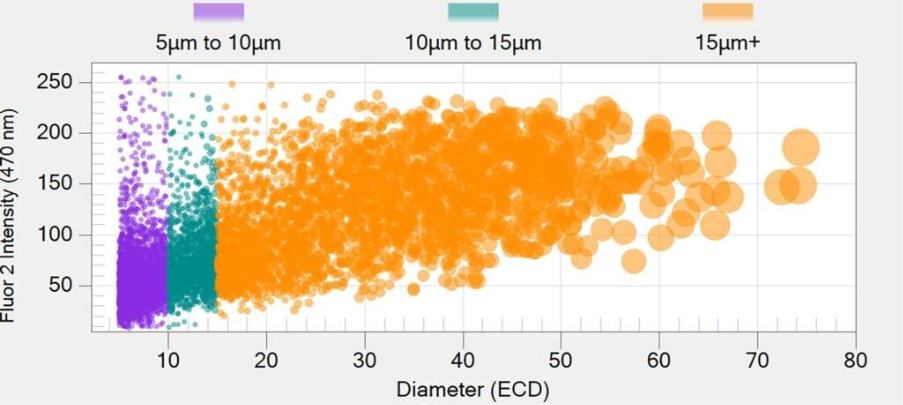
The Aura Platform leverages fully automated high-resolution imaging to obtain detailed images of particles within a sample. It allows for the detection and quantification of subvisible particles ranging from 1-100 µm, which are CQAs in various biologics such as vaccines, gene therapies, and monoclonal antibodies (mAbs).
By utilizing technologies like Backgrounded Membrane Imaging (BMI) and Fluorescence Membrane Microscopy (FMM), Aura Systems reveal critical subvisible particle data, including count, size, and particle identification. This leads to more precise results and a deeper understanding of the drug product.
Conclusion
Understanding and monitoring CQAs of drug products is not just a beneficial aspect of pharmaceutical manufacturing; it’s a necessity. This key process guarantees that a final drug product surpasses the basic requirement of being effective and ensures the highest standards of safety and quality for patients.
As technology continues to advance, tools like Waters game-changing particle analysis technology will play an increasingly vital role in identifying and analyzing these critical attributes.
References
- https://www.linkedin.com/pulse/benefits-identifying-critical-quality-attributes-cqas-mo-heidaran-2e/
- S. Department of Health and Human Services, Food and Drug Administration, Center for Drug Evaluation and Research (CDER). Guidance for Industry: Q8(R2) Pharmaceutical Development. November 2009.
Related posts
Unlocking Faster, More Confident Antibody Analytics with Modern Protein A Affinity Chromatography
Biologics developers today face unprecedented pressure: tighter timelines, increasingly complex antibody formats, and a growing need for real-time process understanding. Yet many analytical workflows still rely on methods that can’t deliver the speed, sensitivity, or depth required for modern bioprocessing. That’s where advances in Protein A (ProA) affinity chromatography are making a meaningful difference, reshaping…
Enzymatic Digestion: Accelerating Bioseparations with Novel Enzymes
The Role of Enzymes in LC-MS Analysis of Modern Biotherapeutics Enzymes are nature’s catalysts, enabling precise and efficient biochemical transformations. In analytical workflows, enzymatic digestion is a cornerstone technique for breaking down complex biomolecules into smaller, more manageable fragments. This process is critical for applications such as peptide mapping in protein characterization and oligonucleotide mapping…

FDA October 2025 Draft Guidance Sparks Industry Biosimilars Buzz
The FDA’s October 29, 2025 draft guidance has generated significant attention due to the implications for both developers and patients. By allowing developers to bypass comparative efficacy studies (CES) when advanced analytics are successful substitutes, the draft guidance avoids one of the most expensive steps, estimated to account for 70% of the total biosimilar development…
Popular Topics
ACQUITY QDa (17) bioanalysis (12) biologics (17) biopharma (49) biopharmaceutical (58) biotherapeutics (21) case study (18) chromatography (14) compliance (12) data integrity (23) food analysis (12) HPLC (15) LC-MS (26) liquid chromatography (LC) (24) mass detection (16) mass spectrometry (MS) (58) method development (13) particle analysis (19)