donald mason

Donald Mason

Donald Mason is the Global Scientific Affairs Manager in the Health Sciences Diagnostics Business for Waters Corporation. For the past 15 years Don has played an active role in the clinical chemistry community developing the acceptance of liquid chromatographic and mass spectrometric techniques. Don has served on a number of scientific committees including Mass Spectrometry: Applications to the Clinical Lab and AACC’s Annual Meeting Organizing Committee (2015), editorial boards, and standards committees, including CLSI C62-A: Liquid Chromatography-Mass Spectrometry Methods; Approved Guideline.
Posts From Donald Mason


image

Navigating the Hidden Threats: Managing Particulate Contamination in Cell Therapy

,

In the realm of cutting-edge medical treatments, cell therapy products have emerged as revolutionary tools in combating a myriad of diseases, ranging from cancer to genetic disorders. These therapies harness the power of living cells to regenerate damaged tissue, modulate immune responses, or directly target malignant cells. However, amidst the promise of these novel treatments…

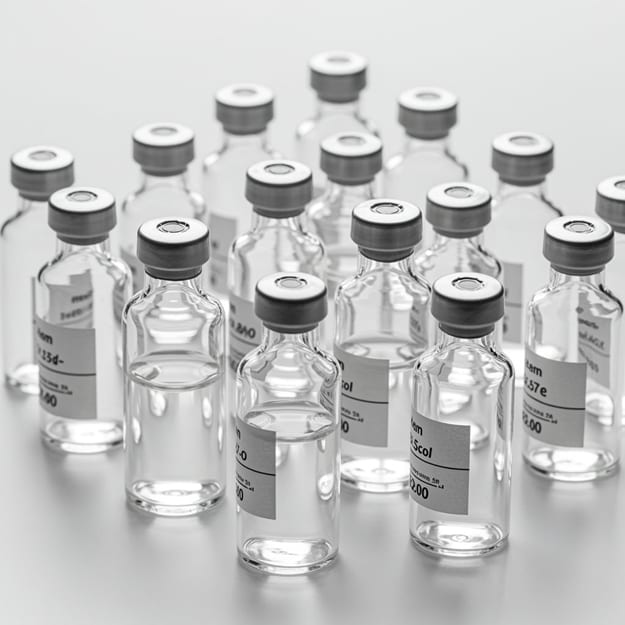
Image of vials

Early Detection of Glass Delamination: Why BMI is the Best Tool

,

Glass delamination has been a persistent challenge in the pharmaceutical industry, posing risks to drug stability and patient safety. The phenomenon occurs when shiny, thin glass layers (lamellae) detach from the interior surface of a glass container and float in the contact liquid. These subvisible glass particles (SVGPs) can cause serious health risks, including infusion-related complications….

Scientist holding medicine with cellular structure

Beyond Impurities: Why Today’s Biologics Need Smarter Particle Analysis

,

Particle analysis is not just a requirement in biopharmaceutical development—it’s a critical component that can make or break the safety and efficacy of your drug. When developing protein therapeutics, particles like aggregates over 1 µm must be defined and monitored, while in delivery systems, even the vehicles themselves—cells or viruses—qualify as particles. Ignoring or mismanaging…

img

Why Compliance with USP 789 is Essential for Pharmaceutical Manufacturers

,

Ensuring the safety and quality of pharmaceutical products is a critical responsibility for manufacturers. The United States Pharmacopeia (USP) plays a pivotal role in setting the standards that safeguard patient health and uphold product efficacy. Among these, USP 789 specifically addresses particulate matter in ophthalmic solutions, emphasizing the importance of maintaining stringent quality controls to…

image

Optimizations in High-Throughput Process Development: Enhancing Efficiency and Precision

,

High-throughput process development (HTPD) refers to the systematic approach of performing numerous experiments simultaneously to expedite the optimization and development of biopharmaceutical processes.  This innovative methodology significantly transforms and accelerates how scientists, clinicians, and engineers tackle the challenges associated with bioprocess development. By employing HTPD, organizations can accelerate process optimization, reduce operational costs, and improve…

Exosome quantification image

Advances in Exosome Quantification Techniques

,

The study of exosomes has gained substantial attention in recent years due to their significant potential in diagnostics, therapeutic applications, and as biomarkers for various diseases. Exosomes, which are extracellular vesicles (EVs) ranging from 30 to 150 nm when stable and in solution, are secreted by various cells and carry molecular signals like proteins, lipids, and RNAs to recipient cells….

Female scientist in lab with vial of blood

Gene and Cell Therapy Commercialization Advances, Challenges, and the Path to Success

,

Cell and gene therapy appear poised to revolutionize drug and vaccine discovery, with the potential to address diseases that have been untouchable, and treat others with more successful therapies. But the road to success has been rocky, and many obstacles remain for both gene and cell therapy commercialization.  A Look Back: The History of Gene Therapy  Therapeutic Targets  Gene…

FDA Center for Food Safety Applied Nutrition CFSAN 6540 8754867859

Complete Guide to Protein Identification and Characterization

,

Protein identification and characterization is one of the most important components of expressing and manufacturing recombinant proteins for biologics. It involves a wide variety of analytical tools and techniques because of the very complexity of proteins themselves, starting with 21 amino acids arranged in a nearly infinite number of ways, and then folded into three-dimensional structures.   Understanding…

Two scientists having a discussion in the lab next to cell imaging on monitor.

Exploring Cell Imaging Techniques – Types, Analysis, and Applications

,

Understanding cellular functions like migration, morphology, and physiological changes in healthy and diseased cells is important for grasping biological processes and using them to optimize the creation of biological therapeutics. Live-cell imaging provides an instant picture of a cell, tissue, or organism’s current state, as close to in vivo as possible, without introducing artifacts seen…

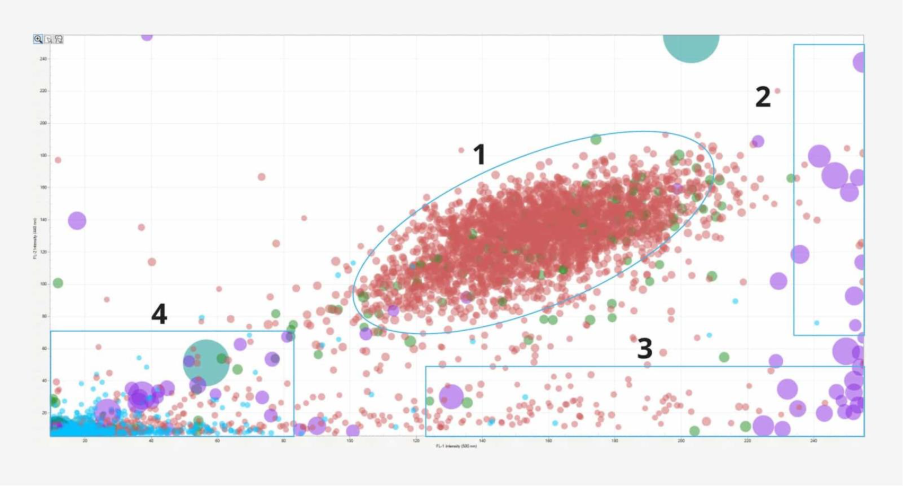
Identify cell doublets and triplets (1), cellular aggregates (2), protein aggregates (3), and plastic contaminants (4) in a cell therapeutic sample.

Decoding Cell Culture Contamination – An In-Depth Analysis

,

Cell culture contamination is the bane of every laboratory’s existence. They can be physical, chemical, or biological, ranging from minor problems to catastrophes.  Solutions to contamination range from observing good laboratory practices, maintaining high standards of cleanliness and care of culture media, effective cleanups, and using technologies like Aura+ System to detect and characterize the contaminants, and potentially the source of contamination and…

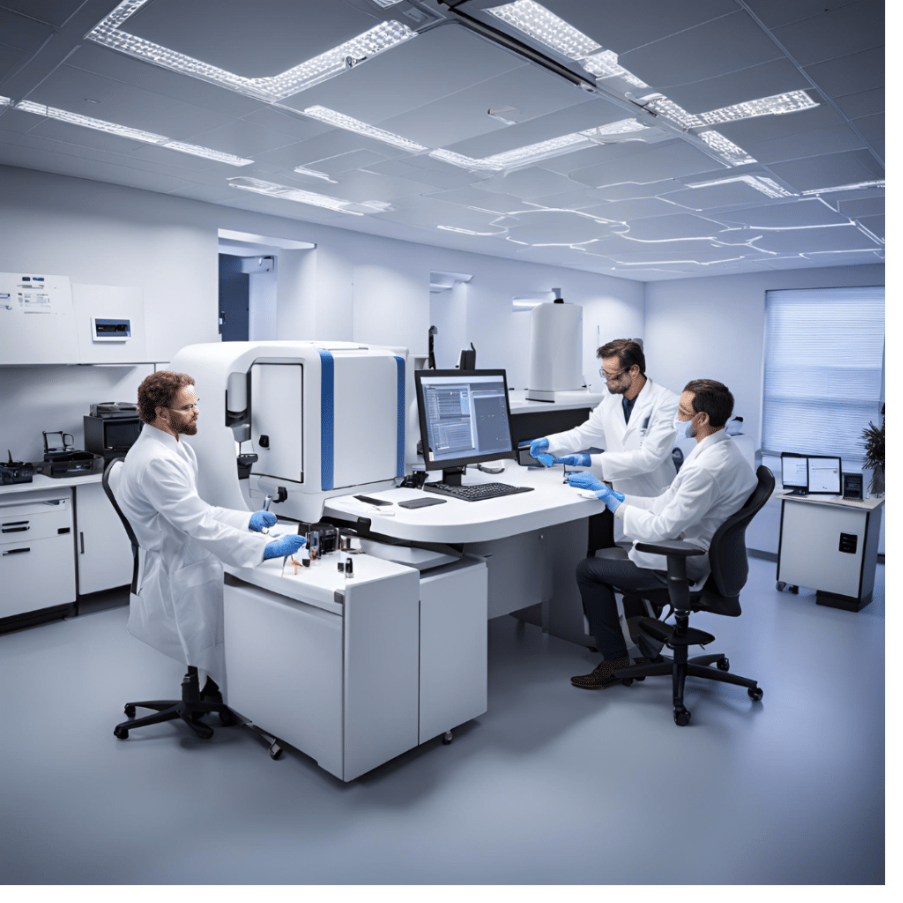
Three scientists in a lab discussing particle size distribution

Complete Guide to Particle Size Distribution and Analysis

,

Understanding your product’s particle size distribution can help you predict its manufacturability, efficacy, quality, bioavailability, and shelf life. Larger particles can decrease porosity, limiting the passage of the drug and potentially blocking it from reaching its target site.  Conversely, very small particles can add to the surface area of a drug, which can lead to unintended side effects. In short,…

Three scientists in a lab discussing particle size distribution

Particle Size Analyzer Prices 101

,

In general, particle size analyzer prices can range from $35,000 to $250,000. The more an analyzer can do, the higher its price. It is also important to determine other factors that will add value to the right particle analyzer, including technology that allows tests using small samples, and that allows for particle testing earlier on in the discovery…