
Catching Insulin Aggregation Before It Goes Rogue: DLS Instrument in Action
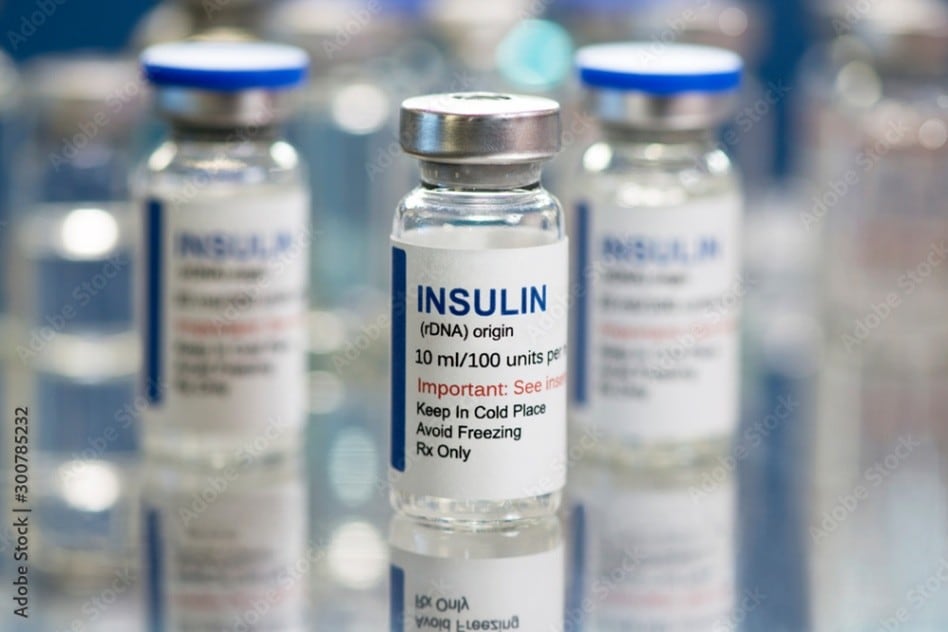
In hospital intensive care units, insulin is a critical therapeutic used to maintain tight glycemic control. While it is typically supplied at 100 units/mL, clinical protocols dilute it to 1 unit/mL for continuous infusion, commonly known as the insulin infusion protocol (IIP). At these low concentrations, ensuring stability becomes challenging, especially when aggregation or surface adsorption may occur in saline bags, containers, or IV tubing.
This raises important questions about insulin aggregation: does insulin, once diluted and left in a saline bag, start to clump? And if it does, would anyone be able to detect it?
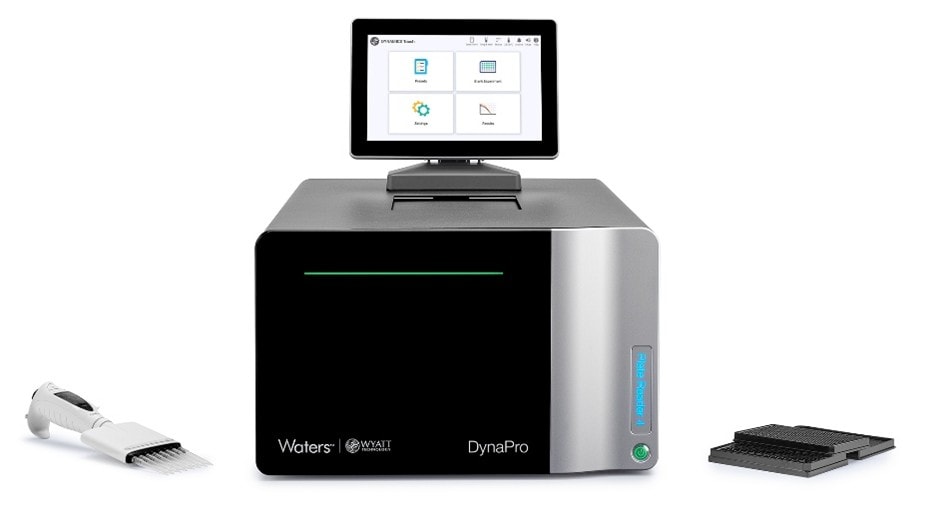
A study led by Professor Luís Maurício Trambaioli R. Lima at Universidade Federal do Rio de Janeiro addressed this using dynamic light scattering (DLS), a technique known for its exceptional sensitivity to early-stage aggregation. Using a DynaPro DLS Instrument, the team evaluated insulin stability under conditions mimicking real clinical workflows.
DLS measures fluctuations in scattered light caused by particles undergoing Brownian motion. The physics of light scattering means larger species scatter disproportionately more light, enabling highly sensitive aggregate detection. To establish detection limits, the researchers created a reference sample of aggregated insulin as a benchmark, then diluted it stepwise to determine how far the signal could still be detected.
“[Analyzed by DLS,] Aggregated insulin was detected close to 10,000-fold dilution.”
da Cruz e Silva et al. ACS Omega 2026, 11, 10, 16481–16488
The results were striking. Using a DynaPro DLS Instrument, aggregated insulin remained detectable down to 0.05 units/mL—nearly a 10,000-fold dilution, and just 5% of the standard clinical infusion concentration. This demonstrates that DLS can identify insulin aggregation at levels 20-fold below what is typically administered to patients.
With this sensitivity established, the team evaluated insulin diluted to 1 unit/mL in saline over extended periods. While clinical guidelines recommend replacing infusions every 24 hours, the study monitored samples for up to 72 hours. No aggregates were detected throughout this timeframe, indicating strong conformational stability under IIP conditions.
These findings are significant not just because insulin remained stable, but because the measurement technique is sensitive enough to detect problems far below clinically relevant levels.
By combining high sensitivity with a plate-based format, the DynaPro Plate Reader enables efficient, low-volume, and high-throughput monitoring of protein therapeutics.
For a deeper look at the experimental design, detection limits, and detailed insulin aggregation analysis, refer to the full study:
Physicochemical Stability of Insulin and Analogues in Saline Infusion: Screening for Amyloid and Amorphous High-Molecular-Weight Material, ACS Omega 2026, 11, 10, 16481–16488, https://doi.org/10.1021/acsomega.5c12466
Request additional information and learn more about the DynaPro Plate Reader.
Related posts

AI Maturity in GMP: Accelerating Your Digital Journey at Warp Speed, Safely
Most AI projects fail. The organizations that succeed are the ones that build governance before they build velocity. Written by Tracy Hibbs and Tony Sacchetti, Waters Corporation Artificial intelligence (AI) is poised to take routine work and shift it to fully automated workflows. Currently, 80% of AI projects fail.1 As with most paradigm-shifting technology, it…

Is Your Organization Ready for AI Inspection?
Inspecting AI is not new to regulators. The expectations are already well-established. The key question is whether your organization can reliably demonstrate them. Written by Tracy Hibbs and Tony Sacchetti, Waters Corporation Exploring artificial intelligence (AI) and machine learning (ML) in regulated laboratories governed by Current Good Manufacturing Practices (CGMP) may be new for your…

AI in GMP: Navigating Evolving Expectations for Regulated Labs
Why 2026 marks the shift from guidance to enforcement and what it means for your organization now. Written by Tracy Hibbs and Tony Sacchetti, Waters Corporation Regulators are already inspecting AI use, how prepared is your organization? For years, the pharmaceutical industry has anticipated regulatory clarity on the use of artificial intelligence (AI) and machine…
Popular Topics
ACQUITY QDa (17) bioanalysis (13) biologics (17) biopharma (50) biopharmaceutical (59) biotherapeutics (24) case study (22) chromatography (16) data integrity (28) HPLC (17) informatics (12) LC-MS (35) liquid chromatography (LC) (34) mass detection (16) mass spectrometry (MS) (68) method development (16) particle analysis (21) regulatory compliance (16)