biologics

  • FDA October 2025 Draft Guidance Sparks Industry Biosimilars Buzz 

    The FDA’s October 29, 2025 draft guidance has generated significant attention due to the implications for both developers and patients.  By allowing developers to bypass comparative efficacy studies (CES) when advanced analytics are successful substitutes, the draft guidance avoids one of the most expensive steps, estimated to account for 70% of the total biosimilar development…
  • Beyond Impurities: Why Today’s Biologics Need Smarter Particle Analysis

    Particle analysis is not just a requirement in biopharmaceutical development—it’s a critical component that can make or break the safety and efficacy of your drug. When developing protein therapeutics, particles like aggregates over 1 µm must be defined and monitored, while in delivery systems, even the vehicles themselves—cells or viruses—qualify as particles. Ignoring or mismanaging…

  • Complete Guide to Protein Identification and Characterization

    Protein identification and characterization is one of the most important components of expressing and manufacturing recombinant proteins for biologics. It involves a wide variety of analytical tools and techniques because of the very complexity of proteins themselves, starting with 21 amino acids arranged in a nearly infinite number of ways, and then folded into three-dimensional structures.   Understanding…

  • I Resolve to Get Better mAb Separations

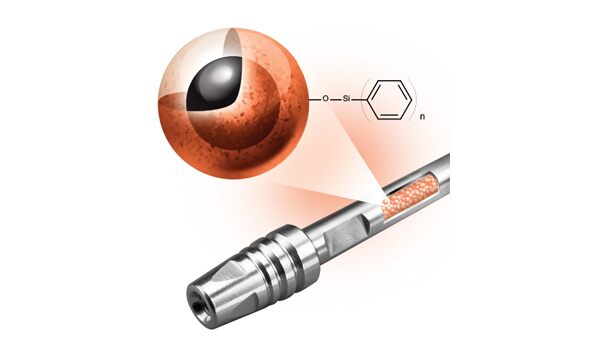
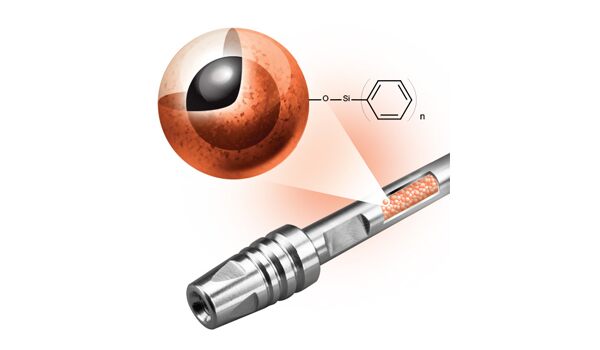
    We listened and learned how scientists separate mAbs and ADCs; then we designed a novel column for LC-MS bioseparations A critical step toward the prolific and successful use of monoclonal antibodies (mAb) as biotherapeutics occurred in 1988 when techniques were introduced to humanize these biomolecules, eliminating or reducing the deleterious patient side effects that previous…

  • Enhancing Analytical Productivity by Breaking Down Silos (Part 1)

    Analytical methods transfer. Data integrity. A changing and more stringent regulatory landscape. All this, and more, impacts productivity in upstream and downstream biopharmaceutical processes. How is Waters looking to help address development challenges for biologics and biosimilars?

  • How to improve analytical method transfers for biotherapeutics

    “Assuming continuous improvement is a worthy goal, there is every reason to improve validated chromatographic methods if you’re working with the right instrument technology,” says Eric Grumbach of Waters. See what that means for developing and transferring methods for biologic drugs.

  • Biopharma Data: Chaos or Harmony?

    If data can throw your biotherapeutic development program into chaos, it can also help move you forward. Let’s see how.