
Built on Control and Backed by Data: Why Vigilant Monitoring Matters in Pharma QC
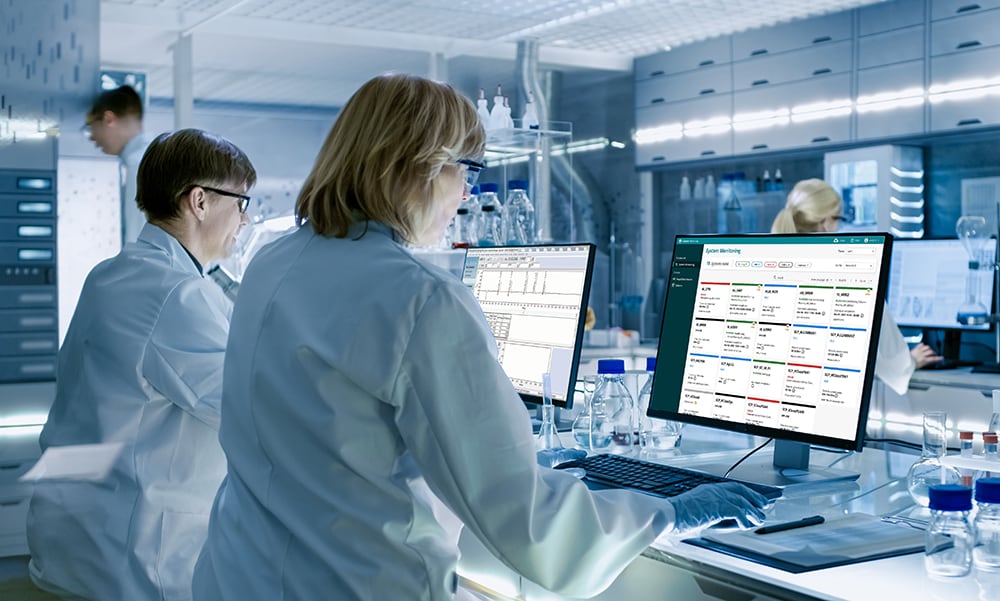
Stage 3 verification: Establishing and maintaining a state of control
In pharmaceutical quality control (QC), consistency should mean more than an analyst ending a shift relieved that the results were repeatable and there were no obvious failures. It should mean having enough confidence in the process, the controls, and the data to know that those results are genuinely reliable, explainable, and sustainable over time. This is where Stage 3 process verification becomes so important.1,2
Stage 3 is the ongoing phase of the analytical procedure lifecycle, where the laboratory verifies during routine use that the procedure remains in a state of control.1,2 It shifts the focus away from a purely reactive model, where laboratories respond only after an out-of-specification (OOS), out-of-trend (OOT), or investigation appears, and toward a more mature way of working—one built on vigilant monitoring, traceability, and evidence-based oversight.2,4
Why can validation alone no longer build confidence?
That shift matters because the regulatory expectation has changed. A validation package on its own is no longer enough to create confidence that a laboratory process remains fit for purpose. What matters now is whether the laboratory can show that its procedures continue to perform reliably in routine use, that sources of variability are being watched, and that decisions are supported by data rather than assumption.1,2
As regulatory expert Peter Baker (Live Oak Quality Assurance LLC) noted in a recent webinar on Managing Method Variability: A Foundation for Risk-Based Change, “We really have to change the way we define validation.”4 That is a strong message for QC teams, because it shifts the conversation from validation as a completed exercise to control as an ongoing expectation. The question is no longer only whether a method was validated once. It’s now whether the laboratory can show that the method remains under control throughout its entire lifetime of use.1,2
Vigilant monitoring: Detecting drift before it escalates
Ongoing verification matters because it gives QC teams a structured way to see developing signals earlier, understand whether procedure performance is starting to drift, and respond before variability becomes disruptive.2,4 In a different webinar, Managing Process Performance in Stage 3 Process Validation: Regulatory Expectations for Continued Process Verification, Peter stressed the importance of laboratories understanding where variability exists within methods and procedures, and the need for monitoring programs to be implemented before those issues turn into investigations.4 This is the real value of Stage 3 verification. Continuous control starts with knowing what to watch, and then watching it consistently.2,3
This broader view of monitoring is also why simply trending final results is not enough. Final results matter, of course, but on their own they do not always tell the laboratory where the problem is coming from. Peter made that point directly in the webinar when he explained that, if you are only trending the end result, “you don’t know whether the high or low result is due to the product or the method.”4
For QC laboratories, this is a critical distinction. When an investigation starts, time is already against you. If monitoring has been limited to final results only, the lab may not have enough visibility to determine whether the underlying signal points to the procedure, the sample, the instrument, or the process. Vigilant monitoring is what reduces that ambiguity.2,4
Traceability: Turning data into defensible evidence
This is where traceability becomes a practical requirement, not just a compliance concept. If the laboratory can see what happened, who did what, what changed, and how results were reviewed, then data becomes easier to trust and easier to defend.2,4 Such traceability is especially important in pharma QC, where data is used to support batch decisions, trend stability, justify investigations, and demonstrate control during inspection. A laboratory that can show its reviewers, auditors, and regulators a clear line from execution to review to conclusion is in a much stronger position than one that has to reconstruct the story after the fact. Consistent operations and compliant decision making both depend on that visibility.2,4
This also changes how confidence is built in QC. Confidence should not come from the absence of obvious failures alone. It should come from evidence that the process is behaving as expected and that any emerging signs of drift will be seen and understood early enough to act. Peter made that point clearly in the webinar when he said that “accuracy and completeness are the two factors that FDA is really looking for.”4
For QC laboratories, that is the heart of the issue. Audit trails, review practices, process knowledge, trend analysis, and procedural controls matter because they support those two outcomes.2,4 Once Stage 3 verification is viewed through that lens, its purpose becomes much clearer. It is not about creating more review for the sake of it. It is about maintaining confidence that the system remains in control and that the data can support critical product quality decisions.2,3
From audit readiness to operational advantage
This is where Stage 3 verification moves beyond simple compliance and becomes a real operational advantage. A laboratory that monitors the right indicators is better able to detect drift early, identify repeat issues before they escalate, and distinguish isolated noise from a genuine performance signal.2,3 That makes investigations more focused, root cause work more effective, and day-to-day operations more resilient. It also reduces the amount of firefighting that so often pulls QC teams away from productive work. Continuous control is not about adding more oversight for the sake of it; it’s about making sure the laboratory can stay in a state of control with fewer surprises and fewer decisions based on incomplete information. Continuous control means continuous confidence.2,4
For pharma QC, that kind of confidence matters at every level: analysts need confidence that procedures are behaving as expected, supervisors need confidence that trending and review processes will highlight emerging issues in time, and quality leaders need confidence that the laboratory can explain its performance clearly and defend its decisions during inspection. That’s what a mature quality system looks like in practice. It is controlled, confident, and compliant, not because it says so, but because the evidence is there in the data, the review process, and the operational discipline that supports them.2,4 The next step is making that evidence easier to generate, review, and defend consistently—day after day, method after method.
This is where Waters can help, enabling laboratories to generate, review, and defend that evidence through integrated systems, reproducible chromatographic technologies, traceable workflows, data intelligence tools, and expert services. The Waters approach combines purposefully designed instrumentation, scalable chemistries, informatics, and professional support to strengthen control from method design through routine monitoring.5
Empower Software supports audit‑ready operations by creating traceable records through audit trails and compliance‑enabled workflows, and Empower Subscriptions can make it easier to stay current with updates and related cloud‑based applications, reducing upgrade burden while maintaining compatibility and security as requirements evolve. In parallel, Waters Data Intelligence Software is designed to trend key measures, visualize risk, and support audit-readiness through data‑driven oversight.7
Waters Professional Services, Software Compliance Services, Instrument Qualification Services, and Empower Software‑based system services can then help laboratories deploy, qualify, validate, and maintain these approaches to support consistent operations and inspection readiness across the lifecycle.5
The message from regulators is clear. In modern pharma QC, confidence doesn’t come from a validation report alone. It comes from continuous evidence that the operation remains in control.1,2 Stage 3 process verification is what helps laboratories create that evidence. It allows them to monitor what matters, reduce ambiguity, strengthen traceability, and build decisions on data rather than assumption.2-4
That’s the foundation of consistent operations. It’s also the basis for a laboratory that is ready, every day, to show that its processes are controlled, its data is trustworthy, and its decisions can stand up to scrutiny. Built on control and backed by data.2,4
Special thanks to Peter Baker, President, Live Oak Quality Assurance LLC, for generously sharing the regulatory insights and practical perspectives from the webinar series that informed this article.
To hear Peter Baker’s perspectives on Regulatory Expectations for Continued Process Verification in full, watch the webinar.
References
1. International Council for Harmonisation. (2023). ICH harmonised guideline Q14: Analytical procedure development. Adopted 1 November 2023.
2. United States Pharmacopeia. (2021). <1220> Analytical Procedure Life Cycle. USP–NF. Rockville, MD: United States Pharmacopeial Convention.
3. International Council for Harmonisation. (2023). ICH harmonised guideline Q9(R1): Quality risk management. Adopted 18 January 2023.
4. Baker, P. (2026). Webinar Managing Process Performance in Stage 3 Process Validation: Regulatory Expectations for Continued Process Verification.
Related posts
AI Maturity in GMP: Accelerating Your Digital Journey at Warp Speed, Safely
Most AI projects fail. The organizations that succeed are the ones that build governance before they build velocity. Written by Tracy Hibbs and Tony Sacchetti, Waters Corporation Artificial intelligence (AI) is poised to take routine work and shift it to fully automated workflows. Currently, 80% of AI projects fail.1 As with most paradigm-shifting technology, it…

Is Your Organization Ready for AI Inspection?
Inspecting AI is not new to regulators. The expectations are already well-established. The key question is whether your organization can reliably demonstrate them. Written by Tracy Hibbs and Tony Sacchetti, Waters Corporation Exploring artificial intelligence (AI) and machine learning (ML) in regulated laboratories governed by Current Good Manufacturing Practices (CGMP) may be new for your…

AI in GMP: Navigating Evolving Expectations for Regulated Labs
Why 2026 marks the shift from guidance to enforcement and what it means for your organization now. Written by Tracy Hibbs and Tony Sacchetti, Waters Corporation Regulators are already inspecting AI use, how prepared is your organization? For years, the pharmaceutical industry has anticipated regulatory clarity on the use of artificial intelligence (AI) and machine…
Popular Topics
ACQUITY QDa (17) bioanalysis (14) biologics (17) biopharma (50) biopharmaceutical (60) biotherapeutics (24) case study (22) chromatography (16) data integrity (28) HPLC (17) informatics (12) LC-MS (36) liquid chromatography (LC) (35) mass detection (17) mass spectrometry (MS) (68) method development (16) particle analysis (21) regulatory compliance (16)