
Unlocking Faster, More Confident Antibody Analytics with Modern Protein A Affinity Chromatography
Biologics developers today face unprecedented pressure: tighter timelines, increasingly complex antibody formats, and a growing need for real-time process understanding. Yet many analytical workflows still rely on methods that can’t deliver the speed, sensitivity, or depth required for modern bioprocessing.
That’s where advances in Protein A (ProA) affinity chromatography are making a meaningful difference, reshaping how teams measure titer, monitor cultures, and assess product quality throughout development.
How affinity chromatography and Protein A work
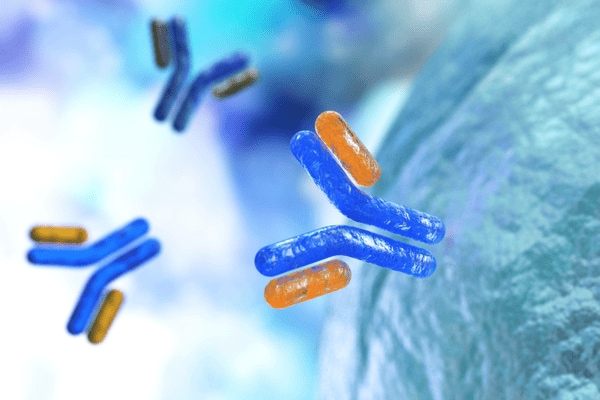
Affinity chromatography leverages highly specific biological interactions to isolate a target molecule from a complex mixture. In the case of monoclonal antibodies, Protein A, a bacterial protein, binds strongly to the Fc region of many IgG subclasses.
The workflow is simple and powerful:
- Antibodies bind to immobilized Protein A
- Impurities wash through
- Bound antibodies elute in a concentrated, measurable form
This selectivity has made Protein A the backbone of antibody analytics for decades, widely used for titer measurement, purification, variant analysis, and bioprocess monitoring.
Where modern Protein A affinity chromatography delivers real impact
1. Earlier, more sensitive titer measurement
One of the biggest challenges in upstream development is waiting for cultures to reach concentrations detectable by traditional assays. Newer Protein A workflows allow teams to measure titer from microbioreactors much earlier in cell culture (even as early as day 1), giving them faster visibility into growth trends, clone performance, and culture stability.
This earlier insight helps teams:
- Make informed selections sooner
- Identify issues before they affect yield
- Reduce delays and unnecessary repeat experiments
2. Lower carryover for more trustworthy titer results
Carryover, remnants of mAbs or impurities left behind after elution, can undermine result reliability and contaminate follow-up injections. Updated Protein A column designs now significantly reduce this issue.
Key advantages:
- ~65% lower carryover vs. a comparable alternative, meaning cleaner injection-to-injection performance
- More accurate, reproducible titer data for sequential samples
- Lower risk of cross-contamination during column reuse, protecting downstream analyses
3. Integrated titer and aggregate analysis through 2D ProA–SEC
Traditional workflows require separate assays for titer and aggregate/size-variant analysis. Modern two-dimensional Protein A–SEC methods bring these measurements together, providing both readouts in a single run.
These integrated workflows offer:
- Titer and aggregate data from one injection
- High throughput without adding complexity
- Optimization of speed or resolution depending on your needs
Options range from trap-and-elute formats for speed and high resolution to direct-connect approaches designed for simplicity. Both reduce hands-on work and streamline data collection.
4. Faster, deeper structural insight with ProA-MS
Teams increasingly need structural understanding beyond just titer. Rapid Protein A elution combined with native high-resolution MS now enables intact mass analysis of mAb and msAb variants directly from cell culture media in less than five minutes.
This approach reveals:
- Low-abundance variants
- Oxidation states
- Heavy chain pairing differences
- Other structural attributes normally require additional purification
The ability to pair titer and structural insight so quickly helps scientists make smarter decisions earlier in development.
5. Stronger support for upstream and downstream monitoring
Bioprocessing teams need analytics that are fast, stable, and compatible with a wide range of LC conditions. Updated Protein A methods maintain reproducible performance under high-pressure operation and across long study timelines, making them well-suited for:
- Real‑time titer trending on both HPLC and UPLC systems
- Early feedback for process optimization
- Routine monitoring across multiple batches
The consistency they provide is essential for robust process development and PAT initiatives.
6. More consistent performance through routine CIP
Media components inevitably accumulate Protein A resin over repeated injections, affecting backpressure, peak shape, and recovery. Routine clean-in-place (CIP) keeps columns stable and prevents buildup. In controlled testing, Protein A columns remained effective for 1500+ injections when CIP was applied regularly.
Benefits include:
- Sustained performance over long campaigns
- Reduced fouling and drift
- Longer column lifetime
- More consistent titer data
The takeaway: Protein A is evolving alongside modern bioprocessing.
Modern Protein A affinity chromatography has become a multi‑functional analytical engine that helps teams achieve:
- Earlier visibility into process performance
- Cleaner, lower-carryover workflows
- Integrated multi-attribute analysis
- Faster structural insight
- Longer lasting, more stable columns
As biologics pipelines accelerate and diversify, these capabilities are no longer ‘nice to have;’ they’re essential for keeping development on track, minimizing risk, and improving overall process understanding.
Learn more about Waters BioResolve Protein A Affinity Columns featuring MaxPeak Premier Technology.
Related posts

Why More Laboratories are Choosing Empower Subscription Bundles
For more than three decades, Waters Empower Chromatography Data System (CDS) has been the trusted foundation for chromatography data management. Empower Software enables laboratories to address regulatory requirements, deliver consistent results, and scale operations. But the pace of change in today’s scientific world is unprecedented- unlike anything labs have experienced before. Global supply chains, the…
Enzymatic Digestion: Accelerating Bioseparations with Novel Enzymes
The Role of Enzymes in LC-MS Analysis of Modern Biotherapeutics Enzymes are nature’s catalysts, enabling precise and efficient biochemical transformations. In analytical workflows, enzymatic digestion is a cornerstone technique for breaking down complex biomolecules into smaller, more manageable fragments. This process is critical for applications such as peptide mapping in protein characterization and oligonucleotide mapping…
FDA October 2025 Draft Guidance Sparks Industry Biosimilars Buzz
The FDA’s October 29, 2025 draft guidance has generated significant attention due to the implications for both developers and patients. By allowing developers to bypass comparative efficacy studies (CES) when advanced analytics are successful substitutes, the draft guidance avoids one of the most expensive steps, estimated to account for 70% of the total biosimilar development…
Popular Topics
ACQUITY QDa (17) bioanalysis (12) biologics (17) biopharma (49) biopharmaceutical (58) biotherapeutics (21) case study (18) chromatography (14) compliance (12) data integrity (23) food analysis (12) HPLC (15) LC-MS (26) liquid chromatography (LC) (24) mass detection (16) mass spectrometry (MS) (58) method development (13) particle analysis (19)