liquid chromatography (LC)

  • Chords and Chemistry and the Benefits of Choosing Wisely

    “A true measure of excellence for Waters is in orchestrating consistent instrument and chemistry optimization across applications, methods, and workflows.” I was on a job interview – more specifically, for my first position at Waters – where I was asked a compelling question. The question had to do with the consideration that Waters was a…


  • Bring efficiency back to your lab: How aging technology hinders ideal performance

    In this series, we review considerations for keeping your lab at the forefront of science. As we adjust to living and working in a pandemic and anticipate future global and geopolitical events, Waters remains dedicated to supporting your business and unlocking the potential of your science. Our holistic separations solutions and expert support help you…

  • Choosing the Correct Column for Chromatographic Selectivity

    When developing a method for the routine multiresidue analysis of pesticides in food commodities there are several factors that need to be considered when selecting which liquid chromatography (LC) column to use. The requirements include: Good retention for a range of physiochemical properties (polar, non-polar, base, acid). Moderate to high resolution (peak capacity). Sample extracts…

  • Change Up Your Routine (Analysis)

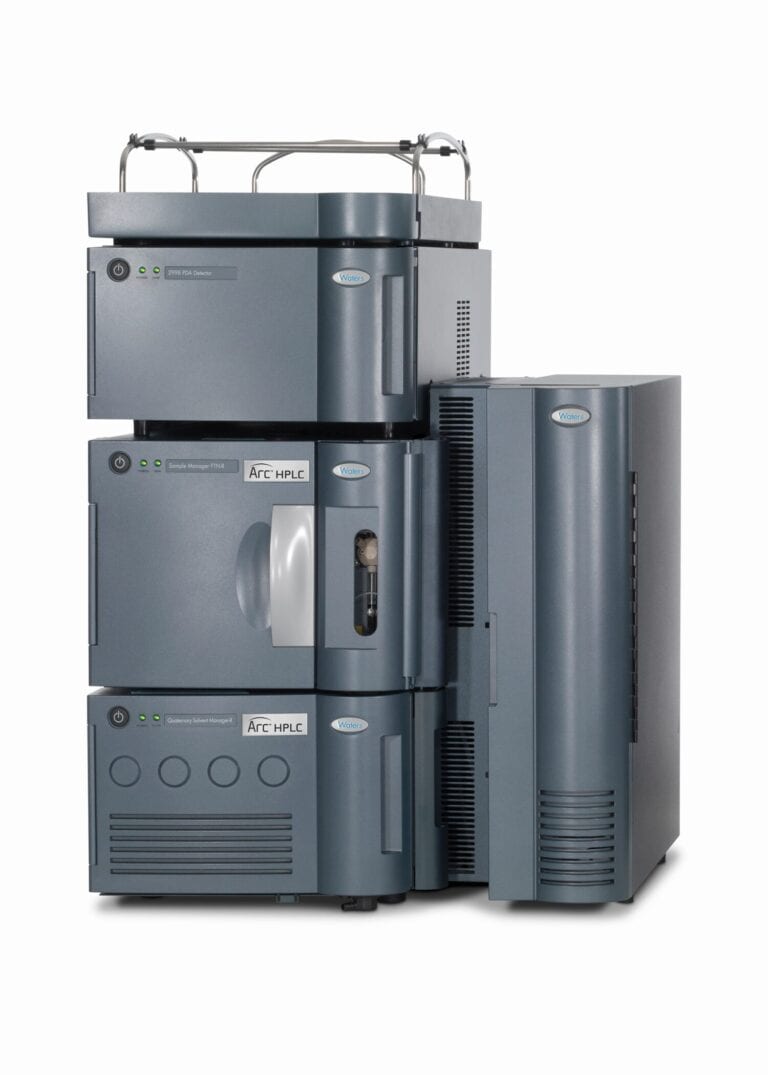
    Enhancing performance, mitigating risk, and improving efficiency Today, Waters introduced the Arc HPLC, a modern liquid chromatography system that replicates established test methods while delivering improved performance. HPLC has been a cornerstone of routine analytical testing for decades. It has proven to be particularly important for quality control and manufacturing support laboratories in the pharmaceutical…

  • Mobile Phase Additives for Peptide Characterization

    The characterization of peptides and proteins can be challenging due to issues such as adsorption, varying hydrophobicities, and specificity to name just a few. When analyzing peptides by Liquid Chromatography (LC) and Mass Spectrometry (MS), it’s beneficial to introduce mobile phase additives in order to facilitate ionization and enhance the analyte signal. Additionally, these additives…

  • ACQUITY UPLC – 15 Years On and Still Going Strong

    The 30th James L. Waters Annual Symposium  will take place on Monday, March 18 in Philadelphia as part of Pittcon 2019. The theme of this year’s Symposium focuses on early research efforts required to develop Ultra High Pressure Liquid Chromatography (UHPLC) and the impact that the adoption of this technology had on the analytical chemistry…

  • Infographic: What’s the Best Column for Polar Compound Retention?

    Retaining and separating highly polar, water-soluble organic compounds has been a challenge for separations scientists who prefer reversed-phase chromatography as their technique of choice. See how Waters has addressed these analytical challenges with our T3 columns.

  • The Waters ACQUITY Arc System Receives 2016 Frost & Sullivan New Product Innovation Award

    Bridging the gap between HPLC and UPLC performance, the ACQUITY Arc System is a favorite of QC laboratories that test small and large molecule pharmaceuticals. We’re excited to announce today (Tuesday, Oct. 5) that our ACQUITY® Arc™ System has just received a 2016 New Product Innovation Award from market research and growth consulting firm Frost…

  • Can Sports Cars Increase Testosterone?

    According to published reports by Hiscox UK in 2008,  just listening to the sound of a sports car increased salivary testosterone levels in male and female participants. Another study, by Gad Saad et al, measured a testosterone increase in men who were given the opportunity to drive a $150,000 Porsche 911 Carrera Cabriolet for an…