Ultra-Pure Proof with Mass Detection
At Reach Separations, they’re putting robust detection on the front lines of method development and mass confirmation.

Our expertise drives innovation, development, and application of informatics and software that continue to enable leading pharmaceutical, environmental, food & beverage and chemical materials organizations to accelerate decision-making, improve laboratory effectiveness, and get products to market faster.
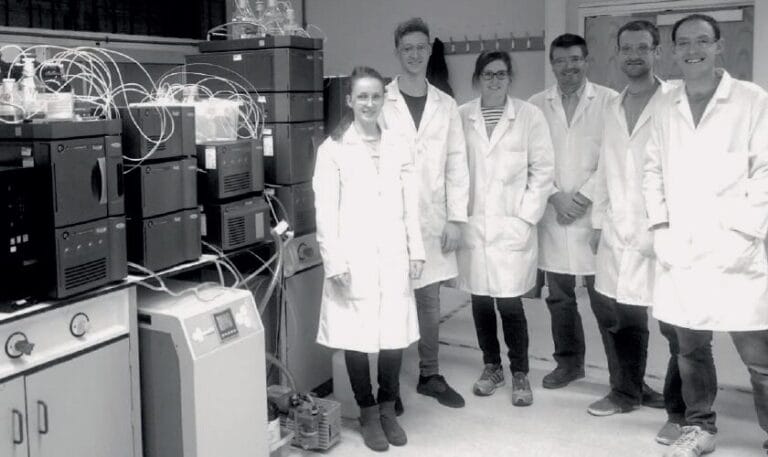
At Reach Separations, they’re putting robust detection on the front lines of method development and mass confirmation.

Lion, one of the largest food and beverage companies in Australia and New Zealand, wanted to monitor fermentation profiles to completion as the company introduced voluntary nutritional panels across its beer portfolio. See what they gained by changing from electrochemical to mass detection.
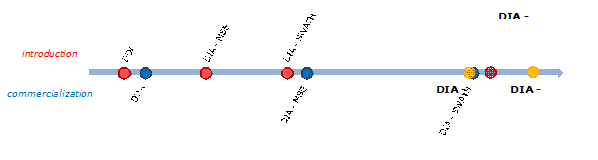
Targeted LC-MS based assays are increasingly applied in the post-discovery Omics area with an emphasis on validation, the first of many phases in translational research; and in studies that are aimed at gaining the understanding of biological systems in terms of drug development and treatment. Understanding the context of analytical results is driving current research,…

Recently, Ade Kujore (Cecil Instruments), Tracie Brombos (GenTech Scientific), and I were asked by Angelo De Palma, a well-respected writer for Lab Manager magazine, to contribute to an article about maintaining and caring for your laboratory instruments. Here are my tips and best practices for column and HPLC, UHLPC, and UPLC system maintenance. Maintaining your…
Bridging the gap between HPLC and UPLC performance, the ACQUITY Arc System is a favorite of QC laboratories that test small and large molecule pharmaceuticals. We’re excited to announce today (Tuesday, Oct. 5) that our ACQUITY® Arc™ System has just received a 2016 New Product Innovation Award from market research and growth consulting firm Frost…
Microflow or nanoflow chromatography has been used mostly in the academic and fundamental research environment in the past for its various advantages over analytical liquid chromatography, but rarely in the industrial settings. This is most likely because many of us believe it is a pain-in-the-neck technique to perform! But is this a reality or just…
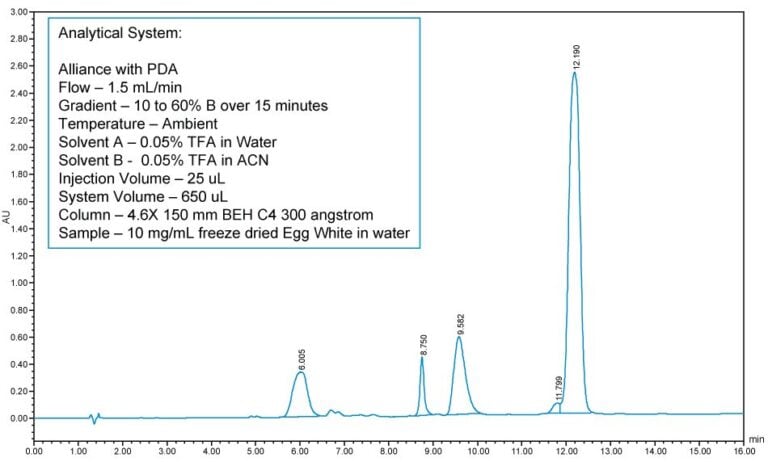
Andrew Aubin (Andy): Manager, Purification / SFx Systems Marketing Laboratory & Blogger VOC: Voice of the Chemist VOC: “I tried to scale up my analytical HPLC method to prep and it didn’t work.” Andy: This is one of the most common things we hear from chemists wanting to do preparative chromatography. We also hear the following…
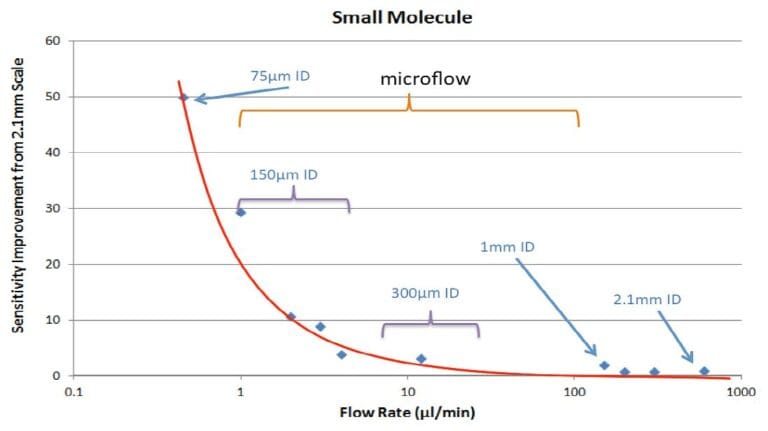
What are the differences between micro-scale and conventional LC? Microflow (a.k.a. microscale) LC has been widely applied to proteomic research for years. Recently, as microflow LC-MS systems continue to evolve, more and more laboratories in various fields are weighing the implications of applying this small-is-beautiful technology. In this and my next two blog posts, I will discuss…

… A successful ASMS 2016! ASMS is definitely one of the highlights of our year and here at Waters we are only just recovering from this year’s event and, can you believe it, starting to think about next year already. It’s funny because whenever I travel to America my children are always slightly suspicious that…
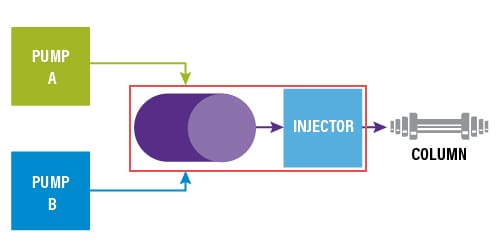
Welcome to the next installment in my series on binary vs. quaternary pumps for liquid chromatography! In my previous post, I discussed how gradients are created as well as the importance of having accuracy and precision in your gradient. Today I am going to talk about what happens after all that — specifically, mixing. After chromatographic…
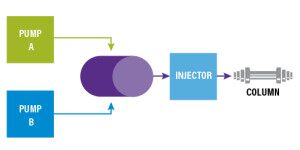
How is a Gradient Created? Any liquid chromatograph (LC) is an amalgamation of a certain set of components that delivers to the scientist a monograph of the sample they are analyzing. Traditionally, an LC system consists of a pump, an injector, a column heater, a detector, and even more commonly these days a mass spectrometer…

For decades, food security was viewed exclusively through the lens of shortages. In the 1960s, when daily food availability in emerging countries was just 1,850 kcal per person as many as half of the world’s population was malnourished. It’s easy to understand our narrow focus on increasing food production. The challenges we face have shifted….