Pharmaceutical

We bring high-value technologies designed to solve critical, analytical problems. We enable profound discoveries, optimize lab operations and ensure regulatory compliance. We help customers turn global industry challenges into the medicines that offer hope.

  • Gene and Cell Therapy Commercialization Advances, Challenges, and the Path to Success

    Cell and gene therapy appear poised to revolutionize drug and vaccine discovery, with the potential to address diseases that have been untouchable, and treat others with more successful therapies. But the road to success has been rocky, and many obstacles remain for both gene and cell therapy commercialization.  A Look Back: The History of Gene Therapy  Therapeutic Targets  Gene…

  • Increasing Lab Efficiency with Amazon Web Services to Enable Real-Time Remote Access to Lab Information

    The collaboration between Waters and AWS has enhanced the waters_connect System Monitoring tool, revolutionizing laboratory productivity. This cloud-based platform provides secure, compliant access to chromatography lab information, allowing users to coordinate work, address system errors, and make informed decisions from anywhere, anytime.

  • Complete Guide to Protein Identification and Characterization

    Protein identification and characterization is one of the most important components of expressing and manufacturing recombinant proteins for biologics. It involves a wide variety of analytical tools and techniques because of the very complexity of proteins themselves, starting with 21 amino acids arranged in a nearly infinite number of ways, and then folded into three-dimensional structures.   Understanding…

  • Exploring Cell Imaging Techniques – Types, Analysis, and Applications

    Understanding cellular functions like migration, morphology, and physiological changes in healthy and diseased cells is important for grasping biological processes and using them to optimize the creation of biological therapeutics. Live-cell imaging provides an instant picture of a cell, tissue, or organism’s current state, as close to in vivo as possible, without introducing artifacts seen…

  • Decoding Cell Culture Contamination – An In-Depth Analysis

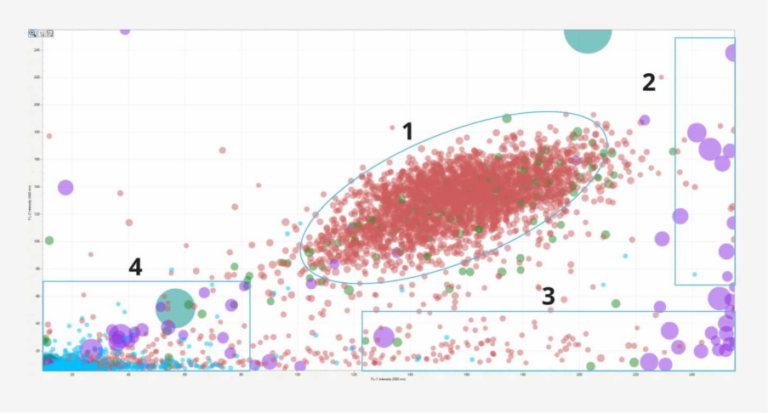
    Cell culture contamination is the bane of every laboratory’s existence. They can be physical, chemical, or biological, ranging from minor problems to catastrophes.  Solutions to contamination range from observing good laboratory practices, maintaining high standards of cleanliness and care of culture media, effective cleanups, and using technologies like Aura+ System to detect and characterize the contaminants, and potentially the source of contamination and…

  • Embracing Sustainability in Analytical Science

    The integration of sustainability practices in analytical laboratories is not just a trend but a crucial shift towards a more responsible future. The ACQUITY QDa II Mass Detector shows how Waters enhances lab capabilities while also promoting sustainability.

  • Complete Guide to Particle Size Distribution and Analysis

    Understanding your product’s particle size distribution can help you predict its manufacturability, efficacy, quality, bioavailability, and shelf life. Larger particles can decrease porosity, limiting the passage of the drug and potentially blocking it from reaching its target site.  Conversely, very small particles can add to the surface area of a drug, which can lead to unintended side effects. In short,…

  • Particle Size Analyzer Prices 101

    In general, particle size analyzer prices can range from $35,000 to $250,000. The more an analyzer can do, the higher its price. It is also important to determine other factors that will add value to the right particle analyzer, including technology that allows tests using small samples, and that allows for particle testing earlier on in the discovery…

  • USP<787>: Tailored Guidance for Better Biologics

    Understanding US<787> and its Impact on Pharmaceutical Quality with Tailored Guidance for Biologics In the world of pharmaceuticals, quality is paramount. Ensuring the safety and efficacy of medications is not only a regulatory requirement but also a moral obligation to patients. To achieve this, regulatory bodies like the United States Pharmacopeia (USP) lay down guidelines…

  • Unseen Dangers: The Impact of Undetected Particles in Your Cell Therapies

    In recent years, cell therapy has emerged as a transformative treatment, providing promising cures and even more potential for treating various cancers and other diseases. However, amidst the optimism, a significant concern looms—the presence of foreign particles in cell therapy. These tiny intruders, often difficult to detect, can pose serious threats to the safety of…

  • Biophysical Characterization Methodologies

    Biophysical characterization of proteins is a necessary step in the production and development of protein therapeutics, as it allows for a comprehensive understanding of a protein’s function and structure. By analyzing and defining the higher-order structure of potential drug targets, this process serves to identify and mitigate issues that could significantly impact the efficacy and safety of a product, such as…

  • The Importance of AAV Characterization in Ensuring Safe Gene Therapy Development

    Adeno-associated virus (AAV) capsids have emerged as frontrunners for in vivo gene delivery thanks to their unique safety profile and ability to provide long-term gene expression. With multiple serotypes of recombinant AAV vectors being utilized across various gene therapy programs, the field is witnessing unprecedented growth. As of April 2020, there are 244 active worldwide…