Biopharmaceutical

We help ensure the medicines people take every day are reliably safe and effective, from the common aspirin to the most complex biotherapy. Tests performed using our liquid chromatography-mass spectrometry (LC-MS) instruments ensure the efficacy and safety of these complex, protein-based drugs well before they reach the patient.

  • Exploring Cell Imaging Techniques – Types, Analysis, and Applications

    Understanding cellular functions like migration, morphology, and physiological changes in healthy and diseased cells is important for grasping biological processes and using them to optimize the creation of biological therapeutics. Live-cell imaging provides an instant picture of a cell, tissue, or organism’s current state, as close to in vivo as possible, without introducing artifacts seen…

  • Decoding Cell Culture Contamination – An In-Depth Analysis

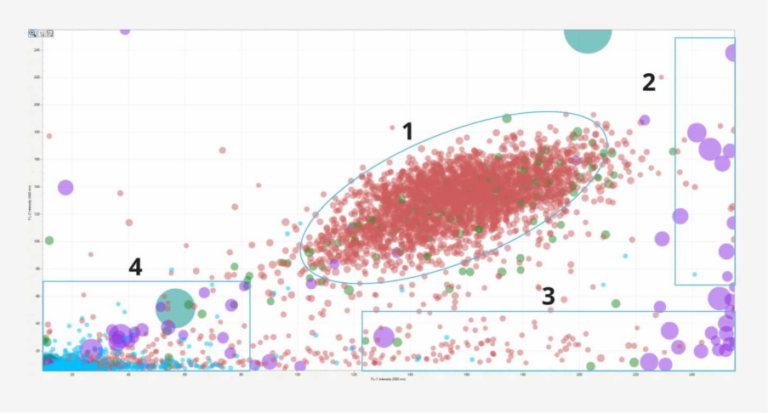
    Cell culture contamination is the bane of every laboratory’s existence. They can be physical, chemical, or biological, ranging from minor problems to catastrophes.  Solutions to contamination range from observing good laboratory practices, maintaining high standards of cleanliness and care of culture media, effective cleanups, and using technologies like Aura+ System to detect and characterize the contaminants, and potentially the source of contamination and…

  • Complete Guide to Particle Size Distribution and Analysis

    Understanding your product’s particle size distribution can help you predict its manufacturability, efficacy, quality, bioavailability, and shelf life. Larger particles can decrease porosity, limiting the passage of the drug and potentially blocking it from reaching its target site.  Conversely, very small particles can add to the surface area of a drug, which can lead to unintended side effects. In short,…

  • Particle Size Analyzer Prices 101

    In general, particle size analyzer prices can range from $35,000 to $250,000. The more an analyzer can do, the higher its price. It is also important to determine other factors that will add value to the right particle analyzer, including technology that allows tests using small samples, and that allows for particle testing earlier on in the discovery…

  • USP<787>: Tailored Guidance for Better Biologics

    Understanding US<787> and its Impact on Pharmaceutical Quality with Tailored Guidance for Biologics In the world of pharmaceuticals, quality is paramount. Ensuring the safety and efficacy of medications is not only a regulatory requirement but also a moral obligation to patients. To achieve this, regulatory bodies like the United States Pharmacopeia (USP) lay down guidelines…

  • Unseen Dangers: The Impact of Undetected Particles in Your Cell Therapies

    In recent years, cell therapy has emerged as a transformative treatment, providing promising cures and even more potential for treating various cancers and other diseases. However, amidst the optimism, a significant concern looms—the presence of foreign particles in cell therapy. These tiny intruders, often difficult to detect, can pose serious threats to the safety of…

  • Biophysical Characterization Methodologies

    Biophysical characterization of proteins is a necessary step in the production and development of protein therapeutics, as it allows for a comprehensive understanding of a protein’s function and structure. By analyzing and defining the higher-order structure of potential drug targets, this process serves to identify and mitigate issues that could significantly impact the efficacy and safety of a product, such as…

  • The Importance of AAV Characterization in Ensuring Safe Gene Therapy Development

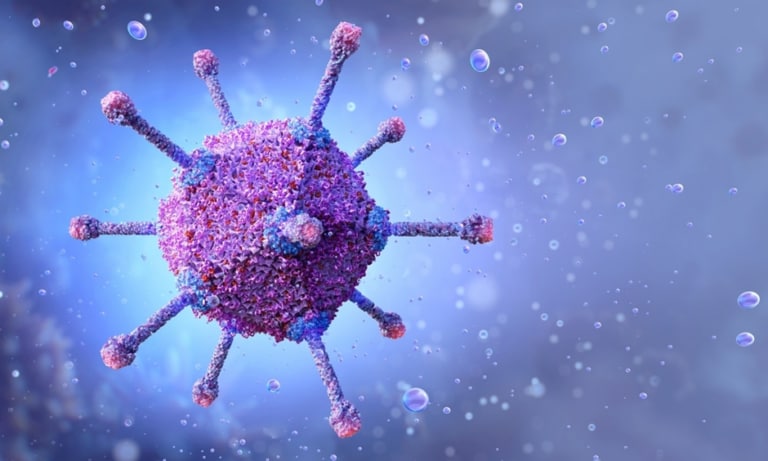
    Adeno-associated virus (AAV) capsids have emerged as frontrunners for in vivo gene delivery thanks to their unique safety profile and ability to provide long-term gene expression. With multiple serotypes of recombinant AAV vectors being utilized across various gene therapy programs, the field is witnessing unprecedented growth. As of April 2020, there are 244 active worldwide…

  • Why USP 788 Matters: Ensuring Patient Safety Through Particulate Matter Testing in Injections

    In the world of pharmaceuticals, strict regulations are crucial for protecting patients and ensuring product efficacy. One significant regulation is the United States Pharmacopeia Chapter 788 (USP 788), which provides guidelines for testing particulate matter in injections.  But why is this important? Particulate matter, often too small to see with the naked eye, can pose…

  • Is it Time to Re-Evaluate U.S. Pharmacopeia Standards? Exploring Y-site Pediatric Drug Administration Compatibility

    Navigating the complex landscape of pediatric healthcare, particularly when it involves administering intravenous (IV) medication to children, brings about a unique set of difficulties. The task becomes even more daunting when dealing with critically ill patients who frequently require extensive IV drugs to maintain homeostasis.  To put it into perspective, an infant in a neonatal intensive care unit might receive an…

  • Polysorbate 80: Exploring its Impact on IgG Stability

    As drug safety regulations intensify, manufacturers must ensure their formulations, like polysorbate 80, are free from visible particles and contain a limited number of subvisible particles larger than 10 µm (per FDA requirements). These particulates aren’t just due to process instability but also the degradation of formulation excipients. Mechanical stress during manufacturing can cause protein…

  • Get the Right Lipid Nanoparticle Formulation Ensuring Effective Drug Delivery

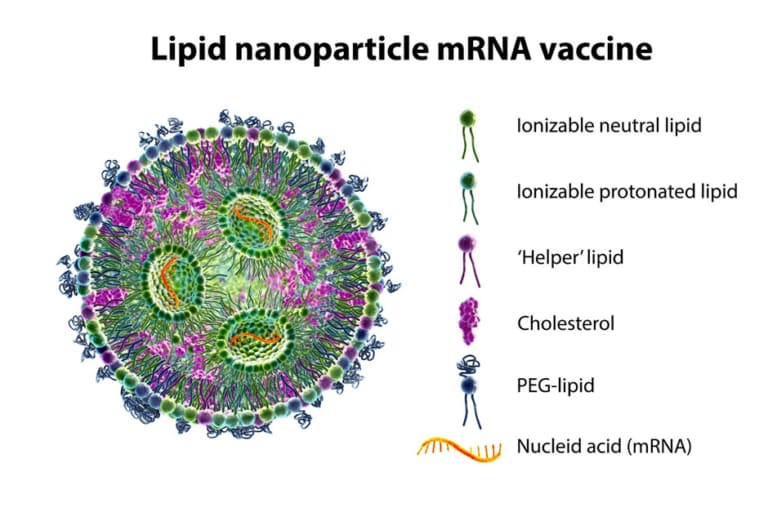
    In the fight against COVID-19, one technology has quietly transformed the way we combat this deadly virus—lipid nanoparticles (LNPs). These tiny vesicles serve as an ideal vehicle for genetic material, encapsulating and ferrying it directly into our cells.  They act as a shield for mRNA, protecting it from degradation in the body while ensuring its…