
Bringing the Future Into Focus with Waters’ Virtual Events
In the midst of the COVID-19 pandemic the power of technology has emerged center stage, keeping the industry connected at a time when many ordinary avenues of communication have been cut off over safety concerns. In order to drive forward the next generation of technological and research innovations, we understand how vital it is that industry pioneers are presented with opportunities to continue sharing their research and exchanging insights.
That’s why we set up the Waters Mass Spectrometry Virtual Event 2020. Spanning topics from technological innovations in automation and equipment to the latest research leveraging ion mobility and mass spectrometry, the events were designed to help scientists bring their visions of the future into reality. Read on to discover the fascinating insights that were shared over the course of these sessions!
Technological Innovations
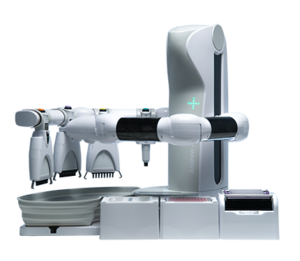 Exciting developments in mass spectrometry (MS) technology were an important focus of our virtual event series. Our Andrew Alliance event featured an interesting discussion on the possibilities created by the integration of GlycoWorks, a technology for glycan detection, with the automated Andrew+ pipetting robot. The innovation will enable researchers to obtain more rapid, robust and repeatable results through liquid chromatography-mass spectrometry (LC-MS), while simplifying a complex process. Utilizing the OneLab cloud-native software platform, the modern interface is designed to help combat increasingly cumbersome workflows within pharma and life science through automation.
The ability to design and execute protocols remotely and view their implementation using virtual platforms such as Zoom has been essential during the COVID-19 pandemic. A number of users have had to adapt their workflows ‘on the fly’ and the versatility of the Andrew+ workspace offers real benefits here, given the ease of adding new labware to OneLab and being able to switch in and out of different ontologies, such as shaking and heating/cooling. This is all facilitated within a very compact and flexible footprint, well suited to a biosafety hood.
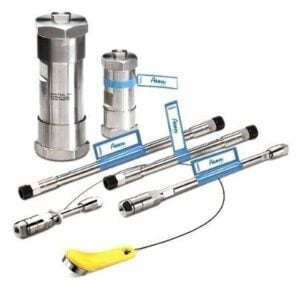 Solutions to challenges faced by chromatographers were further explored in our Chemistry Seminar. The difficulties inherent in the separation of polar acids using reversed phase (RP) HPLC are well established, with conventional RP columns offering poor retention of acidic analytes. To overcome this challenge, the creation of the RP/anion-exchange (AX) Atlantis PREMIER Column was described, which makes use of hybrid organic/inorganic particles and mixed-mode bonding, as well as new MaxPeakTM High Performance Surface column hardware to improve reproducibility and reduce analyte losses. By combining the power of the two technologies, researchers are presented with a solution to a complex challenge that has plagued many generations of scientists.
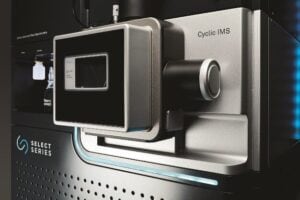 This theme of utilizing the latest technological advancements to solve long-standing challenges was also expanded on in our Advanced Mass Spectrometry Technology (AMST) seminar, which focused on the exciting possibilities combining Electron Capture Dissociation (ECD) in the SELECT SERIES Cyclic IMS. Featuring a cyclic path length, this instrument enables scalable, ultra-high resolution ion mobility-mass spectrometry (IMS-MS), giving researchers the ability to investigate molecular structure like never before. By merging the capabilities of the Cyclic IMS with ECD, the AMST Seminar delved into the potential for improved structural analysis of peptides, intact proteins and protein complexes. This has exciting implications for research focused on understanding disease mechanisms and uncovering new drug treatments, and highlights the importance of continuing to expand on the features of cutting-edge instrumentation.
Latest Research Utilizing Ion Mobility
Another key focus of our virtual event series was breakthroughs in ion mobility-mass spectrometry technology that are paving the way for new discoveries. Our Advanced Mass Spectrometry Technology (AMST) Symposium shed light on the biomedical research applications of the SELECT SERIES Cyclic IMS and SYNAPT XS, our latest high-resolution IMS-MS instruments. The talks given at the symposium underscored the value of combining advanced ion mobility separation with MS for elucidating complex data that contains insights into cellular processes and mechanisms. In addition, the power of MS imaging technology for spatially mapping disease biomarkers was also highlighted. Moving forward, discussions held at the event emphasized the value of the sensitivity and high-throughput of DESI imaging for clinical research and described how further development of chemical databases and software will help launch the technique into new application areas.
 Among the application areas that IMS-MS promises to drive forward are petroleomics and chemical manufacturing – topics that were explored in depth at our Chemical & Materials Symposium. Petroleum samples comprise highly complex mixtures that can often be difficult to accurately interpret and assign structures to. A talk held at the event highlighted how the latest Cyclic IMS instrument rose to the challenge in a study of petroleum mixtures, providing insights into its polluting aspects through its advanced separation capabilities. In addition, the application of IMS-MS for troubleshooting issues at chemical plants, such as solid formation, by providing improved structural elucidation was discussed. In future, it is anticipated that IMS-MS will increasingly help to develop, manufacture and characterize advanced materials.
Our Pharma Seminar, meanwhile, delved into the use of IMS-MS and collision cross section (CCS) values for analyzing structurally complex cyclic peptides containing natural and unnatural modifications when performing metabolite identification. The incorporation of these types of modifications is a common strategy to improve the efficacy and absorption, distribution, metabolism and excretion (ADME) profile of peptide therapeutics. Making use of Mass-MetaSite and WebMetabase software combined with IMS-MS, researchers were able to process the information-rich data and rapidly determine the metabolic fate of candidate compounds, helping to inform the design of drug candidates with improved pharmacokinetic properties.
Altogether, the Pharma Seminar shined a light on the value of fusing advanced software with high-resolution analytical technologies. As the trend for increasingly complex drug targets and drug molecules continues, this important insight can help scientists accelerate their drug discovery and development research to deliver effective therapeutic treatments.
Applications of Waters’ MS technology

MS research is a rapidly advancing field. That’s why we invited speakers to discuss exciting new applications of MS technology. At our Food and Environmental Symposium, presenters illustrated advances in analytical techniques, from sample preparation, ion sources, data processing and informatics that are helping to advance research involving complex data analysis and ensure the safety of our food and the environment. These improvements in technology combined with effective research facilitate the development of reliable methods to meet challenging global regulatory requirements.
At the Pharmaceutical Symposium, researchers discussed the use of high-resolution MS and tandem quadrupole (TQ) to accurately assess the efficacy of drug candidates and identify potentially carcinogenic impurities across the discovery, development and manufacturing pipeline. By correctly determining the potential success of drug candidates at an early stage, or verifying the absence of nitrosamine impurities in manufactured drugs, high resolution MS and TQ technology can save precious time and resources, enabling patients to obtain access to life-saving medicines more quickly.
Our Biopharma Symposium featured a series of talks covering the application of collision-induced unfolding (CIU) for enabling next-generation stability measurements, as well as the use of LC-MS for characterizing recombinant adeno-associated virus (rAAV) capsid proteins. Further highlights from the event include an intriguing discussion of how best to leverage MS in QC-release laboratories, and a description of a robust LC-MS streamlined workflow for peptide attribute monitoring and new peak detection of biotherapeutics.
Virtual Users Meeting
The importance of collaboration was a key theme at the Virtual Mass Spec Users Meeting, with each  presentation highlighting how Waters works closely with the scientific community to understand real-world business and scientific challenges. The session focused on the impact of MS and related technologies across a diverse range of scientific disciplines, including detailed protein characterization and contaminant testing in the cannabis industry. In light of the COVID-19 pandemic, working together to develop innovative solutions is more important than ever and the Virtual Users Meeting also provided a platform to discuss how Waters can support a variety of applications relating to COVID-19 research.
Looking to the future
Collaboration and the exchange of insights are always essential for innovation, but never more so than during the unusual circumstances created by the COVID-19 pandemic. At a time when it is all too easy to become cut off, these virtual events brought together experts in ion mobility, MS and LC to share solutions to research challenges and pioneering applications of our technology. We look forward to watching your visions of the future unfold in the coming months as the research conducted today leads to the innovations of tomorrow.
If you missed any of the events or would like to revisit any of the content, here is a link to watch all the events on-demand.
Related posts
Identifying Critical Quality Attributes in Drug Products: Your Key to Ensuring Safe and Effective Therapeutics
In drug manufacturing, there is no room for error. Every decision, from early formulation to final release, must ensure a product is safe, effective, and consistent. At the center of this process are critical quality attributes (CQAs), the measurable properties that define whether a drug meets its required standards. In this blog, we break down…
Navigating the Hidden Threats: Managing Particulate Contamination in Cell Therapy
In the realm of cutting-edge medical treatments, cell therapy products have emerged as revolutionary tools in combating a myriad of diseases, ranging from cancer to genetic disorders. These therapies harness the power of living cells to regenerate damaged tissue, modulate immune responses, or directly target malignant cells. However, amidst the promise of these novel treatments…
Early Detection of Glass Delamination: Why BMI is the Best Tool
Glass delamination has been a persistent challenge in the pharmaceutical industry, posing risks to drug stability and patient safety. The phenomenon occurs when shiny, thin glass layers (lamellae) detach from the interior surface of a glass container and float in the contact liquid. These subvisible glass particles (SVGPs) can cause serious health risks, including infusion-related complications….
Popular Topics
ACQUITY QDa (17) biologics (17) biopharma (50) biopharmaceutical (59) biotherapeutics (24) case study (22) chromatography (16) data integrity (27) food analysis (12) HPLC (17) informatics (12) LC-MS (33) liquid chromatography (LC) (32) mass detection (16) mass spectrometry (MS) (68) method development (16) particle analysis (21) regulatory compliance (15)