
ACQUITY UPLC PDA Detector
Quantify high and low level components at once within a single chromatographic separation
Today’s labs are challenged to answer more questions from increasingly diverse and complex samples, which require a wide range of detection techniques. The ACQUITY UPLC Photodiode Array (PDA) Detector offers advanced optical detection, providing unprecedented trace impurity detection and quantitation with spectral analysis capabilities.
It is the ideal detector for any laboratory application, from compound identification to method development. Perfect for routine analyses, the ACQUITY UPLC PDA Detector is reliable, easy to use, and possesses enhanced software control - providing flexibility for simultaneous 2D and 3D operations.
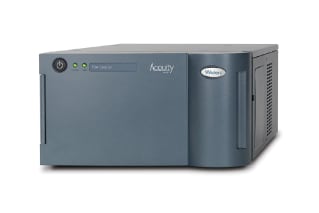 ACQUITY UPLC PDA Detector
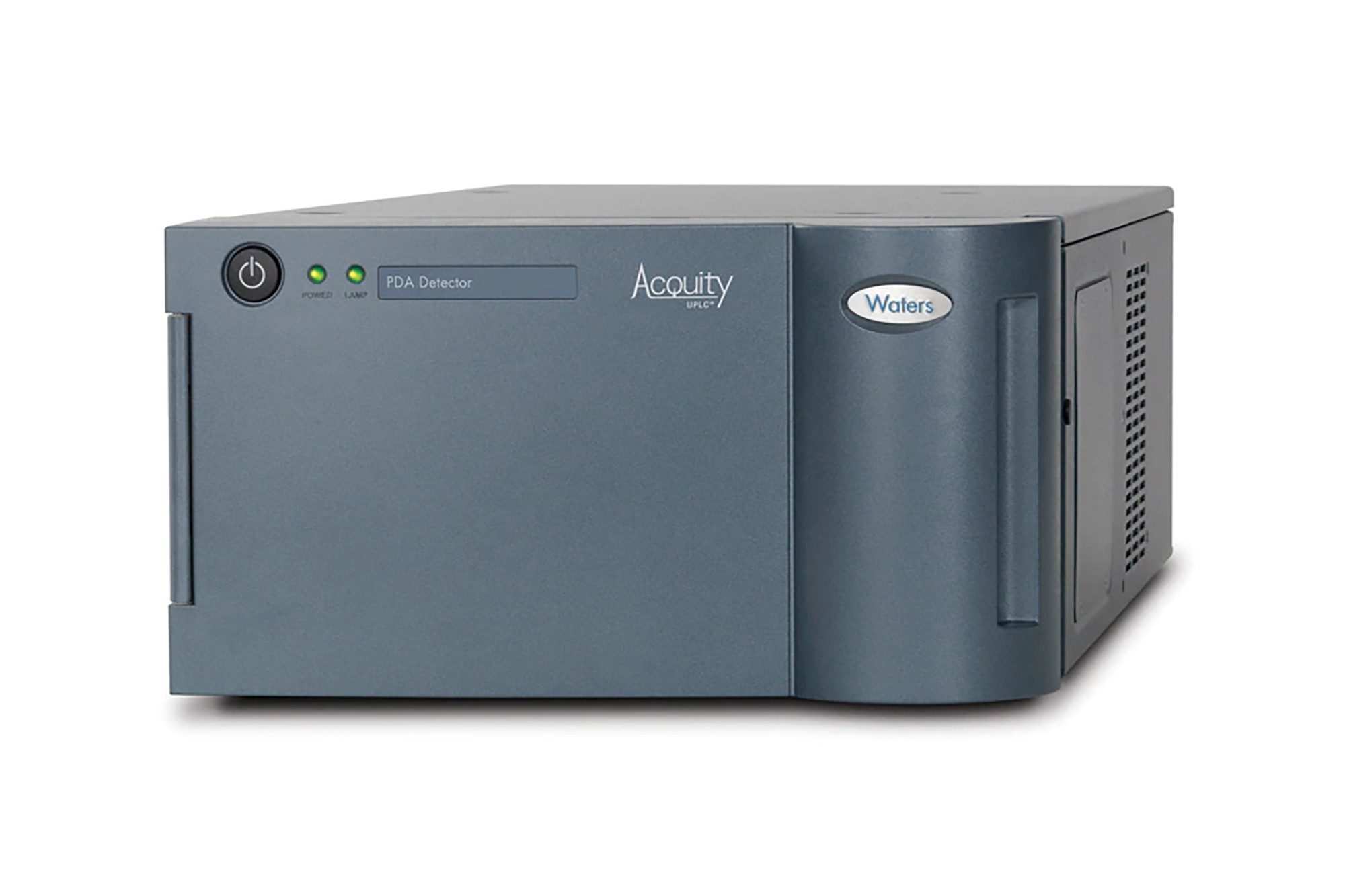
Specifications
|
Wavelength range |
190 to 500 nm |
|
Wavelength accuracy |
±1 nm (via patented1 Erbium filter) |
|
Linearity range |
Deviation at 2.0 AU ≤5%, propylparaben, at 257 nm |
|
Optical resolution |
1.2 nm |
|
Digital resolution |
0.6 nm/pixel to 500 nm |
|
Baseline noise |
±3 μAU, 230 nm, 2 points/s, 2 s, wavelength compensation 310 to 410 nm, 90:10 water/methanol (2D channel with analytical flow cell) |
|
Drift |
≤1.0 x 10⁻³/AU/hour/°C with analytical flow cell |
|
Sampling rate |
Up to 80 points/s |
|
Light source |
Prealigned, intelligent technology Deuterium lamp |
|
Dispersion volume |
≤0.8 μL (Analytical flow cell); ≤1.5 μL (High sensitivity flow cell) |
|
Flow cell design |
Light-guiding UPLC intelligent technology flow cell |
|
Path length |
10 mm (analytical flow cell) |
|
Flow cell volume |
500 nL (analytical flow cell) |
|
Wetted materials |
316 stainless-steel, fused silica, Teflon AF, PEEK (analytical flow cell) |
|
Pressure limit |
1000 psi (all flow cells) |
|
Flow cell options |
Analytical - 500 nL, 10 mm path length High sensitivity - 2400 nL, 25 mm path length High throughput - 135 nL, 3 mm path length Stainless-steel - 1500 nL, 5 mm path length Titanium - 1500 nL, 5 mm path length Low dispersion analytical - 500 nL, 10 mm path length Low dispersion microbore - 250 nL, 10 mm path length Microscale - 100 nL, 10 mm path length |
|
Physical specifications |
Width: 34.3 cm (13.5 inches) Height: 19.4 cm (7.6 inches) Depth: 60.7 cm (23.9 inches) |
1. US Patent Numbers: 6,423,249 and 6,783,705.
Overview
- High optical and digital resolution, low signal-to-noise ratios, and library matching provides quantitation of trace impurities with low signal-to-noise ratios
- Flexible parameter control for the detection of analytes in any UPLC separation
- Simultaneous 2D and 3D operation in either Empower or MassLynx Software
- Wavelengths of 190 to 500 nm and up to 2.0 AU without compromising linearity
- Low-volume, light-guided flow cell improves light transmission efficiency, allowing quantitation of up to 2.0 AU without compromising linearity
Recommended Use: For superior trace impurity detection and quantification while maintaining maximum chromatographic sensitivity.
Features Header
Get the data you need with wavelength options
The ACQUITY UPLC PDA Detector enables detection and quantification of lower concentrations of sample analytes and comparison of spectra across ultraviolet wavelengths (up to 500 nm). Together with Performance UHPLC/UPLC Systems, the ACQUITY UPLC PDA Detector can fulfill multiple UPLC-MS detection strategy requirements to identify components that are difficult to resolve by conventional HPLC-based methods.
- Offers exceptional signal-to-noise ratios, high optical and digital resolution, and high-sensitivity library matching
- Enables Performance UHPLC/UPLC Systems to map low levels of compounds and determine trace impurity levels within the compound’s peak
- Eliminates the need to compromise optical bandpass and linear range simply to reduce noise
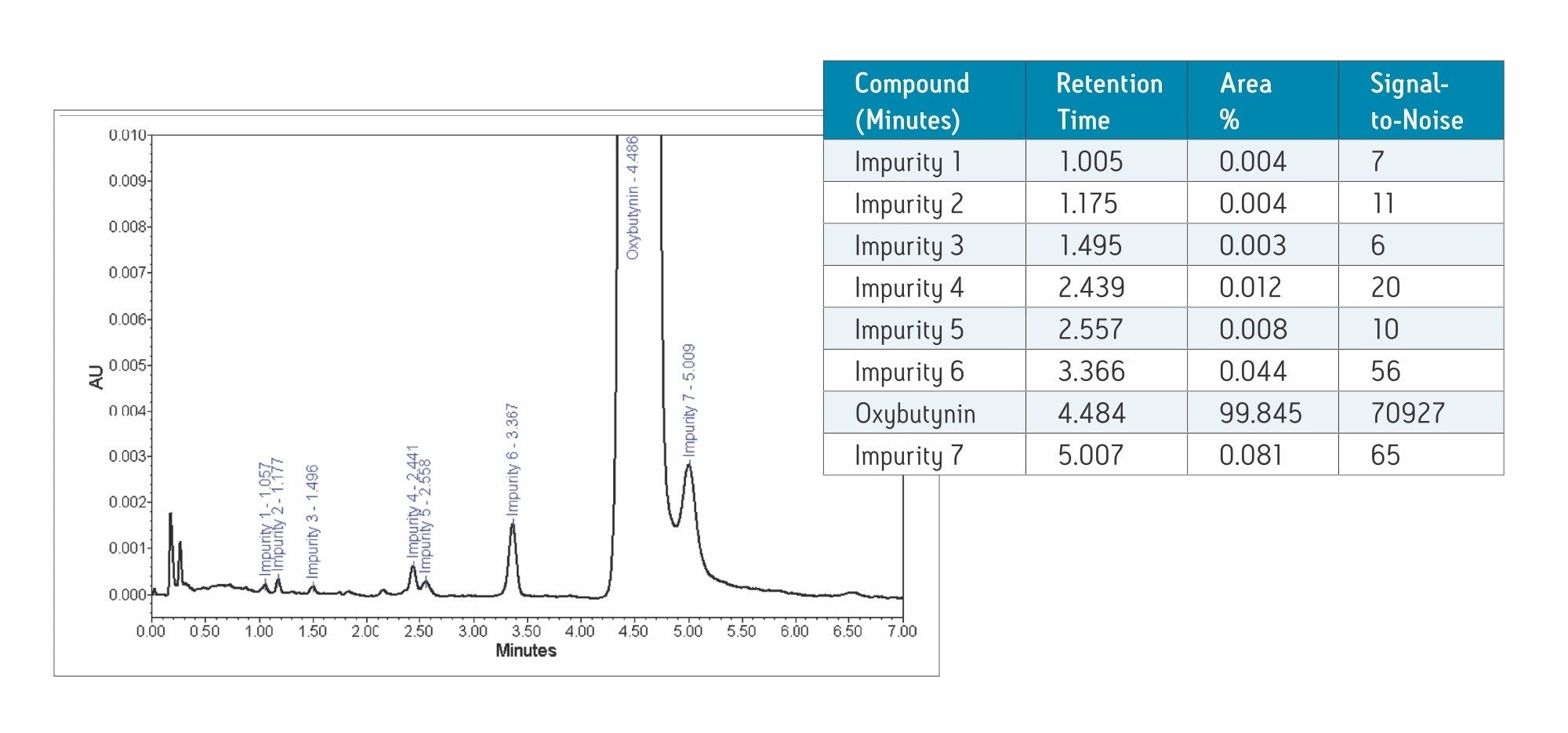
Compound identification with spectral confidence
Small-bore, high-capacity ACQUITY UPLC Columns produce small volume peaks. To avoid band spreading and maintain concentration, the detector flow cell volume must be correspondingly low. To achieve the required volume reduction with conventional absorbance detector flow cells, the path length must be reduced, which results in a loss of sensitivity.
Waters has specifically designed a low volume light-guiding flow cell for the ACQUITY UPLC PDA Detector that has optimum path length and high light throughput. The cell is comprised of Teflon AF, which utilizes total internal reflection principles, to improve light transmission efficiency by eliminating internal absorption.
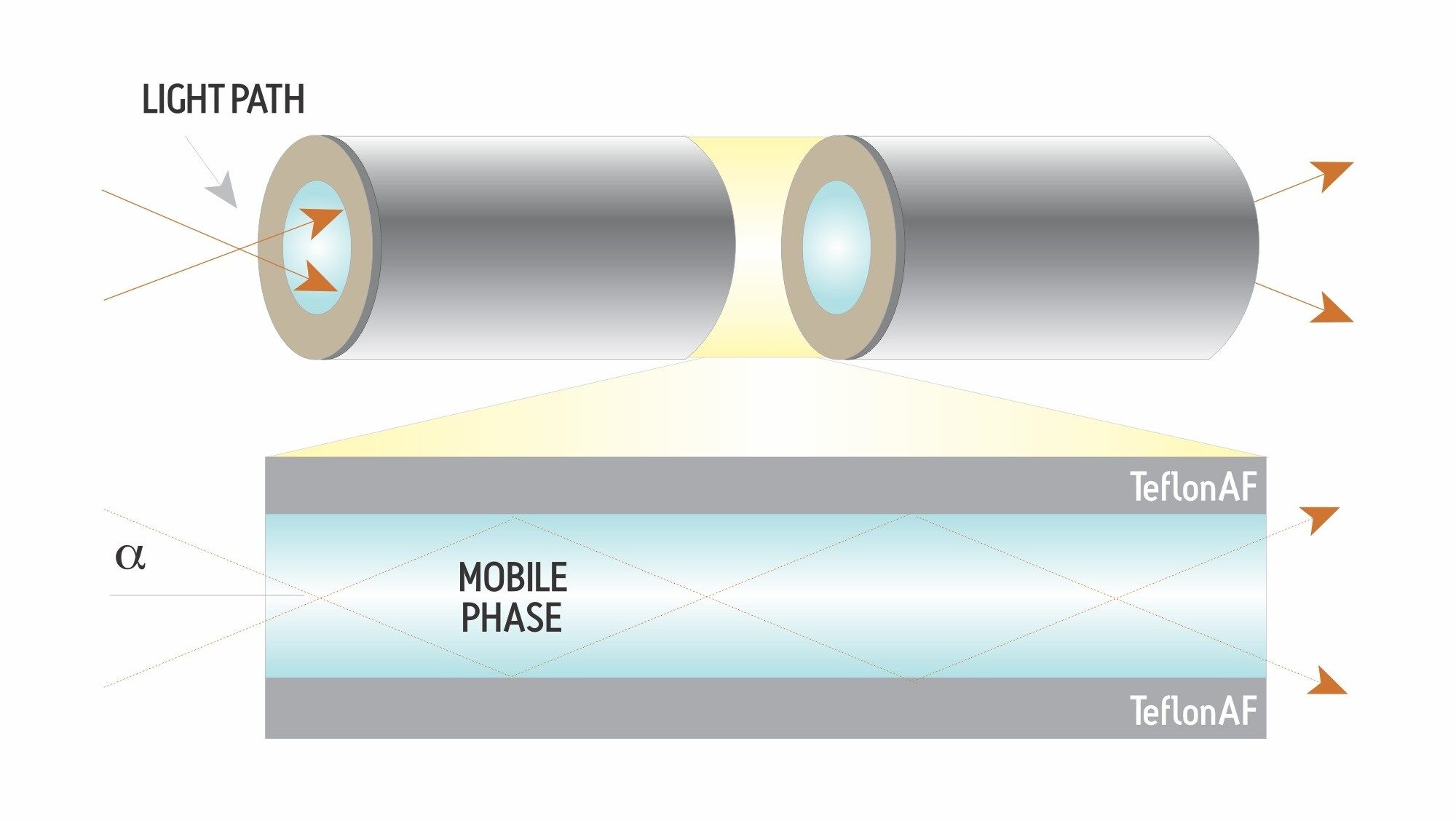
Detection and resolution optimized without compromise
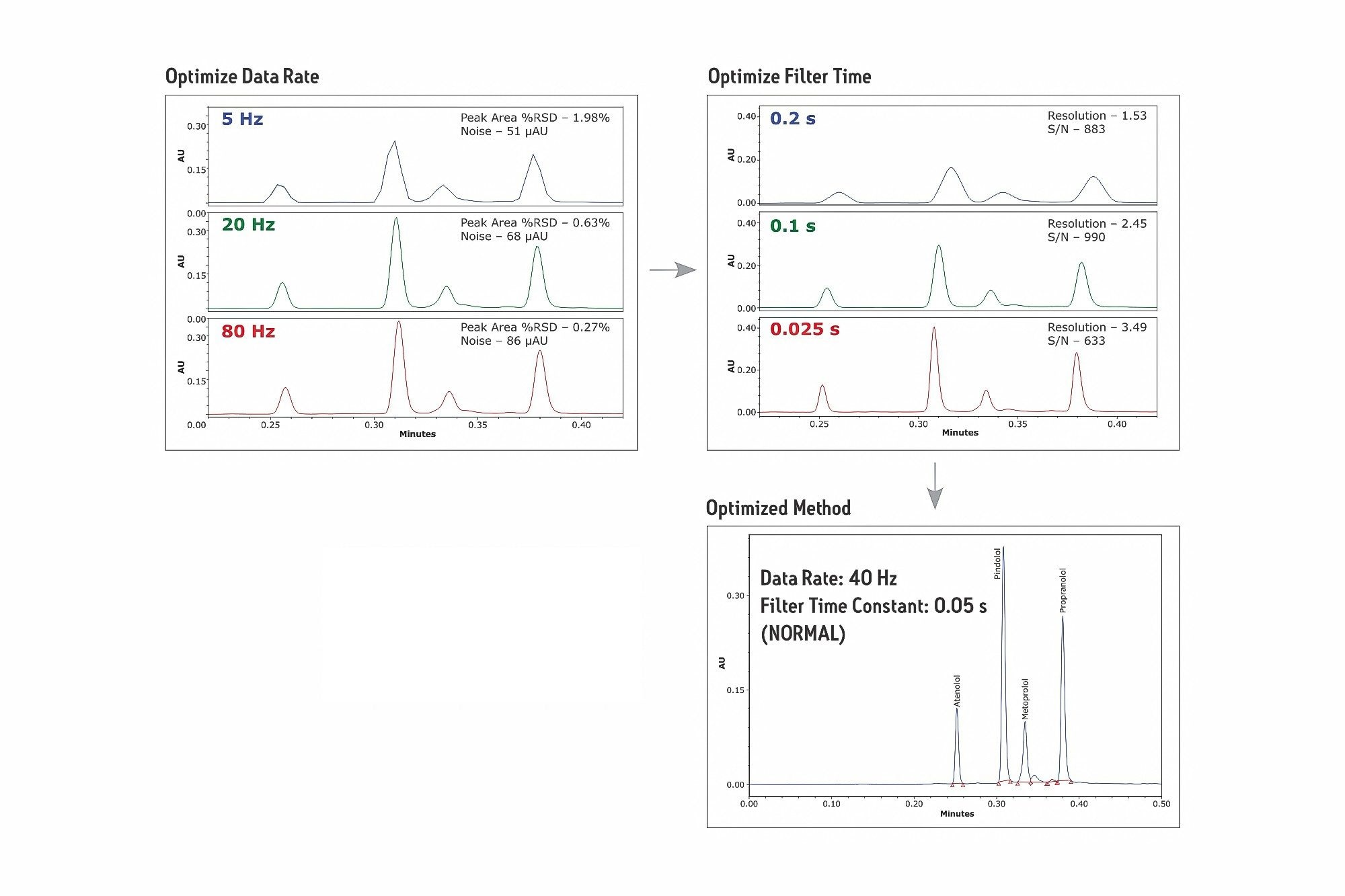
The ACQUITY UPLC PDA Detector operates at a fixed optical resolution of 1.2 nm, providing high-quality spectral resolution. The low detector noise performance allows you to operate at maximum digital resolution and not sacrifice linearity.
Resources
Documents
Support
What do you want to do?


Related
The ACQUITY UPLC PDA Detector is designed specifically to work with Ultra-Performance Liquid Chromatography (UPLC) systems, which are advanced tools used in many scientific fields like pharmaceuticals, environmental studies, and food science.
This detector's main job is to find and study compounds in a sample very precisely. It does this using photodiode array detection, where it shines light through the sample and measures how much is absorbed across different wavelengths. This gives a quick and detailed look at what's in the sample.
What sets the ACQUITY UPLC PDA Detector apart is its incredible sensitivity. It can detect even tiny amounts of compounds, which is crucial for tasks like finding impurities in drugs or checking for pollutants in the environment.
On top of that, it has excellent resolution, meaning it can separate and identify very similar compounds. This is important for getting accurate results, especially when dealing with complex mixtures.
And you can count on the ACQUITY UPLC PDA Detector to work reliably over time. It's built tough and goes through strict quality checks during manufacturing and calibration.
This UPLC PDA detector is a top-notch tool for scientists and analysts, giving them the detailed and accurate data they need to understand what's in their samples.
ACQUITY UPLC PDA Detector FAQs
1.What types of applications can the ACQUITY UPLC PDA Detector be used for?
The ACQUITY UPLC PDA Detector is versatile, which is why it is widely used across various industries. In pharmaceutical analysis, it helps ensure drug purity and stability by detecting and quantifying active ingredients and impurities. Environmental testing laboratories rely on it to monitor pollutants and contaminants in water, soil, and air samples.
In the food and beverage industry, it ensures product quality by analyzing ingredients, additives, and contaminants. The detector is also valuable in clinical research, biotechnology, and chemical manufacturing, where accurate and sensitive detection of multiple analytes is essential for product development and quality control.
2.How do I maintain and calibrate the ACQUITY UPLC PDA Detector to ensure optimal performance?
Proper maintenance and calibration are crucial for the consistent performance of the ACQUITY UPLC PDA Detector. Routine maintenance includes cleaning the flow cell, checking the lamp status, and inspecting connections and tubing for any signs of wear or blockage. Regular calibration is necessary to maintain accuracy, typically performed using standard solutions to validate wavelength accuracy and absorbance.
Following all recommended schedules and procedures will help ensure optimal performance. As with any equipment, users should keep detailed records of maintenance and calibration activities, which can help diagnose issues and ensure compliance with regulatory standards.
3.What software is compatible with the ACQUITY UPLC PDA Detector for data analysis?
The ACQUITY UPLC PDA Detector is compatible with Waters' Empower Software, a powerful and user-friendly platform designed for data acquisition, processing, and reporting. Empower Software allows users to control the detector, manage complex workflows, and analyze spectral data efficiently. It supports a wide range of chromatographic techniques and offers features like automated peak identification, spectral library searching, and advanced reporting tools.
The software's flexibility and scalability make it suitable for labs of all sizes, providing robust data management and compliance features that meet regulatory requirements across industries.


