
3465 Electrochemical Detector
Sensitivity, reliability, and simplicity combined
The Waters 3465 Electrochemical Detector combines sensitivity, reliability, and simplicity for electrochemical detection. Its versatile detection modes are ideally suited for analyzing a wide range of compounds.
The 3465 Electrochemical Detector’s multiple flow cell configuration combines working and reference electrode designs to minimize cost and enhance flexibility. The flow cell accommodates several reference electrodes: ISAAC; traditional salt-bridge design, which limits air bubble formation; and Hy-Ref, which is ideal for carbohydrate analysis and is compatible with extreme mobile phases. The detector is designed for ultra-trace analysis and is compatible with both analytical and microbore scale applications.
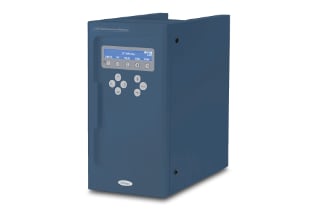 3465 Electrochemical Detector

Specifications
|
Operating modes |
Direct Current (DC), DC, PULSE, PULSE 2, SCAN (DC, PULSE, and PULSE 2 are available and supported under Empower CDS control) |
|
Other modes |
CONFIG, DIAG, and SERVICE |
|
Detector configurations |
Single Flow Cell (SCC) (p/n: 725000673) or Dual Flow Cell (DCC) (p/n: 725000686) |
|
Autozero |
Triggered by keyboard, rear panel TTL, or remote PC control (LAN) |
|
Max. current compensation (Autozero) |
25 nA - 2.5 mA in DC and PULSE mode dependent on range setting |
|
Offset |
+50% to -50% of max. output voltage, 5% steps |
|
PC control |
Parametric control and data-acquisition via LAN port (USB service port) |
|
Acquisition control |
.Net Driver for Empower 3, leveraging existing Empower 3 ICF Support layer |
|
Analog signal output (DAC) |
-1 to +1 V full scale (via 16-bit D/A converter) |
|
Analog output (I/E) |
-2.5 to +2.5 V full scale (unprocessed I/E converter signal) |
|
Digital I/O connectors (rear panel) |
2x relay, 5x TTL outputs (CMOS 3.3V logic), 13 TTL inputs (programmable), 1x GND |
|
Programmable I/O functionality |
Cell on, Cell off, Autozero, Start, Overload, Relay, Auxiliary |
|
Integrated flow cell and column heating compartment |
+7 °C above ambient to 60 °C, accuracy 0.5 °C, stability 0.1 °C; accommodates column and flow cell(s) |
|
Flow cell |
Confined wall-jet design - VT03, Sencell, and thin-layer design Flexcell |
|
VT03 |
Flow cell (originally available with 2465 ECD); available with 2 and 3 mm working electrode diameter |
|
Sencell |
Tool-free adjustable spacer; multiple working and reference electrodes |
|
Flexcell |
Replaceable working electrode, (GC, Pt, Au, Ag, BDD) stainless-steel auxiliary electrode |
|
Range |
10 pA–200 μA in 1, 2, or 5 increments |
|
Filter (ADF) |
10–0.001 Hz in 1, 2, or 5 increments; RAW and OFF: For unprocessed data |
|
Potential (Ec) |
-2.5 V to +2.5 V with 10 mV increments |
|
Data rate |
1–100 Hz in 1, 2, or 5 increments, dependent on filter setting |
|
Noise |
<2 pA with dummy cell (load of 300 MΩ/470 pF) in 1 nA range, filter off, Ec +800 mV, and temp. of 35 °C |
|
Range |
10 nA–200 μA in 1, 2, or 5 increments |
|
|
Filter (ADF) |
0.5–0.001 Hz in 1, 2, or 5 increments; OFF: For unprocessed data |
|
|
Potential (Ec) |
-2.5 V to +2.5 V with 10 mV increments |
|
|
Data rate |
1/(pulse duration) Hz |
|
|
Waveform |
Max five potential steps |
|
|
Pulse times (t1-t2) |
t1: 100 ms–2000 ms; t2, t3, t4, and t5: 0–2000 ms in 10 ms increments |
|
|
Sampling times (ts) |
20 ms – [t1–60] ms |
|
Range |
10 nA–200 μA in 1, 2, or 5 increments |
|
Filter (ADF) |
0.5–0.01 Hz in 1, 2, or 5 increments; OFF: for unprocessed data |
|
Potential (Ec) |
-2.5 V to +2.5 V with 10 mV increments |
|
Data rate |
1/(pulse duration) Hz |
|
Waveform |
Free programmable multi-step waveform with up to 30 time-potential (t, E) coordinates and max pulse duration of 4 s; time points in 10 ms increments |
|
Sampling time |
Sampling interval is freely programmable, defined by Begin and End markers |
|
Range |
10 nA–200 μA in 1, 2, or 5 increments |
|||
|
Potential (Ec) |
-2.5 V to +2.5 V with 10 mV increments |
|||
|
Data rate |
1 Hz |
|||
|
Scan rate |
1–100 mV/s in 1, 2, or 5 increments |
|||
|
Cycle |
Half, full, or continuous |
|
Usage |
For indoor use only |
|
Solvent storage |
<2000 m |
|
Operating temp. range |
10–35 °C |
|
Operating humidity range |
20% to 80% RH |
|
Voltage range |
100–240 VAC autosensing |
|
Voltage fluctuation |
Input voltage of 100–240 VAC +/- 10%† |
|
Line frequency |
50–60 Hz |
|
Power requirements |
260 VA |
† Derating may be needed under low input voltages.
|
Dimensions |
|
|
Weight |
14.4 Kg (32 lbs.) without flow cell or column (SSC version) |
|
Width |
22 cm (8.7 “) |
|
Height |
44 cm (17.3 “) |
|
Depth |
43 cm (16.9 “) |
|
Safety and EMC compliance |
CE (CB Scheme), UL, and CSA (cMETus approval) |
|
Audible noise |
45 dBA (detector on and the door closed) |
|
Part Title |
Part Number |
|
3465 Electrochemical Detector |
725000673 |
|
3465 Dual Flow Cell Electrochemical Detector |
725000686 |
|
Flowcell 2 mm Glassy Carbon WE/Salt Bridge Ref (used for qualification) |
700013052 |
|
Flowcell Kit, 2 mm Glassy Carbon WE/ISAAC REF, VT03 (used for qualification) |
205004215 |
Overview
- Selectivity for a wide range of applications such as catecholamines, aminoglycosides, carbohydrates, neurotransmitters, phenols, and thiols with multiple flow cell, electrode, and detection mode options
- Sensitivity for ultra-trace analysis to detect concentrations as low as 10 ρmol/L and as high as µmol/L
- Simplicity of operation plus versatility with Empower control and use with the Waters liquid chromatography (LC) portfolio
- Reliability backed by Waters service and application support and 21CFR Part 11 compliance readiness
Recommended Use: For ultra-trace analysis compatible with both analytical and microbore scale applications.
Features Header
Advanced sensitivity
- Achieve ultra-trace analysis
- Eliminate matrix interferences with an Advanced Digital Filter
- Improve thermal operating stability with Faraday-shielded oven
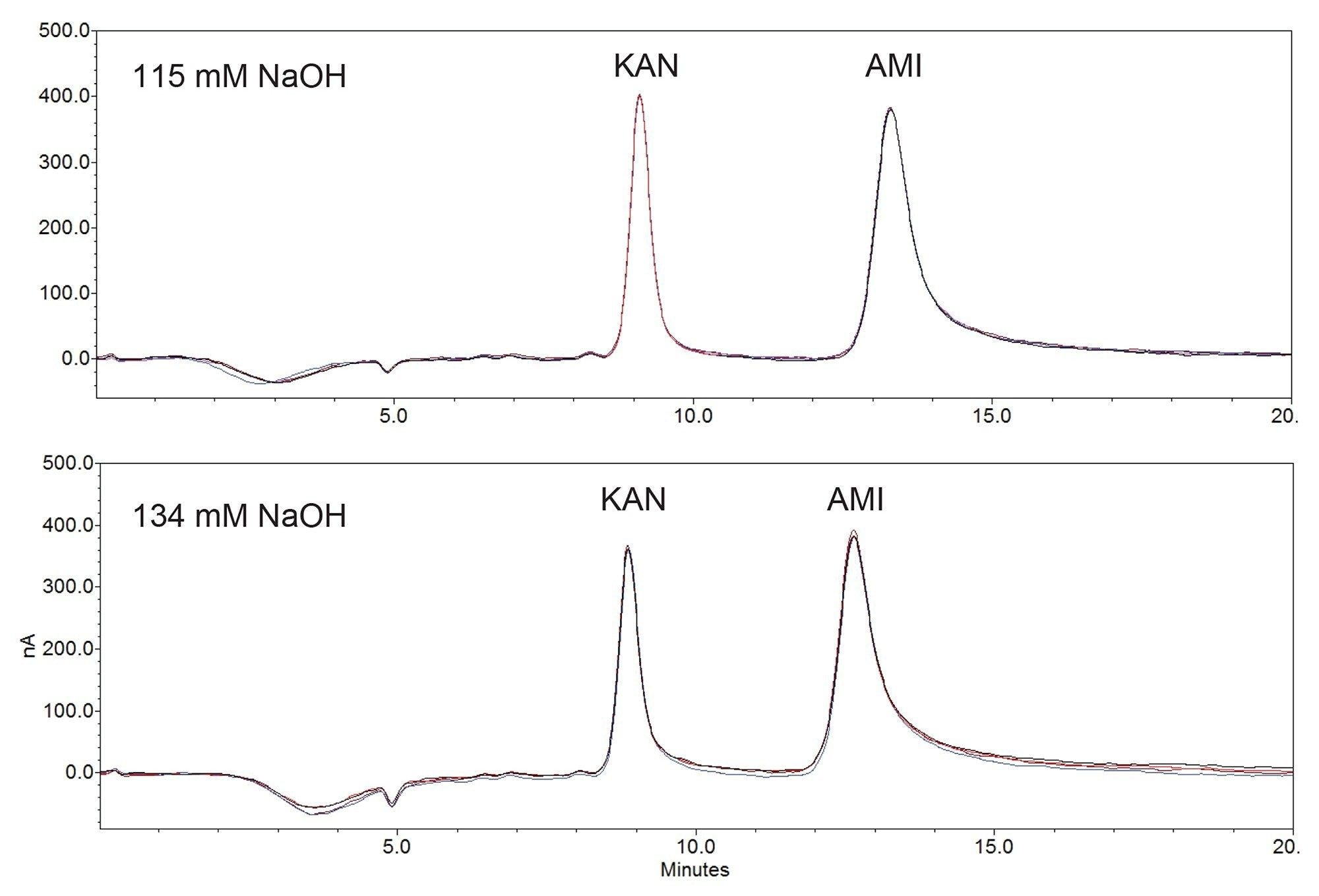
Flexible for your requirements
The 3465 is controlled by industry-leading Empower Chromatography Data System (CDS) and compatible with the Arc HPLC, Alliance, ACQUITY Arc, and ACQUITY UPLC H-Class Systems, 1515 isocratic and gradient Empower CDS-based systems, Breeze, and QS-based systems when configured with an eSat/IN analog/Digital convertor. There are two configurations of the 3465 ECD: one supports control of a single flow cell and the second supports the independent control of dual flow cells.
Resources
What do you want to do?


Related
The 3465 Electrochemical Detector (ECD) is a vital instrument in high-performance liquid chromatography (HPLC) systems, designed to identify and quantify substances through their electrochemical properties. Its main components include an electrochemical cell, which contains a working electrode where reactions take place, a reference electrode that maintains a stable potential, and a counter electrode that balances the current. Additionally, a potentiostat controls the potential of the working electrode and measures the resulting current. A flow cell ensures that liquids and analytes flow steadily through the electrochemical cell, and a data acquisition system records and processes the signals generated.
The ECD operates by detecting substances as they elute from the HPLC column. These substances undergo oxidation or reduction at the working electrode, generating a current proportional to their concentration. This current is measured by the potentiostat and recorded as a voltage signal by the data acquisition system. The resulting signals are then analyzed to identify and quantify the substances present.
The ECD is highly valued for its sensitivity and ability to detect extremely low concentrations of electroactive compounds. It has numerous applications, including pharmaceutical analysis for detecting drugs and metabolites, environmental monitoring for identifying pollutants in water and soil, biochemical analysis for measuring neurotransmitters and hormones, and the food and beverage industry for detecting additives and contaminants.
ECD needs careful calibration for each specific substance to ensure accurate results. It can be more expensive than other types of detectors and may require extensive sample preparation to remove interfering substances. Despite these challenges, the 3465 ECD remains a powerful and reliable tool in analytical chemistry when properly maintained and optimized.
FAQs about Electrochemical Detector for LC Systems
What is the Electrochemical Detector for LC Systems?
The Electrochemical Detector for LC Systems is a detector designed for use with liquid chromatography systems. It is capable of detecting a wide range of compounds, including those with low levels of electroactivity.
What are the benefits of using the Electrochemical Detector for LC Systems?
The Electrochemical Detector for LC Systems offers a number of benefits, including improved sensitivity, increased selectivity, and faster response times. It is also capable of detecting a wide range of compounds, including those with low levels of electroactivity.
What type of compounds can the Electrochemical Detector for LC Systems detect?
The Electrochemical Detector for LC Systems is capable of detecting a wide range of compounds, including those with low levels of electroactivity.
What is the response time of the Electrochemical Detector for LC Systems?
The response time of the Electrochemical Detector for LC Systems is typically less than one second.
What is the warranty for the Electrochemical Detector for LC Systems?
The Electrochemical Detector for LC Systems comes with a one-year warranty.


