
Improving Efficiency in the Determination of PFAS in Foods of Animal Origin
Margot Lee, Kari Organtini, Eimear Trivedi
Waters Corporation, United States
Published on October 15, 2026

Abstract
Benefits
- An accessible LC-MS/MS method developed for 44 PFAS to support compliance and monitoring testing of meats in accordance with EU Regulation 2022/2388 and Recommendation 2022/1431
- The sample preparation approach incorporates automated solid-phase extraction (SPE) cleanup and eliminates the need for an evaporation and reconstitution step, reducing time and risk of background interference from the pre-concentration step
- Reliable, yet efficient analytical method achieving separation of 44 PFAS in a short 11-minute runtime, while maintaining separation of analytes from isobaric and system background interferences
- Analytical parameters from the European Union Reference Laboratory (EURL) were set within the MS Quan Application in the waters_connect™ Software platform for data processing, improving data review time and consistency
Introduction
Per- and polyfluoroalkyl substances (PFAS) are persistent environmental contaminants that can accumulate in a variety of foods commonly consumed by humans, including meats. As PFAS contamination continues to be identified across diverse food matrices, regulatory agencies have increased efforts to better understand dietary exposure and potential human health impacts. In previous studies, analytical workflows have been developed for the analysis of fish,1 milk,2 eggs,3 meat,4 fruit, vegetables, and baby foods5 to levels and performance required under EU Regulation 2022/2388,6 EU Recommendation 2022/1431,7 and EURL for POPs guidance on PFAS analysis.8 While these previous analytical workflows support the monitoring and compliance testing of meat from terrestrial animals, in this study, a streamlined sample preparation approach was explored to provide a more efficient and effective method for the reliable determination of PFAS in meat.
Method performance was evaluated in accordance with regulations and guidance in place in the European Union, focusing on meats of bovine, pig, and poultry – the lowest levels stipulated in Regulation 2022/2388. In total, 44 PFAS were evaluated in this study, addressing the 27 listed in Recommendation 2022/1431/EU, along with additional analytes of interest in emerging methodologies, including fluorotelomers.

Experimental
Sample Description
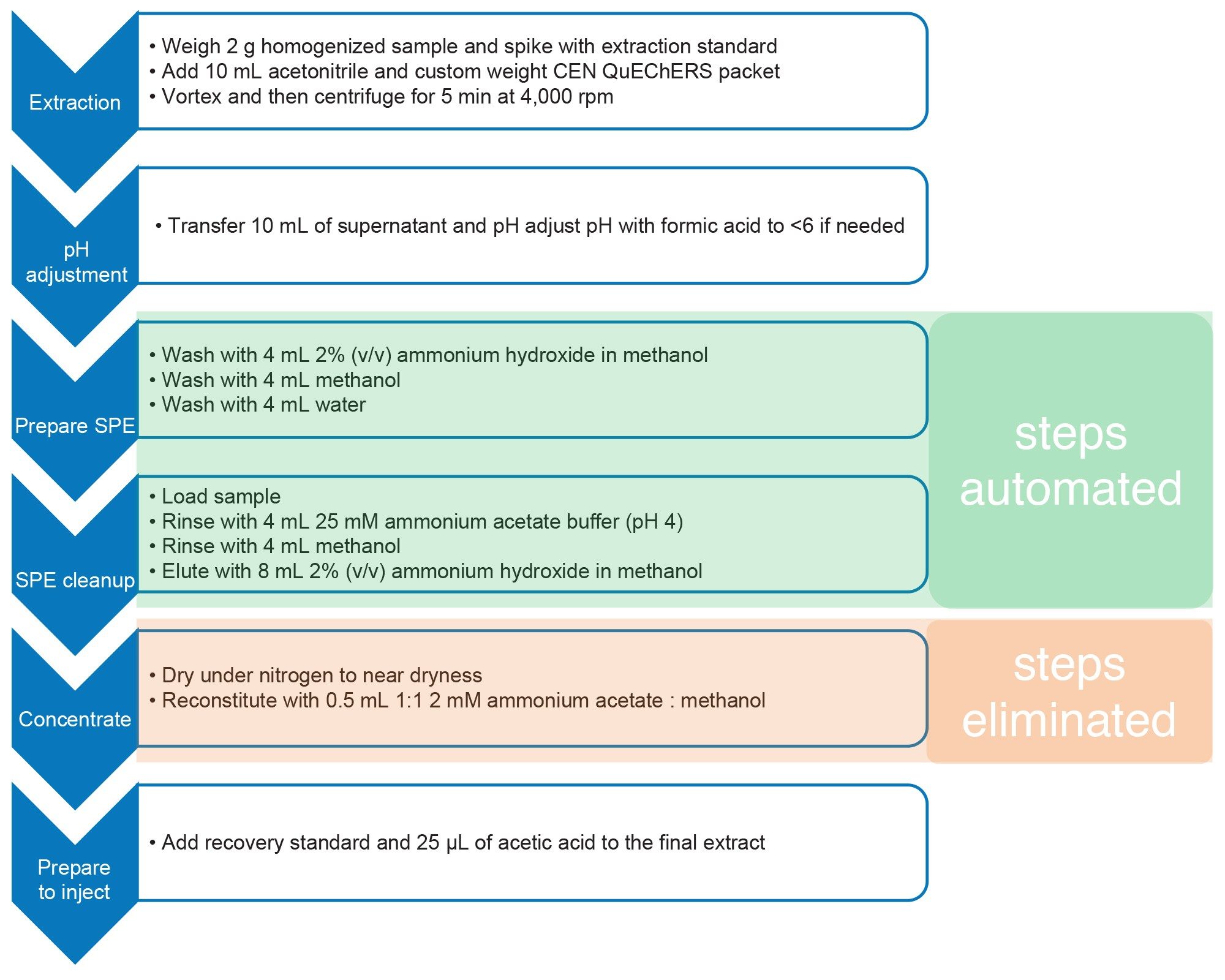
Detailed experimental information can be found in the Lee and Organtini 2026 application note.9 In summary, store bought samples of beef, chicken, pork, and bratwurst were prepared as shown in Figure 1. Automation of the SPE procedure reduced hands-on sample preparation time by enabling simultaneous processing of eight samples in approximately one hour, allowing the analyst to focus on other tasks during the automated SPE procedure. In addition, direct analysis of the 5 mL SPE eluate eliminated the dry-down and reconstitution steps, further reducing analyst intervention and overall sample preparation time. For laboratories seeking lower-level detection, this flexible sample preparation procedure can support the concentration step, where preferred. Running a 10 µL injection, all analytes were acquired by LC-MS/MS in 11 minutes.
Results and Discussion
Linearity and Chromatography
A ten-point solvent calibration curve was prepared and used for quantification of all food sample extracts, over a calibration range of 5–5,000 ng/L (corresponding to 0.025 µg/kg–25 µg/kg in the original sample). Calibration standards were analyzed throughout each sequence alongside spiked samples.
Linear regression with 1/x weighting was used for quantification. Good linearity was achieved for all analytes, including the four EU-regulated PFAS analytes, where back-calculated concentrations of the analytes were ≤ 20% of the true concentration.
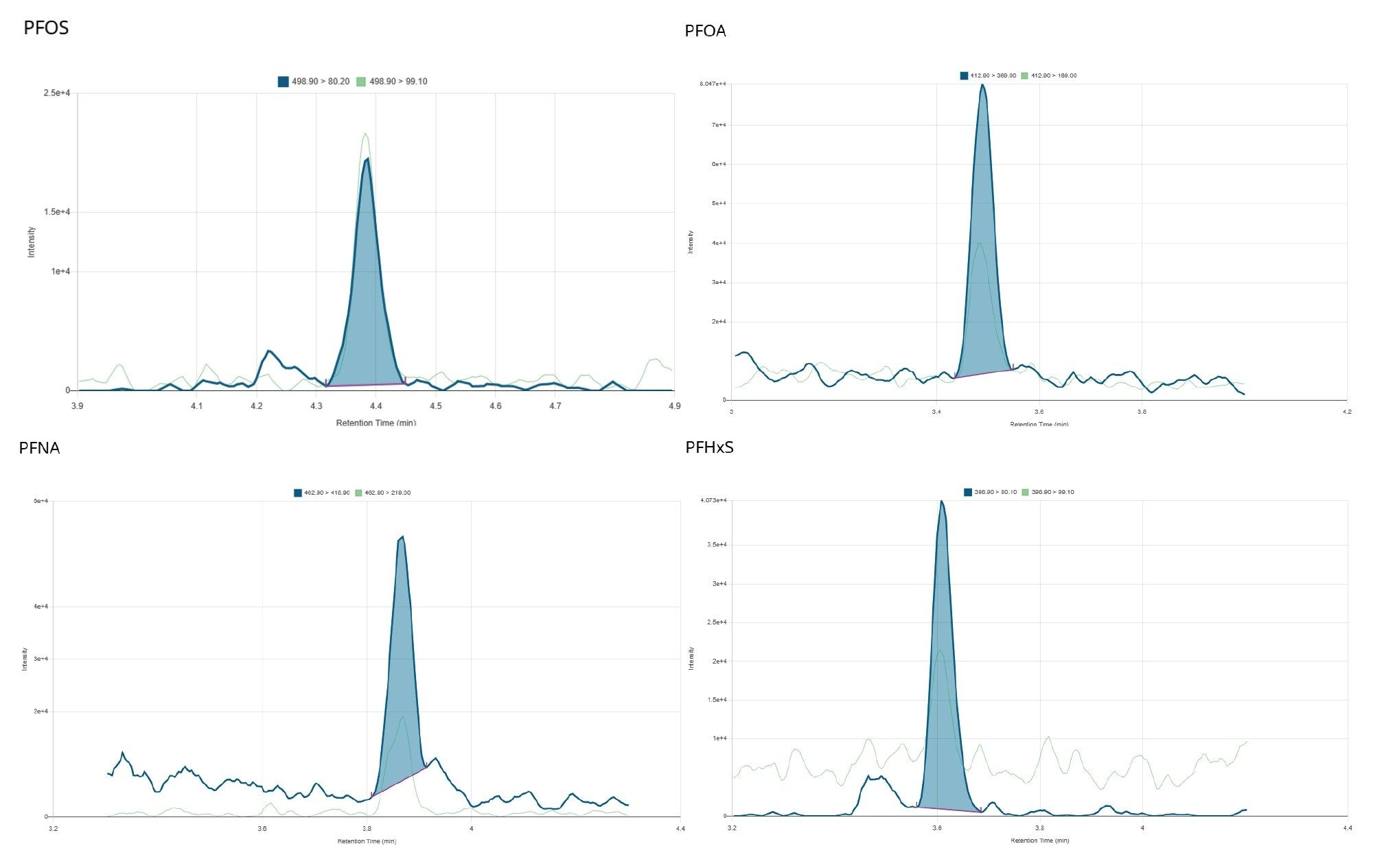
The calibration range was selected to support quantification of PFAS at relevant concentrations, showing excellent system sensitivity. Representative chromatograms of the four EU-regulated PFAS at the lowest calibration level (5 ng/L) are shown in Figure 2. All analytes produced good peak shape with consistent retention times, well separated from isobaric and background interferences.
Method Validation of Meat Samples
Meat samples of beef burger, pork, chicken, and bratwurst (pork and veal sausage) were spiked to 0.1 µg/kg in replicate (n=3) and analyzed in triplicate. Percent recoveries were calculated as apparent recoveries,10 as follows:
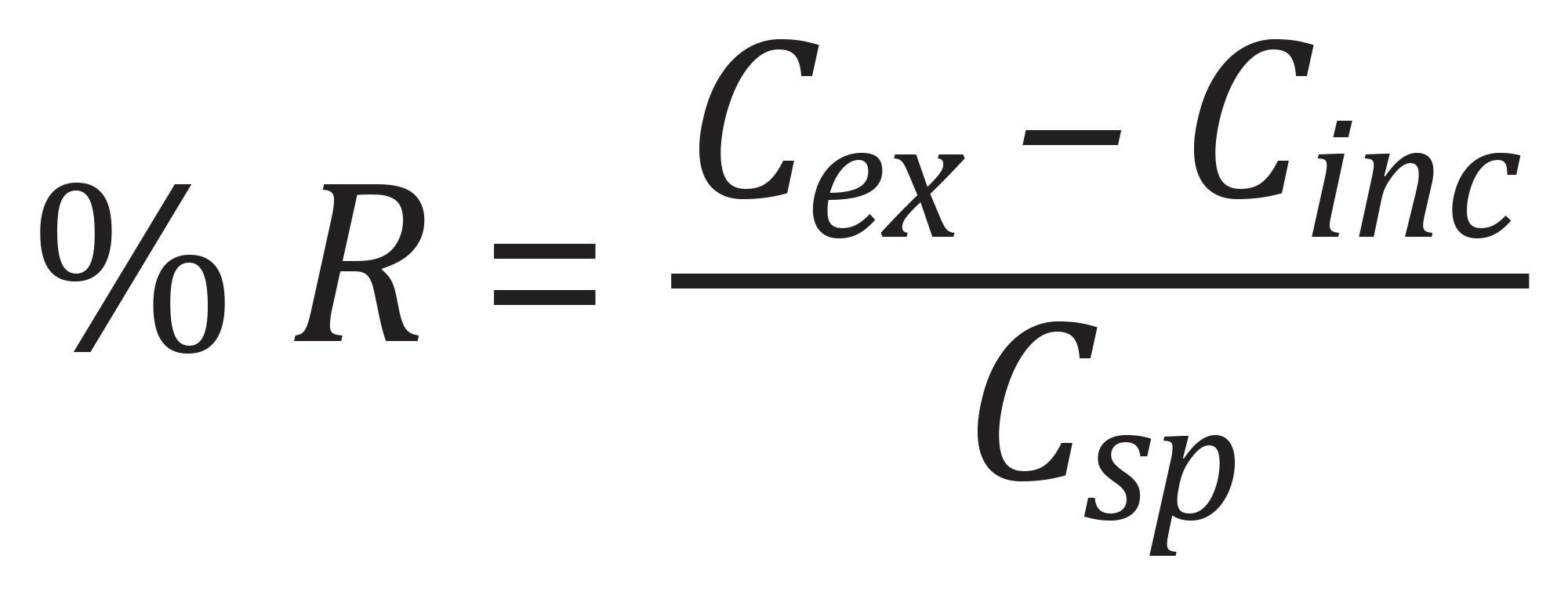
Where Cex: quantity recovered from sample after extraction and clean-up.
Cinc: quantity detected in the original sample when analyzed as a blank or non-spiked sample.
Csp: known quantity spiked into the sample.
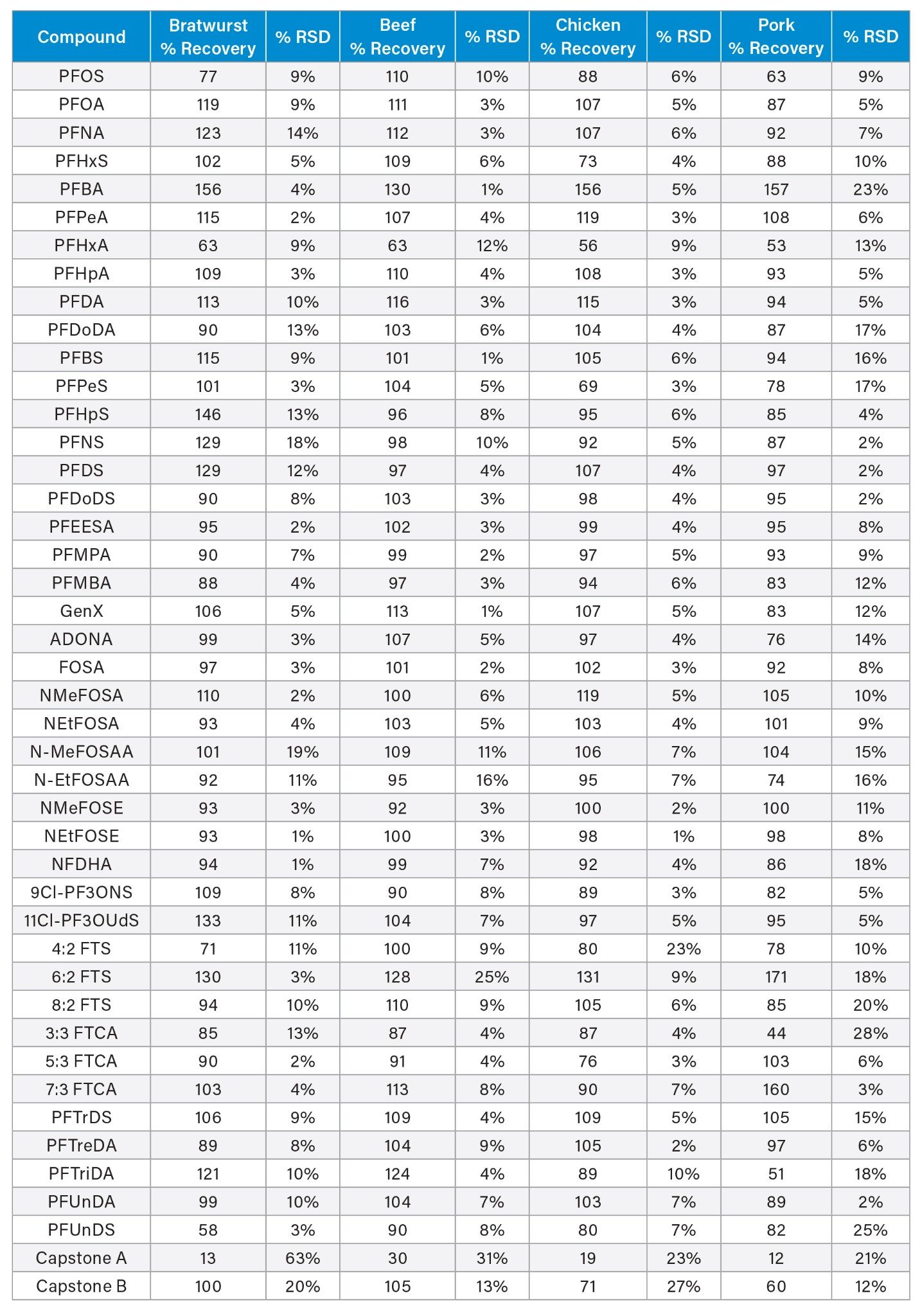
The average apparent recovery and within laboratory reproducibility of relative standard deviation (%RSD) was calculated from replicate samples, where results for the majority of analytes (> 92%) were in accordance with the EURL for POPs guidance on PFAS analytical performance. For the four regulated analytes, apparent recoveries were close to 80 and 120%, with %RSD ≤ 20%, while the remaining analytes met recommended tolerances for monitoring purposes with apparent recovery within 65 to 135% and %RSD ≤ 25%. All results are summarized in Table 3.
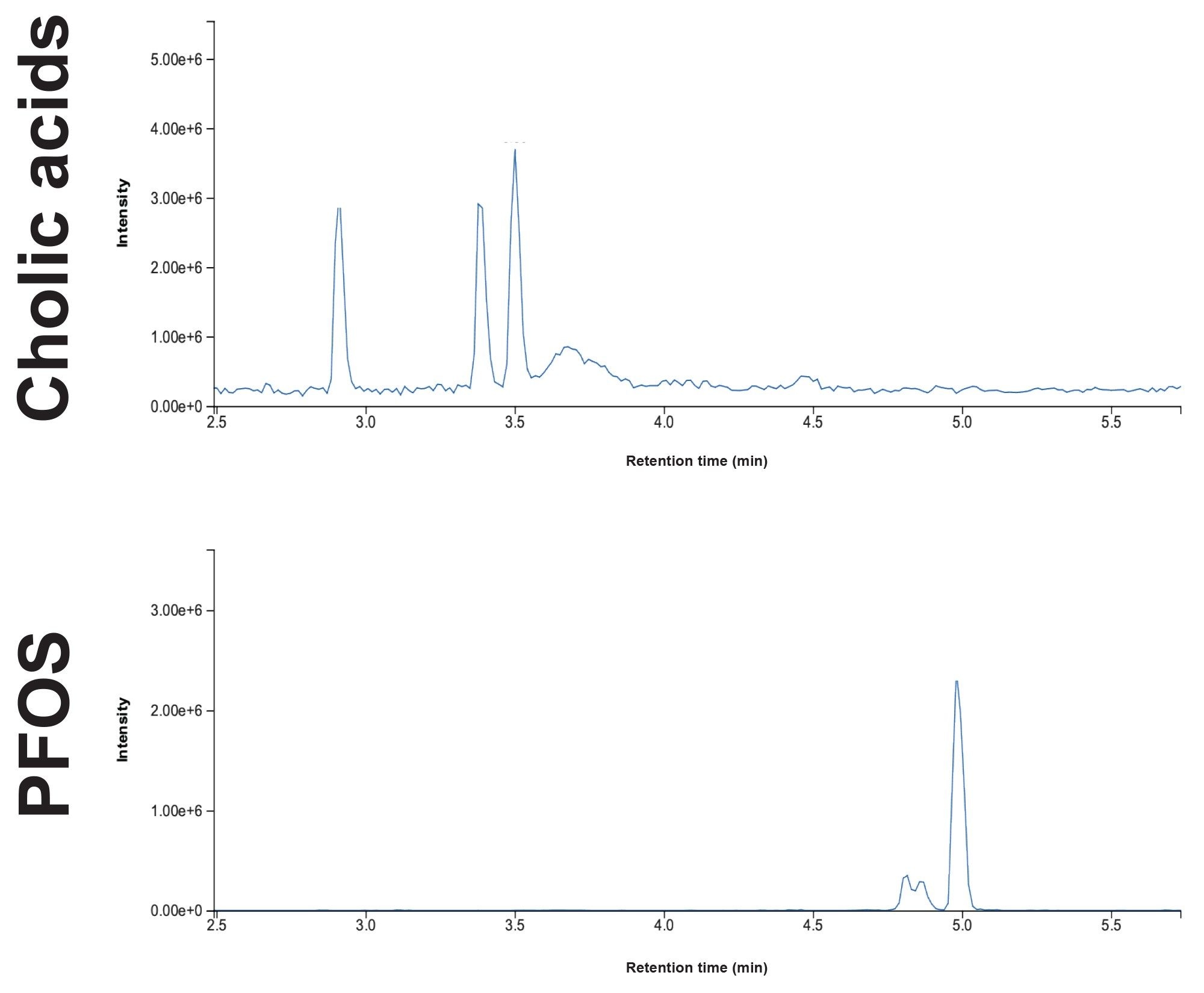
A further example of this chromatographic performance is shown in Figure 3, where isobaric interferences cholic acids were baseline separated from PFOS. Cholic acids and their salts, including taurochenodeoxycholic acid (TCDCA), taurodeoxycholic acid (TDCA), and tauroursodeoxycholic acid (TUDCA), are bile acids, naturally present in biological samples, including edible meats. Due to their chemical characteristics, they may cause false detections of PFOS by triple quadrupole mass spectrometry, if not removed during clean-up or chromatographically resolved from the analyte peak of PFOS transition 499 > 80.
Method Validation of Meat Samples
Meat samples of beef burger, pork, chicken, and bratwurst (pork and veal sausage) were spiked to 0.1 µg/kg in replicate (n=3) and analyzed in triplicate. The average apparent recovery and within laboratory reproducibility (%RSD) was calculated from these samples, where results for the majority of analytes (> 92%) were in accordance with the EURL for POPs guidance on PFAS analytical performance. For the four regulated analytes, apparent recoveries were close to 80 and 120%, with %RSD ≤ 20%, while the remaining analytes met recommended tolerances for monitoring purposes with apparent recovery within 65 to 135% and %RSD ≤ 25%. All results are summarized in Table 3.
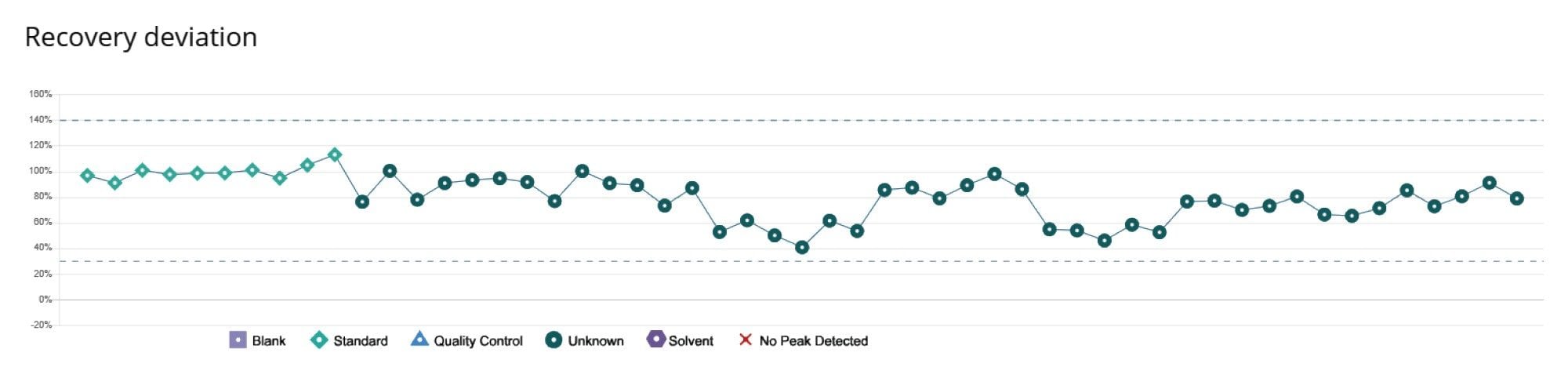
The recovery standard (NIS), where used and spiked into all samples prior to injection, showed good recovery across all injections. An example of this is shown in Figure 4 for M8 PFOS across the analytical run as plotted within MS Quan Application, allowing for a quick check on batch performance during routine operation.
Previous work demonstrated that capstone A may be lost during the SPE procedure.5 Recovery of capstone A was consistently lower than that of capstone B, likely because no compound-specific isotopically-labeled internal standard was available at the time of experimentation. Instead, the isotopically-labeled capstone B analogue was used as a surrogate internal standard for both analytes, which may not fully compensate for differences in analyte behavior experienced by capstone A throughout the workflow. Despite this limitation, these results demonstrate that the workflow provides reliable extraction, cleanup, and quantitation for a broad range of PFAS in complex food matrices, including meats, while maintaining performance at concentrations relevant to current regulatory requirements.
Identification
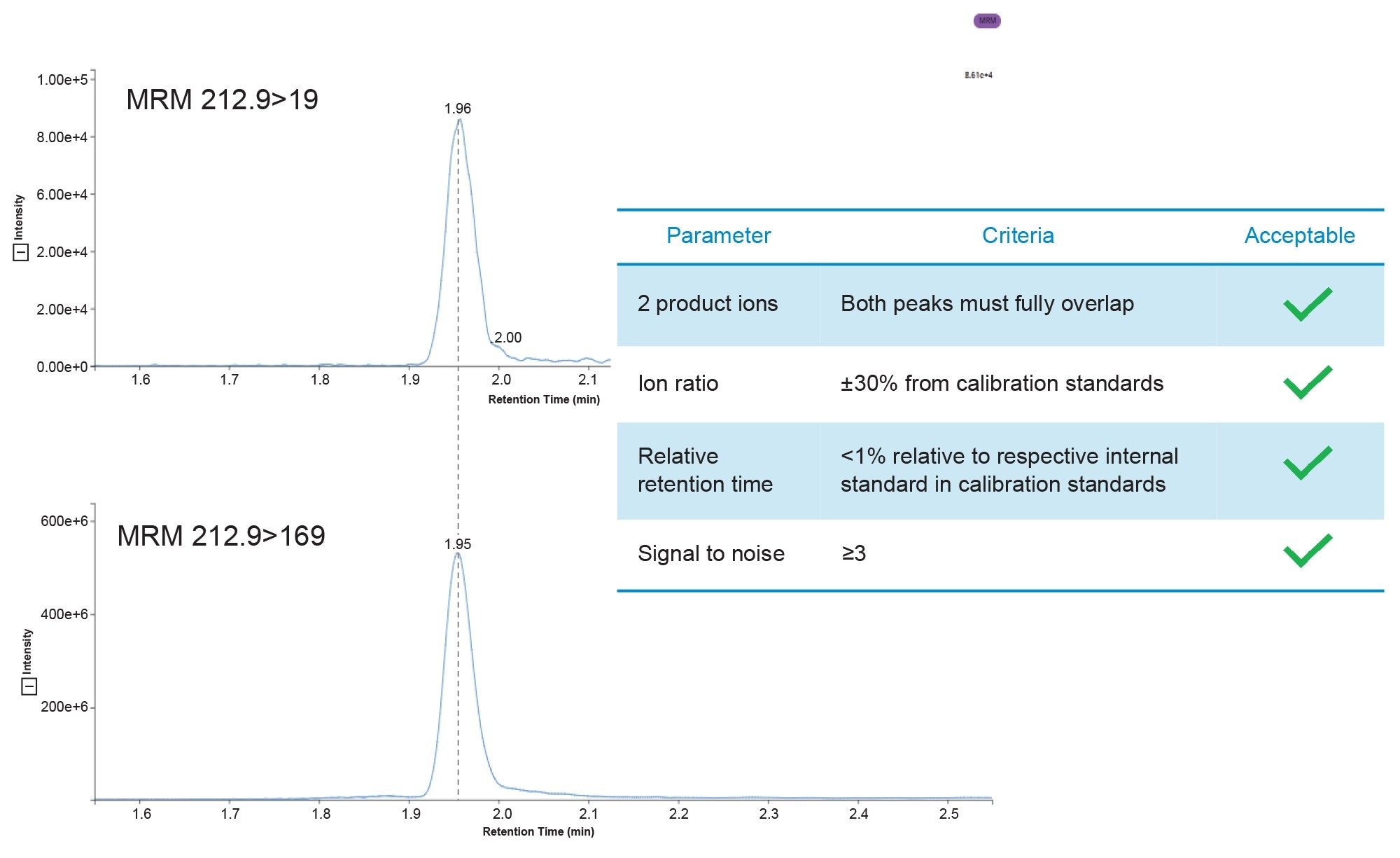
In accordance with EURL for POPs guidance, all identification criteria were applied, using customizable and automated tools within waters_connect Software and MS Quan Application. At least 2 MRM transitions were acquired per analyte, with ion ratios, relative retention times, and signal to noise (S/N) criteria set in the method. All validation data was reviewed against these criteria to ensure LOQ in accordance with EURL for POPs guidance. An example is summarized for PFBA in the beef-spiked sample, where all criteria detailed in the table inset were met.
Conclusion
Streamlining the sample preparation protocol by reducing the sample weight, automating SPE clean up, and eliminating evaporation and reconstitution stages, created an efficient, yet reliable LC-MS/MS method, enabling food testing laboratories to meet high-throughput demand for meat samples analyzed in accordance with current regulatory requirements. Removing the evaporation step from the workflow allowed for time savings, while reducing the risk of concentrating contamination of environmental PFAS from sources such as solvent, blow down gas, and equipment.
Overall, acceptable recoveries, precision and identification was achieved for all four meat samples at 0.1 µg/kg, in accordance with EURL for POPs guidance on PFAS analytical parameters, demonstrating method performance at the LOQ to support compliance and monitoring testing of meats. Combining technological advantages of automated SPE clean-up, advanced chromatography, MS performance, and waters_connect Software, an accessible, time efficient yet reliable workflow has been demonstrated for laboratories working to meet the demands of high-throughput in accordance with current EU regulatory requirements for PFAS in meats.
References
- Adams, S.; Dreolin, N.; Organtini, K. L.; Hancock, P. Analysis of Per- and Polyfluoroalkyl Substances (PFAS) in Animal Products with an Enhanced Sensitivity LC-MS/MS Method Using Fish Reference Materials as a Case Study. (2023), Waters Application Note. 720008108.
- Ng, D.; et al. Automated Solid-Phase Extraction (SPE) and UPLC-MS/MS Analysis of PFAS in Milk. (2025), Waters Application Note. 720008740.
- Lee, M.; Organtini, K. Cracking the Challenge: Automated Extraction of PFAS in Backyard and Store-Bought Cage-Free Eggs Using LC-MS/MS and Dual-Phase GCB/WAX Cartridges.
(2025), Waters Application Note. 720008911. - Organtini, K. L.; Adams, S.; Hird, S.; Jandova, R. Total Workflow for the Sensitive Analysis of Per- and Polyfluoroalkyl Substances (PFAS) in Fish, Meat, Edible Offal, and Eggs. (2022), Waters Application Note. 720007482.
- Dreolin, N.; Adams, S.; Organtini, K. L.; Hird, S.; Burt, O. Analysis of 28 EU Regulated and Recommended PFAS in Food via LC-MS/MS – Part 1: Vegetable, Fruit, and Baby Food. (2024), Waters Application Note. 720008219.
- Commission Regulation (EU) 2022/2388 of 7 December 2022 amending Regulations (EC) No 1881/2006 as regards to maximum levels of perfluoroalkyl substances in certain foodstuffs.
- Commission Recommendation (EU) 2022/1431 of 24 August 2022 on the Monitoring of Perfluoroalkyl Substances in Food.
- EURL for POPs Guidance Document on Analytical Parameters for the Determination of Per- and Polyfluoroalkyl Substances (PFAS) in Food and Feed, Version 2.0. September 2024. Accessed August 2026. https://eurl-pops.eu/working-groups#_pfas.
- Lee, M.; Organtini, K. Flame Grilled and Fluorinated: PFAS Analysis in Barbeque Foods Using a Miniaturized QuEChERS Workflow. (2026), Waters Application Note. 720009567.
- Use of the terms “Recovery” and “Apparent Recovery” in Analytical Procedures, IUPAC Recommendation. 2002. Pure and Applied Chemistry 74. 2002. 2201–2205.
720009629, October 2026


