
Demonstrating Successful Method Migration of USP Organic Impurities Methods from an Agilent 1100 Legacy System to the Alliance iS HPLC System
Kimberly Martin, Lise Gauthier, Corey Reed, Amanda Dlugasch, Paula Hong
Waters Corporation, United States
Published on October 08, 2026

Abstract
Pharmaceutical laboratories often need to transfer established compendial HPLC methods from aging legacy systems to newer instruments while maintaining chromatographic performance, impurity quantitation, and data quality. This application note evaluates the transfer of three USP organic impurity methods—fluconazole, ibuprofen tablets, and quetiapine drug substance—from an Agilent 1100 HPLC System to the Alliance™ iS HPLC System.
The evaluation included both isocratic and gradient separations and assessed key USP system suitability criteria, including resolution, tailing, peak area precision, retention time precision, and sensitivity where applicable. System suitability, chromatographic behavior, and organic impurity quantitation were compared across both systems using method conditions maintained as closely as possible. The Alliance iS HPLC System met applicable USP system suitability requirements and produced results comparable to the Agilent 1100 across both isocratic and gradient separations. The results demonstrate that the Alliance iS HPLC System can provide a practical modernization path for laboratories transitioning from legacy HPLC instrumentation.
Benefits
- The Alliance iS HPLC System successfully replicated established methods from the Agilent 1100 System, delivering comparable chromatographic performance and meeting system suitability requirements
- Migration of organic impurity methods to the Alliance iS HPLC System produced quantitative results comparable to those obtained on legacy HPLC system
- Alliance iS HPLC System supports laboratory modernization by preserving data quality, impurity quantification, and method performance for routine pharmaceutical impurity analysis
Introduction
Modernizing HPLC instrumentation is an important strategy for pharmaceutical laboratories that rely on established compendial methods for product quality, regulatory compliance, and routine release testing. Although legacy systems such as the Agilent 1100 System have supported reliable analysis for many years, aging instrumentation can increase long-term risk through limited serviceability, parts obsolescence, downtime, variable performance, and workflow inefficiencies.
For regulated laboratories, modernization must preserve validated and compendial method performance. Migrating existing HPLC methods to a modern platform helps extend the value of established methods while reducing risks associated with aging hardware, unplanned downtime, system-to-system variability, and future support limitations.1
Modern HPLC systems can improve reproducibility, usability, diagnostics, and workflow standardization, supporting more consistent operations and lower long-term compliance and business risk. Because system differences such as dwell volume, gradient formation, mixing efficiency, and detector response can affect retention time, resolution, peak shape, and impurity quantitation, comparable performance after transfer must be demonstrated.
This study evaluates the migration of representative USP organic impurities methods for fluconazole, ibuprofen, and quetiapine from a legacy Agilent 1100 System to the Alliance iS HPLC System. System suitability and organic impurity results were assessed to demonstrate comparable performance and demonstrate a controlled modernization that can maintain analytical consistency while reducing long-term operational, compliance, and continuity risks.
Experimental
Fluconazole
System Suitability, Standard and Sample Preparation
Stock solutions of fluconazole, fluconazole related compound A (RC A), fluconazole related compound B (RC B), and fluconazole related compound C (RC C) were prepared individually at 1 mg/mL in acetonitrile. The standard solution was prepared at 10 µg/mL: in a 50 mL volumetric flask, 500 µL of each stock solution (RC A, RC B, RC C and fluconazole) was combined. The volumetric was then diluted to volume using 80:20 water:acetonitrile. The fluconazole sample solution was prepared at 3 mg/mL by weighing 3.0 ± 0.3 mg of the fluconazole sample and diluting with 1 mL of 80:20 water:acetonitrile. The system suitability solution was prepared at 10 µg/mL. In a 50 mL volumetric flask, 500 µL of each stock solution (RC A, RC B, RC C and fluconazole) was combined. The volumetric was then diluted to volume using 80:20 water:acetonitrile.
Method Conditions
|
LC systems and detection: |
Alliance iS HPLC System – Tunable Ultraviolet (TUV) Detector Agilent 1100 – Variable Wavelength Detector (VWD) |
|
Wavelength: |
260 nm |
|
Sampling rate: |
5 points/sec |
|
Vials: |
LCGC-certified Clear Glass 12 x 32 mm, Screw Neck Vial, with Cap and Preslit PTFE/Silicone Septum, 2 mL volume, 100/pk (p/n: 186000307C) |
|
Column(s): |
XSelect™ HSS T3 column, 3.5 μm, 4.6 x 150 mm (p/n: 186004786) |
|
Column temperature: |
40 °C |
|
Sample temperature: |
10 °C |
|
Injection volume: |
20 μL |
|
Flow rate: |
0.5 mL/min |
|
Mobile phase A: |
Water |
|
Mobile phase B: |
Acetonitrile |
|
Sample manager wash: |
80:20 Water:Acetonitrile |
|
Sample manager needle wash: |
80:20 Water:Acetonitrile |
Gradient Table

Data Management
|
Chromatography data system: |
Empower™ 3 FR4 Chromatography Data System with Alliance iS HPLC System |
|
Chromatography data system: |
Empower 3.6.1 Chromatography Data System with Agilent 1100 System |
Ibuprofen
System Suitability, Sensitivity Solution and Sample Concentrations
Sensitivity solution consists of 0.005 mg/mL ibuprofen in mobile phase. Standard solution consists of 0.2 mg/mL ibuprofen, 0.01 mg/mL ibuprofen related compound J (RCJ), and 0.01 mg/mL ibuprofen related compound C (RCC) in mobile phase. System suitability solution consists of 10.0 mg/mL ibuprofen, 0.01 mg/mL ibuprofen, and 0.01 mg/mL ibuprofen related compound C (RCC) in mobile phase. Sample consists of a nominal concentration of 10.0 mg/mL ibuprofen in mobile phase. Generic ibuprofen tablets purchased from a pharmacy and analyzed past expiry.
Method Conditions
|
LC systems and detection: |
Alliance iS HPLC System – TUV Detector Agilent 1100 – Diode Array Detector (DAD) |
|
Wavelength: |
254 nm |
|
Sampling rate: |
2 points/sec (Alliance iS HPLC System) 2.5 points/sec (Agilent 1100) |
|
Vials: |
TruView™ pH control LCMS-certified Vials (p/n: 186005666CV) |
|
Column(s): |
XBridge™ C18 Column, 250 x 4.6 mm, 5 μm (p/n: 186003117) |
|
Column temperature: |
25 °C |
|
Sample temperature: |
15 °C |
|
Injection volume: |
10 µL |
|
Flow rate: |
2.0 mL/min |
|
Mobile phase A: |
4 g/L chloroacetic acid (p/n: C19627, MilliporeSigma) in 40:60 Milli-Q Water:Acetonitrile(ACN), pH 3.0 Water |
Gradient Table

Data Management
|
Chromatography data system: |
Empower 3 FR4 Chromatography Data System with Alliance iS HPLC System and Agilent 1100 |
Quetiapine
System Suitability, Standard and Sample Preparation
The USP method requires a quetiapine fumarate reference standard and a system suitability reference standard. The quetiapine standard solution was prepared using the USP quetiapine fumarate reference standard and was prepared at a concentration of 0.001 mg/mL in diluent (86:14 Solution A: Solution B). The system suitability solution was prepared from the USP quetiapine system suitability RS and consists of a mixture of quetiapine, quetiapine desethoxy (1–5%), related compound G and related compound B standard. The system suitability solution was prepared at 1 mg/mL in diluent (86:14 Solution A: Solution B). The quetiapine drug substance was obtained from Hangzhou Think Chemical Co., Ltd. and past the date of expiration. The sample was prepared at 1.0 mg/mL in Solution A.
Method Conditions
|
LC systems and detection: |
Alliance iS HPLC System – TUV Detector Agilent 1100 – VWD Detector |
|
Wavelength: |
250 nm |
|
Sampling rate: |
10 points/sec |
|
Vials: |
LCGC-certified Clear Glass 12 x 32 mm Screw Neck Vial, with Cap and Preslit PTFE/Silicone Septum, 2 mL Volume, 100/pk (p/n: 186000307C) |
|
Column(s): |
XBridge C18 Column, 250 x 4.6 mm, 5 μm (p/n: 186003117) |
|
Column temperature: |
45 °C |
|
Sample temperature: |
10 °C |
|
Injection volume: |
20 µL |
|
Flow rate: |
1.5 mL/min |
|
Mobile phase A: |
Solution A: Acetonitrile and Buffer (75:25) |
|
Mobile phase B: |
Solution B: Acetonitrile |
|
Buffer: |
3.1 g/L of ammonium acetate in water. 2 mL of 25% ammonium hydroxide was added to each 1 liter of solution. The final pH is not less than (NLT) 9.2 |
|
Seal wash: |
90:10 water:acetonitrile |
|
Purge solvent: |
50:50 water:acetonitrile |
|
Wash solvent: |
50:50 water:acetonitrile |
Gradient Table
Data Management
|
Chromatography data system: |
Empower 3 Chromatography Data System |
Results and Discussion
Analysis of organic impurities for drug substances can pose challenges, particularly in method transfer. Because organic impurities are typically present at low concentrations relative to the active pharmaceutical ingredient (API), reliable detection and quantitation require robust system performance and consistent chromatographic behavior. Any differences in detector sensitivity can impact quantitative results. As a result, these methods are often some of the more challenging to transfer from one system to another. To test the ability to migrate methods from the Agilent 1100 System to the Alliance iS HPLC System, a series of USP organic impurity methods were transferred. Key method parameters were kept constant or as similar as possible.
USP Fluconazole, Organic Impurities Procedure 1
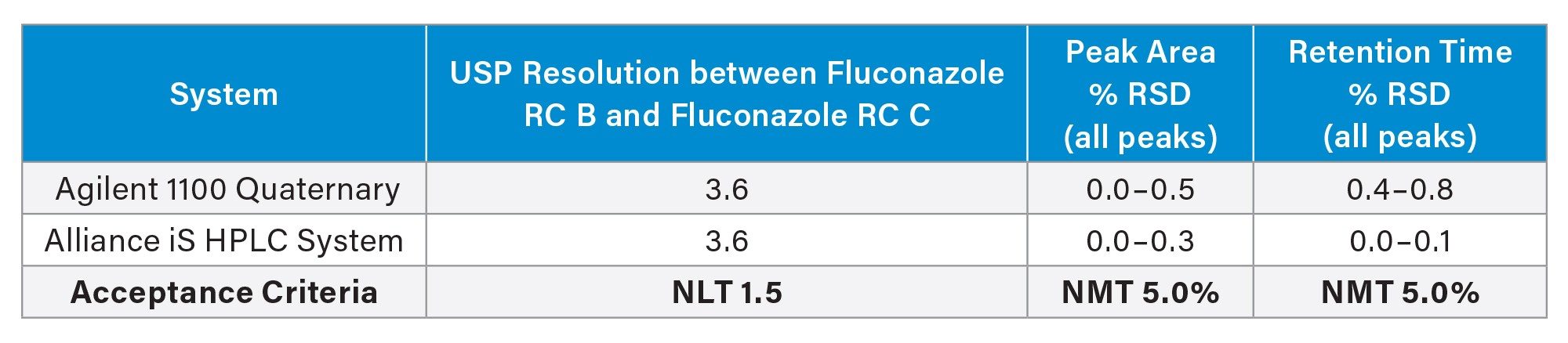
The method for organic impurities of fluconazole2 is an isocratic method, with no impact from gradient delay. The USP method for fluconazole impurities system suitability criteria includes USP resolution, peak area, and retention time precision. The larger HPLC column dimensions and analytical flow rate result in a minimal impact of system dispersion differences on resolution. All other method conditions were within system capabilities.
Given these factors, the method was successfully transferred without requiring adjustments to the established conditions. As described in the USP method, system suitability and quantitation of a sample were evaluated. The suitability requirements, which include analysis of the standard solution, demonstrated comparable results on both systems (Table 1). USP resolution between fluconazole RC B and fluconazole RC C was equivalent, exceeding the USP acceptance criterion. Peak area precision and retention time precision were also well within requirements, with %RSD values substantially below no more than (NMT) 5.0% acceptance criteria. No significant differences were observed across the system indicating that both systems were suitable for the analysis.
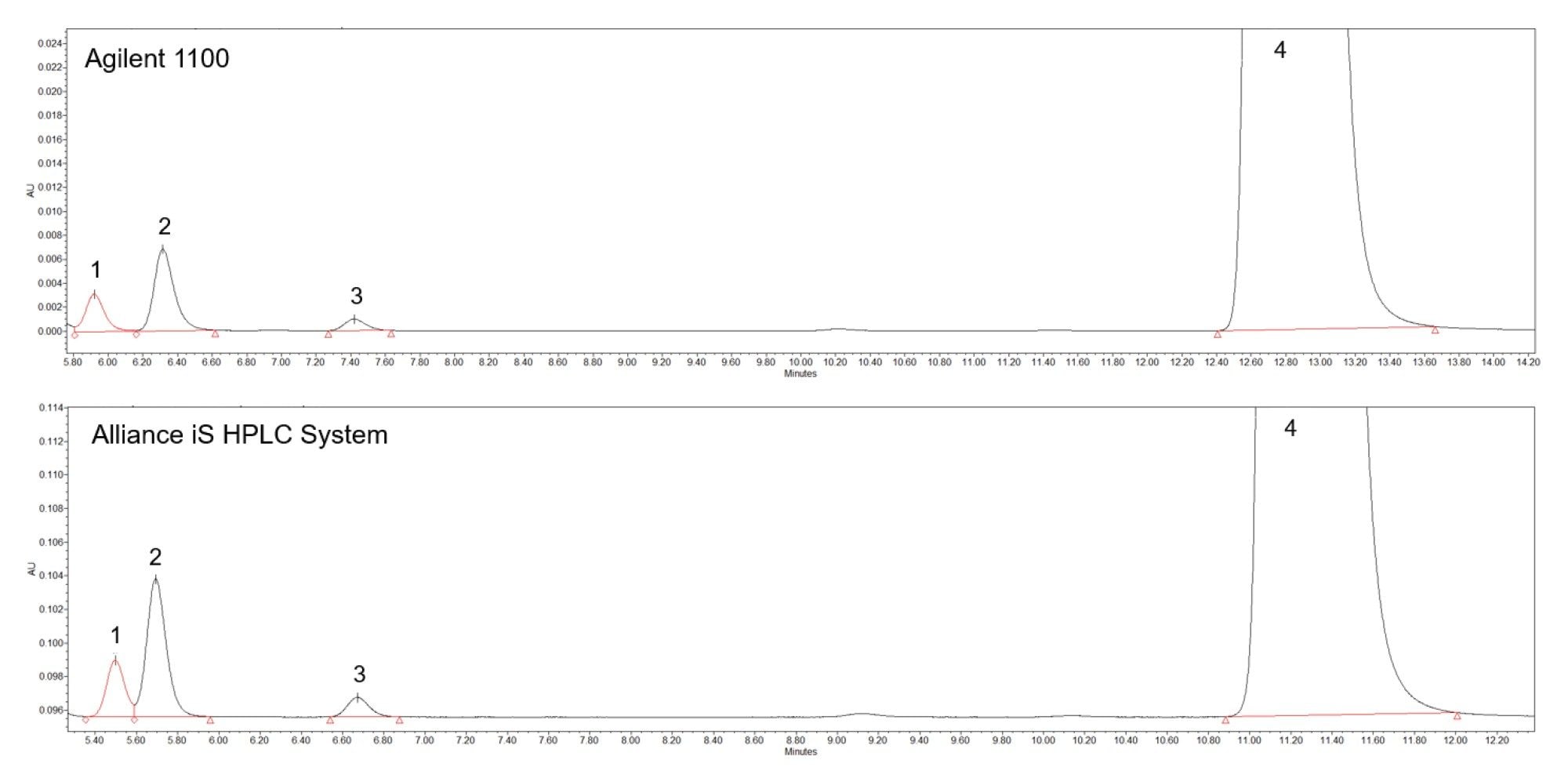
Analysis of a drug substance sample on both systems confirmed the presence of fluconazole related compound A (RC A) along with two unspecified impurities (Figure 1). While there were retention time shifts observed across the systems, the relative retention times (RRTs) of all impurity peaks remained consistent across both systems. Relative retention times for the impurities seen in the chromatogram (Figure 1) are approximately at RRT ~0.460 for unspecified impurity #1 (Peak 1) and approximately at ~RRT 0.580 for unspecified impurities #2 (Peak 3). Differences in column temperature control in combination with elevated temperature (40 °C) may contribute to the observed retention time differences.

Quantitation results of the drug substance sample were also comparable (Table 2). As described in the USP method, quantitation of known and unknown impurities is based on different standards. For known impurities, quantitation is performed against the corresponding standard. For unspecified impurities, where no dedicated reference standard is available, quantitation is performed using the USP Fluconazole Reference Standard and reported as fluconazole equivalents. Thus, RC A was quantified using its corresponding USP impurity reference standard, while the two unspecified impurities were quantified as fluconazole equivalents using the USP Fluconazole Reference Standard, as described in the USP method.4 The percentage (%) impurity results were comparable across both systems, supporting equivalent quantitative performance.
USP Ibuprofen Tablets, Organic Impurities
As with the previous method, the method for ibuprofen tablet organic impurities3 is an isocratic method. Minor modification was needed for the sampling rate: the default sampling rate on the Agilent 1100 System with DAD was 2.5 Hz, while the TUV Detector used a sampling rate of 2 Hz.
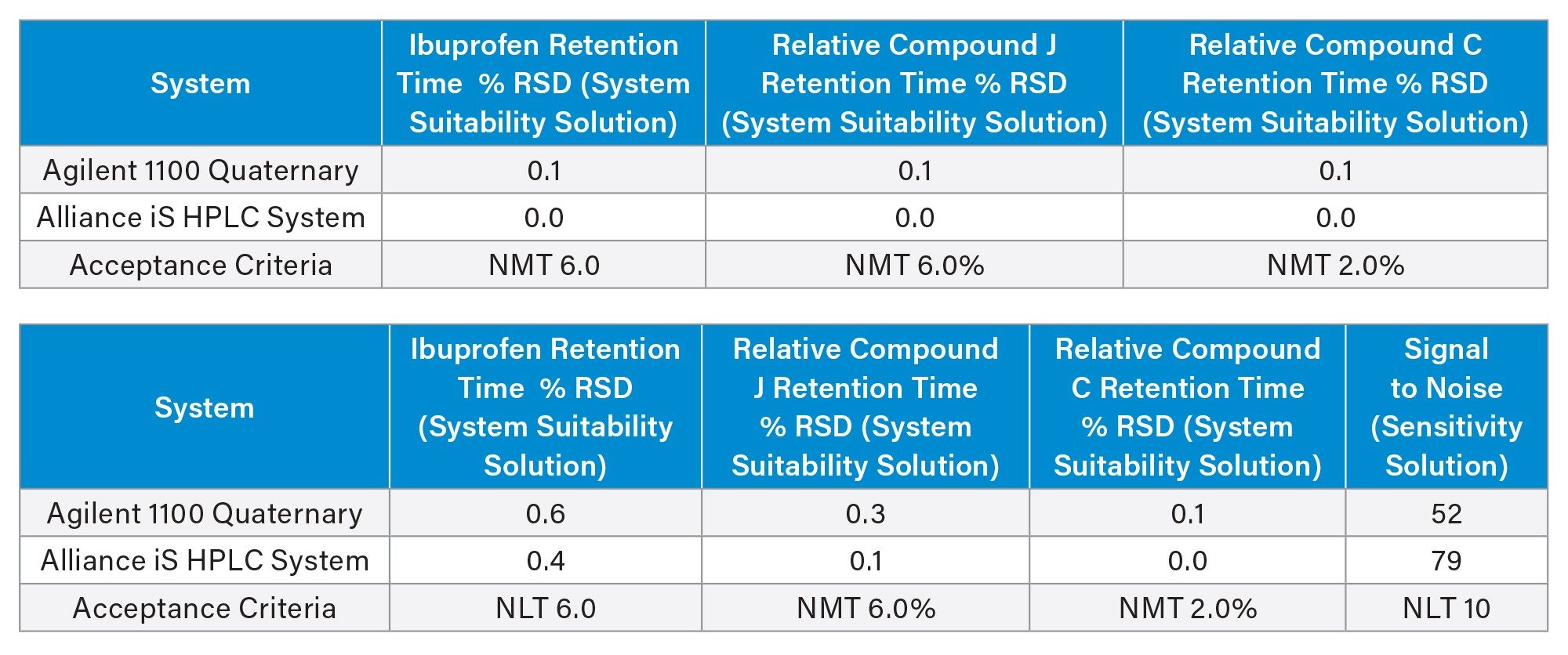
While the USP method criteria include resolution and relative standard deviation, there was also a sensitivity requirement. The latter criterion is critical to ensure the systems have sensitivity required to measure low-level impurities. On both systems, the sensitivity and standard solution produced comparable results across the two systems (Table 3), with both easily meeting the acceptance criteria.
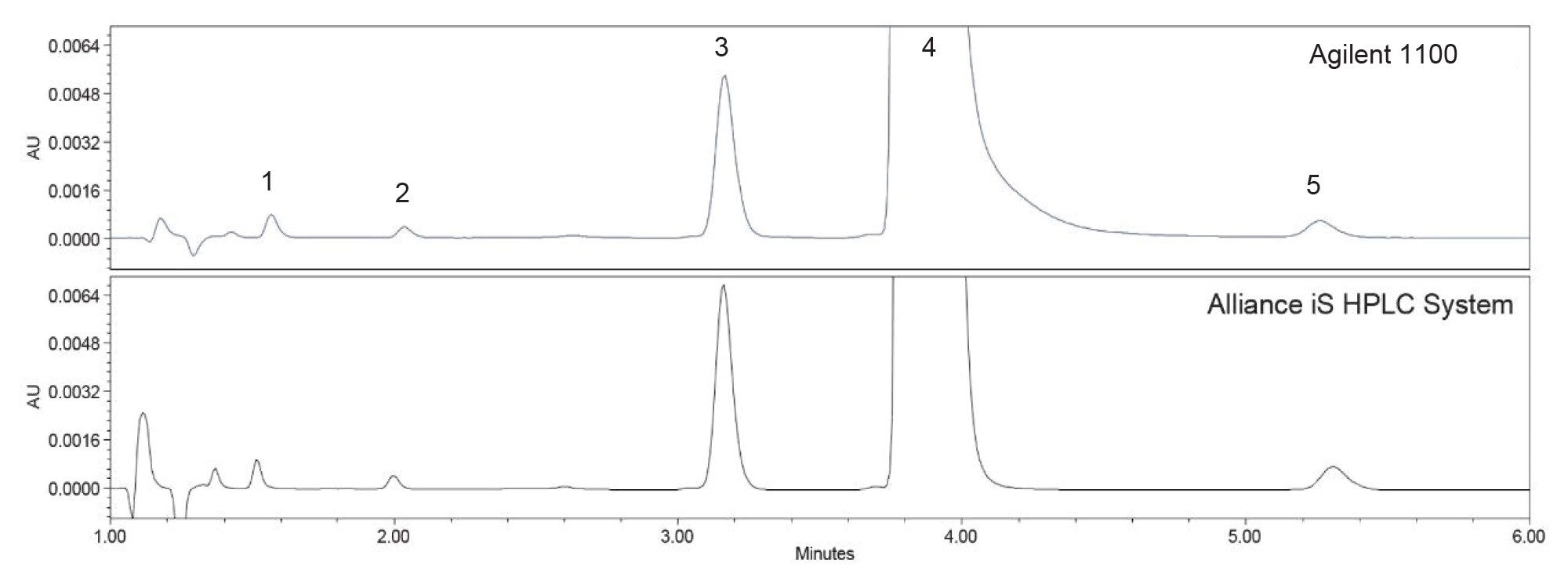
Generic ibuprofen tablets were also analyzed as described in the USP method on both systems.4 The chromatographic results (Figure 2) demonstrated comparable separation across both systems, with the observance of four impurities: related compound J, related compound C, and two unknown impurities. Note: Related compound J and C were present in values <0.00005. All retention times were comparable.

Quantitative results of the sample were also comparable across the two systems. Analysis of impurity results between the Alliance iS HPLC System and the Agilent 1100 System showed comparable results (Table 4). The Unspecified impurity #1 was 0.10% on both systems, while Unspecified impurity #2 was 1.10% on the Alliance iS HPLC System and 1.00% on the Agilent 1100 System.1
The quantitation approach for USP ibuprofen for organic impurities is similar to the USP fluconazole organic impurities method. Quantitation of known and unknown impurities is based on different standards. For impurities, quantitation is performed against the corresponding standard. For unspecified impurities, where no dedicated reference standard is available, quantitation is performed using the USP Ibuprofen Reference Standard and reported as ibuprofen equivalents.
Total impurities were 1.20% and 1.10%, respectively, indicating comparable impurity profiling performance. The small differences observed are consistent with normal analytical variability and do not impact the overall interpretation of sample quality.
USP Quetiapine Drug Substance, Organic Impurities
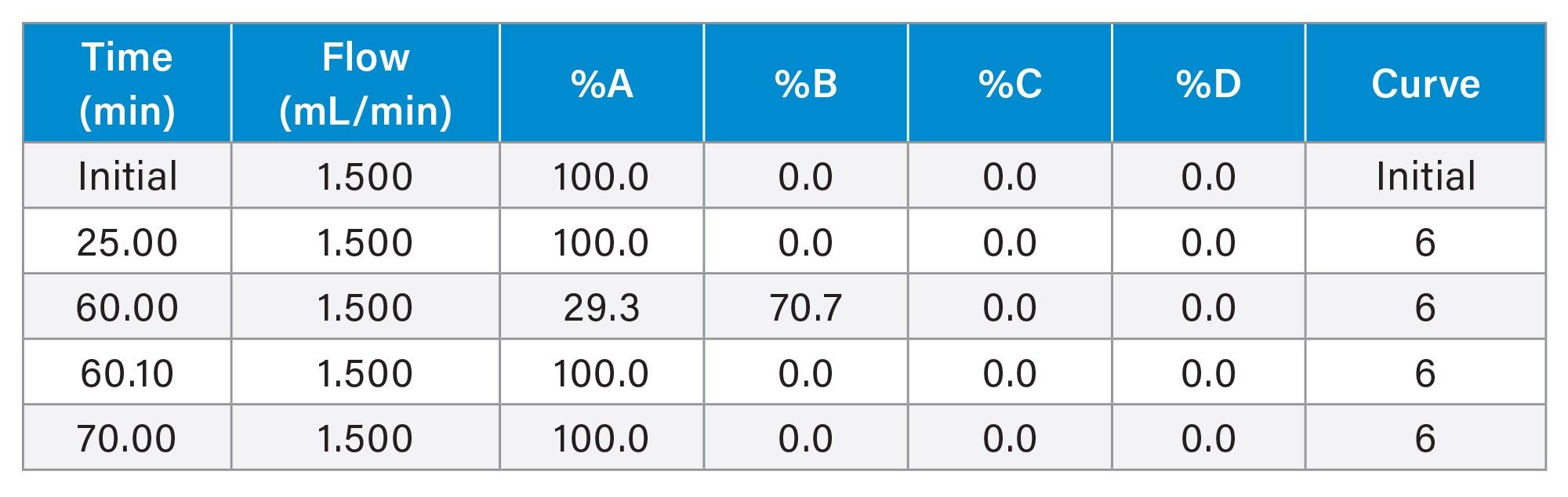
While many USP HPLC methods may be isocratic, gradient methods are also used for an ever-increasing number of separations, including organic impurities. These methods can pose more challenges in method transfer if there is a significant difference in gradient delay. While there are differences in gradient delay from the Agilent 1100 System to the Alliance iS HPLC System, the method conditions including a gradient start after 25 minutes and a flow rate of 1.5 mL/min, minimize any impact on chromatography. Thus, for method transfer, no adjustments were needed.
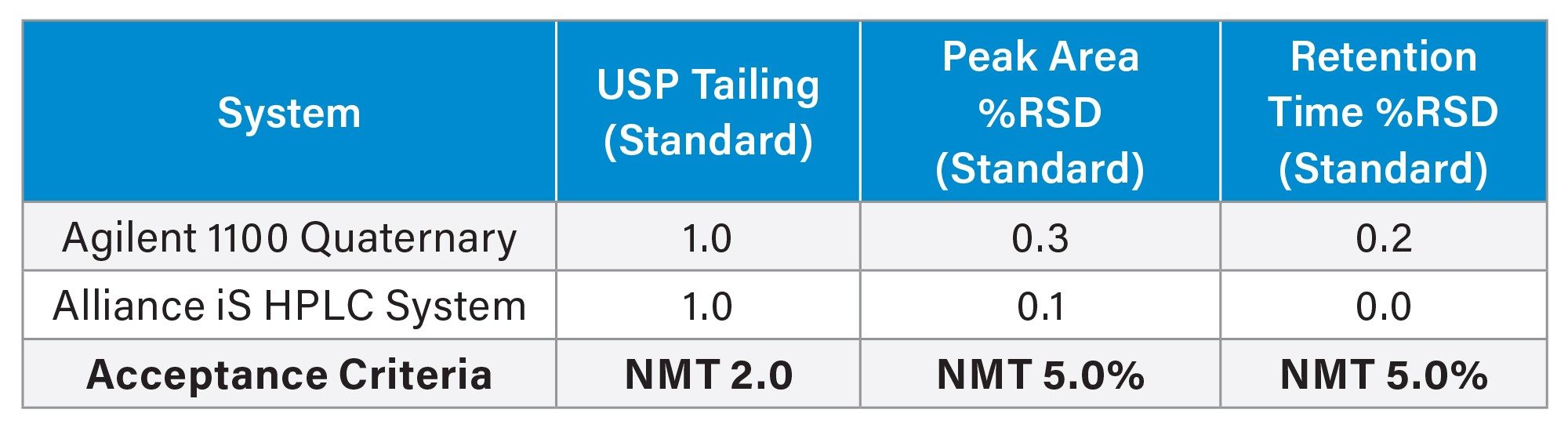
As summarized in Table 5, both the Alliance iS HPLC System and the Agilent 1100 System successfully met all USP system suitability requirements, demonstrating acceptable chromatographic performance and method reproducibility.
Injection precision and retention time reproducibility were well within acceptable values, with peak area %RSD values of 0.1% and 0.3% and retention time %RSD values of 0.0% and 0.2% for the Alliance iS HPLC System and Agilent 1100 System, respectively. The low variability observed across all system suitability parameters demonstrates robust and reproducible system performance and confirms that both instruments provided the precision and chromatographic stability required for reliable impurity analysis.5
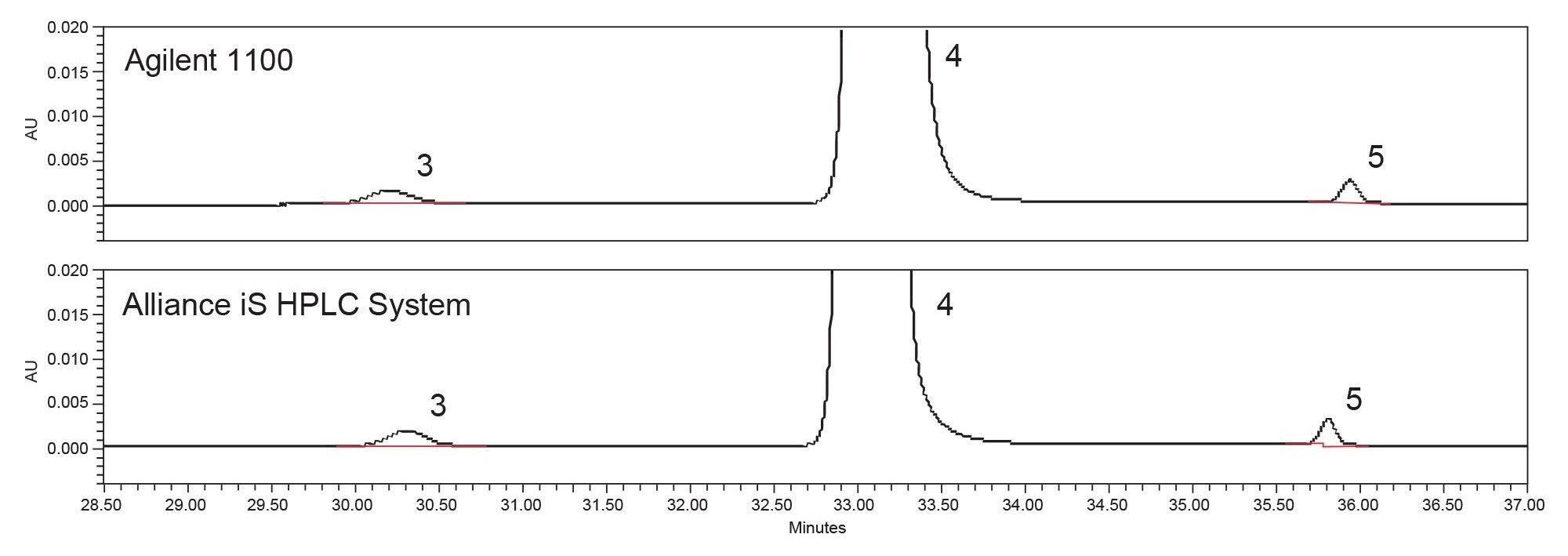

Organic impurity results obtained using the USP quetiapine organic impurities method6 are presented in Figure 3 and summarized in Table 6. Comparison of impurity levels, total impurities, and quetiapine purity demonstrated good agreement between the Alliance iS HPLC System and the Agilent 1100 System. Specifically, the quetiapine desethoxy impurity was quantified at 0.10% on the Alliance iS HPLC System and 0.11% on the Agilent 1100 System, while unspecified impurity #1 was measured at 0.07% on both systems. These individual impurity results resulted in total impurity values of 0.17% and 0.18% for the Alliance iS HPLC System and Agilent 1100 System, respectively. Quetiapine purity values were also highly consistent, with measured purities of 99.83% on the Alliance iS HPLC System and 99.82% on the Agilent 1100 System.
Conclusion
Laboratories using aging HPLC systems face growing pressure to maintain validated method performance while managing instrument lifecycle risks, including serviceability, downtime, and long-term support. This study demonstrates that three USP organic impurity methods—Fluconazole, Ibuprofen tablets, and Quetiapine drug substance—can be successfully transferred from a legacy Agilent 1100 HPLC System to the Alliance iS HPLC System.
Across both isocratic and gradient separations, the Alliance iS HPLC System met applicable USP system suitability requirements and produced chromatographic and quantitative results comparable to the Agilent 1100 HPLC System. These results support the Alliance iS HPLC System as a practical modernization platform, helping laboratories reduce reliance on legacy instrumentation while preserving the performance, sensitivity, and robustness required for routine pharmaceutical impurity analysis.
References
- Hong, P.; McConville, P.R. Transfer of an HPLC Method from an Agilent 1100 Series LC to an Alliance iS HPLC System, Waters Application Note, 720005445, July 2015.
- GUID-F961B739-9D37-4719-8E8A-1E7474DFE57D_3_en-US (Fluconazole Imp. Method).
- GUID-B108D32E-F28B-41A3-84C7-62D1C4F37646_1_en-US (Ibuprofen Imp. Method).
- Reed, C.E.; Hong, P. Method Migration of the USP Ibuprofen Assay and Organic Impurities Method to an Alliance iS HPLC System. Waters Application Note, 720007866, February 2023.
- Dlugasch, A.B.; Gauthier, L.; Hong, P. Successful Method Migration of the USP Quetiapine Fumarate Impurities Method to an Alliance iS HPLC System. Waters Application Note, 720007944, May 2024.
- GUID-DBEED03E-7C75-4167-BD21-4E30BA2EFF2B_2_en-US (Quetiapine Imp. Method).
Featured Products
720009612, October 2026


