
High-Throughput LNP Compositional Analysis Using GTxResolve™ RP 230 Å PH+ Columns: Robustness and Reproducibility
Mateusz Imioleka, Stephan M. Kozab
aWaters Corporation, Geneva, Switzerland
bWaters Corporation, Milford, MA, United States
Published on June 08, 2026

Abstract
This application note introduces a new GTxResolve Reversed Phase Column designed for the separation of strongly hydrophobic analytes such as lipids, showcasing the compositional analysis of lipid nanoparticles (LNPs) and demonstrating precise column-to-column and batch-to-batch reproducibility. The columns are packed with wide pore (230 Å) superficially porous particles featuring optimal retentivity for lipid separations that is achieved by high density surface charge and the choice of phenyl hexyl ligand. Owing to its dedicated solid core particle design even a short column (50 mm) enables full resolution of four basic components of LNPs in analysis time as short as 4 mins providing repeatable separations over 500 injections of complex LNP and lipid mixtures while operated at an elevated flow rate. Highly reproducible results were obtained comparing both different columns and particle batches, with consistent retention times even when running longer gradients. Finally, the novel particle was evaluated against legacy fully porous stationary phase of similar chemistry showing that the new column design allows 50% faster separation and improved selectivity for a critical peak pair. Together, this application note establishes the superb performance of GTxResolve RP 230 Å PH+ Columns for routine characterization of complex LNP formulations.
Benefits
- Introduced a new column purposefully designed for analysis of various classes of lipids
- Established robust lipid separations with high resolution at speed tested for cholesterol, ionizable, PEGylated and phospho-lipids commonly found in LNPs
- Demonstrated column-to-column and batch-to-batch reproducibility to ensure reliable performance in routine quality control assays
Introduction
LNP nucleic acid drug delivery vectors have become indispensable tools for emerging RNA based therapeutics and vaccines as evidenced by the registration of over 180 clinical trials in the last two decades.1 Similarly, lipidomics experienced a shift from a once niche technique to one of the most dynamically growing ‘omics’ fields in biomedicine with an average annual growth rate >25% over the same period.2 With therapeutic areas expanding into new disease categories, and research themes focusing on accurate biomarker and metabolism studies, the relatively young field of lipid characterization is in need of fit-for-purpose optimized tools to ensure robust and productive analytical workflows.
For example, LNP performance highly depends on combining defined ratios of ionizable lipids, cholesterol, helper phospholipids, and PEGylated‑lipids, which ultimately determines physicochemical properties (stability, nucleic acid encapsulation propensity etc.) as well as pharmacodynamics. This establishes precise quantification of lipid composition and identity as an essential quality control test, typically performed using reversed-phase chromatography³. Ionizable lipids are now being systematically diversified in structure and chemistry in order to improve pharmacokinetics, challenging existing analytical solutions and necessitating lengthy method optimization in order to adapt current methods.4 As LNP development is increasingly based on combinatorial ionizable lipid screening campaigns and iterative formulation optimization, such an approach calls for high-throughput and robust lipid characterization tools that can significantly speed up development of new LNP based drugs.
To address those challenges, Waters introduced a new column, purposefully designed for such applications requiring reliable high-resolution separations without compromising speed. A new particle architecture (Figure 1) was developed featuring optimal lipid retentivity via implementation of high-density acid activated positive surface charge along with lower hydrophobicity phenyl-hexyl ligands.
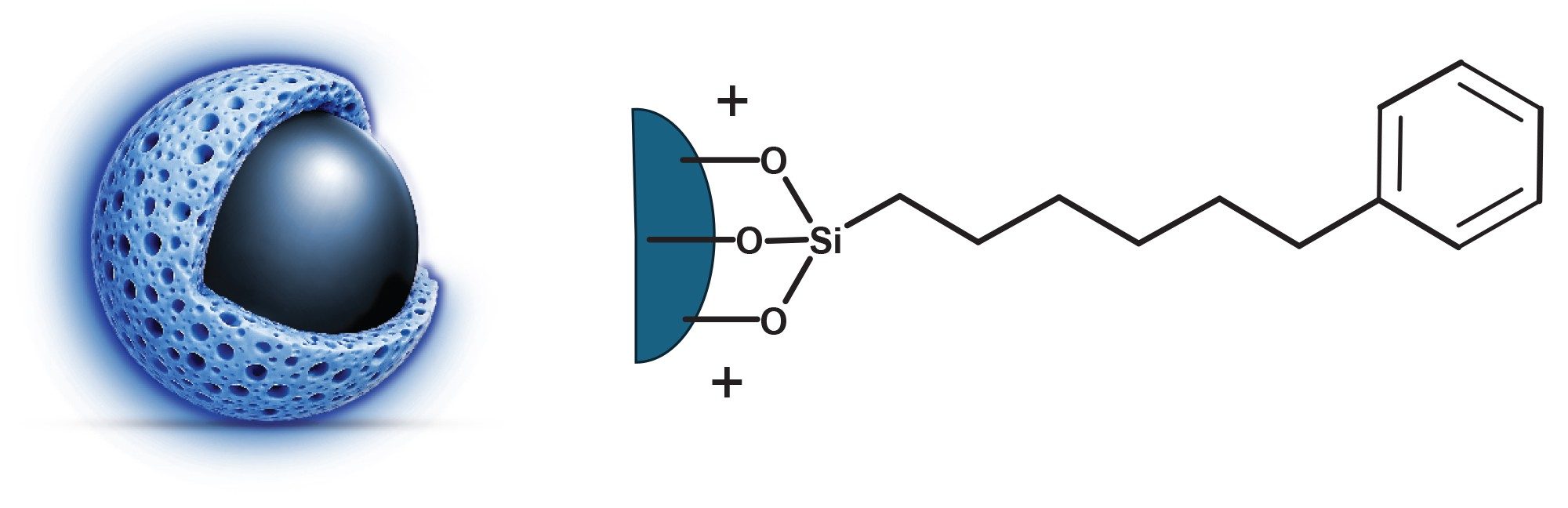
Additionally, a superficially porous wide pore structure ensures exceptional mass transfer properties resulting in superior efficiency separations at high linear velocities allowing for the development of rapid methods. This stationary phase is packed into columns utilizing low adsorption MaxPeak™ High Performance Surfaces (HPS) eliminating carry over and improving out-of-the box performance. The columns are compatible with various detection modes, including charged aerosol detection (CAD), the implementation of which has been described elsewhere.5 Reproducibility data demonstrate that adequate separation of LNP-relevant lipid mixtures is achieved even under generic analytical conditions, using UV detection for optically active lipids and evaporative light scattering detection (ELSD) for the remaining species.
Experimental
The test analytes were prepared as individual concentrated stocks in MeOH before mixing to obtain two different lipid mixtures. Lipids were purchased from various suppliers (Sigma-Aldrich, Cayman Chemical, Fluorochem, Medchem Express) and dissolved in MeOH upon 5 mins sonication in ambient temperature water ultrasound bath to a concentration of 1 – 10 mg/mL and subsequently stored at -20 °C. The composition of the samples were:
- Canonical lipids mixture: Cholesterol (0.1 mg/mL), ionizable lipid: DLin-MC3-DMA (0.067 mg/mL), PEGylated lipid: ALC-0159 (0.18 mg/mL), phospholipid: DOCPe (CAS: 1360461-58-0, 0.2 mg/mL).
- LNP and ionizable lipids mixture: Cholesterol (0.025 mg/mL), ionizable lipids: DLin-MC3-DMA (0.067 mg/mL), ALC-0315 (0.05 mg/mL), C12-200 (0.067 mg/mL), PEGylated lipid: ALC-0159 (0.1 mg/mL), phospholipid: DSPC (0.134 mg/mL) and drug product Moderna COVID-19 Vaccine (NDC 80777-279-99, source of SM-102 ionizable lipid, 20x dilution).
LC Conditions
|
LC system: |
ACQUITY™ Premier System (BSM) |
|
Detection: |
ELSD detector: SEDEX 85 LT-ELSD (Sedere, France), drift tube temp: 40 °C, gain: 7, nebulizer gas pressure 48 psi, acquisition rate 25 Hz (eSATIN); ACQUITY UPLC™ TUV Detector with Analytical FC – 500 nL volume, 10 mm pathlength, 205 nm, acquisition rate 40 Hz For equivalent CAD detector conditions, see Reference 5 |
|
Vials: |
QuanRecovery™ with MaxPeak HPS 12 x 32 mm Screw Neck Vial, 300 µL, 100/pk, (p/n: 186009186) |
|
Column: |
GTxResolve Lipid Phenyl-Hexyl+ RP Column, MaxPeak Premier Technology, SPP, 1.6 µm, 230 Å, 2.1 x 50 mm (p/n: 186011698) |
|
Column temperature: |
40 °C |
|
Sample temperature: |
20 °C |
|
Injection volume: |
3.0 µL |
|
Flow rate: |
0.4 mL/min or 1 mL/min |
|
Mobile phase: |
MPA: 0.1% formic acid in H2O |
|
MPB: 0.1% formic acid in MeCN |
|
|
FTN solvents: |
MeOH was used as weak needle wash and equal volume mixture of MeOH/H2O/IPA/MeCN + 0.1% formic acid was used as Sample Manager strong wash |
Results and Discussion
Canonical Lipids Separation and Reproducibility
Lipid separations have been previously studied using CSH™ Phenyl-Hexyl stationary phase, which was identified as having optimal lipid retention characteristics, particularly as it yields a sharp, narrow peak for ionizable cationic lipids.6 Since GTxResolve RP 230 Å PH+ Columns are a next generation optimization of similar chemistry, their performance was first investigated using simple gradient elution acetonitrile supplemented with 0.1% formic acid, previously identified as a suitable starting point mobile phase for method optimization.
All tests were performed with 2.1 x 50 mm columns, starting with four columns from the same batch, which were tested with a high-throughput 4 mins method with elevated flow rate and short gradient time and a slower resolving method with a 10 mins gradient time.
Two different lipid test sample mixtures were prepared that would be representative of most commonly studied lipids that are used in various LNP formulations including cholesterol, cationic lipid, helper lipid, and PEGylated lipids (see Sample Description for details). To avoid potential bias from detection method, one of samples, the canonical lipid mixture, consisted of lipids which can be detected via their UV absorption. The second sample consisted of library of popular ionizable lipids and an approved LNP drug product additionally supplemented with lipid of interests, which required ELSD - a universal detection for non and semi volatile analytes.
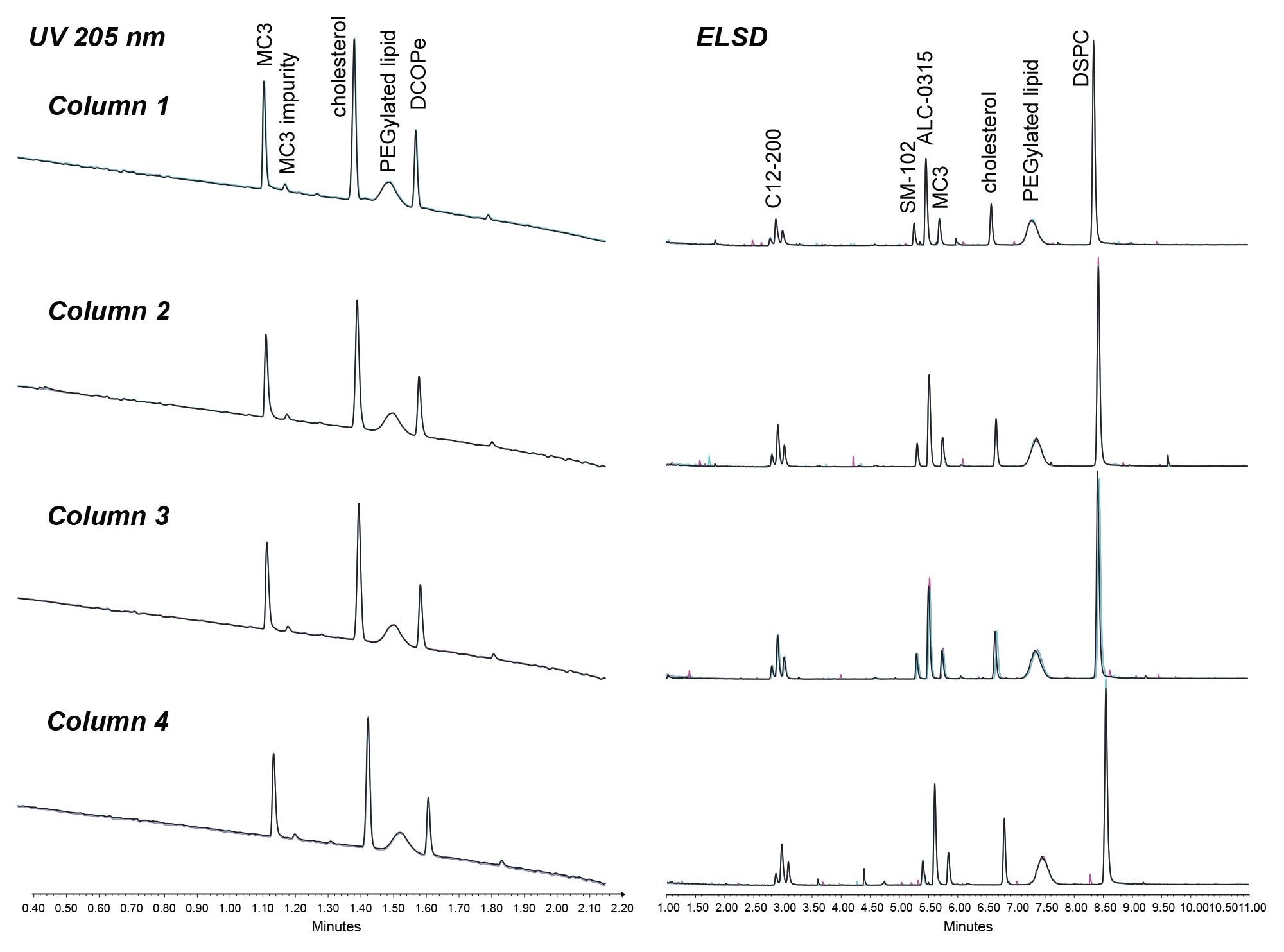
The results of the tests are presented in Figure 2. As predicted, ionizable lipids are highly repelled from the particles and are least retained, while hydrophobic phospholipids are the last ones to elute. Remarkably, good selectivity was observed with a generic 40%-90% B gradient, allowing discrimination of all injected compounds, including partial separation of the weakly retained C12-200 cationic lipid diastereoisomers and full separation of low abundance oxidized MC3 lipid impurity.
A complete overlay of three injections confirms significant precision of separation in all cases. The high-throughput separations (Figure 2, left chromatograms) are highly reproducible with maximum retention time RSD = 1.1% and average peak area RSD = 9%, likely affected by residual evaporation of solvent from the sample vial occurring between measurement of different columns. All visible peaks are separated and variations in width at half height were 5.7% or lower.
It is worth noting that despite the fact that UV detection of this mixture requires relatively high mass load injections (~2 µg, due to absence of good chromophores with UV absorbance driven by unsaturated bonds, carbonyl groups), the peak shapes observed had USP tailing factors below 2.
The resolving separations (Figure 2, right chromatograms) were assessed for peak capacity assuming elution window for ionizable lipids and using maximum observed peak width. All tested cationic lipids were fully resolved under these conditions (Rs > 2.0), with the columns yielding similar peak capacities in the range of 37–40 peaks. High retention time reproducibility was also observed (RSD ≤ 1.0%). The residual low intensity spikes appearing randomly in repeated injections were attributed to unoptimized ELSD method for residual LNP drug product formulation components (e.g. sucrose).7
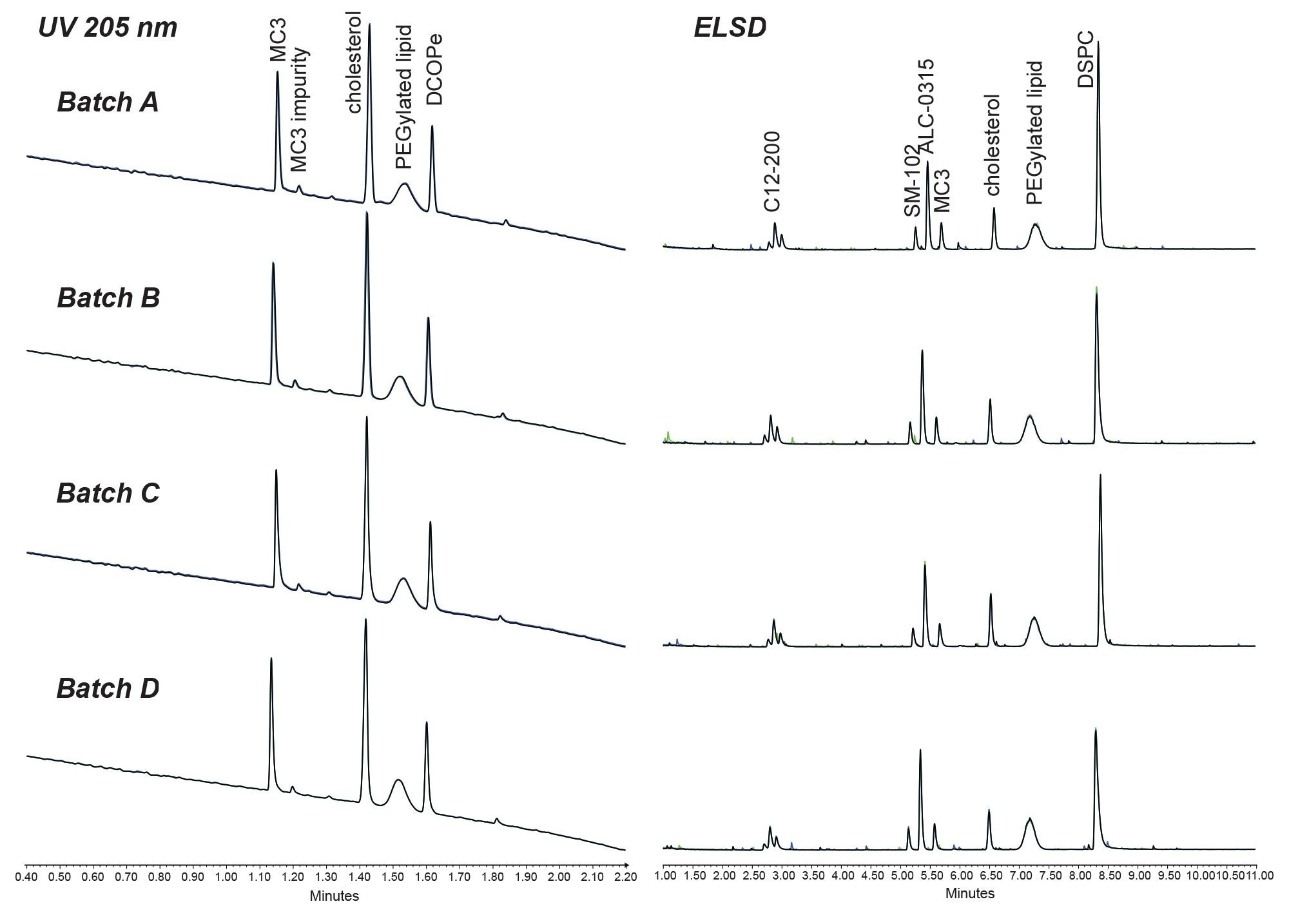
Analogous tests were performed for four columns packed with stationary phase from different batches. Minimal selectivity differences were observed between particles from different lots; in high-throughput separation, all injected compounds could be separated (Rs > 1.5) with consistent retention times (maximum RSD = 0.7%) and peak areas (average RSD = 6.3%).
The resolving separation revealed remarkably consistent ionizable lipid peak capacity in range of 38-39 peaks. The only minor observed difference was in regard to DSPC peak shape (Batch D) with half height peak width RSD at 13.4%, within expected batch-to-batch variation under an unoptimized method conditions.
Summing up, presented above data confirm reproducibility of the GTxResolve RP 230 Å PH+ Columns and their suitability for routine quality control assays during characterization of LNP and its lipid components.
Column Lifetime and Advantage Over Legacy Methods
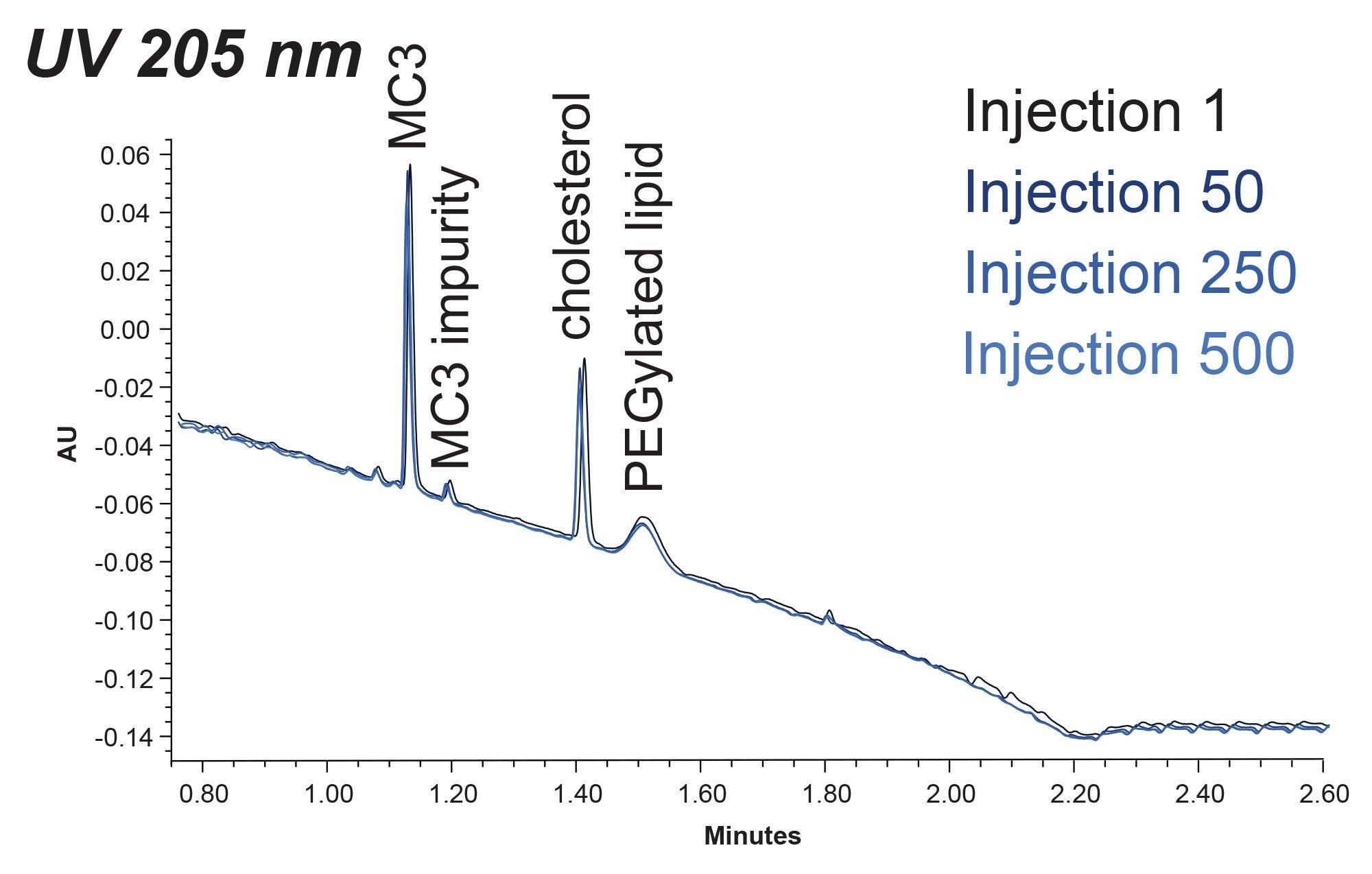
In the next step, the stability of a column was evaluated in an accelerated stress test, using elevated flow rate conditions and injecting a complex sample containing LNP formulation matrix after precipitation of the nucleic acid payload. To this end, 500 injections of an LNP and ionizable lipids mixture were performed using the high-throughput method and the quality of separation was monitored. The chromatographic results showing an overlay of injections 1, 50, 250 and 500 monitored by UV are shown in Figure 4.
Throughout the stability testing, satisfactory separation of the MC3 ionizable lipid and its impurity was observed. Overlay of chromatograms shows high reproducibility of the separation with minimal peak distortion and conservation of retention time. No cleaning procedure was used in between the samples highlighting high robustness of the column under challenging conditions. In standardized sequence, a strongly eluting alcohol (e.g. 100% isopropanol) or buffered MeOH (20 mM ammonium acetate) cleaning should be implemented to guarantee satisfactory performance over a longer period.
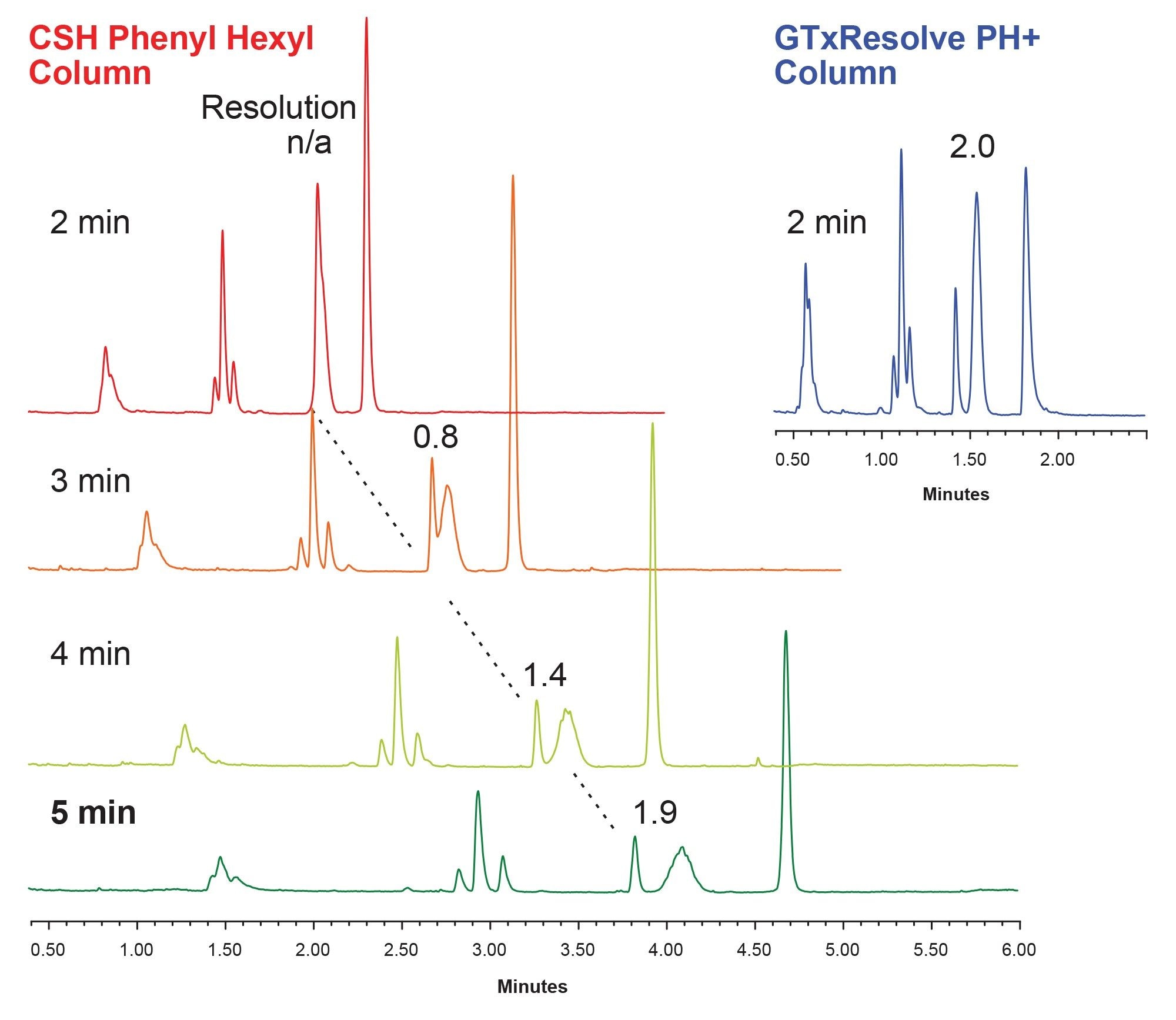
Prior experimentation had shown that a useful separation could be achieved with the fully porous CSH Phenyl Hexyl legacy Ccolumn.6 Accordingly, the two columns were compared using high-throughput conditions (Figure 5). Satisfactory separation of the different ionizable lipids was observed on both columns - typically only one ionizable lipid is used during LNP formulation. However, separating the LNP and ionizable lipid mixture under high-throughput conditions required much longer gradient time (5 mins vs 2 mins) to achieve similar resolution of the critical peak pair (cholesterol and PEGylated lipid), partially driven from significant sharpening of PEGylated lipid peak for the GTxResolve Column (almost 75% sharper peak).
Conclusion
This application note describes the first applications of a GTxResolve RP 230 Å PH+ Columns designed for lipid separations and demonstrates manufacturing reproducibility and high-throughput separation capabilities. Employing an optimized charged surface, these superficially porous particles allowed for the separation of complex samples representative of commonly used LNP formulations using generic conditions. Superiority to existing solutions (e.g. over 50% faster runs and selectivity gains) was verified suggesting that this column can provide benefits when establishing platform methods, for the rapid screening of LNPs composed with diverse libraries of ionizable lipids. Robust performance was observed in a demanding column stress study also indicating its suitability for routine assays. With clearly defined physicochemical characteristics of the particle, guided method development (interplay of electrostatic/hydrophobic interactions) can be performed to optimize the separations towards a specific lipid in cases where co-elution might be observed or specific focus might be needed. Such considerations, for example, on effects of adjusting the ionic strength and organic co-solvents are described in accompanying application note.8
References
- M. Zhang; L. Van; M.M. Amiji. Pharmacometric Modeling of Lipid Nanoparticle-Encapsulated Mrna Therapeutics and Vaccines: A Systematic Review, Mol. Ther. Nucleic Acids 36 (2025) 102686. https://doi.org/10.1016/j.omtn.2025.102686.
- P. Li; Z. Sun; X. Chen; Q. Shao; H. Wu. Mapping Current Research Status and Emerging Frontiers of Lipidomics: A Comprehensive Data‑Mining‑Based Study, Metabolomics 21 (2025) 85. https://doi.org/10.1007/s11306-025-02292-6.
- United States Pharmacopeia (USP), Analytical Procedures for Quality of Mrna Vaccines and Therapeutics, Draft Guidelines, 3rd ed., USP–NF (2024). https://www.usp.org/mrna-quality.
- G.S. Naidu, R. Rampado, P. Sharma, A. Ezra, G.R. Kundoor, D. Breier, et al. Ionizable Lipids With Optimized Linkers Enable Lung‑Specific, Lipid Nanoparticle‑Mediated Mrna Delivery for Treatment of Metastatic Lung Tumors, ACS Nano 19 (2025) 6571–6587. https://doi.org/10.1021/acsnano.4c18636.
- R. Birdsall; X. Du; P. Bigos; D. Han; N. Bhiwankar. Automating Charged Aerosol Detection (Cad) Analysis With Empower™ CDS Software Using a Single‑Vendor Integrated LC Platform, Waters Application Note (2026) 720009297.
- B.A. Alden; G. Isaac; W. Chen; M.A. Lauber. Lipid Nanoparticle Compositional Analysis Using Charged Surface Hybrid Phenyl‑Hexyl Separation With Evaporative Light Scattering Detection, Waters Application Note (2021) 720007331.
- S. Almeling; U. Holzgrabe. Use of Evaporative Light Scattering Detection for the Quality Control of Drug Substances: Influence of Different Liquid Chromatographic and Evaporative Light Scattering Detector Parameters on the Appearance of Spike Peaks, J. Chromatogr. A 1217 (2010) 2163–2170. https://doi.org/10.1016/j.chroma.2010.02.017.
- M. Imiolek; S. M. Koza. High throughput LNP Compositional Analysis using GTxResolve™ RP 230 Å PH+ Columns: Method Development Considerations, Waters Application Note (2026) 720009411.
Featured Products
720009411, June 2026


