Practical AI for the Intelligent Laboratory


Artificial intelligence (AI) is changing what’s possible in today’s labs, but meaningful innovation requires more than just adding AI to existing technology. It must simplify real work, support scientific confidence, and operate within the controls labs rely on. 

Waters is bringing practical AI and machine learning (ML) into its software and analytical workflows, helping laboratories reduce routine complexity, process data more consistently, and make trusted capabilities easier to access. From conversational interaction with waters_connect Software to AI/ML-powered peak integration, these innovations are designed to help scientists work more efficiently while maintaining the control, traceability, and data integrity required by modern laboratories. 

Waters helps your laboratory by: 

  • Simplifying complex workflows by making supported software capabilities accessible using natural language 

  • Reducing repetitive work through intelligent automation of routine laboratory activities 

  • Improving data processing consistency with AI/ML-powered peak integration 

  • Supporting control and confidence by bringing AI into established laboratory software and workflows 

  • Creating a foundation for the AI-enabled lab where scientists can spend less time managing software and data and more time focused on scientific insight


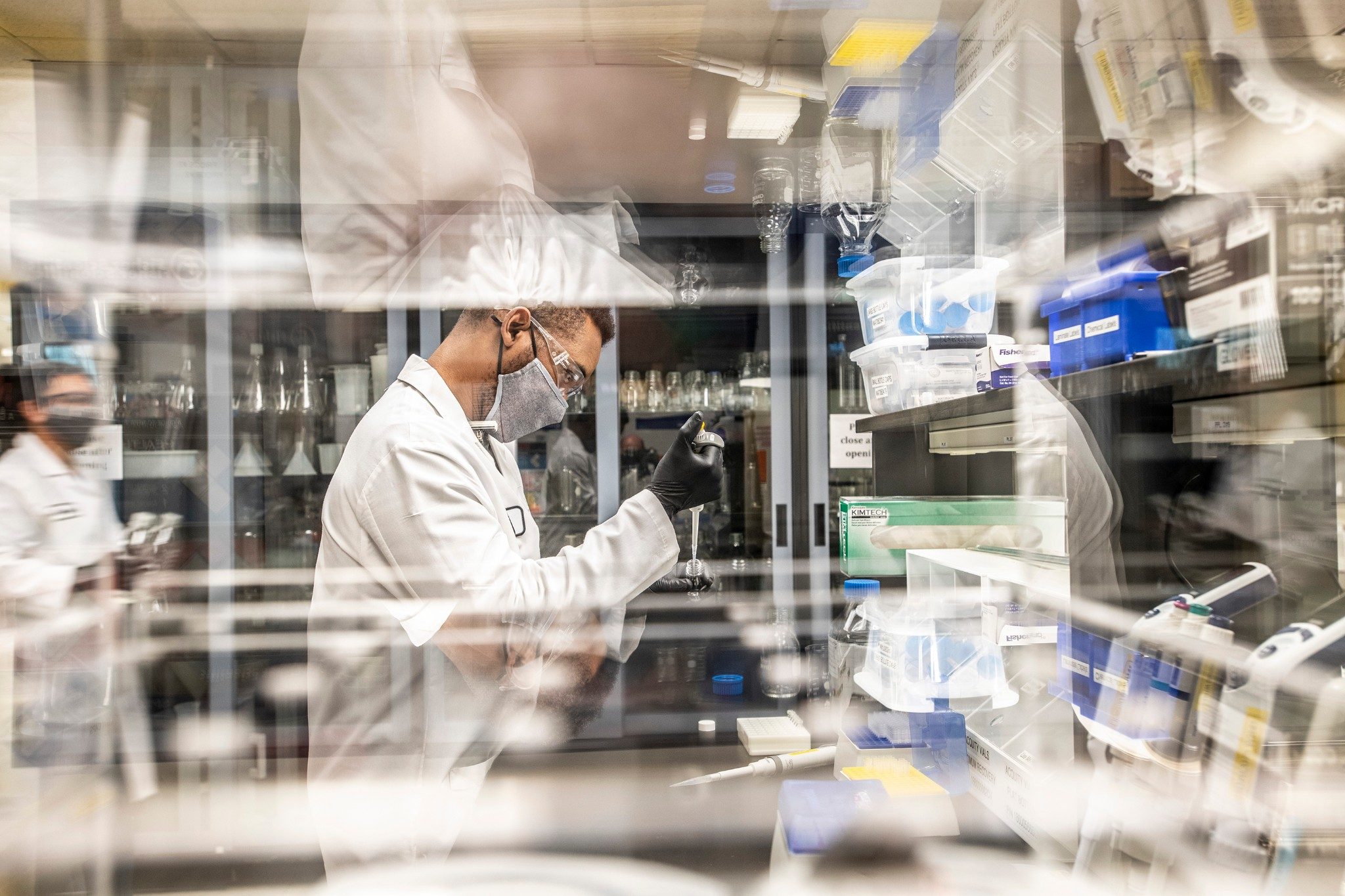
A scientist wearing a mask, using a pipette, with another masked scientist walking behind him. The photo is shot between two clear plastic trays providing a reflective abstract feel.
Scientist using pipette

Mauris efficitur ante feugiat, elementum velit pulvinar, facilisis nulla. Proin posuere faucibus velit id consectetur. In quis nunc placerat, egestas felis ac, pellentesque velit. Cras vitae ligula ante. Nunc sit amet accumsan elit, eget commodo eros. Etiam imperdiet mi nunc, sit amet dapibus risus porta.

  • Nam hendrerit facilisis ante
  • Vel eleifend lorem sodales in
  • Nullam condimentum orci dolor


Make Complex Workflows as Simple as a Conversation


Laboratory software supports highly specialized scientific work, but everyday tasks can still involve navigating multiple applications, menus, and setup steps. Waters AI Link introduces a more intuitive way to interact with waters_connect Software, allowing scientists and laboratory teams to use natural language to access supported capabilities and turn requests into defined actions within their analytical workflows. 

Built using the open Model Context Protocol (MCP) standard, Waters AI Link converts waters_connect Software capabilities into AI-accessible tools.

This supports activities like:

  • Creating and editing sample lists
  • Working with acquisition methods
  • Assigning instruments
  • Submitting work
  • Accessing analytical results
  • Generating reports 

Instead of manually navigating every individual step, scientists can describe what they want to accomplish conversationally while Waters AI Link connects that request with the appropriate capabilities in waters_connect Software.

Importantly, this more intuitive experience does not mean giving AI unrestricted access to the laboratory. Every action remains subject to waters_connect Software authentication, permissions, and access controls, meaning users can only perform actions through AI that they are already authorized to perform directly. The laboratory's scientific applications and validated assets remain in place, with AI providing a new way to interact with those established capabilities. 

By combining natural-language interaction, an open architecture, and platform-level controls, Waters is building a foundation that can expand as more capabilities become available, helping move laboratory AI from experimentation toward a practical part of everyday scientific work. 

Two scientists in laboratory. One working with Xevo TQ Absolute and the other on a computer using Waters Connect

Transform Data Processing with Intelligent Automation


Peak integration is a critical part of chromatographic data processing, yet traditional approaches can involve considerable manual intervention and variability. Waters is applying AI/ML directly to this challenge, helping laboratories increase the speed, consistency, and scalability of data processing while reducing the manual effort associated with traditional peak integration.

AI/ML-powered peak integration brings intelligent automation directly into the software laboratories use for analytical workflows. The capability is available in waters_connect for Quantitation Software and has also been introduced through a beta program for Empower Software, bringing machine learning into established Waters Informatics environments rather than treating AI as a separate or experimental technology.

For laboratories, that can mean: 

  • Less manual intervention in routine peak integration 

  • Greater consistency in the way complex analytical data is processed 

  • Improved reproducibility by reducing integration variability 

  • Greater scalability and efficiency as laboratories process larger volumes of data 

  • More time for scientific insight by reducing the effort spent manually managing data 

For high-throughput and regulated laboratories in particular, the significance extends beyond automation. Waters is integrating AI/ML into existing analytical workflows while retaining the control, traceability, auditability, and data integrity these environments require. It is a tangible example of how AI can move beyond future potential and become a practical capability that scientists can use within their everyday laboratory software.

Many scientists working in a busy laboratory

Adding AI to the Regulated Laboratory


For regulated laboratories, realizing the potential of AI means balancing innovation with the requirements that protect product quality, data integrity, and, ultimately, patient safety. As AI and machine learning become part of pharmaceutical laboratory workflows, established principles including data governance, risk management, validation, transparency, traceability and human oversight remain fundamental.

Regulatory expectations are also evolving alongside the technology. FDA and EMA guidance increasingly addresses the use of AI across drug development and regulated environments, including expectations around model transparency, data governance, lifecycle management, validation, and human oversight. For QC laboratories, the opportunity is therefore not simply to adopt AI faster, but to introduce it in ways that preserve scientific rigor, reproducibility, and appropriate control.

Waters is helping laboratories understand this changing landscape and the considerations that accompany AI adoption in GMP environments. From establishing strong data foundations and an appropriate governance framework to preparing for regulatory inspection, our experts explore the practical steps that organizations should consider as they build greater AI maturity.

Explore AI and compliance in the regulated laboratory: 

International team of scientists working together in medical laboratory doing research on  chemicals and bacteria

Practical AI. Trusted Science. Connected Workflows.


AI should not add another layer of complexity to the laboratory. It should help remove complexity from the work that consumes scientists’ time. 

With Waters AI Link, Waters is making laboratory software capabilities easier to access through natural-language interaction. With AI/ML-powered peak integration, Waters is applying intelligent automation to help laboratories process analytical data more consistently and efficiently.

Together, these innovations demonstrate a practical approach to AI for the laboratory, embedding intelligent technology into real scientific workflows while maintaining the control, traceability and confidence laboratories depend on. 

Businessman on blurred background using globe network hologram with America Usa map 3D rendering

Ready to learn how AI innovations in Waters Software can help your lab? Contact us today.

Back To Top Back To Top