

For forensic toxicology use only.
- Main
-
For forensic toxicology use only.
Nayan S. Mistry, Emily Lee, Gareth Hammond
Waters Corporation, United States
Published on May 26, 2026
For forensic toxicology use only.
Illicit drug use and trafficking contribute substantially to public harm, societal instability, and the perpetuation of violence. The analytical characterization of seized drug samples constitutes a critical component of enforcement and monitoring strategies designed to restrict the manufacture, distribution, and consumption of controlled substances.1 As the volume of seized materials submitted for forensic examination continues to rise, forensic drug laboratories face increasing operational pressure to deliver rapid, accurate, and scientifically robust analytical results.
Traditional analytical workflows employed in forensic drug laboratories typically involve an initial presumptive screening stage followed by confirmatory analysis. However, many commonly used screening methodologies are prone to creating analytical bottlenecks, as they may be time‑intensive, exhibit limited selectivity, or generate elevated rates of false‑positive results. Consequently, the development and implementation of screening techniques that are analytically robust, rapid, and operationally efficient are of significant interest to forensic laboratories seeking to improve throughput and maintain high evidentiary standards.
The RADIAN ASAP Mass Detector has previously demonstrated substantial potential as a rapid and accurate triage tool for the analysis of seized drug materials.² The present study further investigates its applicability and analytical suitability for use as a frontline screening technique in forensic drug casework.
The analytical examination of seized drug samples is integral to the effectiveness of national and international initiatives aimed at controlling the use, trafficking, and distribution of illicit substances. Such materials may be confiscated in a wide range of environments, including entertainment venues, correctional facilities, and border‑control settings, by law‑enforcement and customs agencies. The continued rise in both the volume of seized samples submitted for laboratory analysis and the chemical diversity and potential toxicity of emerging substances places substantial operational demands on drug‑control and forensic chemistry laboratories, necessitating the rapid production of accurate and reliable analytical results.
Industry guidelines, most notably those established by the Scientific Working Group for the Analysis of Seized Drugs (SWGDRUG), outline the minimum analytical requirements necessary for laboratories to achieve a reliable and scientifically defensible identification of controlled substances in seized materials.3 At a minimum, an analytical workflow must incorporate two independent techniques. These techniques are classified according to their level of analytical selectivity, with Category A methods providing the highest degree of discrimination and Category C methods offering the lowest (Table 1).
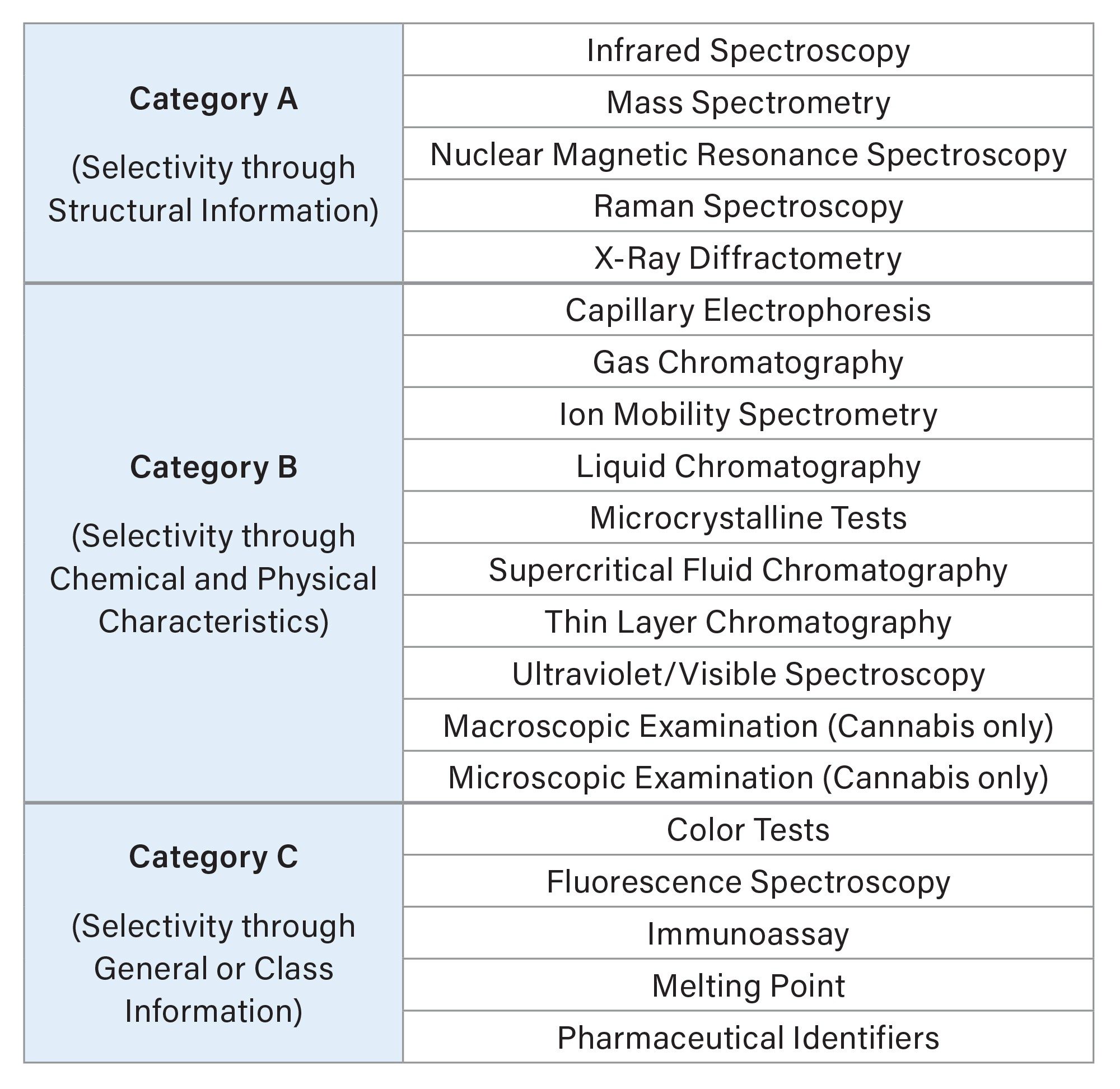
Conventional workflows typically involve an initial presumptive screening step, such as thin‑layer chromatography (TLC), fourier‑transform infrared (FTIR) spectroscopy, or colorimetric assays, followed by confirmatory analysis using a more selective technique, most commonly gas chromatography coupled with mass spectrometry (GC‑MS). However, TLC can be labor‑intensive and time‑consuming, FTIR often lacks sufficient selectivity when analyzing complex mixtures, and colorimetric tests are limited by their restricted applicability and propensity for false‑positive results. These limitations can increase the number of samples requiring GC‑MS analysis, thereby contributing to analytical bottlenecks and laboratory backlogs.
As a result, there is considerable interest in the development and adoption of screening methodologies that are easy to implement, analytically robust, rapid, efficient, and capable of being updated quickly to accommodate emerging substances of concern.
RADIAN ASAP Mass Detector, a compact mass detector developed by Waters, integrates the simplicity of the atmospheric pressure solids analysis probe (ASAP) with the molecular specificity of mass spectrometry. It has previously shown considerable promise as a rapid screening approach for the analysis of seized drug materials.
The objective of the study was to further evaluate the performance of the RADIAN ASAP Mass Detector as a straightforward yet high‑throughput screening tool for seized substances. A total of 229 unknown samples, confiscated by police at music events and night‑time venues, were subjected to analysis. Subsequent confirmatory testing was conducted using the established Forensic Toxicology High‑Resolution Mass Spectrometry (HRMS) Screening Solution, which incorporates a 15‑minute chromatographic separation coupled with analysis on the Xevo™ G3 QTof Mass Spectrometer.4
Material and Sample Preparation
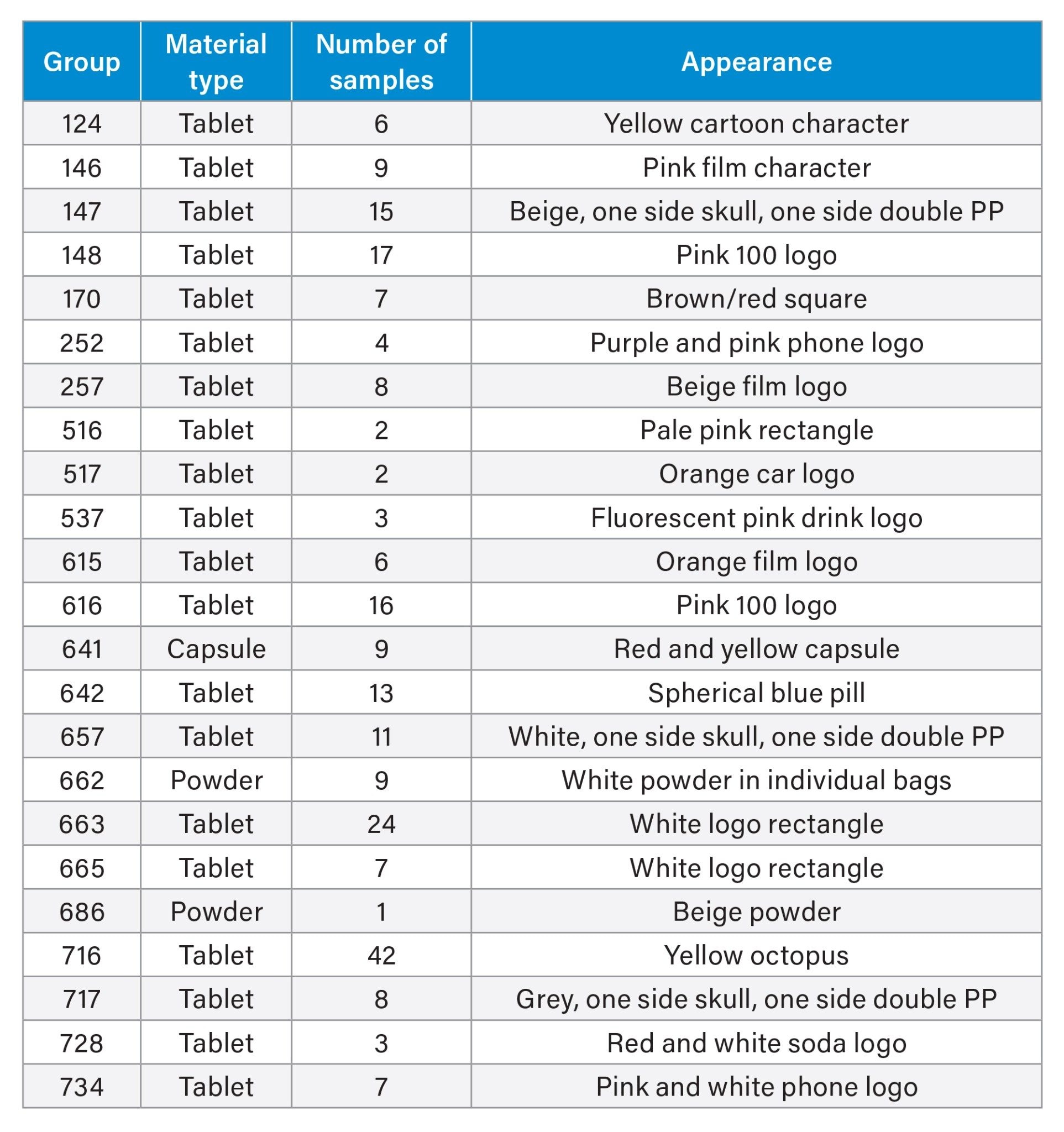
A series of unknown/suspect materials (n=229) confiscated by UK police at entertainment venues were provided for analysis. The samples were organized into 23 groups based on seizure and physical appearance, as summarized in Table 2. Within the dataset, two groups consisted of powders and one group comprised capsules, while all remaining samples were various forms of tablets.
The seized tablets and other materials were prepared for analysis by transferring each sample into a glass vial containing 5 mL of methanol, followed by sonication for 10 minutes. Prior to analysis, each extract was further diluted 1:20 with methanol. Additional dilutions, when required, were also prepared using methanol to ensure appropriate analyte concentrations for analysis.
For capsule‑based materials, the contents were emptied and transferred into a glass vial containing 5 mL of methanol, followed by sonication for 10 minutes. Prior to analysis, each extract was diluted 1:20 with methanol. Any additional dilutions required to achieve suitable analytical concentrations were likewise prepared using methanol.
For seized powders and crystalline materials, an aliquot of the material was transferred into a glass vial containing 5 mL of methanol and subjected to sonication for 10 minutes. Prior to analysis, each extract was diluted 1:20 with methanol. Additional dilutions, when necessary to achieve suitable analyte concentrations, were prepared using methanol.
RADIAN ASAP Mass Detector Analysis
Sampling Procedure – ‘Dipping Method’
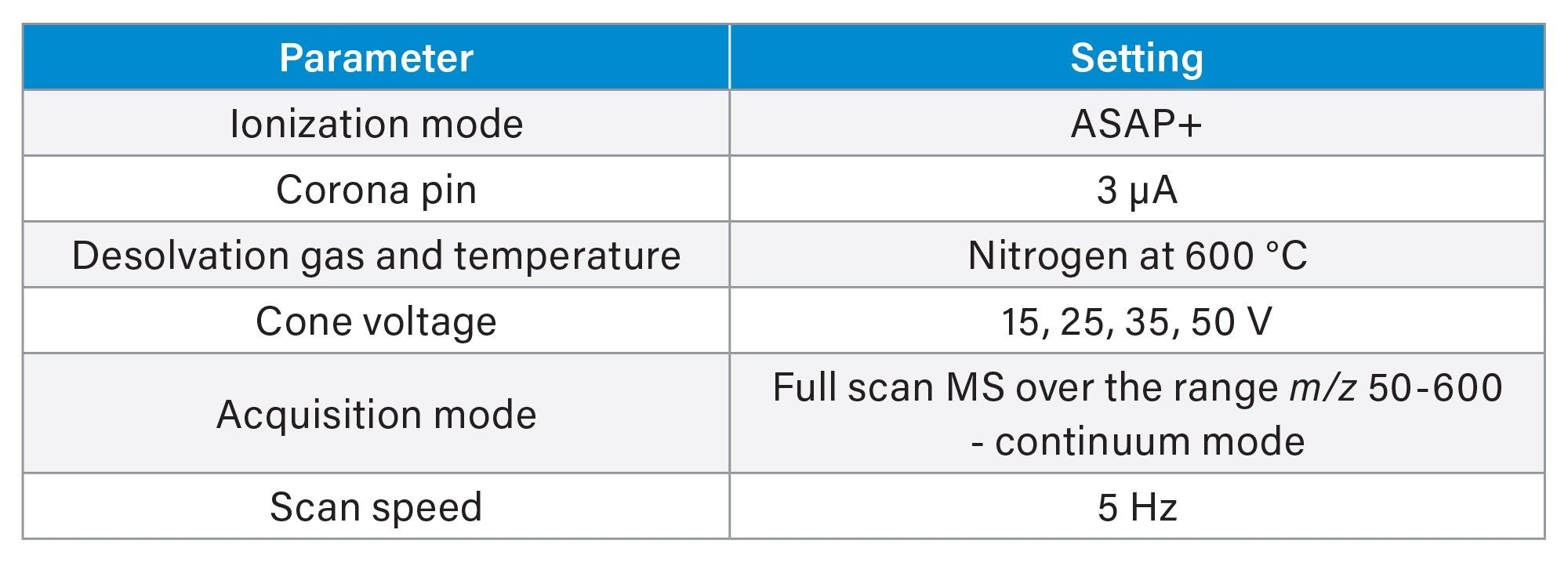
For each sample, a new glass capillary was selected and subjected to cleaning, using the automated RADIAN ASAP Mass Detector bakeout procedure integrated within the instrument software. Sample introduction was performed using a ‘dipping’ approach, whereby the cleaned capillary was immersed just below the surface of the liquid sample, approximately 1 cm in depth, for 5 seconds. The capillary was then placed into the holder and inserted into the RADIAN ASAP Mass Detector ion source for analysis. The analytical parameters used for data acquisition are summarized in Table 3. Each sample was analyzed in triplicate, with the same glass capillary undergoing three consecutive dip‑and‑detect cycles.
Data Processing with SpectralWorks AnalyzerPro XD Software
Data processing was performed using AnalyzerPro XD Software, which enables real‑time spectral library matching of acquired data files. The software compares each acquired spectrum against a curated seized‑drug reference library using a spectral‑matching algorithm that generates a confidence‑based identification score. The algorithm incorporates multiple evaluative components, including forward and reverse fit metrics, relative and absolute intensity thresholds, molecular‑mass confirmation, and ion‑ratio consistency checks. A weighted contribution from spectra acquired at all four cone voltages is then used to calculate the final confidence score, yielding a percentage-based measure for each identification.
Forensic Toxicology HRMS Screening Solution Analysis
Samples were further diluted 1:1000 in 5 mM ammonium formate (pH 3) prior to analysis using an established HRMS screening method incorporating a 15‑minute chromatographic separation and detection on the Xevo G3 QTof Mass Spectrometer. Compound identification was based on comparison with reference retention times, accurate‑mass measurements of precursor ions, and characteristic fragment‑ion data generated through data‑independent acquisition (DIA) using MSE.
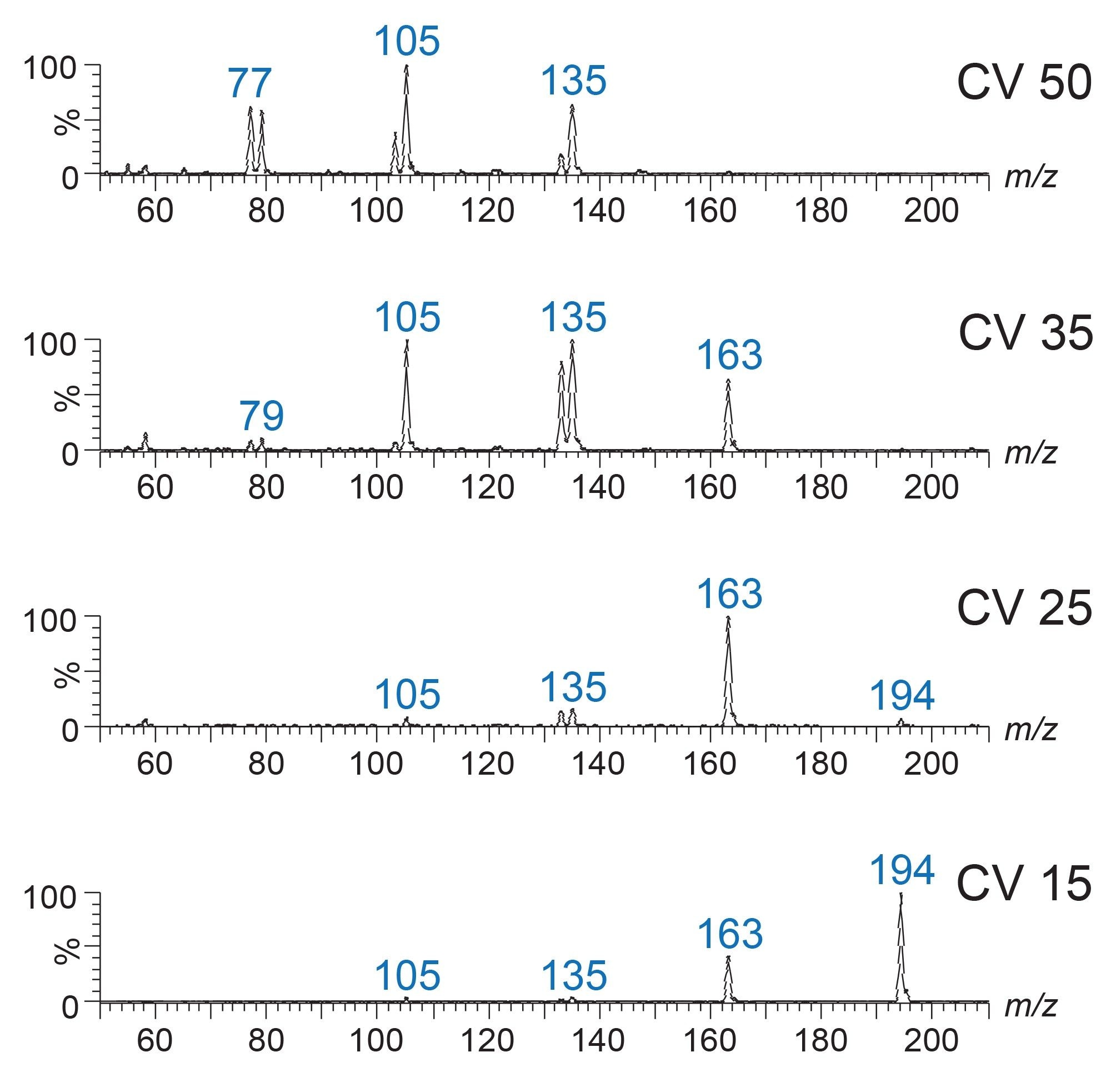
ASAP‑MS enables direct sample analysis by generating mass‑spectrometric data without the need for chromatographic separation, relying instead on the ASAP ionization process. During ionization, the sample deposited onto the glass capillary is volatilized by a stream of heated nitrogen gas, after which the resulting vapor is ionized via a corona discharge.
For all substances examined in this study, ionization predominantly yielded the protonated molecular ion [M+H]+. Data were acquired in full‑scan mode over the m/z range 50–600. Four cone voltages (15, 25, 35, and 50 V) were applied to induce fragmentation via in‑source collision‑induced dissociation (CID). The combined precursor and fragment‑ion information generated under these conditions produces a characteristic spectral fingerprint for each analyte, thereby enhancing the specificity and reliability of compound identification. Figure 1 presents data for the MDMA certified reference material (CRM) and illustrates the type of mass‑spectrometric information obtainable using this technique.
All of the 229 seized samples analyzed, produced at least one positive library match with a confidence score of 85%, corresponding to a 100% true-positive detection rate for this dataset. Across the full sample set, a total of 252 compound identifications were made, comprising only seven substances: MDMA (73.9%), amphetamine (4.3%), caffeine (4.3%), cocaine (4.3%), etizolam (4.3%), flualprazolam (4.3%), and paracetamol (4.3%). MDMA was detected in more than half of all samples and was frequently the sole compound identified, a trend consistent with the nature of the events and venues from which the materials were confiscated.
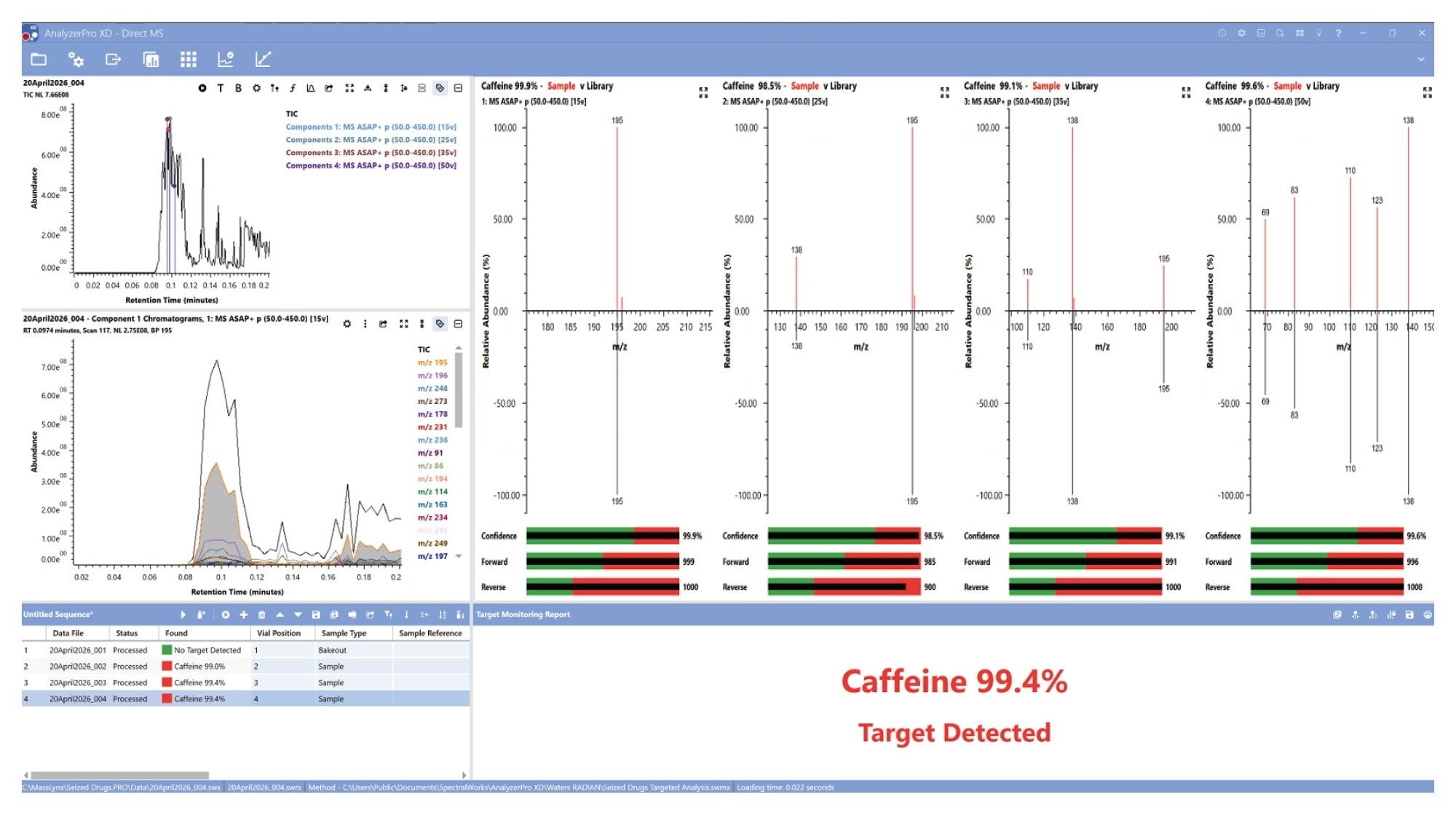
The results obtained using the RADIAN ASAP Mass Detector screening workflow demonstrated strong qualitative concordance with those generated by the Forensic Toxicology HRMS Screening Solution. Observed discrepancies between the two approaches are likely attributable to differences in analytical sensitivity and to variations in the respective reference library contents. In two sample groups, the RADIAN ASAP Mass Detector analysis yielded additional positive identifications beyond those reported by HRMS; however, the primary compound identified by HRMS was also correctly detected by RADIAN ASAP Mass Detector in each case. For sample group #170, the principal components identified by HRMS were not detected by RADIAN ASAP Mass Detector. Figure 2 presents an example output from the AnalyzerPro XD Software, as a representative sample from this group, demonstrating a positive identification of the major component, caffeine (99.4% confidence score). Amphetamine and TFMPP were also detected, although with lower identification confidence scores of 92% and 85.5%, respectively.
HRMS analysis, however, identified four additional substances—4-methylbuphedrone, 4-methylmethcathinone, desmethylprodine, and MDMA. Differences in library coverage contributed to the discrepancy, as 4-methylbuphedrone, 4-methylmethcathinone, and desmethylprodine are not currently included in the RADIAN ASAP Mass Detector seized‑drug reference library. The RADIAN ASAP Mass Detector seized-drug reference library can be rapidly updated, enabling laboratories to maintain current reference databases and incorporate newly emerging psychoactive substances with minimal operational disruption.5
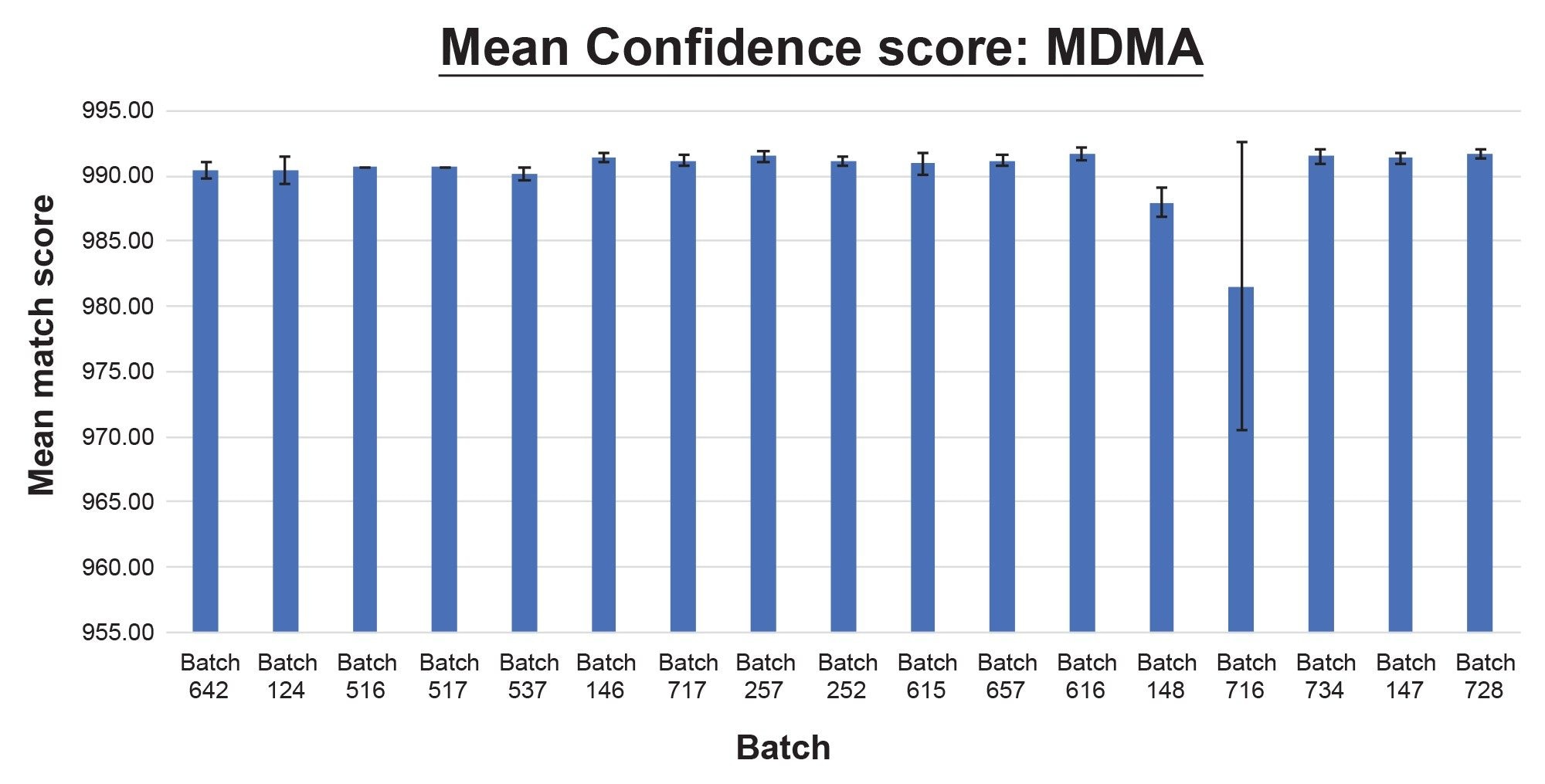
The 229 seized samples were submitted in 23 distinct groups of varying sizes (Table 2). HRMS analysis demonstrated minimal variability in response intensity among samples within the same group, as well as across groups containing the same identified compound. RADIAN ASAP Mass Detector analysis showed strong concordance with these findings: the positive confidence scores exhibited no significant variation across the replicates, between groups, or within groups for samples containing the same substance (Figure 3). Collectively, these results demonstrate that the RADIAN ASAP Mass Detector platform provides a reliable and analytically robust screening approach, yielding highly reproducible identification metrics across diverse sample sets.
RADIAN ASAP Mass Detector is a rapid, user‑friendly, and analytically robust direct‑ionization screening technique that generates spectral data without the requirement for chromatographic separation. The method has demonstrated clear suitability for the rapid presumptive screening of commonly encountered illicit substances in seized materials, including tablets, powders, and capsule contents. Sample preparation is minimal, involving only a brief dilution step, and both RADIAN ASAP Mass Detector analysis and subsequent spectral‑library matching using AnalyzerPro XD Software are highly efficient, enabling fast and streamlined data interpretation.
The high reproducibility observed across replicate measurements further underscores the reliability of the technique and supports its potential to enhance the efficiency of forensic drug‑analysis workflows. By providing rapid, consistent, and accurate screening results, RADIAN ASAP Mass Detector offers a practical means of reducing analytical bottlenecks and alleviating backlogs in forensic drug‑chemistry laboratories.
Waters, RADIAN and Xevo are trademarks of Waters Corporation or its affiliates. AnalyzerPro is a trademark of SpectralWorks Limited.
720009368, May 2026


