
Protein-Pak Columns
Time-tested and proven LC columns for bioseparations
Achieve high-quality LC-based analyses and lab scale purifications of a wide range of peptide and protein biomolecules using Waters Protein-Pak Ion Exchange (IEX) and Hydrophobic Interaction Chromatography (HIC) HPLC and UPLC Columns.
Meet your workflow requirements with a variety of chemistries that include strong and weak anion and cation-exchanges, and a hydrophobic interaction offering. Protein-Pak LC Columns contain either well-performing silica or methacrylate-based, ion-exchange, size-exclusion, and hydrophobic interaction based separation columns for analysis or lab-scale purification of targeted biomolecules.
 Protein-Pak Columns

Specifications
Overview
Chemistries include strong and weak anion and cation-exchanges, and a hydrophobic interaction offering.
Recommended Use: For the analysis and lab scale isolation of peptides and proteins.
Protein-Pak Column Characteristics
-
 Ideal for hydrophobic-based separations for protein characterization using non-denaturing conditions
 -
Deliver fast, efficient separations using non-porous particles to address high-throughput needs
-
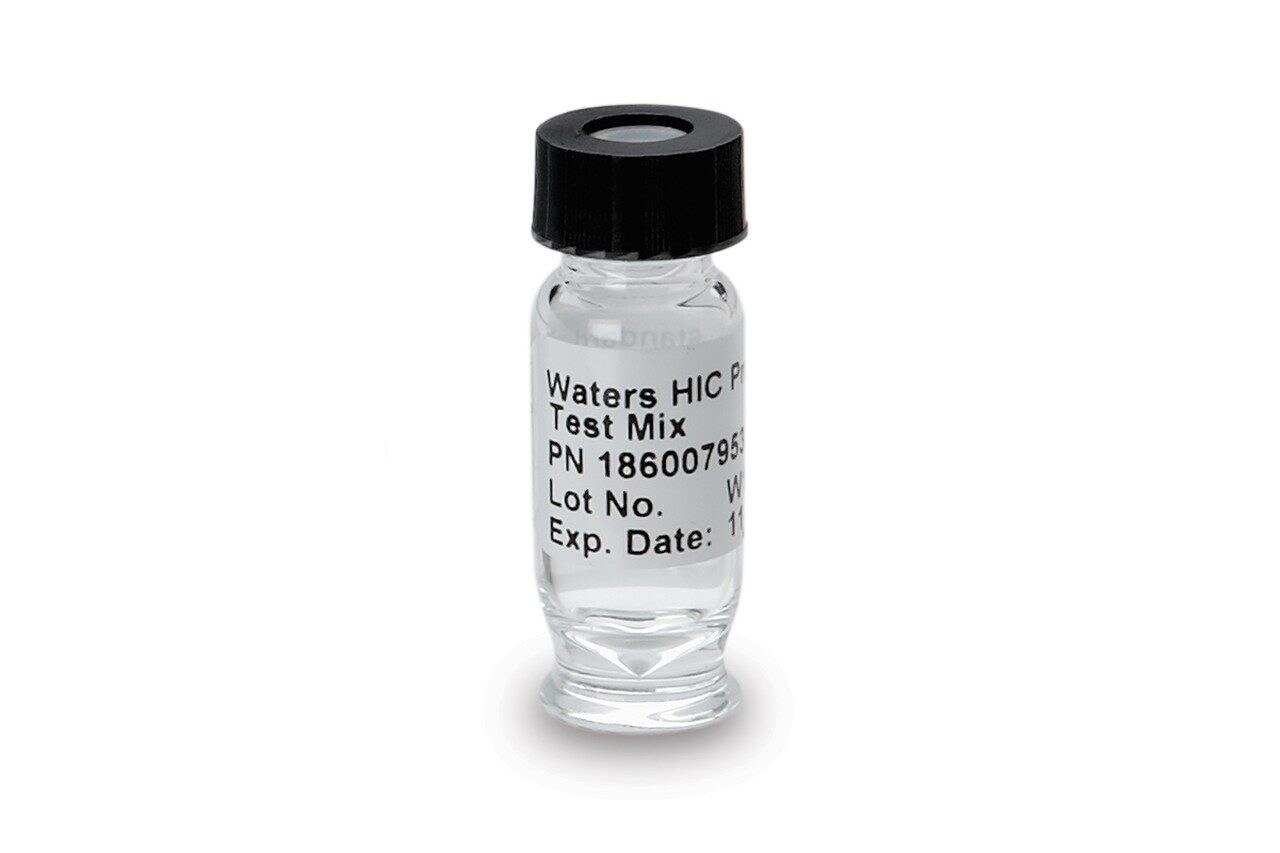
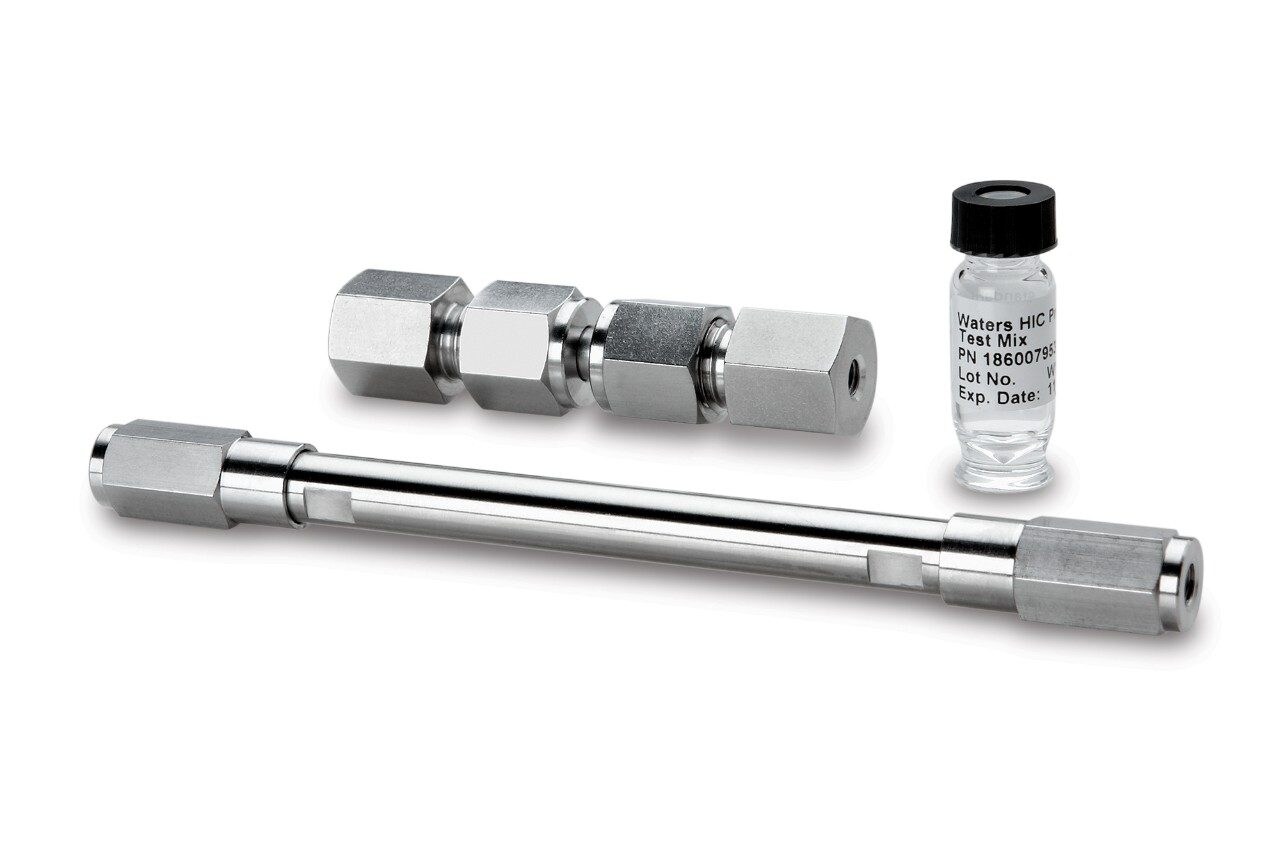
Test for acceptable instrument and HIC column performance with the included Waters HIC Protein Test Standard
-
Successfully used for the analysis of cysteine-based ADCs
-
Designed for the characterization of protein charge variants and other biocompounds
-
Address selectivity needs with two cation-exchangers (carboxymethyl and sulfopropyl) and one anion exchanger (quaternary ammonium)
-
Deliver fast separations that address high-throughput needs with non-porous, high-capacity stationary phases
-
Quality Control (QC) tested with protein standards to ensure batch-to-batch consistency
-
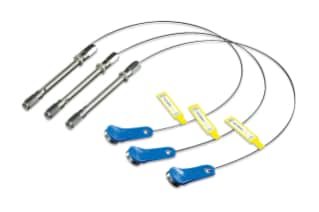
eCord-enabled to help monitor column use on ACQUITY UPLC Systems
-
Chemistries include: Q functional group, a strong anion exchanger; DEAE, a weak anion exchanger; SP a strong cation exchanger; CM, a weak cation exchanger
-
Compatible with buffers in the pH range 2–12
-
Able to withstand exposure to caustic solutions
High resolution HIC columns for protein characterization
Characterize proteins and biotherapeutics including monoclonal antibodies (mAb) and antibody drug conjugates (ADC) with the non-porous, polymethacrylate-based particles (2.5 μm) functionalized with a butyl ligand coating in Protein-Pak Hi Res HIC Columns.
HIC offers attractive orthogonal separation advantages. In reversed-phase LC, proteins are retained by hydrophobic interaction with alkyl groups (e.g., C18) on the packing material. However, the butyl ligand density on Waters Protein-Pak Hi Res HIC Column is comparatively less, resulting in fewer protein-ligand hydrophobic interactions. Consequently, HIC-based elution is possible using gradients of decreasing salt concentration at physiological pH values.
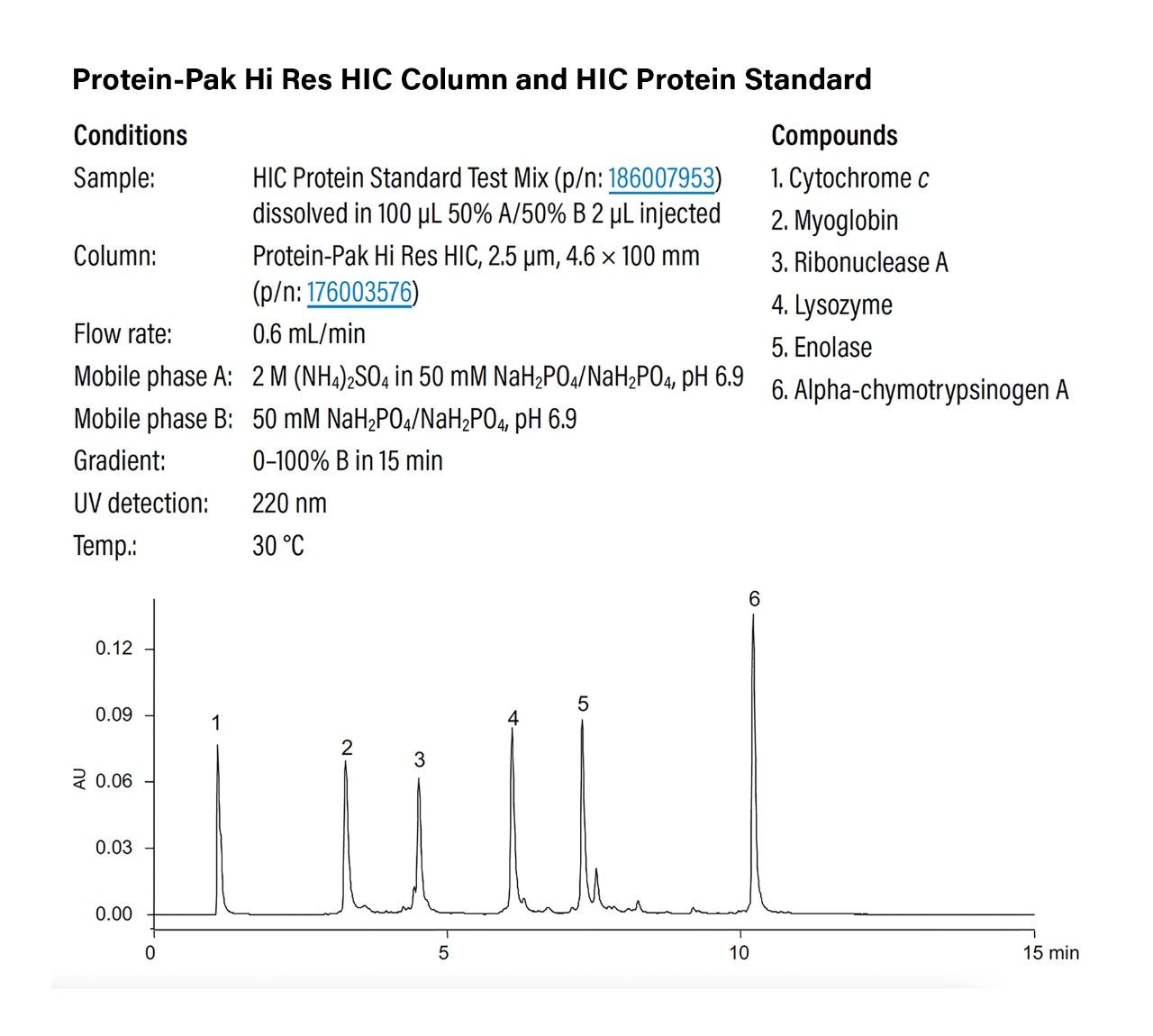
Yield outstanding resolution of charged species in less time
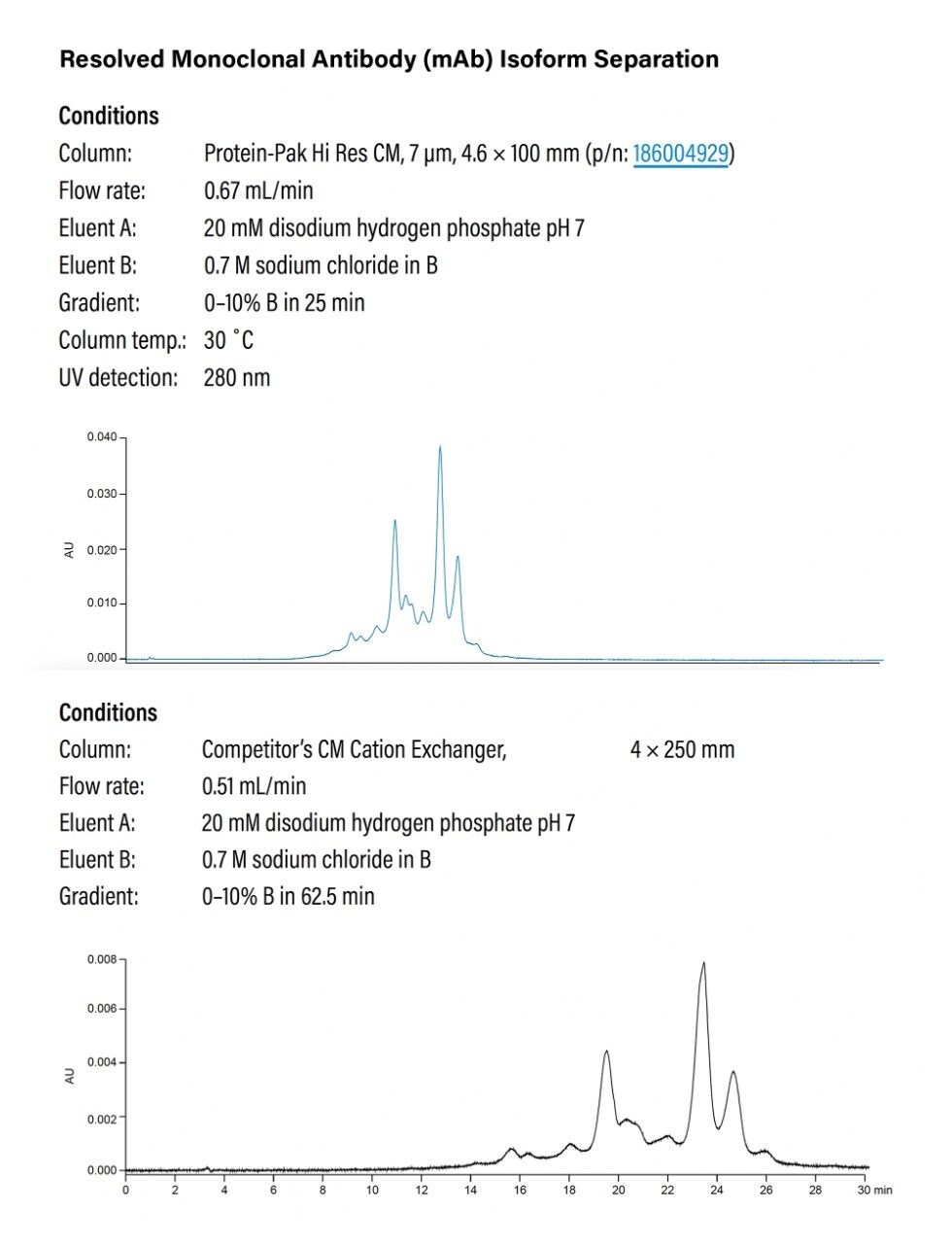
Protein-Pak Hi Res IEX Columns were developed to assist in the characterization of recombinant proteins, monoclonal antibodies, and other biological compounds. Your lab can achieve outstanding resolution of charged species in less time compared to traditional porous IEX offerings with the non-porous, high compound binding capacity of these particles. In addition, quality control testing with defined protein standards helps ensure consistent batch-to-batch performance.
Reduce non-specific adsorption
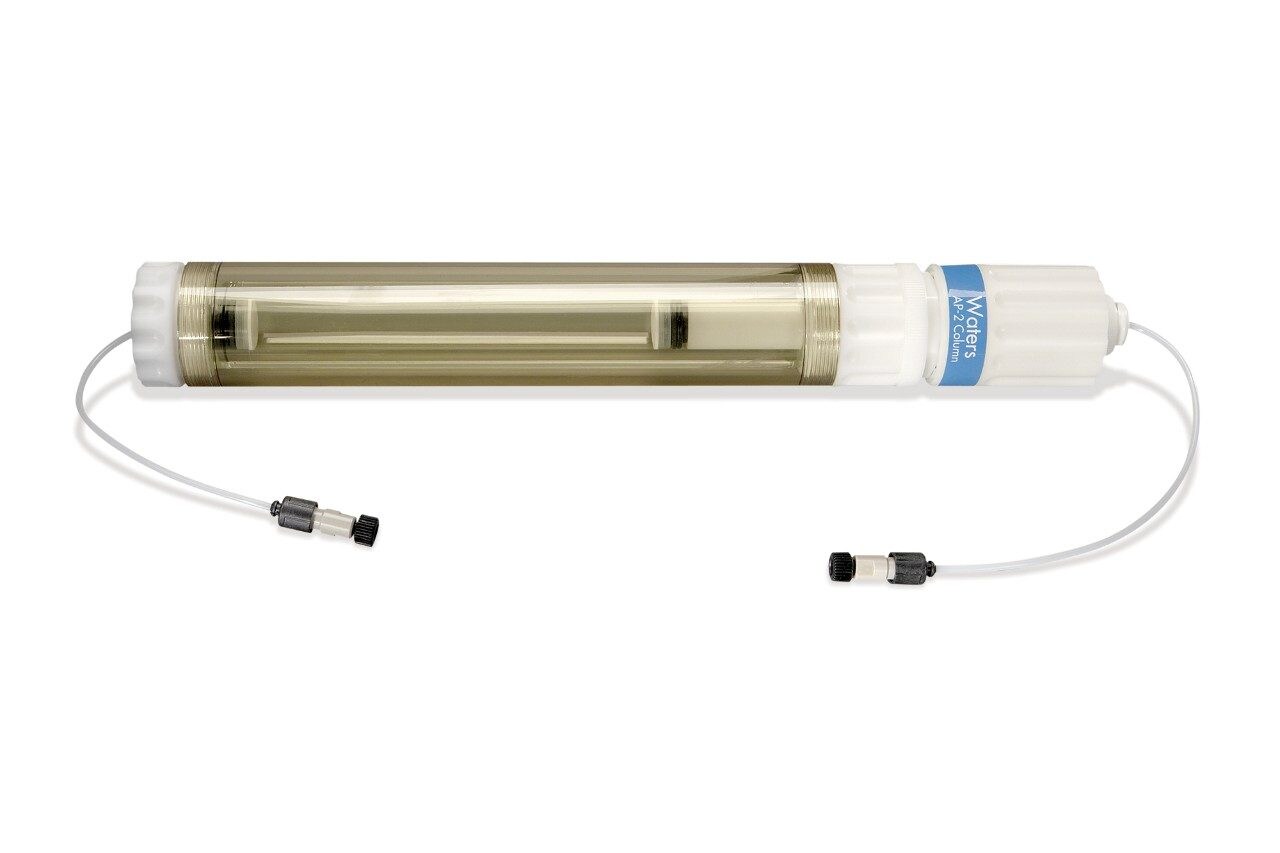
Protein-Pak HR packing materials are based on rigid, hydrophilic, polymethacrylate polymer particles with large 1000 Å pores. The naturally hydrophilic polymer reduces non-specific adsorption, resulting in quantitative recovery of protein mass and bioactivity. These packings are compatible with buffers in the pH range 2–12 and will withstand exposure to caustic solutions. The Protein-Pak HR 8 µm and 15 µm packing materials are available prepacked in Waters Advanced Purification (AP) glass columns. These columns are compatible with a variety of analytical and preparative LC instrumentation.
Resources
Documents
Support
What do you want to do?


Related
Offers and Discounts
FAQs About Waters Protein-Pak:
1. What is the Protein-Pak column used for?
The Protein-Pak column is used for protein separation and purification in various applications such as biopharmaceuticals, food and beverage, and academic research.
2. What is the difference between Protein-Pak and other protein columns?
Protein-Pak columns are designed with a unique silica-based stationary phase that provides high resolution and selectivity for protein separation. They also have a wide range of pore sizes and surface chemistries to accommodate different protein types and applications.
3. What is the recommended flow rate for Protein-Pak columns?
The recommended flow rate for Protein-Pak columns is typically between 0.5-1.0 mL/min. However, this may vary depending on the specific column and application.
4. How do I store and maintain my Protein-Pak column?
Protein-Pak columns should be stored at room temperature in a dry and dark place. They should also be flushed with an appropriate storage solution before and after use to prevent contamination and maintain column performance.
5. Can Protein-Pak columns be reused?
Protein-Pak columns are designed for single use only and should not be reused. Reusing the column can lead to loss of resolution and performance, as well as potential contamination.


