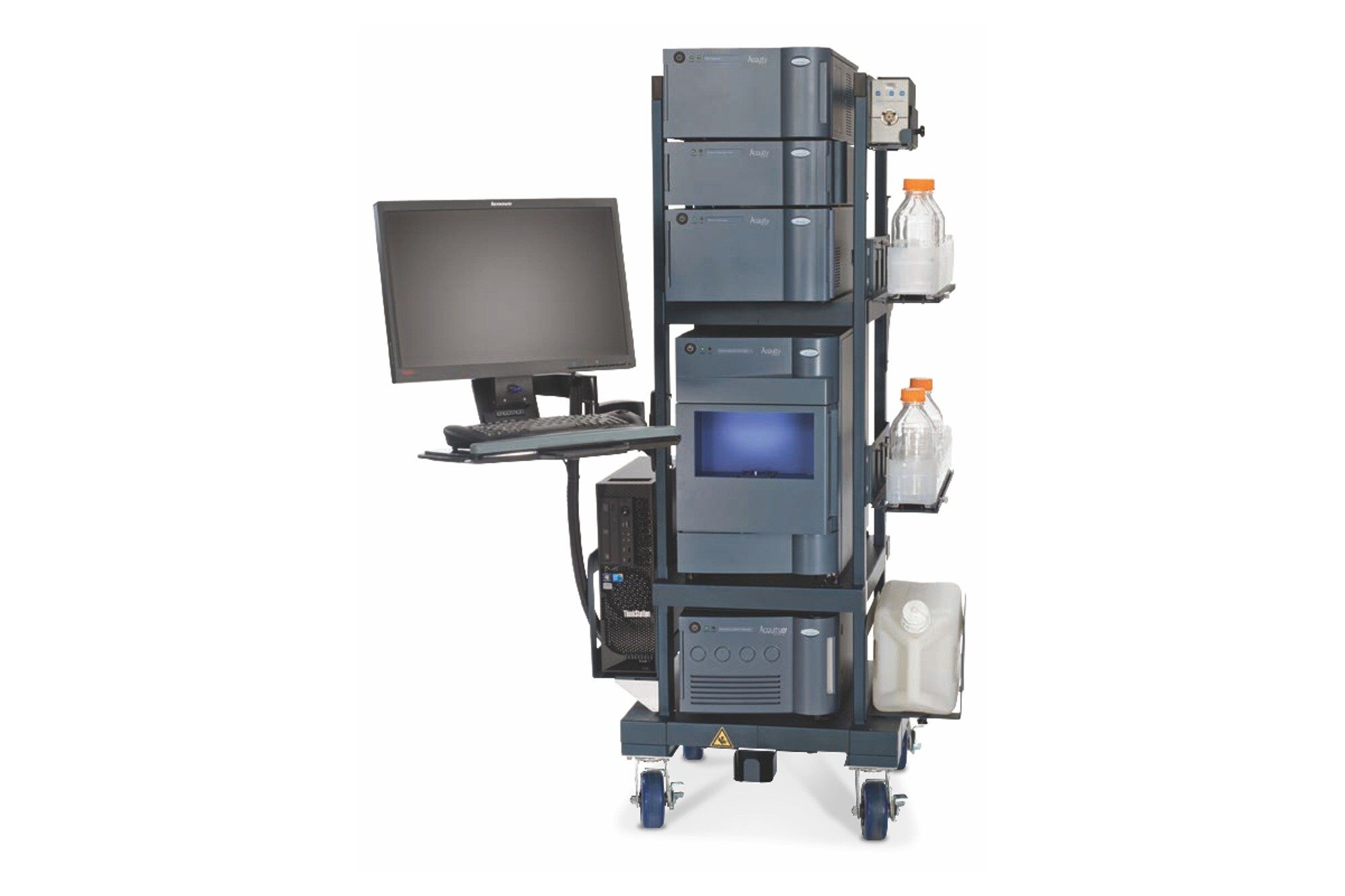
PATROL UPLC Process Analysis System
The PATROL UPLC Process Analysis System from Waters Corporation stands as a cornerstone in modern process development laboratories, designed to elevate the precision and efficiency of in-process analysis. This system is a pivotal component of process analytical technology (PAT), providing real-time, chromatographic-quality data essential for monitoring Critical Quality Attributes (CQA) and ensuring the alignment of Ultra-Performance Liquid Chromatography (UPLC) technology with Quality by Design (QbD) principles.
The core of the PATROL UPLC system is high-pressure HPLC pumps that deliver precise and consistent flow rates, which are critical for accurate sample separation and analysis. Coupled with an automated autosampler, the system minimizes human error and maximizes throughput by facilitating automated sample injections, enhancing both efficiency and reliability. The chromatographic column within the controlled temperature compartment ensures optimal separation efficiency and reproducibility, leading to consistent analytical results.
Detection capabilities are robust, featuring sensitive detectors such as UV-Vis, fluorescence, or mass spectrometry options that cater to a range of analytical needs. These detectors are integral for achieving high sensitivity and selectivity in quantifying analytes, thereby upholding stringent quality standards.
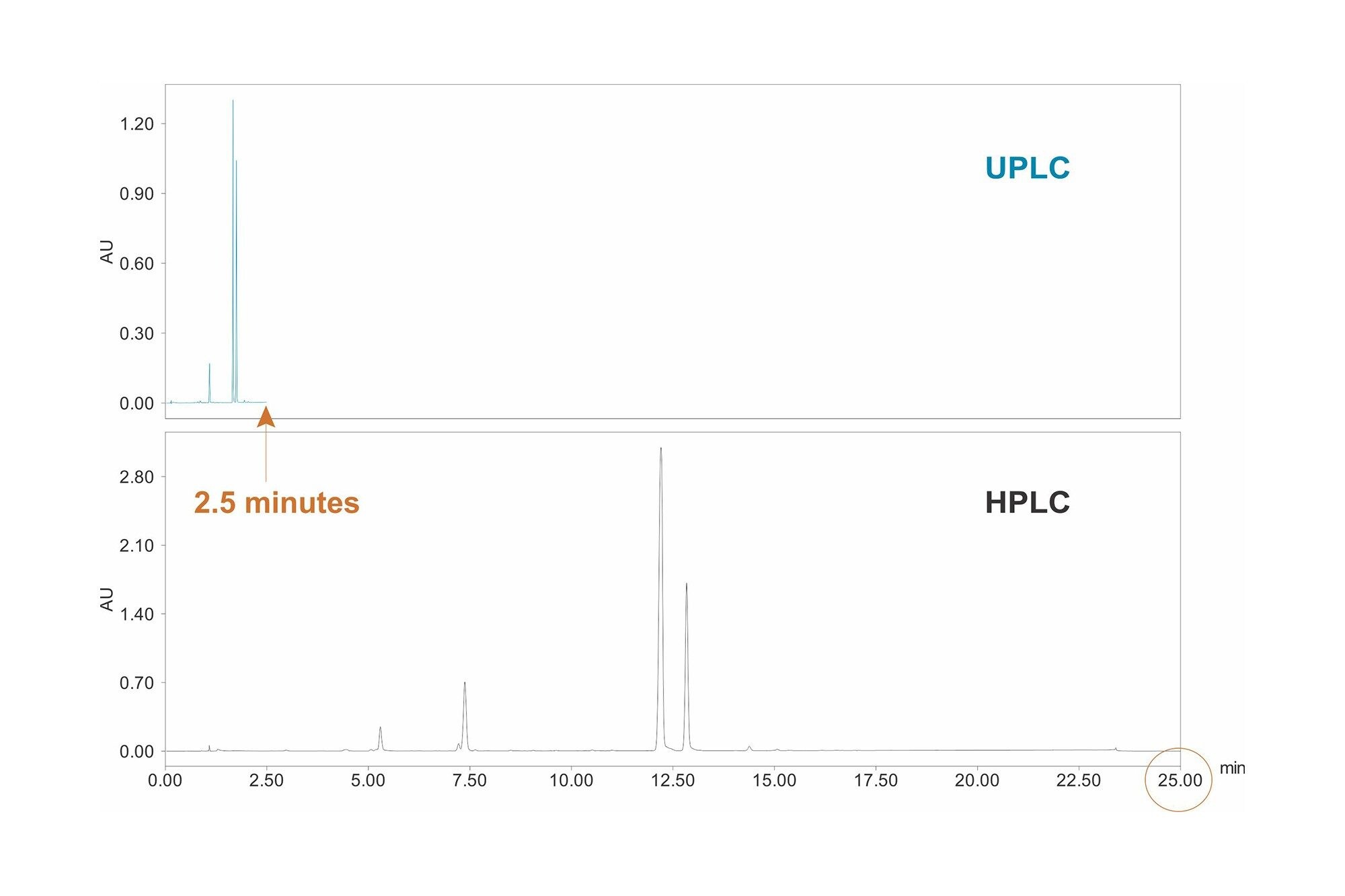
One of the unique benefits of the PATROL UPLC Process Analysis System is its ability to bridge the gap left by slower traditional HPLC techniques, providing a faster and more reliable method for real-time data generation. This capability is crucial for process chemists who require an online and automated analytical tool that not only speeds up the analysis but also enhances process control.
The inclusion of sophisticated data management software is another key aspect, supporting efficient data acquisition, processing, and interpretation. This software aids in seamless reporting and ensures compliance with regulatory standards, including 21 CFR Part 11 for electronic records and signatures. The system's modular design allows for customization and scalability, making it adaptable to various applications and industry-specific requirements.
By integrating the PATROL UPLC System into their operations, laboratories can significantly improve process yields and final product quality. The system helps reduce process cycle times, variability, and bottlenecks while minimizing product rework. This leads to enhanced operational efficiency, quantifiable return on investment, and increased profits, all while ensuring that processes remain within designed control limits.
Additionally, the system's ability to provide simultaneous qualitative and quantitative information allows for dynamic adjustments in the manufacturing process, ensuring that the production is always aligned with predefined quality parameters. This real-time capability is vital for maintaining brand integrity, boosting consumer satisfaction, and enhancing overall process understanding.
The PATROL UPLC Process Analysis System by Waters offers a comprehensive solution for achieving higher productivity, ensuring product quality, and maintaining regulatory compliance. It is an essential tool for any process development laboratory committed to modernizing and optimizing its scientific processes.
PATROL UPLC Process Analysis System FAQs
What detection capabilities are available with PATROL UPLC?
The PATROL UPLC Process Analysis System supports a range of detection options to meet diverse application needs. It is typically configured with UV/Vis detection but can also be equipped with mass spectrometry (MS) or other detection modules depending on the process requirements. UV detection is ideal for quantifying analytes with chromophores, while MS provides enhanced specificity and sensitivity, which is particularly useful for complex mixtures or trace-level components.
What types of analytes can be monitored using PATROL UPLC?
The PATROL UPLC system is designed to monitor a wide range of analytes in real-time, including small molecules, active pharmaceutical ingredients (APIs), impurities, excipients, degradants, and intermediates. It is particularly well-suited for compounds that require high-resolution separations and rapid analysis in complex process streams.
In pharmaceutical manufacturing, it can be used to track critical quality attributes during synthesis, purification, or formulation steps. The system's compatibility with various detection technologies and its ability to handle multiple sample types (aqueous, organic, or mixed) make it highly versatile across industries such as pharma, biopharma, chemical, and food processing.
What is the maximum operating pressure supported by the PATROL UPLC system?
The PATROL UPLC Process Analysis System is engineered for high-performance, in-process analysis and supports pressures up to 15,000 psi (1034 bar) when operating at flow rates up to 1.0 mL/min. For higher flow rates—up to 2.0 mL/min—the system operates at a maximum pressure of 9,000 psi (620 bar). These pressure limits allow the use of high-efficiency columns packed with sub-2-µm particles, which are essential for fast, high-resolution separations in demanding process environments.
The system automatically compensates for solvent compressibility to ensure stable and accurate flow, even under varying pressure conditions, helping maintain method integrity and consistent retention times across extended manufacturing cycles.
How does the PATROL UPLC system support real-time Critical Quality Attribute (CQA) monitoring?
The PATROL UPLC Process Analysis System is designed to deliver real-time, high-resolution chromatographic data directly from in-process samples. This enables continuous monitoring of Critical Quality Attributes (CQAs), allowing users to track product quality throughout production rather than relying on delayed offline testing. By streaming quantitative results, the system provides actionable feedback that supports dynamic process control and optimization. This capability aligns with Process Analytical Technology (PAT) and Quality by Design (QbD) principles, helping laboratories reduce variability, enhance yield, and maintain products within the design space. Unlike spectroscopic methods, PATROL UPLC provides both qualitative and quantitative information across multiple components with high sensitivity and precision, making it an ideal tool for advanced process understanding.
What is the cycle time for injections, and how does it support high-throughput analysis?
The PATROL UPLC system is engineered for high-speed analysis with minimal injection-to-injection cycle times, making it well-suited for real-time process monitoring. In its binary configuration, the system achieves an injection cycle time of less than 15 seconds, while the quaternary configuration completes cycles in under 30 seconds.
What sample formats and injection volumes are supported by the Process Sample Manager (PSM)?
The Process Sample Manager (PSM) in the PATROL UPLC system supports flexible sample handling to accommodate various process monitoring needs. Internally, it holds up to 32 standard 8 mL vials and includes one external sampling port. The system can perform up to 60 injections per vial and offers total random access to sample positions. It supports full-loop injection only, using 1 μL, 2 μL, or 5 μL loops, and enables dilution up to 1:100. Precision is maintained with <0.5% RSD for undiluted injections and ≤1.0% RSD with dilution. The system also achieves excellent dilution linearity (R² ≥ 0.999) and minimal carryover (<0.01%), ensuring accurate, repeatable quantification.

 PATROL UPLC Process Analysis System