
ACQUITY UPC2 System
The ease of reversed-phase meets the power of normal-phase
In reversed-phase chromatography, polar compounds are eluted first, causing routine and complex separation challenges. With convergence chromatography, however, polar compounds are retained and eluted last - providing the separation power of normal-phase liquid chromatography (LC) with the ease-of-use of reversed-phase LC.
Using green and non-toxic compressed liquid CO2 as a primary mobile phase, the ACQUITY UPC2® System delivers the ability to precisely vary mobile phase strength, pressure, and temperature. The ability to fine-tune the resolving power and selectivity of the system, enables better control over the retention of analytes for separating, detecting, and quantifying structural analogs, isomers, and enantiomeric and diastereomeric mixtures - all compounds that are often a challenge to separate by any other means.
 ACQUITY UPC2 System
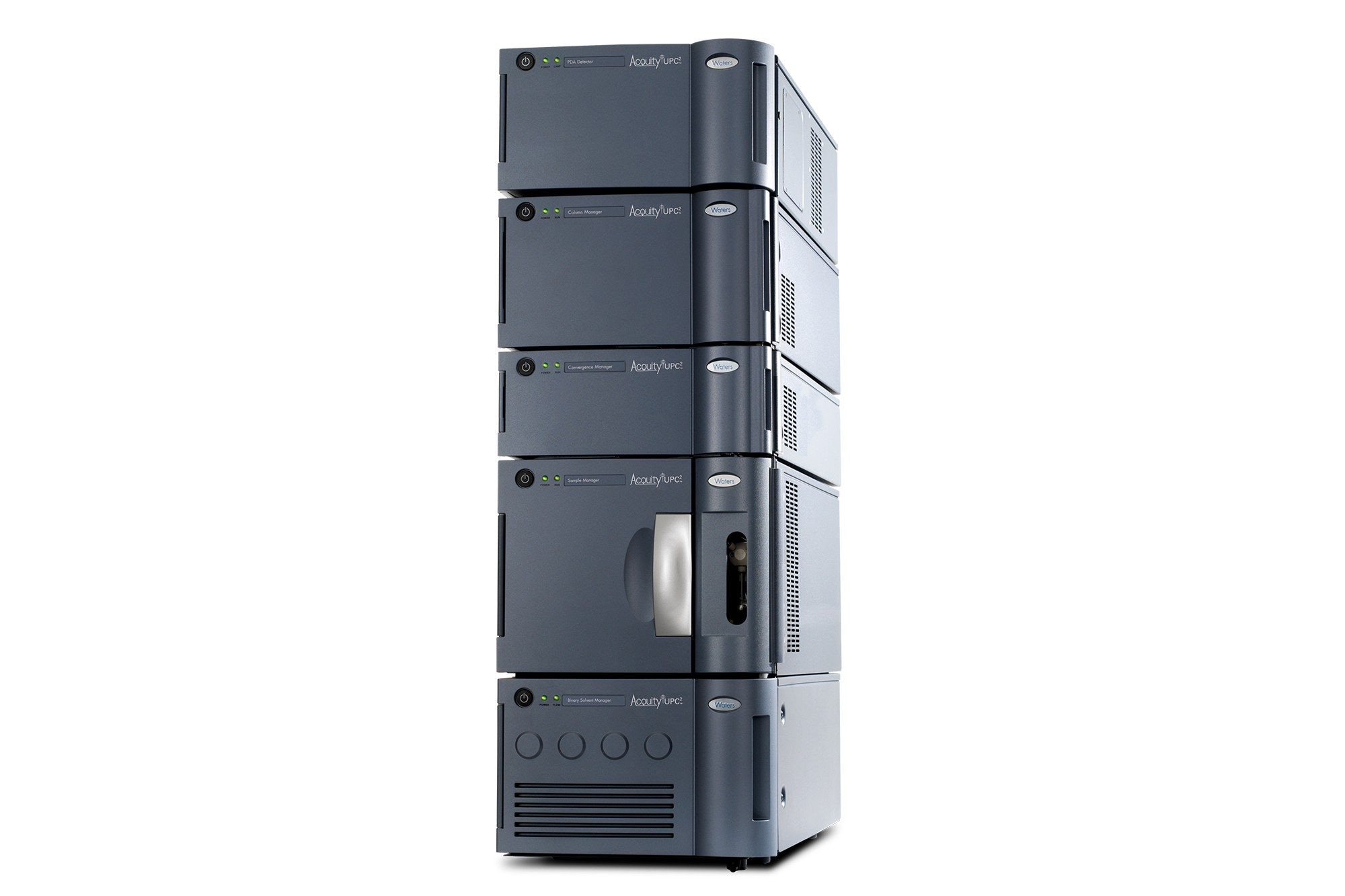
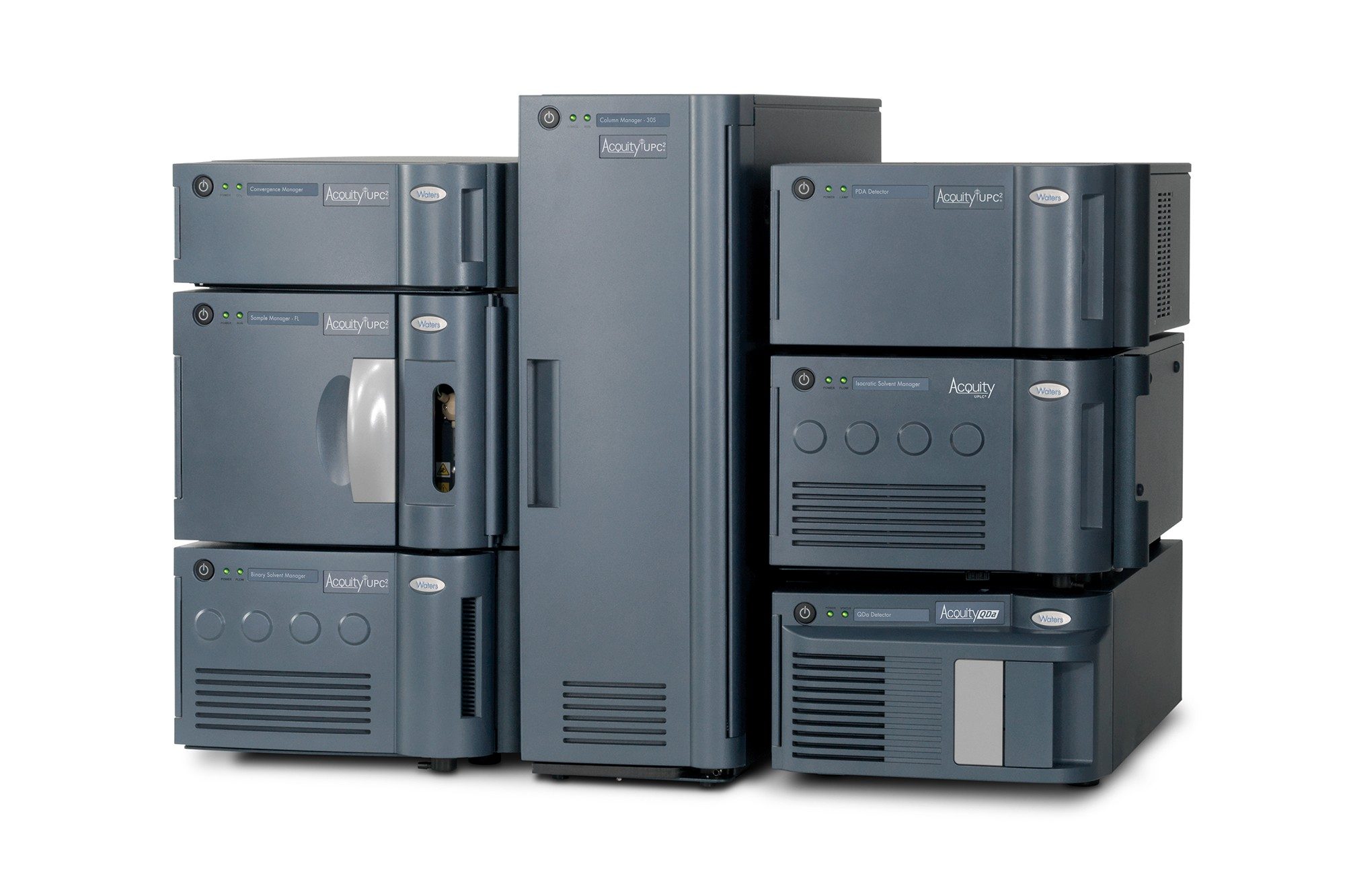
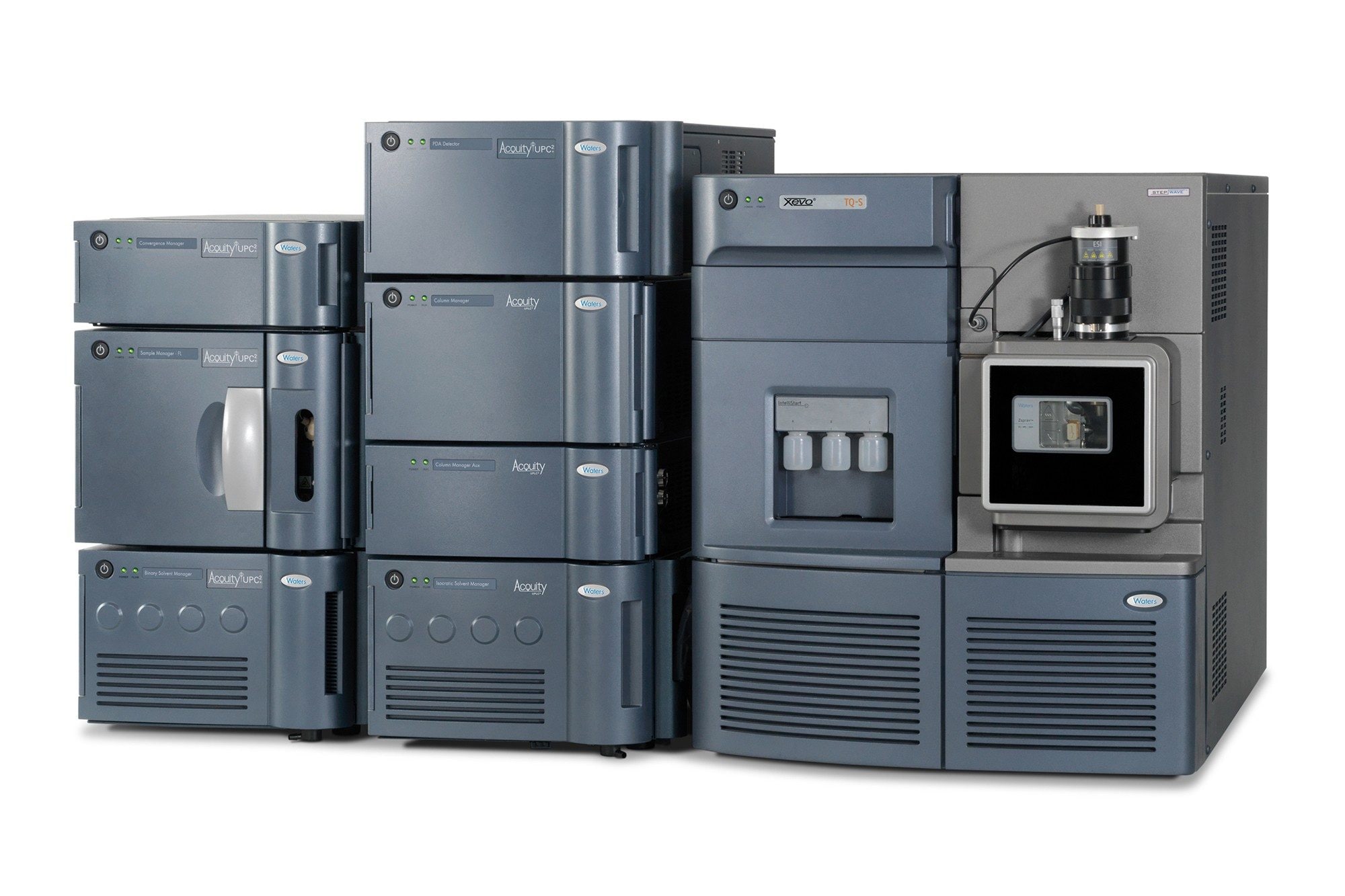
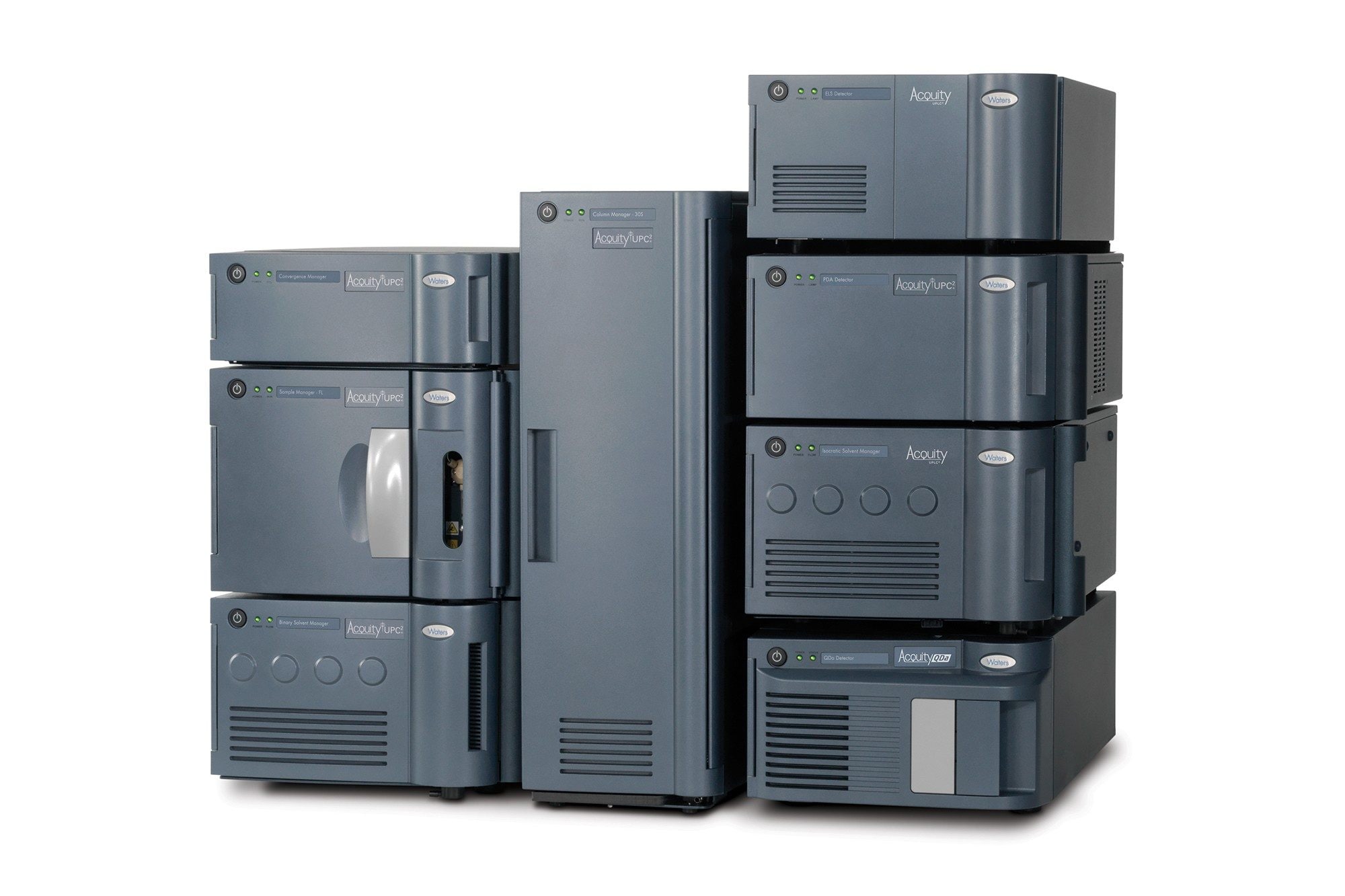

Specifications
|
Operating flow rate range |
0.010 to 4.000 mL/min, in 0.001 mL increments |
|
Maximum operating pressure |
6000 psi (413 bar), up to 4 mL/min |
|
Unattended operation |
Leak sensors, full 96-hour diagnostic data display through console software |
|
Number of solvents co-solvent pump only |
Four solvents on the co-solvent side of the pump, labeled B1, B2, B3, and B4 which will be selected by the Solvent Select Valve (SSV) |
|
Solvent conditioning co-solvent pump only |
Integrated vacuum degassing, four chambers |
|
Operating flow rate range |
0.010 to 4.000 mL/min, in 0.001 mL increments |
|
Maximum operating pressure |
6000 psi (413 bar), up to 3 mL/min, and 4250 psi (293 bar), up to 4 mL/min |
|
Stroke volume |
140 μL |
|
Intelligent intake valve - i2V |
Active inlet check valve on the co-solvent primary side |
|
Passive intake valve |
Passive check valves on each accumulator pump |
|
Ball and seat check valve |
CO2 primary pump will have a single ball and seat |
|
pH range |
2.0 to 12.0 |
|
Compressibility compensation |
Automatic and continuous |
|
Physical dimensions |
Width: 34.3 cm (13.5 in.) Height: 67.2 cm (26.5 in.) Depth: 71.1 cm (28.0 in.) |
|
Primary wetted materials |
316 L stainless-steel, ETFE, PPS, fluoropolymer, perfluoroelastomer, FEP, PTFE, UHMWPE, sapphire, ruby, Zirconia ceramic, Nitronic 60, diamond-like coating (DLC), PEEK and PEEK alloy, Titanium alloy, Tygon 2275, polyethylene |
|
Number of sample plates |
Total of two plates • 96 and 384 microtiter plates • 48 position 2.00 mL vial plates • 48 position 0.65 mL micro-centrifuge tube plates • 24 position 1.50 mL micro-centrifuge tube plates |
|
Maximum sample capacity |
768 in two 384-well plates |
|
Number of sample injections |
1 to 99 injections per sample |
|
Injection volume range |
0.1 to 50.0 μL, in 0.1 μL increments; 10 μL loop is standard |
|
Sample delivery precision |
<1% RSD within 20% to 75% of loop volume for 10 μL loops, UV detection |
|
Injector linearity |
>0.999 coefficient of deviation (from 20% to 75%) |
|
Sample temperature control |
4.0 to 40.0 °C, settable in 0.1 °C increments (assumes an ambient temperature of 25.0 °C). At an ambient temperature of 21.0 °C or lower and sample manager will maintain the temperature of the sample compartment down to 4.0 °C with a tolerance of -2.0/+4.0 °C, when configured with the maximum number of vials and/or plates |
|
Sample probe |
XYZZ based needle-in-needle design |
|
Minimum sample required |
5 μL residual, using maximum recovery 2 mL vials (zero offset) |
|
Wash solvents |
Two degassed: strong solvent and weak wash solvent, programmable to suit application |
|
Sample carryover |
<0.005% or <2.000 nL, whichever is greater |
|
Advanced operations |
Loop off-line mode, load ahead |
|
Unattended operation |
Leak sensors, full diagnostic data control captured through console software |
|
Primary wetted materials |
Titanium alloy, 316 stainless-steel, fluoropolymer, fluoroelastomer, PPS Alloy, PEEK alloy, PPS, PEEK, DLC coating, gold |
|
Column |
2.1 to 4.6 mm I.D. up to 150 mm in length with guard column or filter 30 mm length max |
|
Column capacity |
CM-A: Two columns, as standard (maximum length of 150 mm with filter or guard column) or four columns (maximum length of 50 mm) can be supported with optional tubing kit, up to 4.6 mm internal diameter (I.D.) CM-Aux: Two columns (maximum length of 150 mm, with filter or guard column). Up to two CM-Aux units can be configured with one CM-A for support of up to six columns |
|
Switching valves |
Two injector style, nine port, eight position valves (CM-A only); provides programmable, automatic, random access switching, waste and bypass positions for rapid solvent changeover |
|
Column compartment(s) temperature range |
4 to 90 °C settable in 0.1 °C increments Two independent heat/cool zones per module, up to six zones in stacked configuration |
|
Column compartment temperature accuracy |
±0.5 °C |
|
Column compartment temperature precision |
±0.1 °C |
|
Column compartment temporal temperature stability |
±0.3 °C |
|
Solvent conditioning |
Active pre-heating as standard |
|
Column tracking |
eCord™ Technology column information management tracks and archives achiral Viridis™ Column usage history |
|
Column capacity |
Single column, up to 4.6 mm internal diameter (I.D.) up to 300 mm length with filter or guard column |
|
Column compartment temperature range |
20.0 to 90.0 °C, settable in 0.1 °C increments |
|
Column compartment temperature accuracy |
±0.5 °C |
|
Column compartment temperature stability |
±0.3 °C |
|
Solvent conditioning |
Active pre-heating as standard; passive pre-heating |
|
Column tracking |
eCord Technology column information management tracks and archives column usage history |
|
Pressure control stability |
±7.25 psi (0.5 bar) or 1.25 times the pump pressure fluctuations, whichever is greater using 100% CO2 |
|
CO2 purity level |
99.97%, and should be considered food grade Liquid CO2:CO2 cylinder with a dip tube Gas CO2:CO2 cylinder without a dip tube |
|
Control precision |
Control precision of the active back pressure regulator shall be <±0.5 bar (<±7.25 psi) |
|
Wavelength range |
190 to 800 nm |
|
Light source |
Prealigned, Intelligent technology deuterium lamp |
|
Wavelength accuracy |
±1.0 nm |
|
Linearity range |
<5% at 2 AU (Propylparaben 257 nm, 10 mm cell) |
|
Optical resolution |
1.2 nm |
|
Noise, wet |
≤60 μAU (254 nm, 2 Hz, 1 s TC, 3.6 BW res, 10 mm analytical cell) |
|
Drift, dry |
≤5000 μAU/h (2 h warm-up, constant temp. and humidity at 230 nm, 3.6 BW res, 2 Hz) |
|
Data rate |
Up to 80 Hz |
|
Flow cells |
Stainless-steel, Intelligent technology flow cell |
|
Path length |
10 mm (analytical cell) |
|
Cell volume |
8.4 μL (analytical cell) |
|
Pressure limit |
6000 psi |
|
Wetted materials |
316 SST, PEEK, Fused Silica |
|
Line voltage |
100 to 240 VAC |
|
External control |
Empower Software, MassLynx Software, or (standalone through console software) |
|
External communications |
Ethernet interfacing via RJ45 connection to host PC |
|
Event input/outputs |
Rear panel contact closure and/or TTL inputs/outputs |
|
Connections INSIGHT® |
Provides real-time monitoring and automatic notification of instrument performance and diagnostic information allowing for quicker problem resolution |
|
Acoustic noise |
<65 dBA, system |
|
Operating temperature range |
15.0 to 28.0 °C (59.0 to 82.4 °F) |
|
Operating humidity range |
20% to 80%, non-condensing |
|
Voltage range |
100 to 240 Vac |
|
Frequency |
50 to 60 Hz |
Overview
- The chromatographic principles and selectivity of normal-phase LC
- The ease of use and method development simplicity of reversed-phase LC
- The use of gradients across the widest polarity range
- Chiral and achiral separations in one system, with unequaled speed and confidence
Recommended Use: To solve routine and complex separations challenges that require unparalleled selectivity and ease-of-use.
Features Header
Bringing ease of use to normal-phase LC
By providing the ability to precisely vary mobile phase strength, pressure, and temperature, the Waters ACQUITY UPC2 System gives scientists the power to better control the retention of analytes for separating, detecting, and quantifying structural analogs, isomers, and enantiomeric and diastereomeric mixtures.

The world's first convergence chromatography system
Unique in its capabilities, the pioneering ACQUITY UPC2 System delivers what the rest of the industry never could - a system, based on the principles of normal-phase LC, with the ease-of-use of reversed-phase LC, and purposefully built for analytical performance, placing convergence chromatography atop the list of separations tools in the kit of all analytical chemists.

Unparalleled resolving power and selectivity
With its separation potential for a far broader chemical spectrum of applications than that of reversed-phase LC-based instrumentation, the ACQUITY UPC2 System leverages convergence chromatography to enable superior performance, using inexpensive, compressed CO2 as a non-toxic mobile-phase.
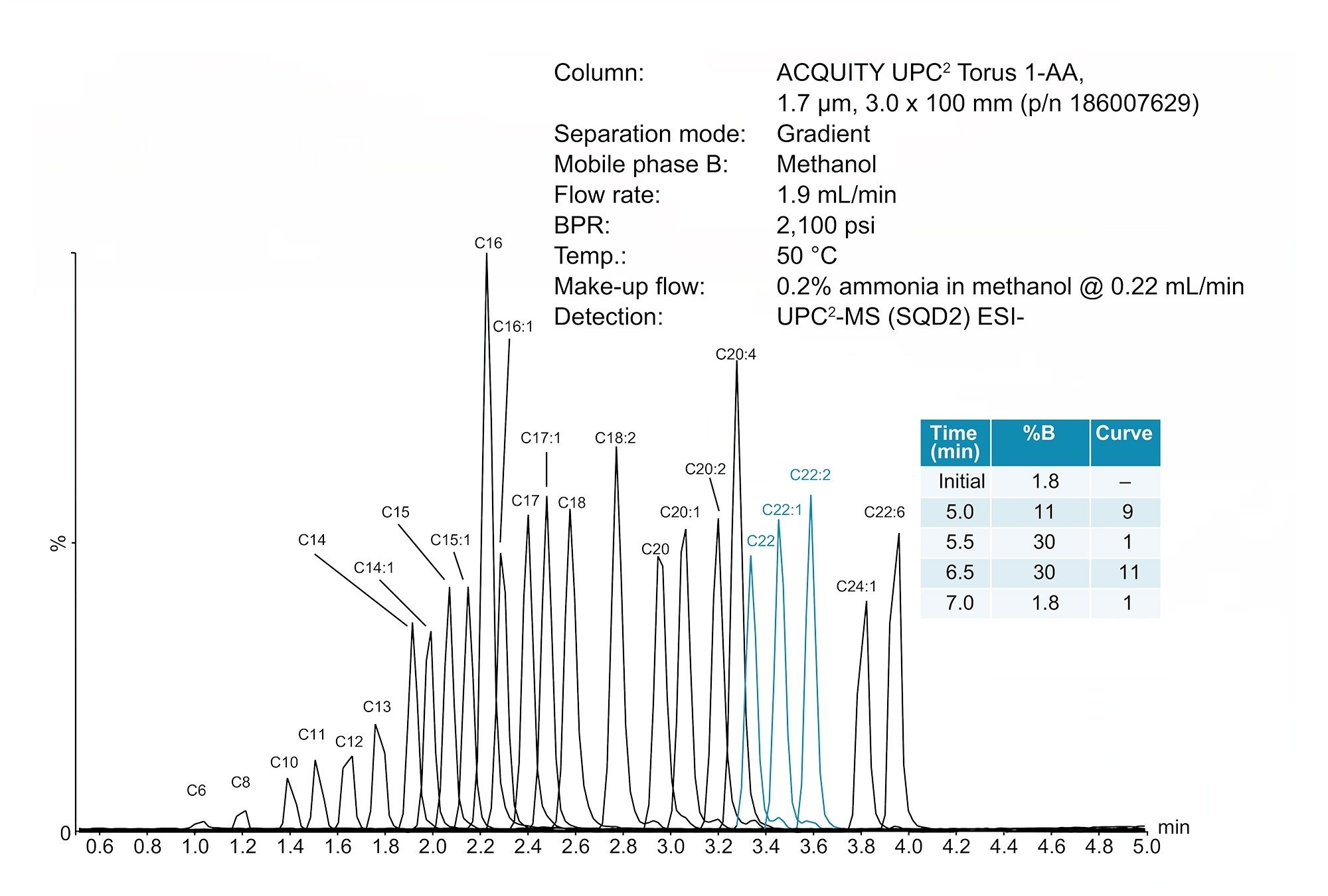
Retention mechanisms and orthogonality to RPLC
Harnessing what's now known as convergence chromatography, an evolution of the traditional SFC technique, the ACQUITY UPC2 System has the power to create selective separations of structurally similar chiral and achiral compounds.
The miscibility of CO2 with a wide range of polar and non-polar organic solvents has made the liquid CO2-based mobile phase versatile enough to separate a much wider range of compounds than reversed-phase LC, especially for mixtures containing polar compounds. Not only can CO2-based solvents be used with both polar and non-polar stationary phases, but chromatography can be influenced by modulating solvent gradients with a much wider choice of columns using the same mass spectrometry-compatible co-solvents.
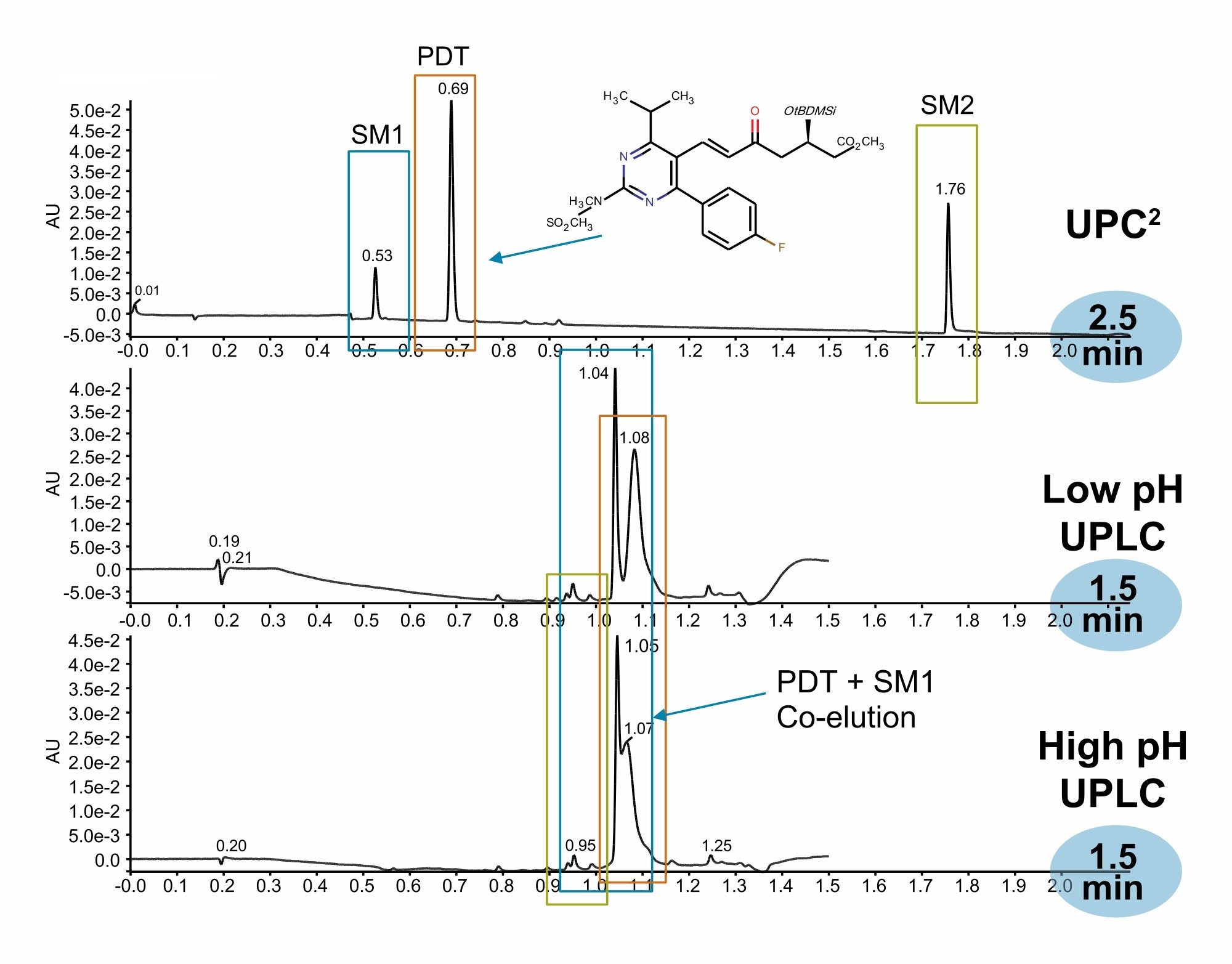
Being orthogonal to reversed-phase LC, UPC2 separations often show an inverse order of elution among groups of analytes. In combination with various detection techniques, this orthogonality is valuable for confirming analyte identity in complex matrices.
Resources
Documents
Support
What do you want to do?


Related
The ACQUITY UPC² (UltraPerformance Convergence Chromatography) is an advanced analytical tool that merges UltraPerformance Liquid Chromatography (UPLC) with supercritical fluid chromatography (SFC). Utilizing supercritical CO₂ as the primary mobile phase, often mixed with organic solvents, it achieves high-resolution separations and faster analysis times compared to traditional high-performance liquid chromatography (HPLC). This system handles a broad range of compounds, including polar, non-polar, and ionic substances, making it suitable for complex mixtures and challenging separations.
A key benefit of the ACQUITY UPC² System is its environmental and cost efficiency. It reduces the need for organic solvents, lowering operational costs and minimizing environmental impact, with CO₂ often being recycled for added eco-friendliness. The system is versatile and compatible with various detection methods, such as ultraviolet (UV), photodiode array (PDA), and mass spectrometry (MS), allowing for the analysis of a wide range of sample types and chemical properties.
Key components of the system include a precise pumping system, an automated injector for high-throughput analysis, a column compartment that maintains optimal temperatures, and sensitive detectors compatible with multiple methods. Advanced software facilitates method development, data acquisition, and processing, enhancing overall efficiency.
The ACQUITY UPC² System is widely applicable across various industries. In pharmaceuticals, it analyzes chiral and achiral compounds, profiles impurities, and conducts stability testing. In the food and beverage sector, it detects contaminants and additives, and analyzes nutritional components and flavors. It is also employed in environmental analysis for monitoring pollutants and pesticides, and analyzing water and soil samples. In chemical research, the system aids in separating and identifying complex mixtures and analyzing natural and synthetic compounds. The system"s ability to provide faster analysis times boosts productivity, while its high sensitivity and resolution enhance the detection of low-concentration analytes.
In summary, the ACQUITY UPC² System represents a significant advancement in chromatographic technology, combining UPLC and SFC strengths to deliver high-performance, efficient, and environmentally friendly analytical solutions. Its versatility, speed, sensitivity, and sustainability make it an invaluable tool for researchers and analysts across various fields.
FAQs about ACQUITY UPC2 System
What is the ACQUITY UPC2 System?
The ACQUITY UPC2 System is a chromatography system designed to provide high-resolution separations and accurate quantitation of complex samples. It is a powerful and versatile system that can be used for a variety of applications, including protein and peptide separations, small molecule separations, and chiral separations.
What are the benefits of using the ACQUITY UPC2 System?
The ACQUITY UPC2 System offers a number of benefits, including high-resolution separations, accurate quantitation, and fast run times. It also offers a wide range of detection options, including UV, fluorescence, and mass spectrometry.
What types of samples can be analyzed with the ACQUITY UPC2 System?
The ACQUITY UPC2 System can be used to analyze a wide range of samples, including proteins and peptides, small molecules, and chiral compounds.
What types of detectors are available with the ACQUITY UPC2 System?
The ACQUITY UPC2 System is compatible with a range of detectors, including UV, fluorescence, and mass spectrometry.
What is the maximum pressure rating of the ACQUITY UPC2 System?
The maximum pressure rating of the ACQUITY UPC2 System is 20 MPa (2,900 psi).


