
High-Throughput Dissolution Analysis with Consistent Performance and Confidence in Routine QC In Vitro Dissolution Workflows
Catharine E. Layton, Amy Woodsmall
Waters Corporation, United States
Published on September 10, 2026

Abstract
Current dissolution LC workflows often rely on UV spectroscopic detection which presents limitations including reduced selectivity and increased susceptibility to matrix interference when used widely. These constraints can lead to additional rework, longer cycle times, and elevated risk during formulation stability testing. The Alliance™ iS HPLC System meets stringent system suitability requirements within a routine quality control (QC) environment, offering a streamlined and compliant solution designed to deliver high reproducibility and throughput during extended injection sequences (i.e. ≥ 60 hours). For this study, a collaboration with a commercial GMP/GLP analytical testing laboratory focused on small molecules, peptides, biologics, and oligonucleotides. The high-throughput QC environment provided a real-world assessment operational performance for the Alliance iS HPLC System. The instrument was employed to monitor formulation stability using a validated dissolution method for a tableted, small molecule active pharmaceutical ingredient (API).
Benefits
- Maximized reproducibility in a high-throughput, formulation development manufacturing environment
- Minimized batch-to-batch uncertainty leading to increased confidence in regulatory submissions and stability data
- Stable testing performance to support extended, long-runtime injection sequences, such as the dissolution assay, without interruption
Introduction
Pharmaceutical manufacturing facilities are responsible for a broad range of analytical assays that underpin process and formulation development, routine manufacturing, and ongoing stability studies. A diverse and reliable portfolio of state-of-the-art analytical instrumentation is required to deliver comprehensive testing capabilities across a wide range of pharmaceutical dosage forms. To remain effective, sample analysis capabilities and instrumentation must continuously evolve to keep pace with rapid advancements in the pharmaceutical industry. One such technology is the Waters Alliance iS HPLC System, a next-generation chromatographic instrument designed with a focus on performance reproducibility and ease of use.
In vitro dissolution testing is a critical quality control measure employed by pharmaceutical development and manufacturing organizations. Analysis is performed to ensure consistent drug product stability and performance. Factors that influence the dissolution rate combine the physicochemical solubility of the API with formulation additives, such as excipients, disintegrants and binders. These additives, some with different solubility characteristics versus the API, may impact the chromatography to result in low-level variability. Hence, when executing dissolution testing, it is critical that the LC instrument perform at an extremely high level of precision and robustness.
In this study, the Alliance iS HPLC System performance was monitored over a three-month dissolution stability study in collaboration with a pharmaceutical QC laboratory. The investigation was operated under stringent GLP guidelines using validated chromatographic testing methods.
Experimental
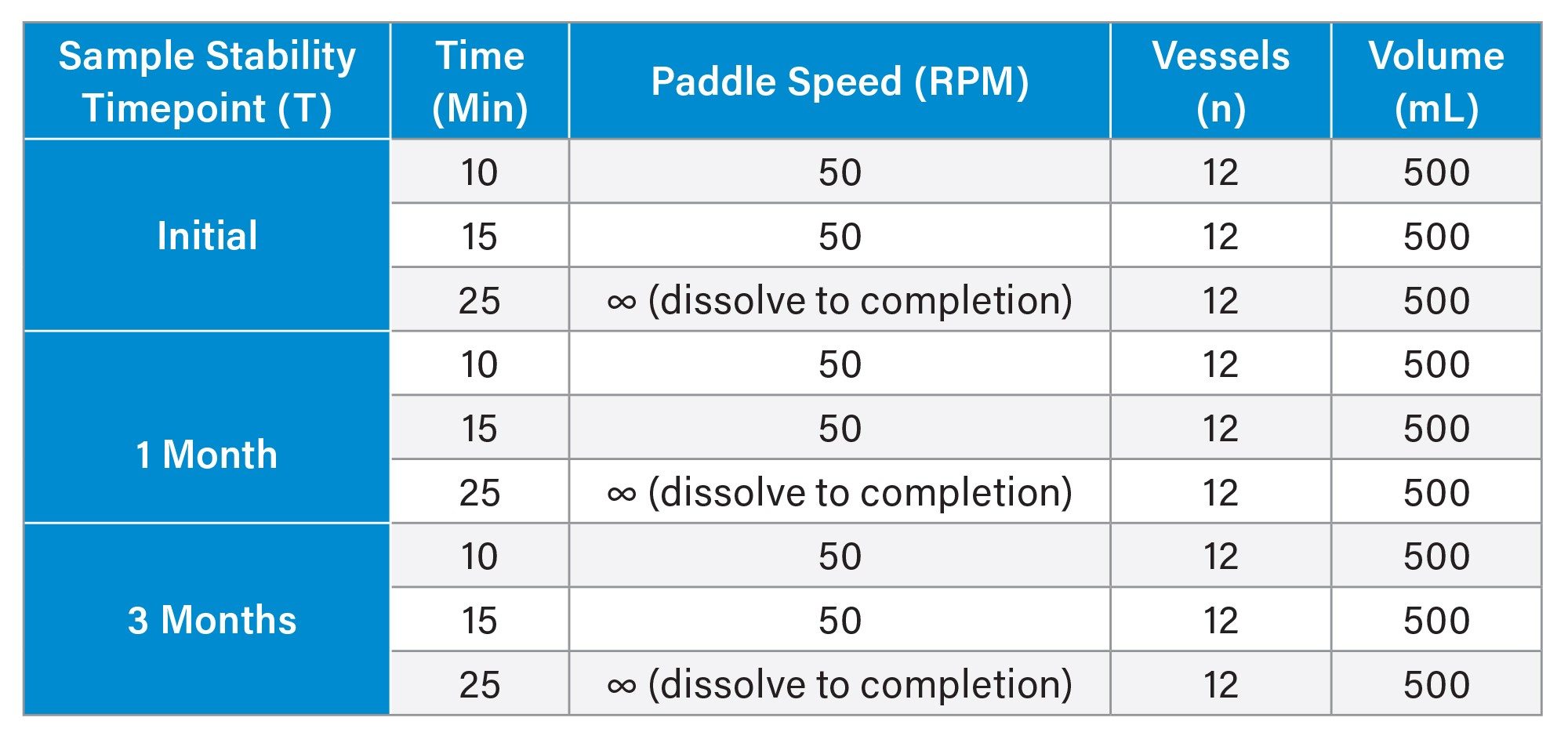
An immediate-release API formulation stored under stability conditions was pulled for dissolution analysis after 0, 1, and 3 months of storage at 4 °C. Representative tablets were randomly selected, and the individual weights recorded. Dissolution baths were equilibrated to 37.0 ºC ± 0.5ºC with paddle rotation. Each tablet was added to a sinker basket and placed into a dissolution vessel containing 500 mL of 0.1 N HCl media (Table 1). A programmable autosampler with syringe pump collected samples from the vessels at the specified testing intervals. Each sample was filtered through a 10 µm full-flow filter and aliquoted for LC analysis.
Chromatographic Conditions
|
System: |
Alliance iS HPLC System with Tunable UV (TUV) Detector |
|
Column: |
YMC Pack Pro C18 RS Column, 150 mm × 4.6 mm, 5 µm |
|
Column temperature: |
55 °C |
|
Flow rate: |
1.000 mL/min |
|
Injection volume: |
15 µL |
|
Mobile phase: |
35 buffer/65 organic (25 mM sodium 1-octanesulfonate, pH 2.5 : acetonitrile) |
|
Detection wavelength: |
214 nm |
|
LC autosampler temperature: |
10 °C |
|
Run time: |
8.0 min |
|
Column wash and storage solution: |
65% acetonitrile / 35% water |
|
System Suitability Test (SST) solution: |
External supplier |
System Suitability Requirements
- No interference at API retention time in blanks
- Repeatability: Six Reference Standard injections at % RSD ≤ 2.0%
- SST solution: Injected in duplicate throughout the sample set at 98.0–102.0% with % RSD ≤ 2.0%
- Retention time (RT) window of API: 5.0–7.0 minutes
Results and Discussion
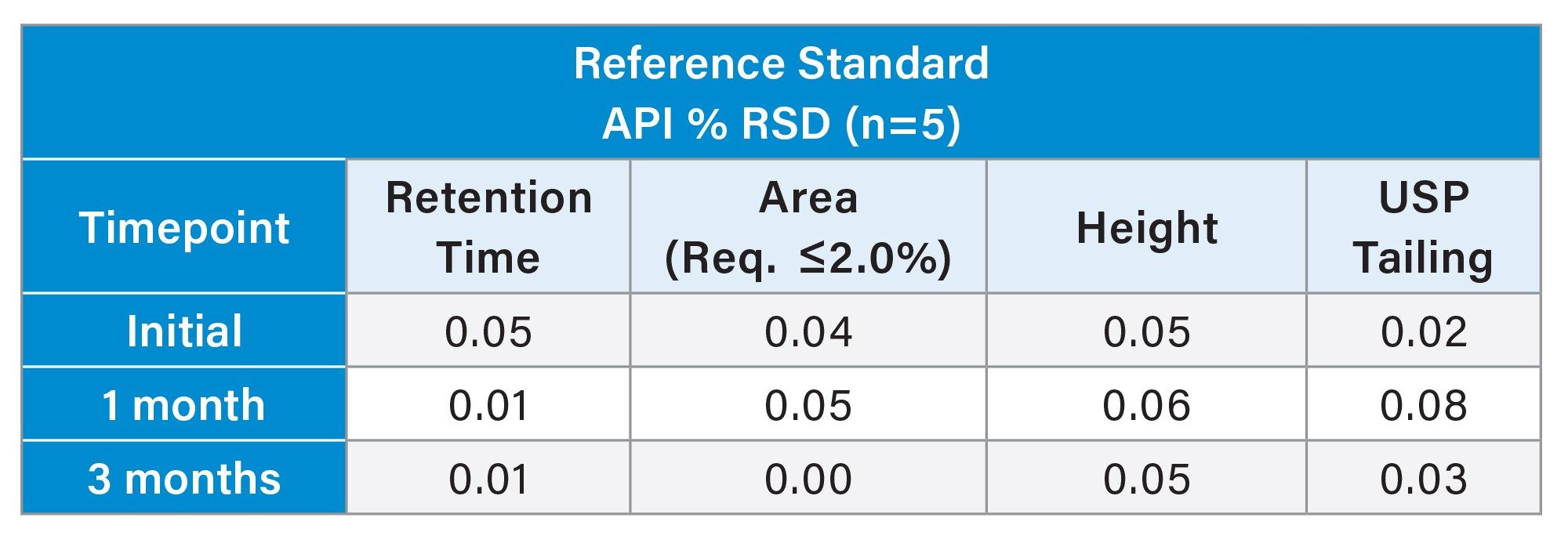
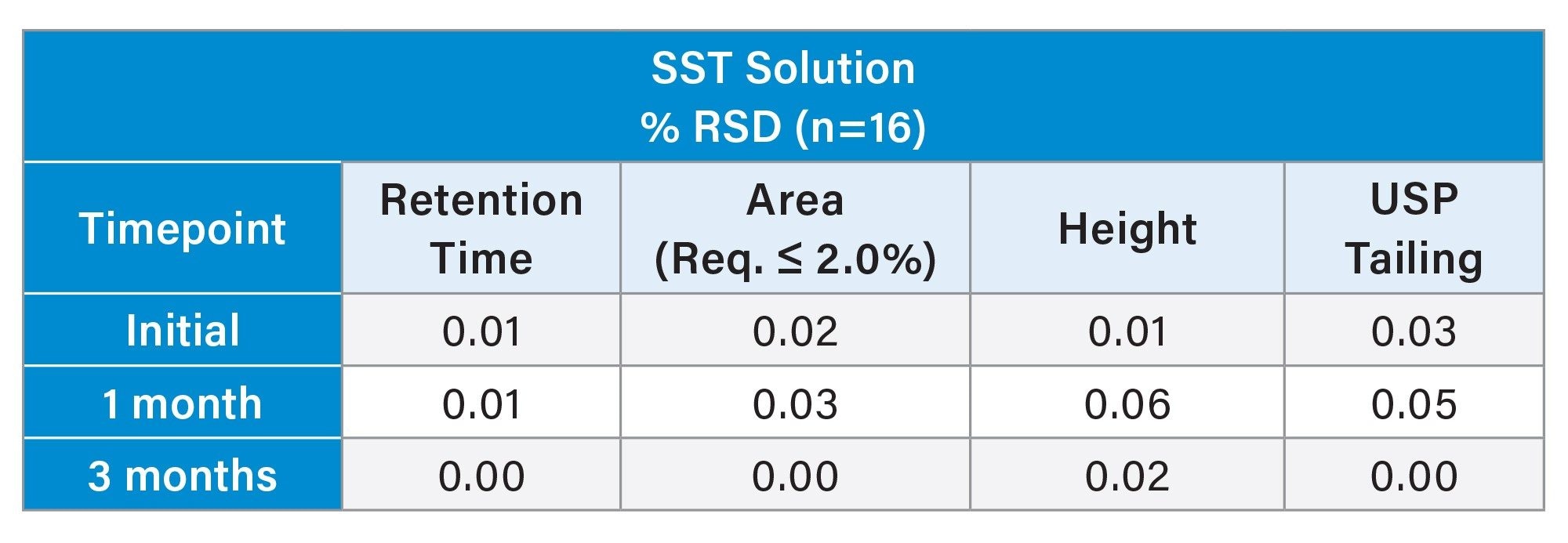
The Alliance iS HPLC System demonstrated stable operation across several days of continuous LC analysis. Suitability criteria were successfully met for the six initial API Reference Standard injections at < 0.1%, which was far below the repeatability specification limit of ≤ 2.0%. Peak performance criteria were also met for the precision, retention time, area, height, and USP Tailing Factor for the Reference Standard injections. The 16 duplicate SST solution injections (Table 2 and Table 3) also met the 98-102% recovery requirements, further confirming reliable sample results and data integrity throughout the long-running injection sequence (Figure 1A). Injection carryover was not detected in the sample chromatograms by area calculation, or by visual inspection of blank injections.
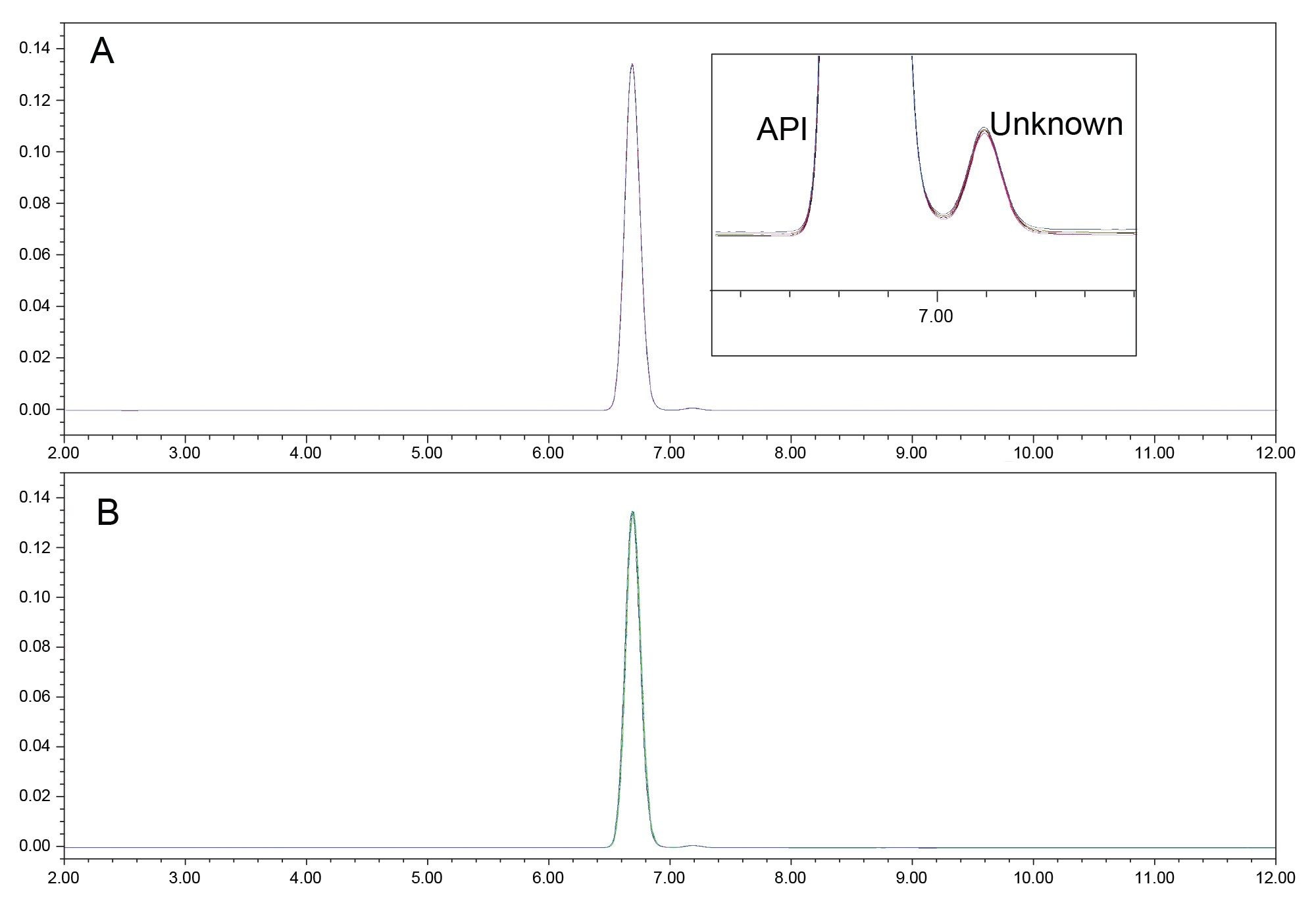
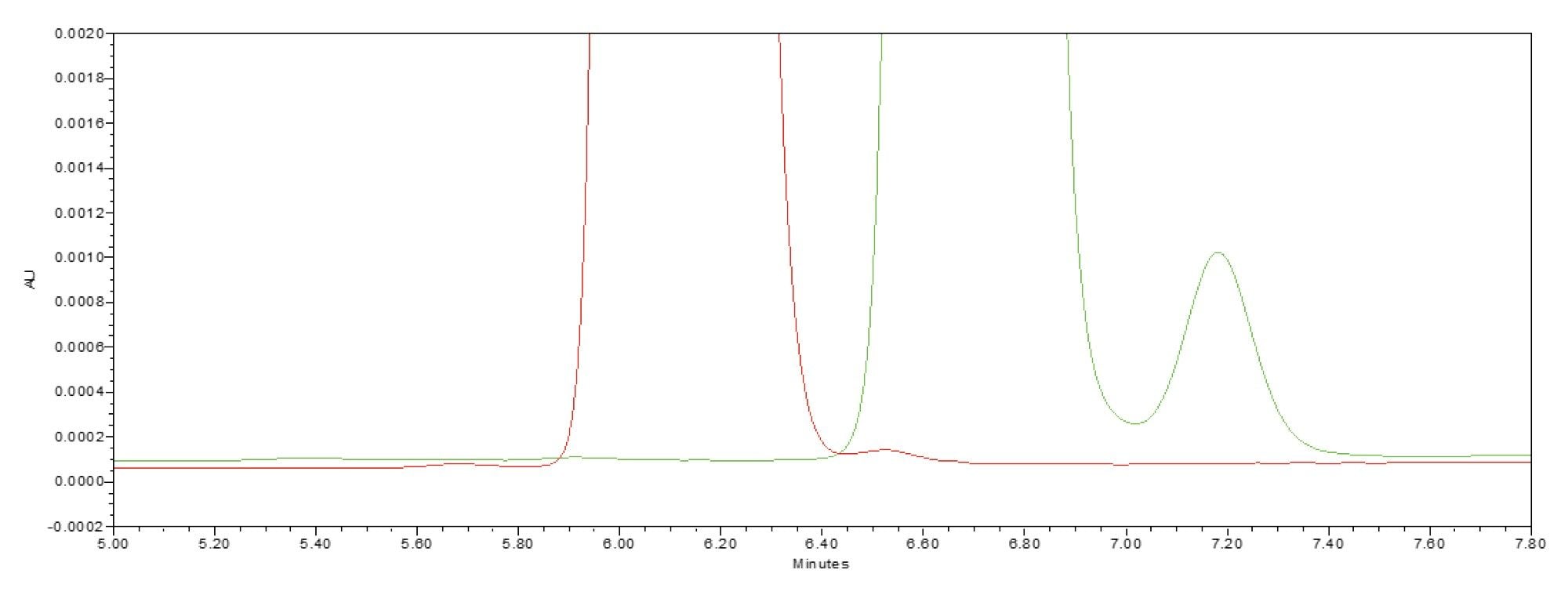
The API retention time varied by less than 30 seconds across three months of stability testing. An unknown peak, suspected to be degradation product, representing 0.02% total area, eluted on the tail of the API in the SST solution after storage at 4 °C for three months (Figure 1B). The unknown peak was not present in the tablet formulation stored under stability conditions. Resolution between the API and the unknown peak was consistent throughout the three month study, demonstrating stable column selectivity performance across the duration of the study.
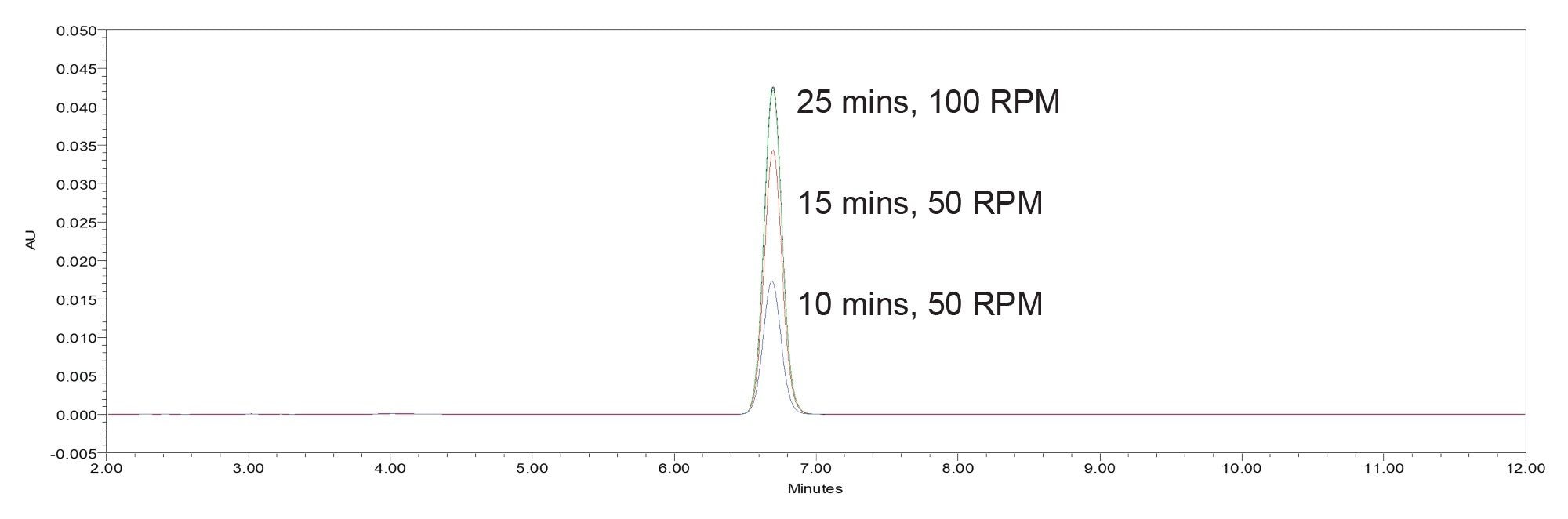
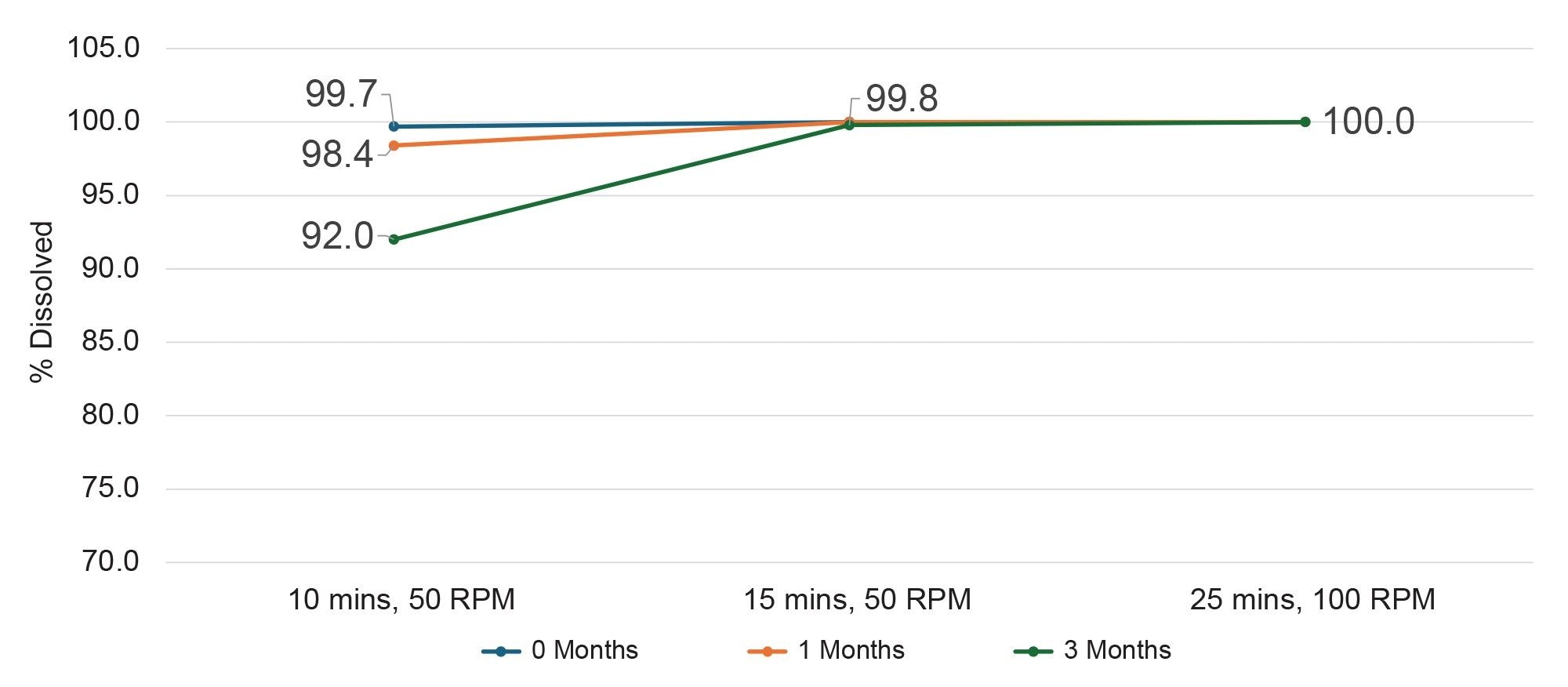
After three months of stability storage, a change in tablet dissolution performance was most evident under the initial, 10 minutes, 50 RPM dissolution timepoint (Figure 2). API release increased as dissolution time and paddle speed increased (Figure 3). Changes in dissolution time were observed after exposure to stability study conditions, which is consistent with literature references regarding formulated, excipient driven dissolution effects.
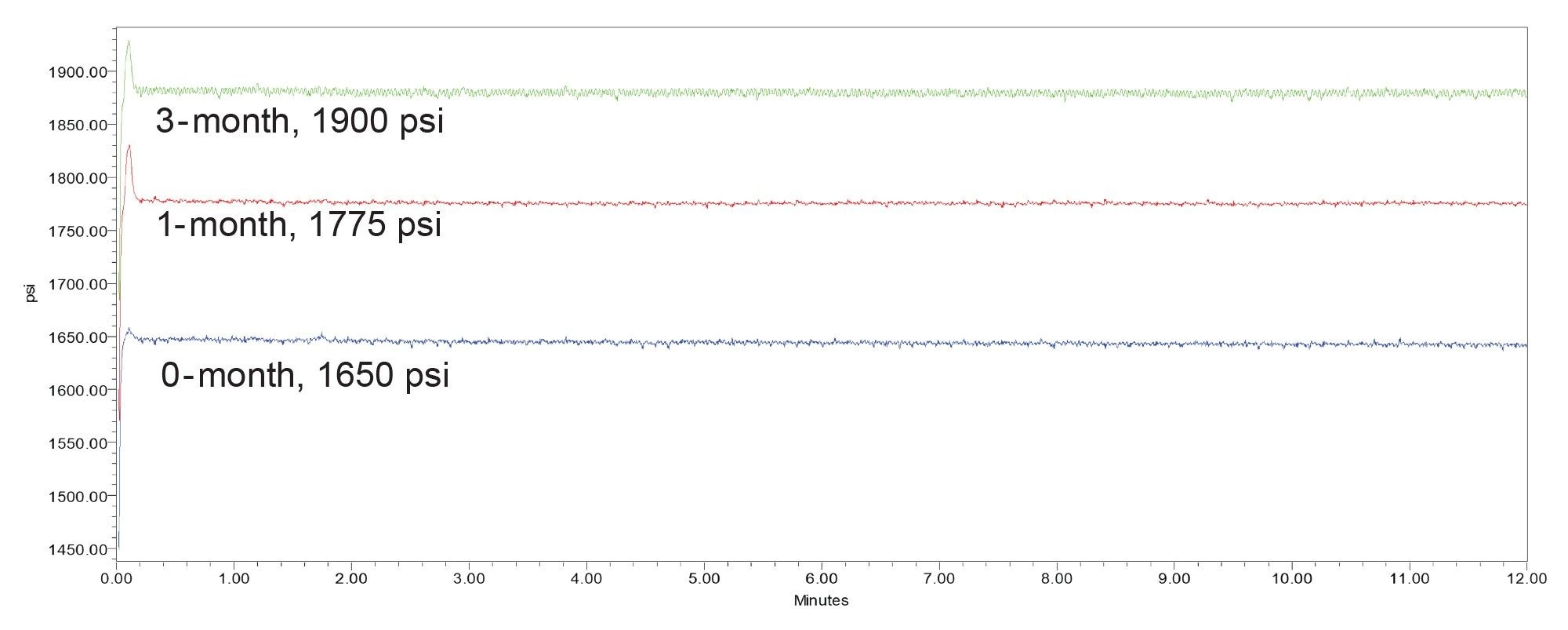
A minor increase in column backpressure (~250 psi) was observed (Figure 4) after three months of sample testing, potentially due to accumulation of excipient-related material on the head of the column. Despite the increase in column backpressure, overall retention of the API shifted later by 30 seconds rather than earlier, which differed from the expected chromatographic behavior associated with increased backpressure. Chromatographic method validation information may provide additional data regarding the relationship between mobile phase preparation and chromatographic robustness. In the case presented, the 30 second shift does not appear to influence the overall results.
Conclusion
The Alliance iS HPLC System demonstrated robust, reliable, and highly reproducible performance for routine dissolution testing. Repeatability results confirm excellent instrument precision during extended analytical sequences, supporting long-runtime applications commonly required for dissolution workflows. Implementation of the Alliance iS HPLC System alongside established dissolution methods enhanced confidence in analytical results while maintaining stable operation performance throughout the study.
In this high-throughput commercial laboratory setting, the Alliance iS HPLC System consistently met and, in several cases, exceeded validated system suitability requirements for chromatographic repeatability and robustness across three months of dissolution stability testing.
Special thanks to Sanjay Patel, for his technical expertise regarding dissolution testing and gracious feedback regarding performance of the Alliance iS HPLC System.
Featured Products
720009571, September 2026


