• Application Note

Semiconductor Photoresist Analysis: Overcoming the Challenges Facing the Development and Supply of Advanced Lithographic Materials with the ACQUITY UPC² System

Semiconductor Photoresist Analysis: Overcoming the Challenges Facing the Development and Supply of Advanced Lithographic Materials with the ACQUITY UPC² System

  • Waters Corporation
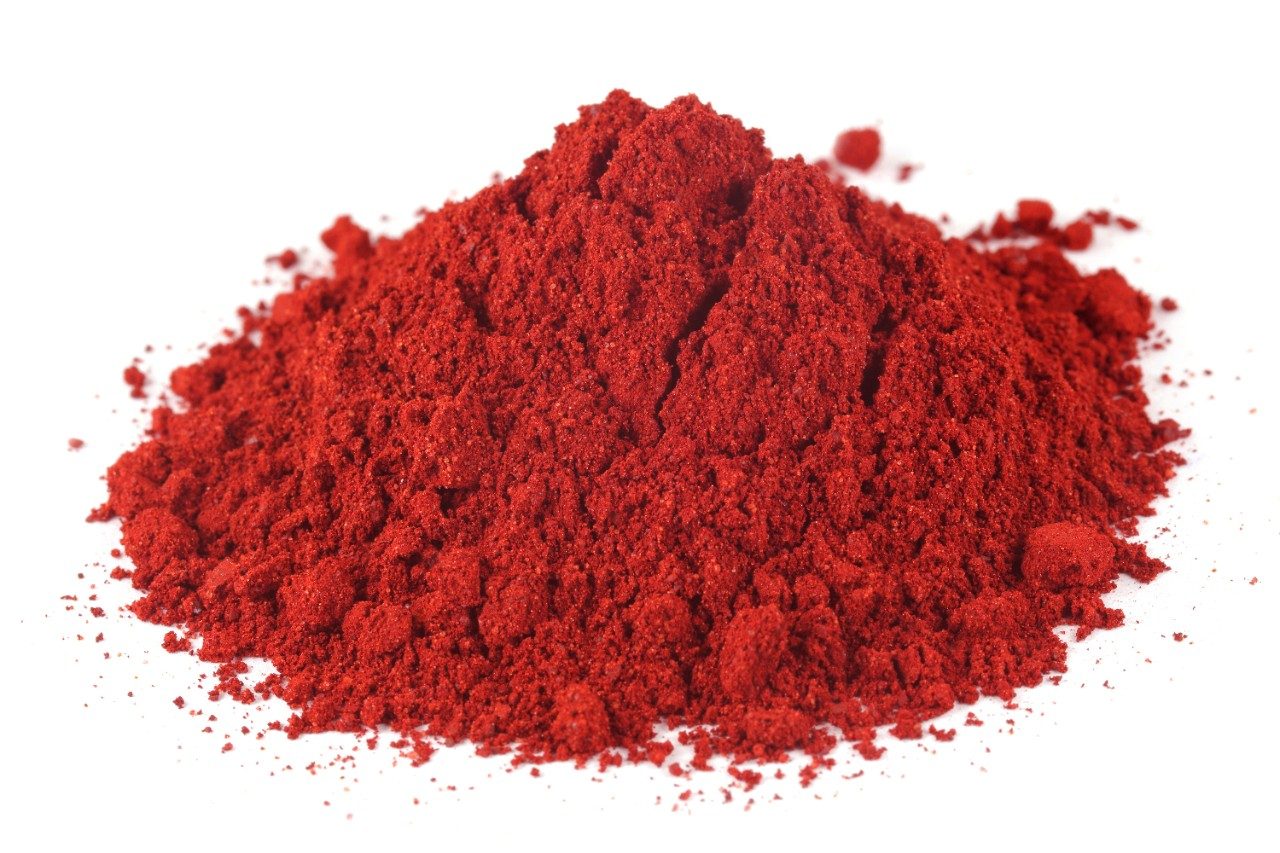
Textile color powder; sudan dye

This is an Application Brief and does not contain a detailed Experimental section.

Abstract

For semiconductor manufacturers and photoresist suppliers, rapid analysis of formulated lithographic materials can provide timely information on dye composition and impurities, supporting formulation assessment and product composition control. The Waters™ ACQUITY™ UltraPerformance Convergence Chromatography™ (UPC²™) System enables direct analysis of formulated photoresists in less than two minutes, providing near real-time assessment information to support manufacturing correction as needed, and facilitate product composition control to help eliminate mischarges and product escapes.

Introduction

Lithographic materials such as photoresist and anti-reflective coatings are formulated specialty coatings produced for the electronics industry. These two coatings are often used in combination to minimize notching and maintain line width control when processing on highly reflective substrates resulting in improved pattern transfer. Dyed photoresist is often employed to combine both the properties of anti-reflective coatings with the lithographic properties of the photoresist in a single package. Many products in this family utilize aromatic azo dyes, such as the Sudan dyes family.1,2,3

Differences in dye assay, dye solubility, and other manufacturing variations result in a need for product analysis to enable corrective adjustments to dye concentration. Current analysis involves a functional evaluation with UV measurements of cast film, which yield bulk values without specific component information. As a result, added functional testing is required which can increase manufacturing cycle time and test cost in excess of $2,000 per batch. Additional normal phase HPLC testing is commonly employed to drive batch correction for mischarges. HPLC test cycle times are 12 to 24 hours, and involve extensive sample preparation, including polymer precipitation and filtration.

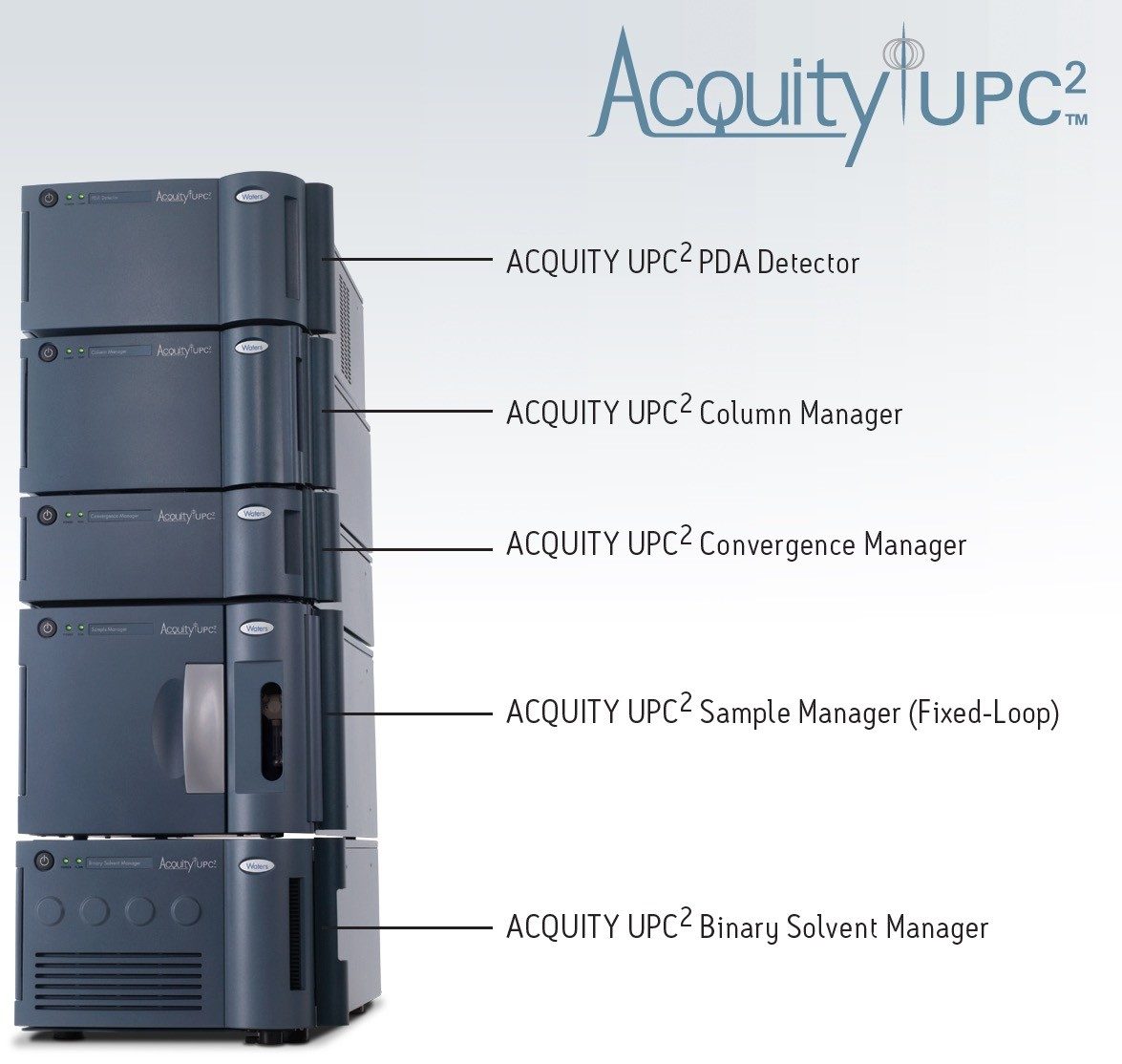
ACQUITY UPC2 System
Figure 1. ACQUITY UPC2 System.

Results and Discussion

In this application brief, the analysis of formulated products using ACQUITY UPC2 System – based on the principles of supercritical fluid chromatography – is described. The final formulated product was diluted ten-fold with tetrahydrofuran, loaded into a sample vial, and directly injected – without the need for extensive sample preparation, such as polymer precipitation, filtration, or lengthy system equilibration.

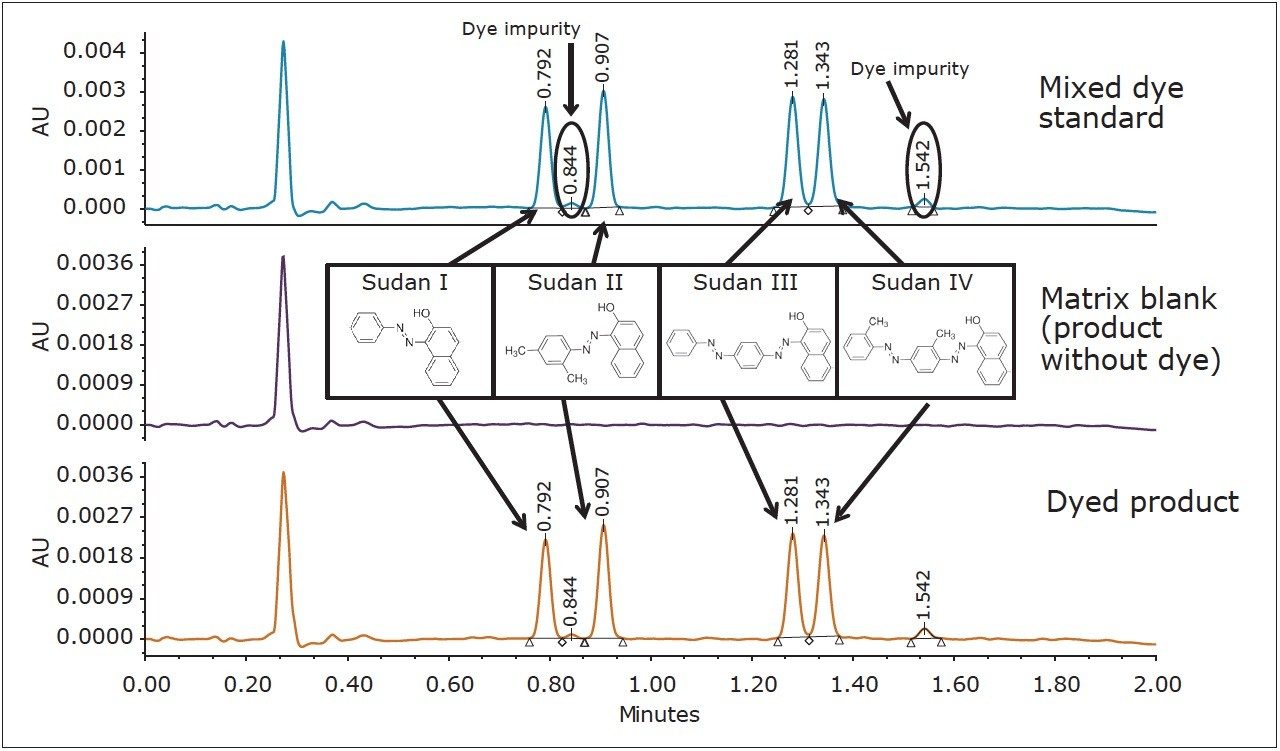
Chromatograms from the mixed standard solution, a blank non-dyed product and the fully formulated product with the mixed dye package are shown in Figure 2. The analysis was conducted in less than two minutes, and provided baseline resolution of the four dyes, as well as the typical dye impurities.

ACQUITY UPC2 chromatogram of dyed product after a simple 10-fold dilution
Figure 2. ACQUITY UPC2 chromatogram of dyed product after a simple 10-fold dilution. No interfering compounds from the blank matrix were observed.

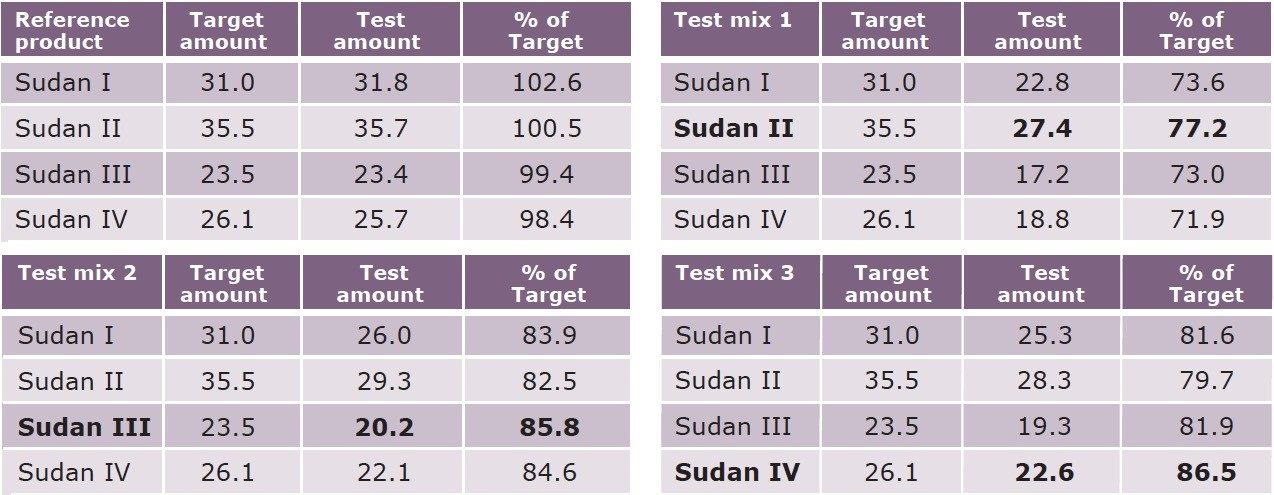
Quantification of the analytes in the product was easily accomplished using an external calibration based on mixed dye standards. The data from the analysis of four product mixes is presented in Table 1. The analysis of the reference product provides the quantitative verification of the product dye mixture as compared to target or formulation amounts. Examples of in-process testing of three test mixes showed a low loading of the dye package. Additionally, the analysis highlighted the disproportionate level of individual dyes in the formulated dye blend in each product. Using this analysis, a formulation correction to each product mix can directly address the total dye level, as well as the relative dye proportions in a fraction of the time of traditional approaches.

Concentration of dye in photoresist after adjusting for dilution factor
Table 1. Concentration of dye in photoresist (mg/kg) after adjusting for dilution factor. Test mix samples had low dye content versus the target. Results in bold indicate compounds that had higher relative concentration, and required additional adjustment.

Conclusion

  • Rapid product analysis was accomplished with the ACQUITY UPC2 System in less than two minutes using a simple dilute and analyze workflow providing timely feedback for manufacturing control.
  • Individual dyes were easily quantified meeting the product requirements.
  • The analysis of three test mixes of product easily demonstrated not only the dye amount but the disproportionate amount of individual dyes.
  • Adjustment of production batches can be controlled to the individual component requirements supported by the ACQUITY UPC2 System analysis.
  • The ACQUITY UPC2 System provides near real-time assessment to direct product manufacture correction as needed, and facilitates product composition control to help eliminate mischarges and product escapes. For semiconductor manufacturers and photoresist suppliers, ACQUITY UPC² delivers a practical approach to improving process efficiency while helping ensure consistent product composition control.

References

  1. R F Sinta, T F Zydowsky. Dyed photoresists and methods and articles of manufacture comprising same. European Patent no. EP 0 930 543 A1.
  2. M W Mongomery, C Hamaker. Sensitized chemically amplified photoresist for use in photomask fabrication and semiconductor processing. U.S. Patent no. 7067227B2.
  3. A Zampini, P Trefonas, et al. Positive dye photoresist compositions with 2,4-bis(phenylazo)resorcinol. U.S. Patent no. 4983492.

720004393, October 2026

Back To Top Back To Top