
Unlocking Robust, Reproducible Separations for Modern Peptide Therapeutics with BioResolve™ Peptide Phenyl Hexyl+ Columns
Emery Domain, Natalia Kozlova, Balasubrahmanyam Addepalli, Caitlin Hanna, Steve Shiner
Waters Corporation, United States
Published on July 09, 2026

Abstract
This application note describes the performance of the newly introduced Waters BioResolve Peptide Phenyl-Hexyl+ 1.6 µm Column, purposefully designed and vetted for use in the analysis and impurity profiling of glucagon-like peptide-1 (GLP-1) receptor agonists and related therapeutics. Increase in the chemical and structural complexity of these incretin mimetic drugs has led to the demand for more precise analytical tools with robust performance optimized for this specific class of peptides. The results described in this work demonstrate excellent batch-to-batch and column-to-column reproducibility, minimal injection carryover and stable chromatographic performance across 500 injections. These data together demonstrate that the columns are well-suited for high-confidence impurity profiling of modern peptide therapeutics.
Benefits
- High reproducibility across multiple batches of material and lots of column hardware
- Minimal sample carryover between injections, enabling data confidence
- Robust column lifetime performance
Introduction
Peptide therapeutics have rapidly emerged as a dominant modality in modern drug development, driven by the clinical and commercial success of GLP-1 receptor agonists. These molecules frequently incorporate sequence and structural modifications such as noncanonical amino acids and fatty acid or large molecule conjugation to enhance pharmacokinetics and efficacy. Additionally, next-generation dual- and multi-agonist designs add further complexity to the drug and resulting analyses.1
As these innovations have advanced therapeutic performance, they have also introduced considerable analytical challenges. Peptide impurity profiles are becoming more intricate, with closely related sequence variants, isomeric impurities, chemical degradation products, and hydrophobic conjugation-related retention effects complicating chromatographic separation.2,3 As a result, conventional reversed-phase columns may not always provide sufficient selectivity or pore accessibility for these complex molecules. Stationary phases with specifically tuned pore diameters are increasingly required to ensure effective mass transfer for higher-molecular-weight peptides and conjugates, while additional retention mechanisms can improve resolution of structurally similar species. Additionally, embedded positive surface charges can enhance selectivity by modulating silanol activity, improving peak shape and reproducibility under acidic conditions commonly used in high-performance liquid chromatography (HPLC) and ultra-performance liquid chromatography (UPLC™) and LC–MS peptide analyses.3,4
To address these growing analytical demands, Waters has developed a 1.6 µm, 230 Å superficially porous charged‑surface particle column – the BioResolve Peptide Phenyl‑Hexyl+ Column – engineered to deliver distinct selectivity and improved pore accessibility for structurally complex peptides compared with traditional reversed‑phase columns. This application note evaluates its performance in reproducibility, carryover, and lifetime using a representative set of clinically relevant peptide therapeutics.
Experimental
Sample Description
The test sample contained a mixture of insulin, a deamidation impurity of insulin, the GLP-1 analogs semaglutide and liraglutide, the dual GLP-1 and GIP (glucose-dependent insulinotropic polypeptide) agonist tirzepatide, and the amylin mimetic cagrilintide. The injected load of each peptide in the test mixture was 0.18 µg, excluding the insulin impurity which was present at around 8% relative abundance, resulting in an approximately 0.9 µg peptide load per injection.
LC Conditions
|
LC system: |
ACQUITY™ Premier UPLC System with Binary Solvent Manager (BSM), Flow-Through Needle Sample Manager (FTN), and CH-A Column Heater |
|
Detection: |
ACQUITY UPLC TUV Detector with Analytical flow cell (10 mm, 500 nL) Wavelength: 214 nm |
|
Column: |
Waters BioResolve Peptide Phenyl-Hexyl+ RP Column, MaxPeak Premier Technology, SPP, 1.6 µm, 230 Å, 2.1 x 50 mm (p/n: 186011725) |
|
Column temperature: |
55 °C |
|
Sample temperature: |
5 °C |
|
Injection volume: |
5 µL |
|
Mobile phase A: |
0.1% formic acid in water |
|
Mobile phase B: |
0.1% formic acid in acetonitrile |
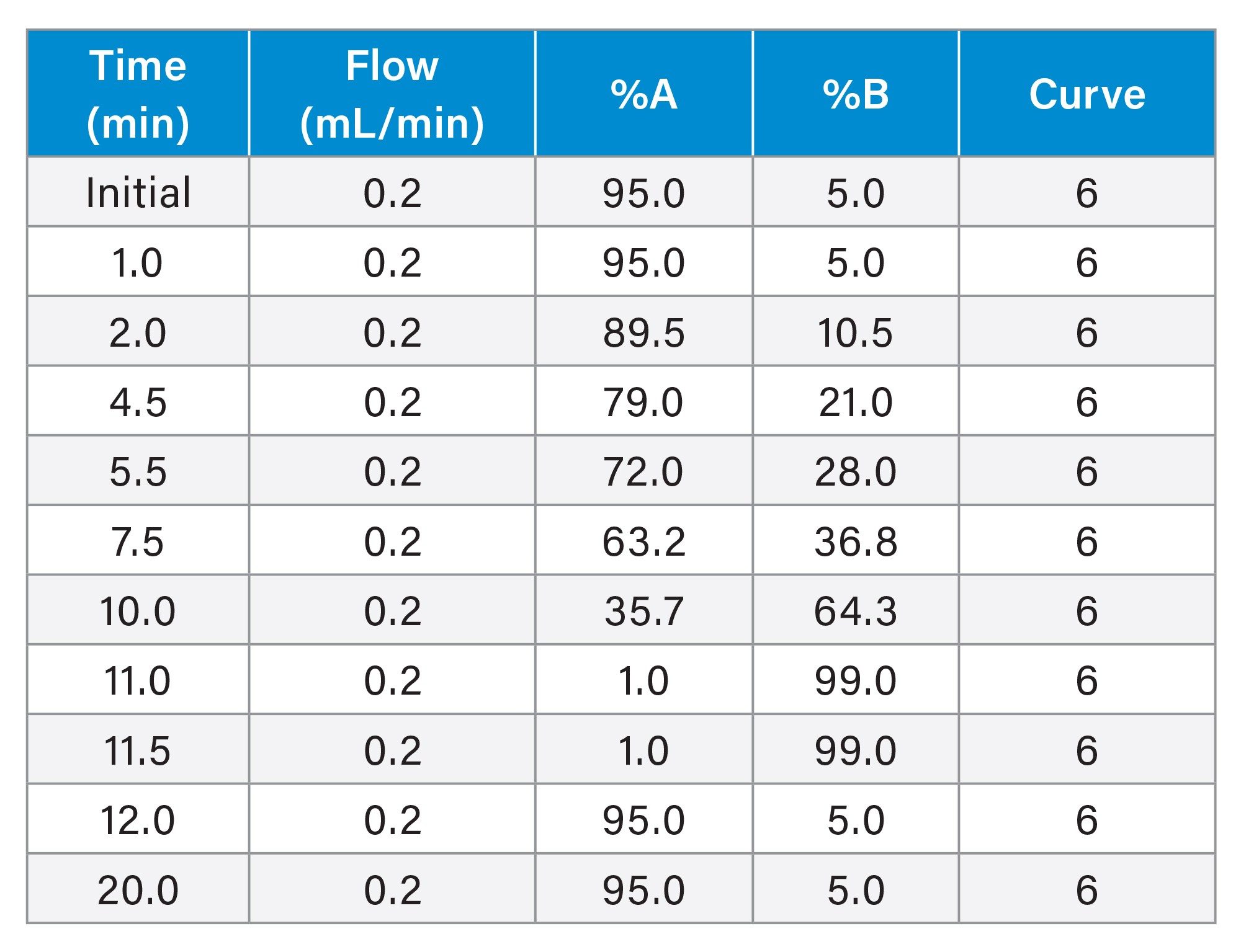
Gradient Table
Results and Discussion
Batch-to-Batch Reproducibility
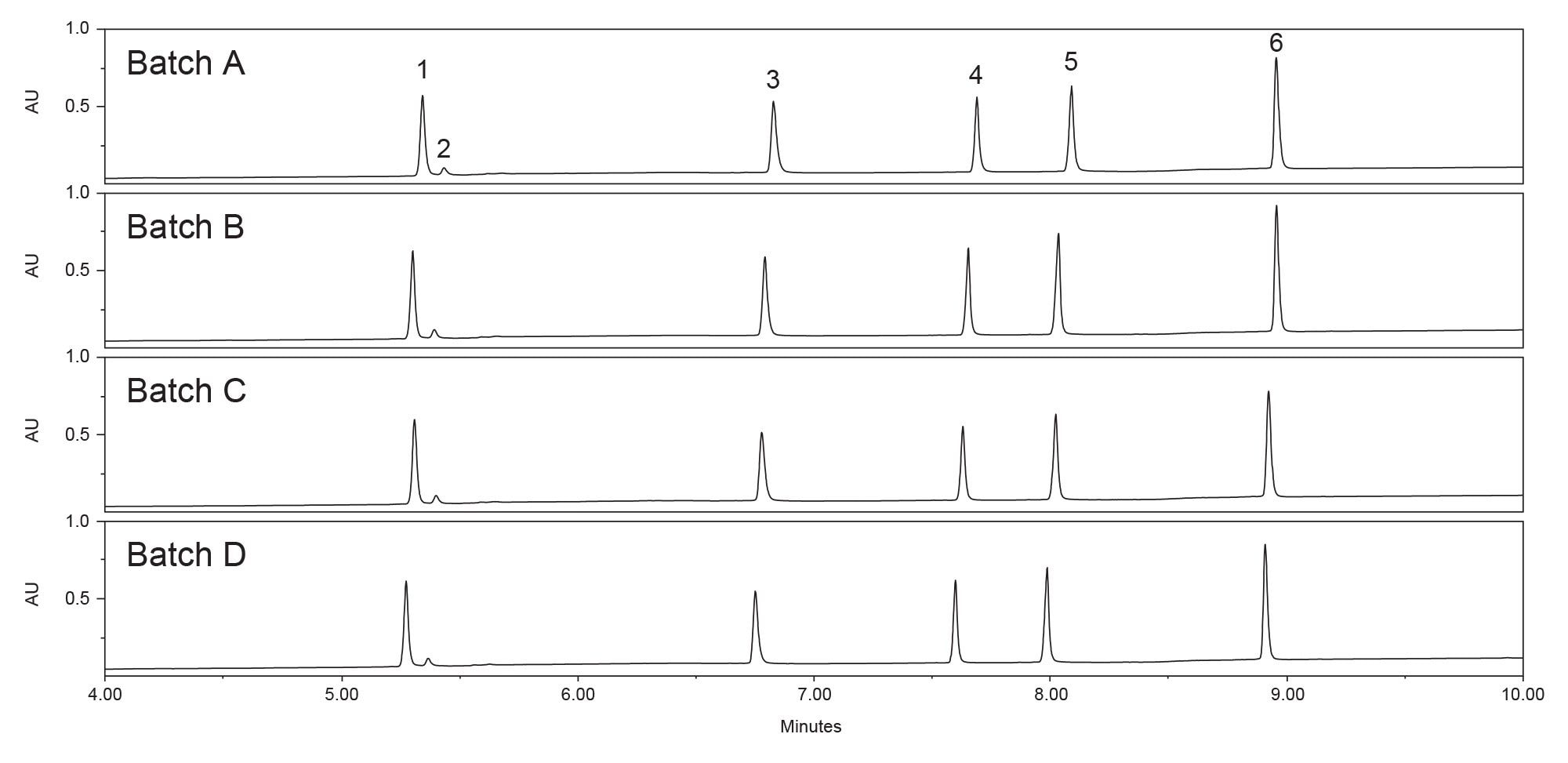
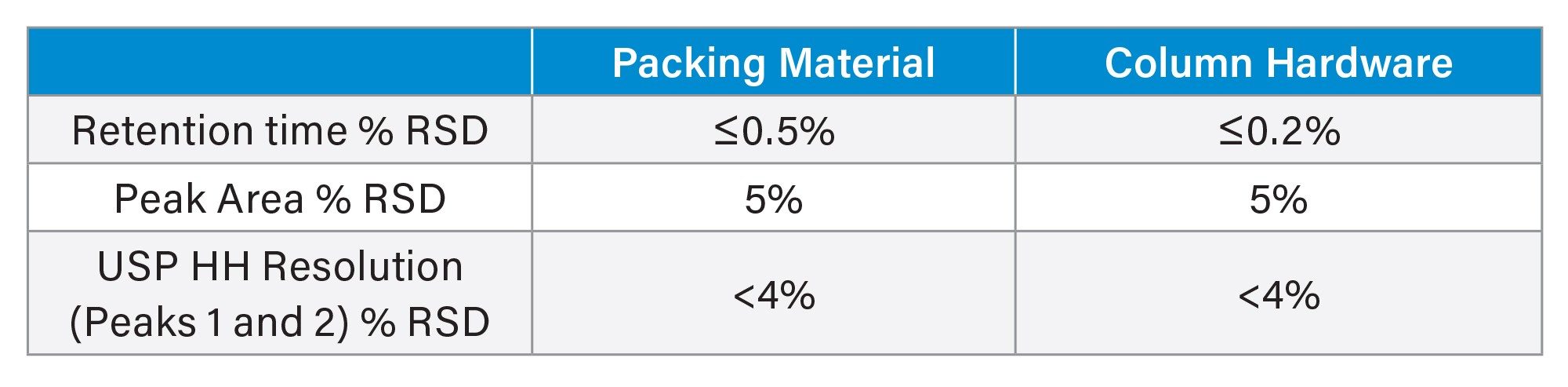
Four unique batches of packing material were compared to assess batch-to-batch chromatographic variability (Figure 1). These analyses revealed excellent reproducibility, with ≤0.5% relative standard deviation (RSD) for the absolute retention times of all peptide peaks and an average peak area RSD of approximately 5%. Additionally, the USP half-height resolution for the critical pair of insulin and its degradant impurity remained <4% RSD across the tested batches.
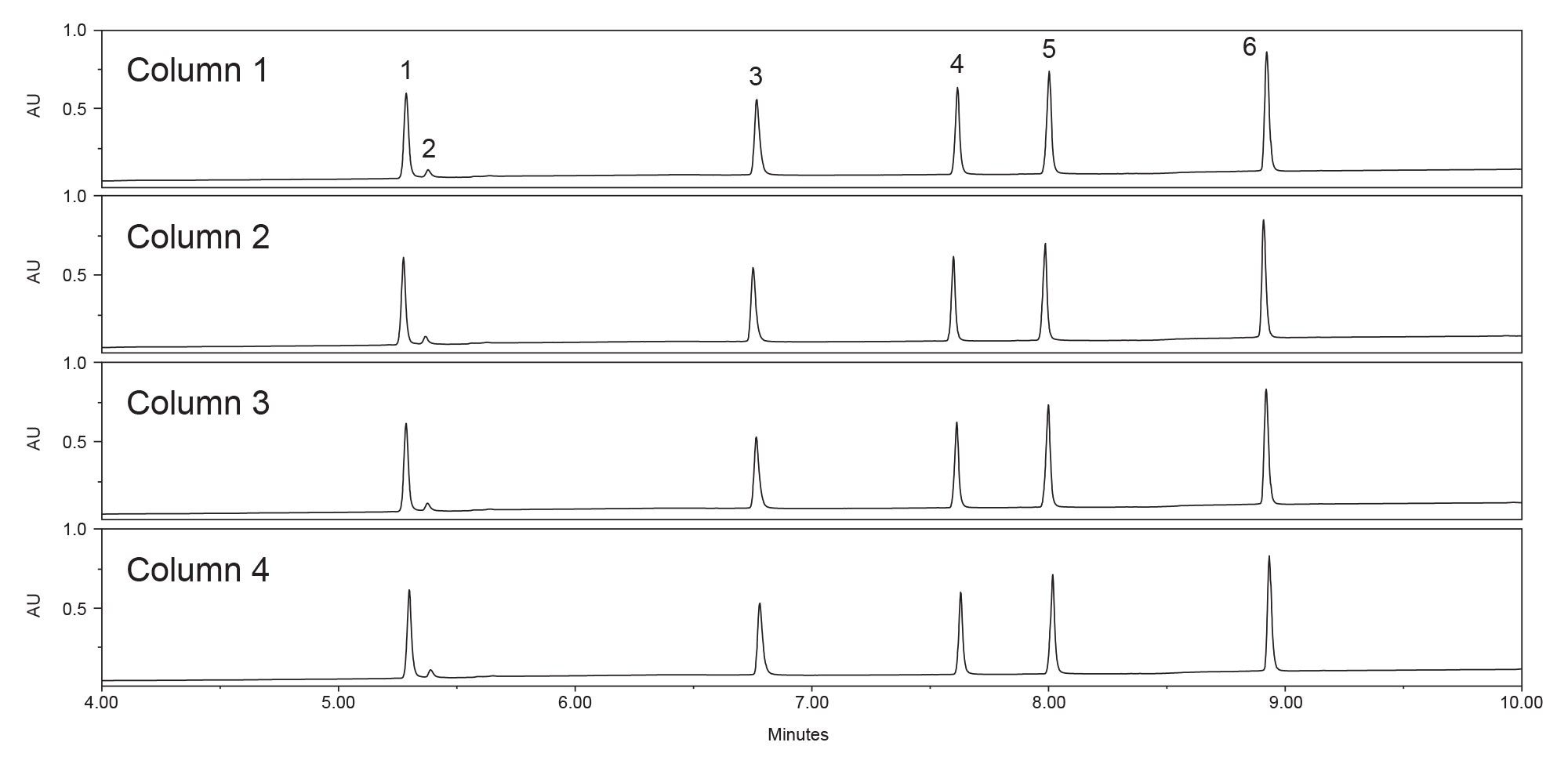
These reproducibility analyses were also applied to four columns containing a single batch of stationary phase material contained within varying lots of MaxPeak™ Premier High Performance Surfaces hardware (Figure 2). This intra-batch comparison also demonstrated a high degree of reproducibility, with ≤0.2% RSD observed for the retention times of all peptides within the test mixture. Similar RSD values were achieved for average peak area (5%) and the USP half height resolution of insulin with its impurity (<4%), as compared to the inter-batch analysis (Table 1). The congruity of these results generated from both inter- and intra-batch testing indicate that the production of this column is highly uniform, with low risk of confounding variation due to manufacturing processes.
Sample Carryover
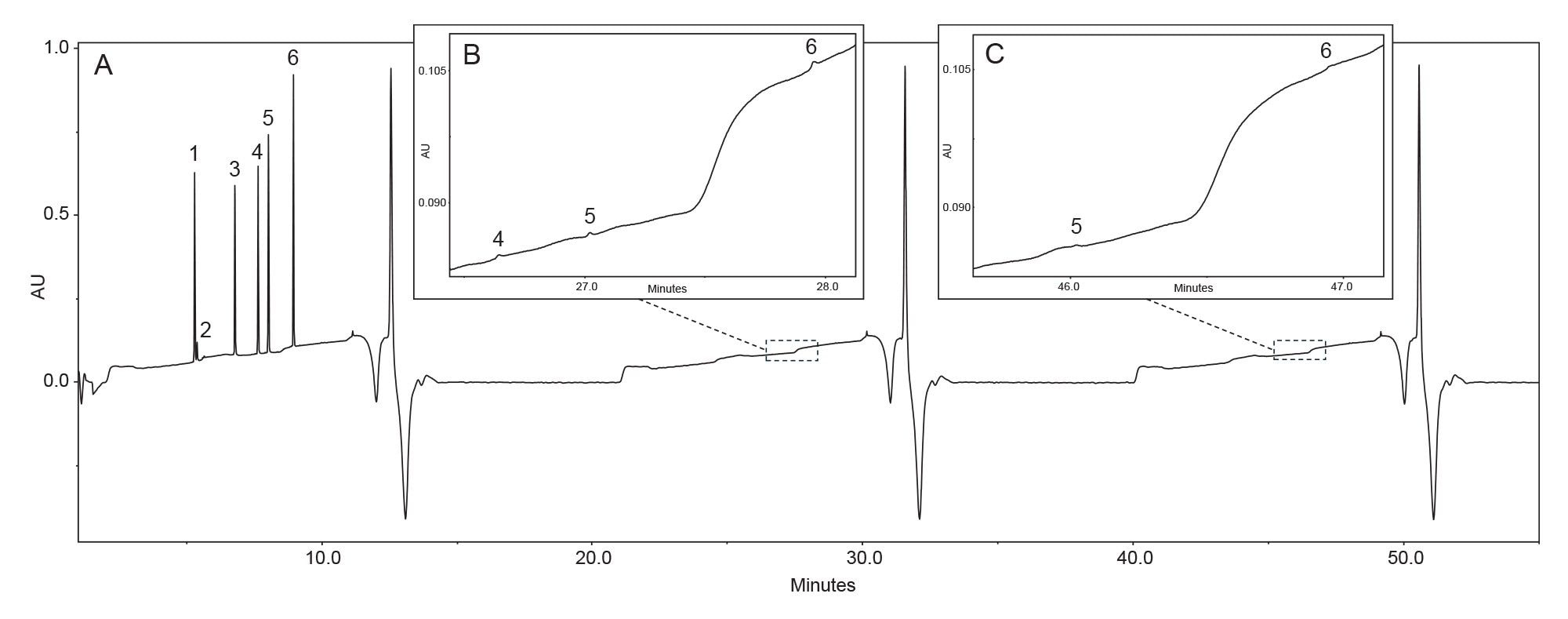
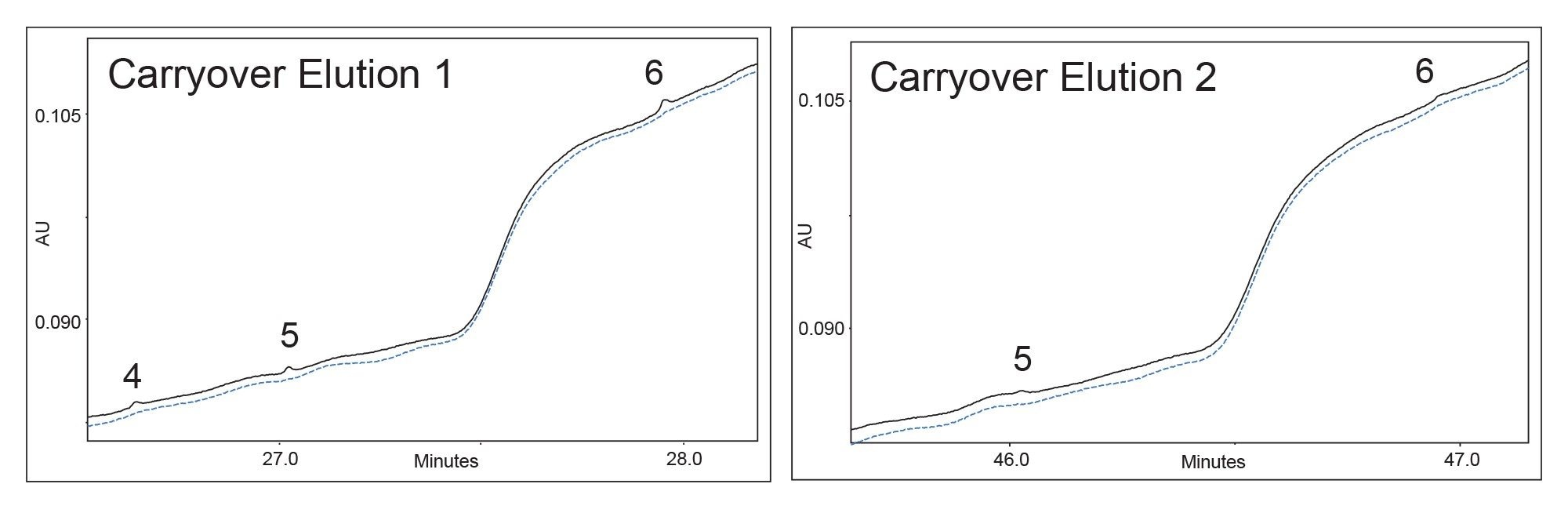
Column-related carryover between injections was also investigated for two of the previously mentioned batches. Sample carryover was assessed by running two full gradient cycles after the primary elution, without reinjection, to eliminate any contribution from the sample delivery system (Figure 3). The total peak area within each carryover window was compared to the total peak area of the main elution to determine carryover percentage. The average total carryover observed from all peptides on both columns was negligible, <0.04% during the first replicate elution cycle and <0.01% during the second, with any observed carryover attributed only to the highly retained insulinotropic peptides semaglutide, liraglutide and tirzepatide. The low carryover observed with these columns is further highlighted in Figure 4, where the baseline chromatograms of the replicate elutions of sample are compared to the baseline from a blank triplicate elution injection of mobile phase A.
Column Lifetime
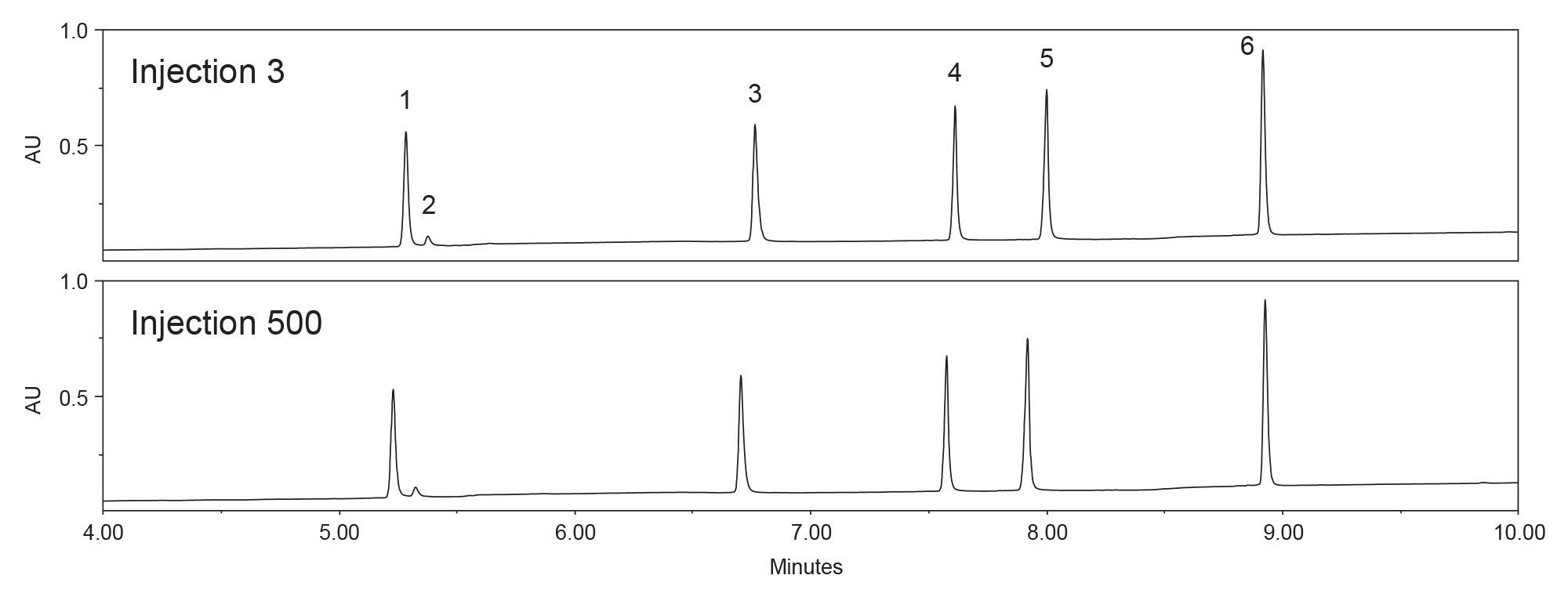
Finally, an investigation into column lifetime was conducted using 500 injections of the previously described peptide test mixture, representing nearly six days of constant operation (Figure 5). Relative retention times for each peak were calculated against peak 1 (insulin) on the third and 500th injection, and only ≤1% change was observed in the relative retention of all peptides. Resolution also remained essentially unchanged, with a 5% change in USP half height resolution between insulin and its impurity observed after 500 injections. Peak shape was stable throughout testing, exhibiting an average of 4% change in USP tailing factor and peak width at half height across all peaks. Moreover, backpressure rose only 215 psi, approximately a 15% increase from the starting column pressure (at a flow rate of 0.2 mL/min). It is important to note that the number of injections performed during this analysis does not indicate the column’s total functional lifetime; rather this test served as a baseline for column performance in a high-throughput environment with continuous injection under low pH.
Conclusion
In summary, the Waters BioResolve Peptide Phenyl-Hexyl+ Column demonstrates strong performance as an analytical solution for increasingly complex peptide therapeutics. The combination of optimized pore structure, positive surface charge, and phenyl hexyl selectivity helps deliver reproducible retention, minimal carryover, and consistent performance across a large number of injections. These attributes support its utility for impurity profiling of GLP-1 receptor agonists and related molecules, where conventional reversed-phase columns may be limited.
References
- Peri, R.V.; Anchan, H.; Jonnalagadda, K.; Varghese, R; Gupta, P. Designing GLP-1 Delivery: Structural perspectives and Formulation Approaches for Optimized Therapy. Nutrition & Diabetes, 15, p.53. 2025.
- Zhang, B.; Xu, W.; Yin, C.; Tang, Y. Characterization of Low-Level D-Amino Acid Isomeric Impurities of Semaglutide Using Liquid Chromatography–High Resolution Tandem Mass Spectrometry. Journal of Pharmaceutical and Biomedical Analysis, 224, p.115164. 2023.
- Manetto, S.; et al. Comparing the Performance of Electrostatic Repulsion–Reversed Phase Chromatography Approaches in the Resolution of Complex Peptide Mixture: liraglutide as case study. European Journal of Pharmaceutical Sciences, 211, p.107120. 2025.
- Hanna, C.M.; Koza, S.M.; Shiner, S. Characterization and Impurity Profiling of Combined Amylin and GLP-1 Analogs with RapiZyme Trypsin. Waters Application Note. 720008925, June 2025.
Featured Products
720009487, July 2026


