Accelerate characterization of emerging small molecule modalities


See more. Discover faster. 

See more. Discover faster. 

When you’re screening thousands of compounds to identify the next impactful small-molecule drug, you need LC-MS solutions that deliver speed without compromising data quality. You need hardware that can handle even the most challenging analytes, methods you can trust and reproduce, and software that accelerates decision-making so you can move confidently from data to insight. 

With Waters solutions for small molecule characterization, you can: 

  • Quickly and confidently identify impactful drug candidates 
  • Deliver more effective and reliable characterization across complex modalities 
  • Rapidly advance projects toward early development with greater confidence
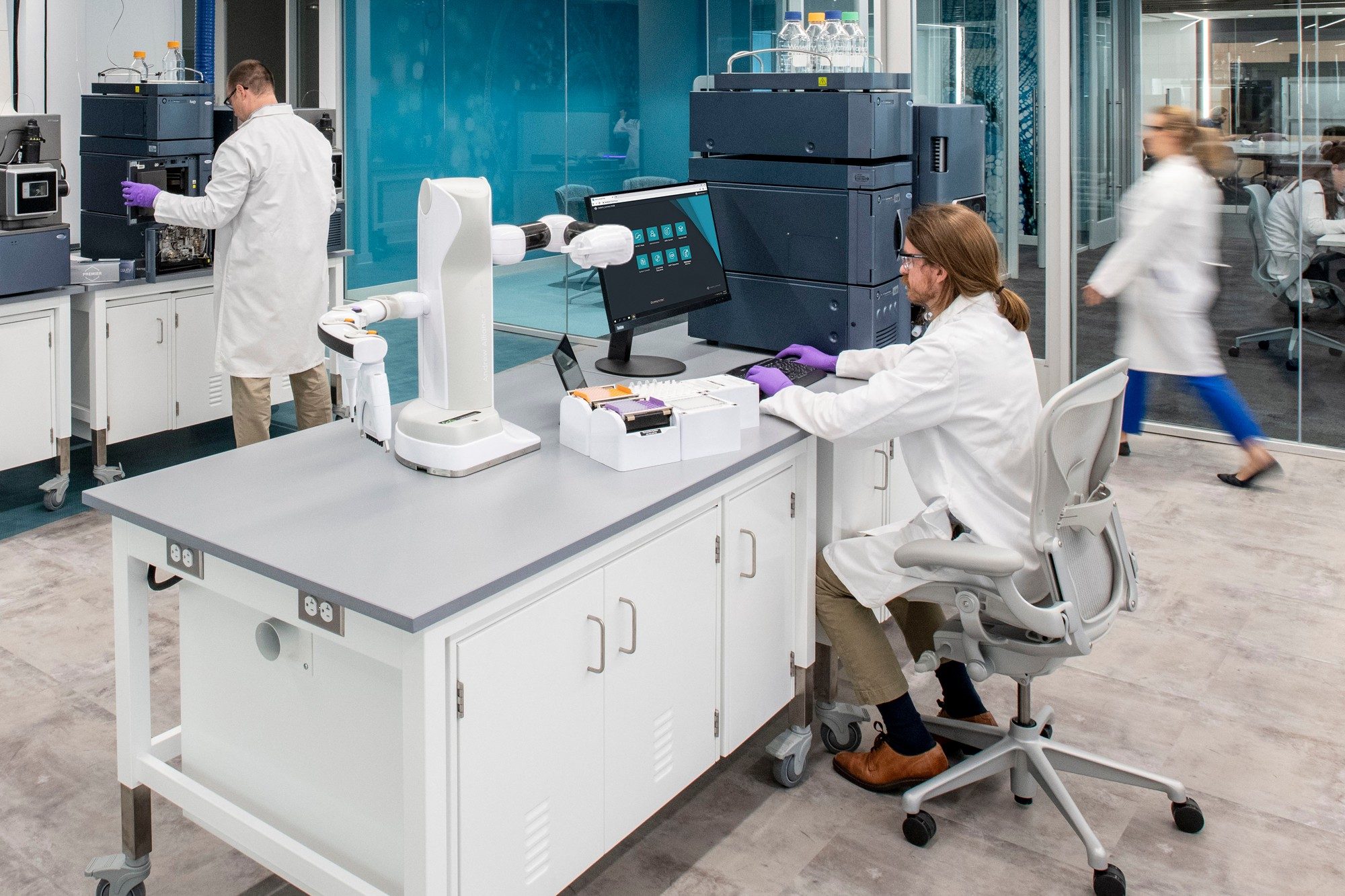
Scientists working in Waters Immerse laboratory

Man sitting on couch, taking medication

Expanding the small-molecule modality landscape


Emerging small molecule modalities such as PROTACs, radiopharmaceuticals, and kinase inhibitors push the limits of conventional analytical workflows. These compounds are often larger, more heterogeneous, more lipophilic, or more prone to surface interactions, making reliable characterization increasingly difficult. Waters solutions are purpose-built to help you characterize these modalities with confidence by combining advanced LC-MS hardware, surface-optimized flow paths, and high-performance data acquisition.

With Waters solutions for emerging modalities, you can:

  • Characterize complex, multifunctional molecules with improved recovery and signal stability
  • Minimize analyte loss and variability caused by metal interactions and adsorption
  • Generate actionable data faster to support structure-activity relationships and lead progression
Scientist wearing a mask and goggles, holding a glowing capsule in her hand

Classic small molecules, consistent LC-MS performance


From inhibitors and chelators to NSAIDs, opiates, and antibiotics, classical small-molecule drugs span a wide range of chemistries and analytical challenges. While these modalities are well established, they still demand reliable, reproducible LC-MS workflows to support confident screening, characterization, and decision-making.

Waters LC-MS solutions enable consistent strategies across classic small-molecule classes by minimizing variability introduced by surface interactions, carryover, and method instability.

With Waters solutions for classic small molecules, you can:

  • Apply a consistent LC-MS approach across diverse drug classes and chemistries
  • Improve recovery and peak shape for metal-sensitive and highly polar compounds
  • Generate reliable, comparable data across assays, instruments, and teams
Reduce the risk of obsolete software with your software maintenance plans.

Proven workflows for confident characterization


From early hit identification to lead optimization, classical small molecule programs demand robust, reproducible separations and confident structural insight. Waters LC and LC-MS solutions provide the reliability, sensitivity, and chromatographic flexibility required to characterize across a diverse chemical space and make faster, more informed decisions.

With Waters solutions for classical small molecule drug discovery, you can:

Woman getting a pill from an amber bottle

Trusted by scientists accelerating modern drug discovery

MaxPeak Premier Columns continue to raise the bar in the scientific world, setting a whole new standard in testing. But don’t just take our word for it. See what researchers all over the world are saying about the difference.


“Astonishing separation with maximal resolution and confidence.”
— Chromatography Evolution
“Great and reliable results.” 
— University of Nicosia
“Smooth method transfer and significantly lower carry-over for sticky peptides.” 
— Nutrilab BV
“Significantly lower carry-over when using the Premier column.” 
— Charles River Laboratories
“Strongly improved peak shape in comparison to non-premier columns.” 
— University of Innsbruck

Networked efficiency with waters_connect Software


Turn workstation silos into parallel, multi-instrument workflows with centralized control—so you run more and rework less.

  • Fleet in one view—Remote status, scheduling, notifications, and multi-system history to keep batches moving across sites.
  • Parallelized operations—Multi-user, multi-instrument environments replace sequential handoffs.
  • Compliance by design—Centralized audit trails, version control, and single-point validation; backup/Disaster Recovery built in.
  • Data integrity at scale—Centralized, secure storage reduces manual transfers and errors.
  • Lower cost to serve—Fewer handoffs + faster triage = less analyst time per batch.
Bring the efficiency of your entire laboratory infrastructure into focus with the ultimate integration of continuous improvement practices and lifecycle asset management – Empower Driven Services (EDS) 365.

Frequently Asked Questions

Classic small-molecule drugs are traditional pharmaceutical compounds—typically under 500–700 Da—that act through inhibition, activation, or modulation of a single biological target. Common classes include enzyme inhibitors, chelators, NSAIDs, antibiotics, and opiates.

Despite their established chemistry, classic small molecules can present challenges such as metal-surface adsorption, poor peak shape, carryover, and variable recovery—particularly for acidic, phosphorylated, or metal-binding compounds.

LC-MS enables sensitive, selective analysis of small molecules by combining chromatographic separation with mass-based detection. It supports screening, purity assessment, metabolite identification, and quantitative analysis throughout drug discovery and development.

Carryover can compromise data quality by introducing contamination between injections, leading to inaccurate quantitation and repeat analyses. This is especially problematic when analyzing small molecules in complex biological matrices.

Carryover can be reduced by using surface-optimized LC hardware, such as Premier Columns, which minimize analyte–surface interactions that contribute to adsorption and residual signal between injections.

Emerging small-molecule modalities include PROTACs, molecular glues, radiopharmaceuticals, and other multifunctional compounds. These molecules are often larger and more complex than classic small molecules and require advanced LC-MS strategies.

Yes. With the right LC-MS systems and surface-optimized technologies, consistent analytical strategies can be applied across classic small molecules and emerging modalities—reducing method redevelopment and improving data comparability.

Reproducible LC-MS data ensures confidence in structure-activity relationships (SAR), reduces rework, and enables reliable comparison of results across projects, teams, and time.

Metal surfaces in LC systems and columns can interact with certain analytes, leading to adsorption, signal loss, and poor peak shape. Surface-engineered LC technologies help mitigate these effects to improve recovery and consistency.

Waters LC-MS solutions are designed to support drug discovery by providing scalable systems, consistent workflows, and surface-optimized technologies that improve data quality for both classic and emerging small-molecule drugs.

Columns that deliver high recovery, reproducible peak shape, and low carryover are critical for small-molecule drug discovery. Surface-optimized columns help reduce analyte adsorption and improve consistency across diverse chemical classes.


Learn how Waters can accelerate your small molecule characterization today.

Back To Top Back To Top