
Targeted Liquid Chromatography Multi-Reflecting Time-of-Flight Mass Spectrometry for Comprehensive Metabolic Profiling
Samantha Ferries, Richard Lock, Hans Vissers
Waters Corporation, Wilmslow, United Kingdom
Published on June 01, 2026

Abstract
Targeted analytical methods are widely applied for quantitative metabolite profiling in biological samples. These methods require both high sensitivity and selectivity to accurately quantify metabolites in complex biological matrices to draw meaningful conclusions. While high‑resolution mass spectrometry (HRMS) has traditionally been associated with untargeted discovery workflows, recent advances in HRMS performance have enabled its effective application to targeted quantitative analyses. In particular, improvements in the speed, sensitivity, and duty cycle of multi‑reflecting time‑of‑flight (MRT) based analyzers now support targeted workflows with sufficient depth and throughput to address relevant metabolic pathways. This application note presents a Tof MRM workflow for the targeted quantification of ~60 metabolites, covering a broad range of compound classes within biological matrices using the Xevo™ MRT P10 Mass Spectrometer.
Benefits
- High sensitivity – The sensitivity of Tof MRM enables the identification and quantitative analysis of targeted metabolites at relevant concentration ranges
- High specificity for complex matrices – HRMS Tof MRM enhances analytical specificity by reducing interferences, providing increased confidence in metabolite identification in complex biological matrices
- Improved coverage for metabolic profiling – Enhanced Duty Cycle (EDC) permits short cycle times without compromising sensitivity to allow for the multiplexed monitoring of metabolites within a single analysis in Tof MRM mode
- Analytical flexibility – The Xevo MRT P10 Mass Spectrometer supports high‑resolution untargeted and targeted quantitative workflows on a single platform
- Streamlined data processing – waters_connect™ Software with the MS Quan Application provides a streamlined workflow for quantitative analysis and data processing
Introduction
Targeted analytical methods are widely applied for the quantitative profiling of metabolites in biological samples, supporting applications across biomedical research, translational studies, and investigating perturbed biological pathways. The rapid growth of metabolomics over the past decade has been driven largely by continued advances in MS instrumentation, including speed, sensitivity, and data processing capabilities which have enabled increasingly comprehensive metabolic profiling. Targeted quantitative metabolomics workflows have traditionally relied on triple quadrupole MS, owing to its established quantitative performance and sensitivity.1 In contrast, HRMS has traditionally been applied to semi-targeted and/or discovery‑based studies, where accurate mass measurements and broad analyte coverage is required.
Recent advances in HRMS technology have expanded its application to targeted quantitative workflows, extending its use beyond traditional discovery‑focused applications. Improvements in the speed, sensitivity, and duty cycle of MRT–based analyzers now support targeted workflows with sufficient depth and throughput to provide adequate disease pathway coverage.2 In particular, the implementation of Tof MRM with EDC to trap and release ions timed with the Tof pusher frequency maximizes duty cycle to provide significant gains in sensitivity that are required for quantifying low level metabolites.3 Combined with the enhanced resolution and mass accuracy inherent to HRMS, these capabilities support sensitive and selective analysis of metabolites in complex biological samples.
Together, these developments enable targeted quantitative workflows that combine the benefits of traditional MRM selectivity with the added confidence of high‑resolution, accurate mass detection, while maintaining analytical flexibility on a single platform. As a result, MRT‑based HRMS instruments offer an alternative to traditional tandem quadrupole MS for targeted metabolomics, with added analytical flexibility for discovery workflows. Here, the Xevo MRT P10 Mass Spectrometer operated in Tof MRM mode is demonstrated for quantification of a broad range of metabolites in biological matrices.
Experimental
Dried U-13C metabolite yeast extract was solubilized in 2 mL of water: MeOH (1:1 v/v) and centrifuged at 20 ºC for 5 minutes at 4000 rcf. A Working Internal Standard (WIS) solution was prepared by adding 1 volume of U-13C yeast extract to 4 volumes of an acetonitrile:methanol (1/1 v/v) solution. A pooled commercial urine sample (SG = 1.0097) was diluted (2×, 5×) with water or concentrated 2, 4, and 6 times by lyophilizing 5 mL aliquots of urine overnight and resuspending them in varying volumes of water to obtain different SG values of 1.0187, 1.0275, and 1.0382. Next, 25 µL of urine sample was added to 75 µL WIS solution in a microcentrifuge tube. The sample was vortexed for 60 seconds and centrifuged for 10 minutes at 4 ºC and 13,500 rpm. Subsequently, 80 µL of the supernatant was transferred to an LC-MS vial and stored at −20 ºC until analysis.4
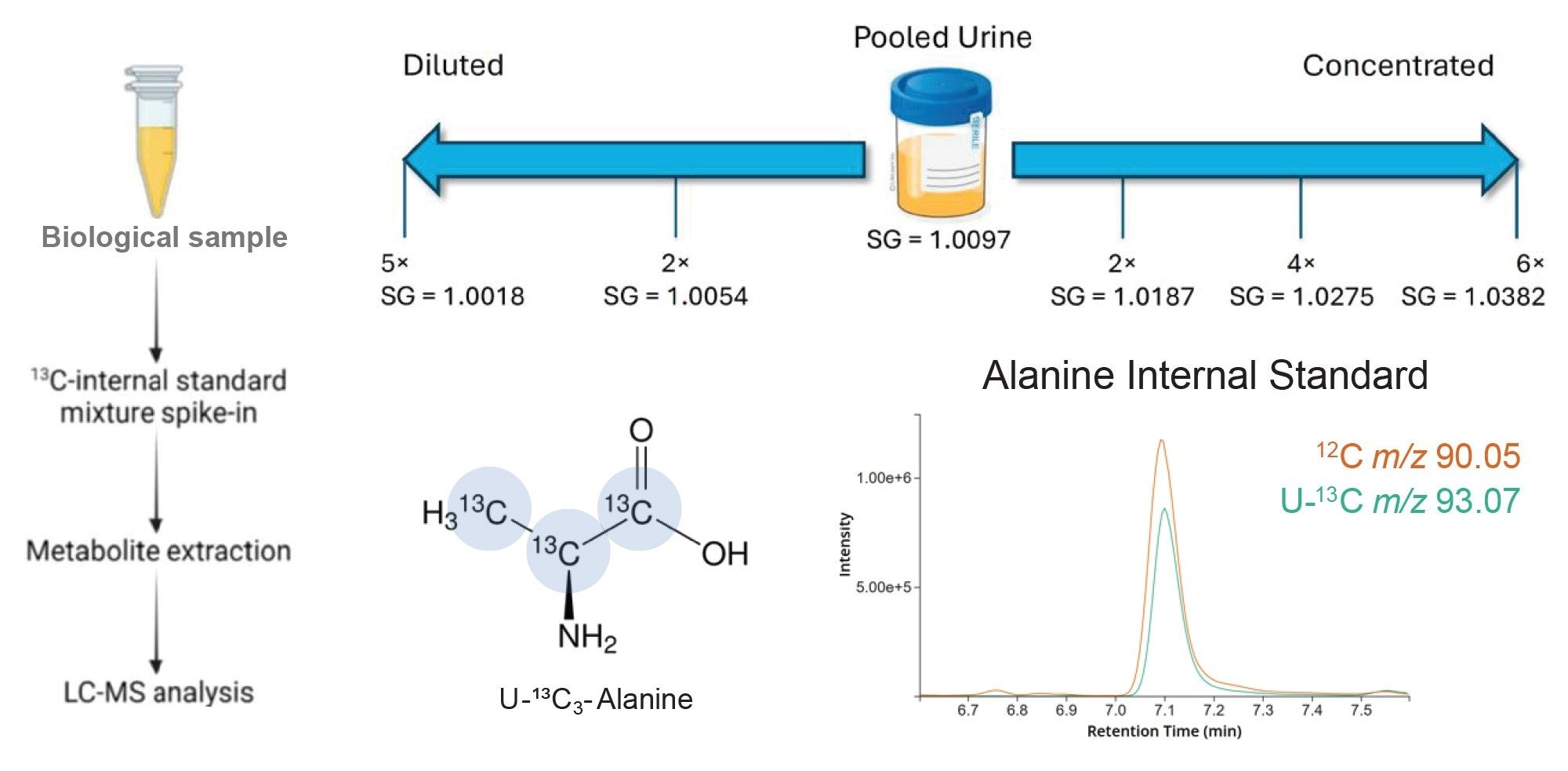
Dwell times were optimized for overlapping transitions to ensure the collection of approximately 8–10 data points across each chromatographic peak. The quadrupole isolation width was set to unit resolution (1 Da), and product ion resolution was set to high‑resolution mode (±25 ppm). In total, 61 metabolites were monitored, comprising 36 analytes acquired in positive ionization mode and 25 analytes acquired in negative ionization mode.
LC Conditions
|
LC system: |
ACQUITY™ Premier UPLC™ System |
|
Column(s): |
Atlantis™ Premier BEH™ Z-HILIC Column 1.7 µm, 2.1 x 150 mm |
|
Column temperature: |
40 °C |
|
Sample temperature: |
6 °C |
|
Injection volume: |
2 µL |
|
Flow rate: |
0.35 mL/min |
|
Mobile phase A: |
95:5 H2O:ACN + 10 mM NH4CH3CO2 |
|
Mobile phase B: |
5:95 H2O:ACN + 10 mMNH4CH3CO2 |
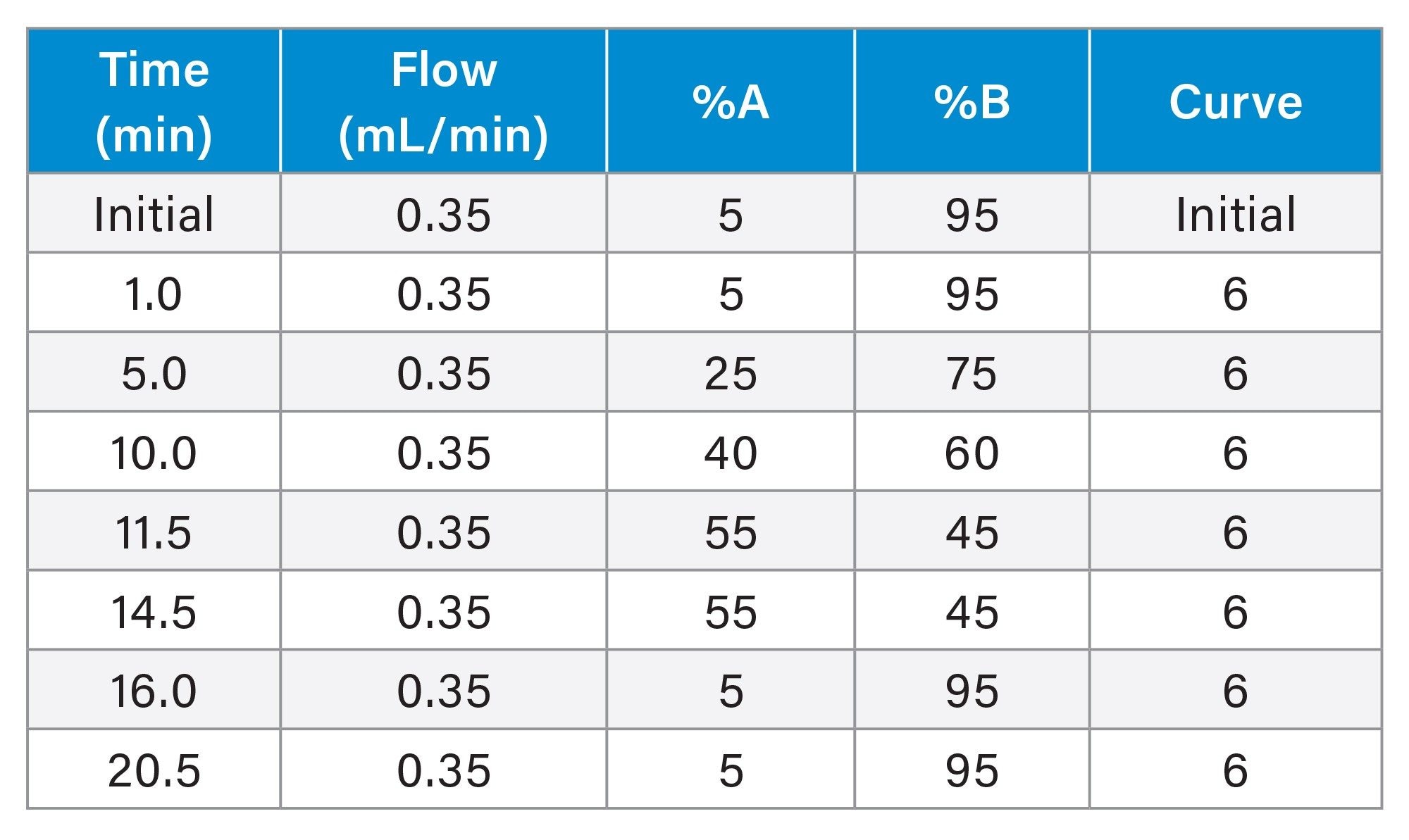
Gradient Table
MS Conditions
|
MS system: |
Xevo MRT P10 Mass Spectrometer |
|
Ionization mode: |
ES+/ES- |
|
Capillary voltage (kV): |
2 |
|
Desolvation temperature (ºC): |
500 |
|
Desolvation gas flow (L/Hr): |
800 |
|
Cone gas (L/Hr): |
50 |
|
Acquisition mode: |
Tof MRM |
|
Lock mass: |
Dual point lock mass using Leucine enkephalin (m/z 556.27658 and 120.08078 for ES+ and m/z 554.26202 and 130.08735 for ES-) |
|
Collision energy (V): |
Optimized per transition |
Software Tools
Data acquisition and processing were performed using the waters_connect Software Platform with the MS Quan Application for quantification. Automatic integration of the peaks was performed by the software and a 1/x or 1/x2 weighting was applied to generate calibration curves for each compound.
Results and Discussion
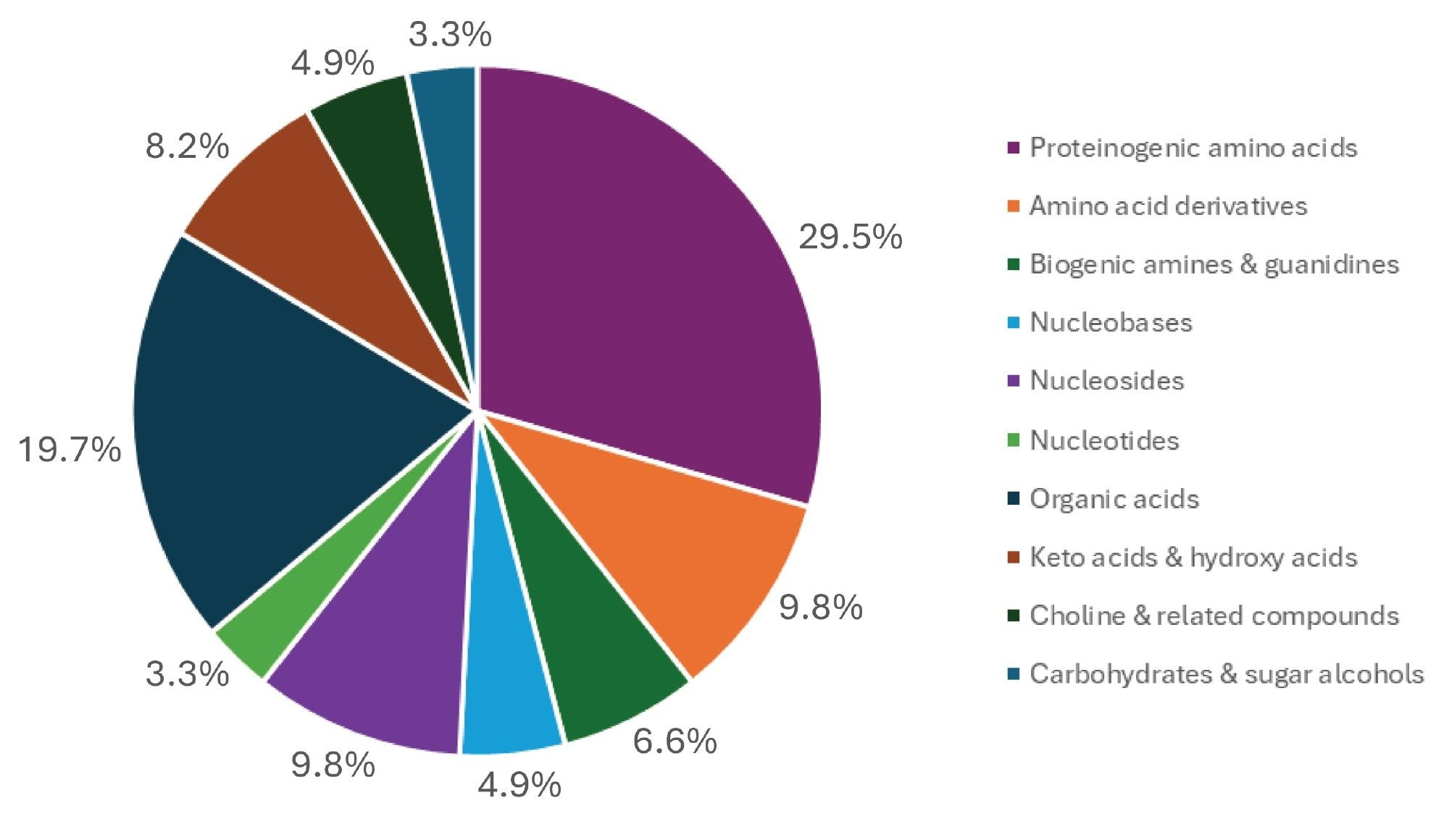
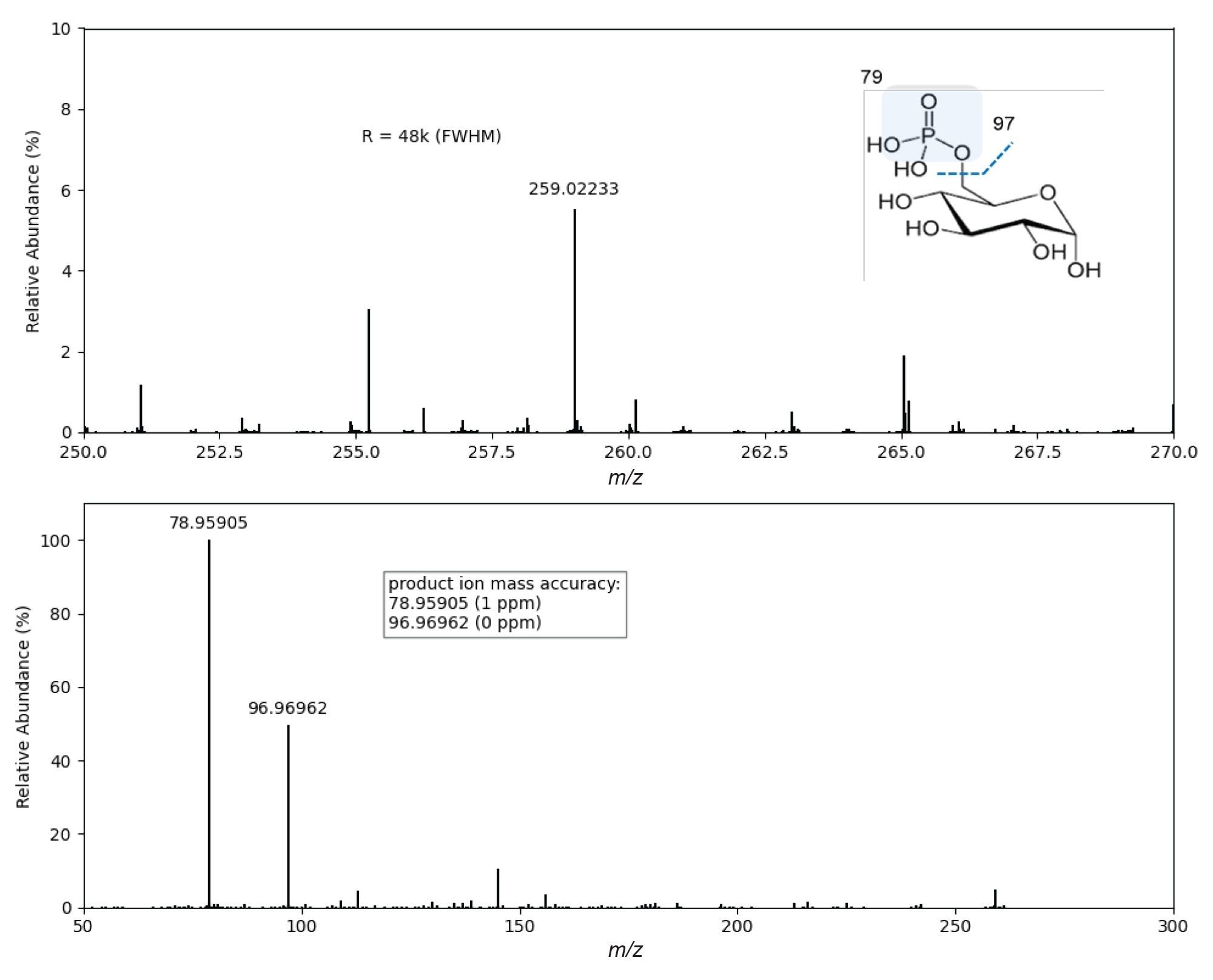
The sensitivity and linear dynamic range of the Xevo MRT P10 Mass Spectrometer was evaluated for the quantification of metabolites within a urine background matrix. In total, 61 metabolites were monitored, covering a broad range of compound classes, including amino acids, organic acids and nucleotides (Figure 2). Initial data‑dependent acquisition (DDA) and data-independent acquisition (DIA) scouting experiments were performed to confirm the detection of candidate product ions for each metabolite. Fragmentation spectra obtained during these experiments were used to select appropriate ions to optimize MRM transitions. Excellent mass accuracy was observed for observed fragment ions (<2 ppm, data not shown), providing confidence in the identifications to support Tof MRM method development. Following the selection of appropriate transitions for each metabolite, the optimal collision energy for every compound was determined to maximize fragment ion intensity for each Tof MRM transition (Figure 3).
Using the described chromatographic method, excellent peak shape and stable retention times were observed, permitting relatively tight transition retention time windows (± 30 seconds) to be used for each metabolite. The high sensitivity and fast acquisition capabilities of the Xevo MRT P10 Mass Spectrometer allow for short transition specific dwell times to be used, enabling the simultaneous detection of a large number of metabolites.
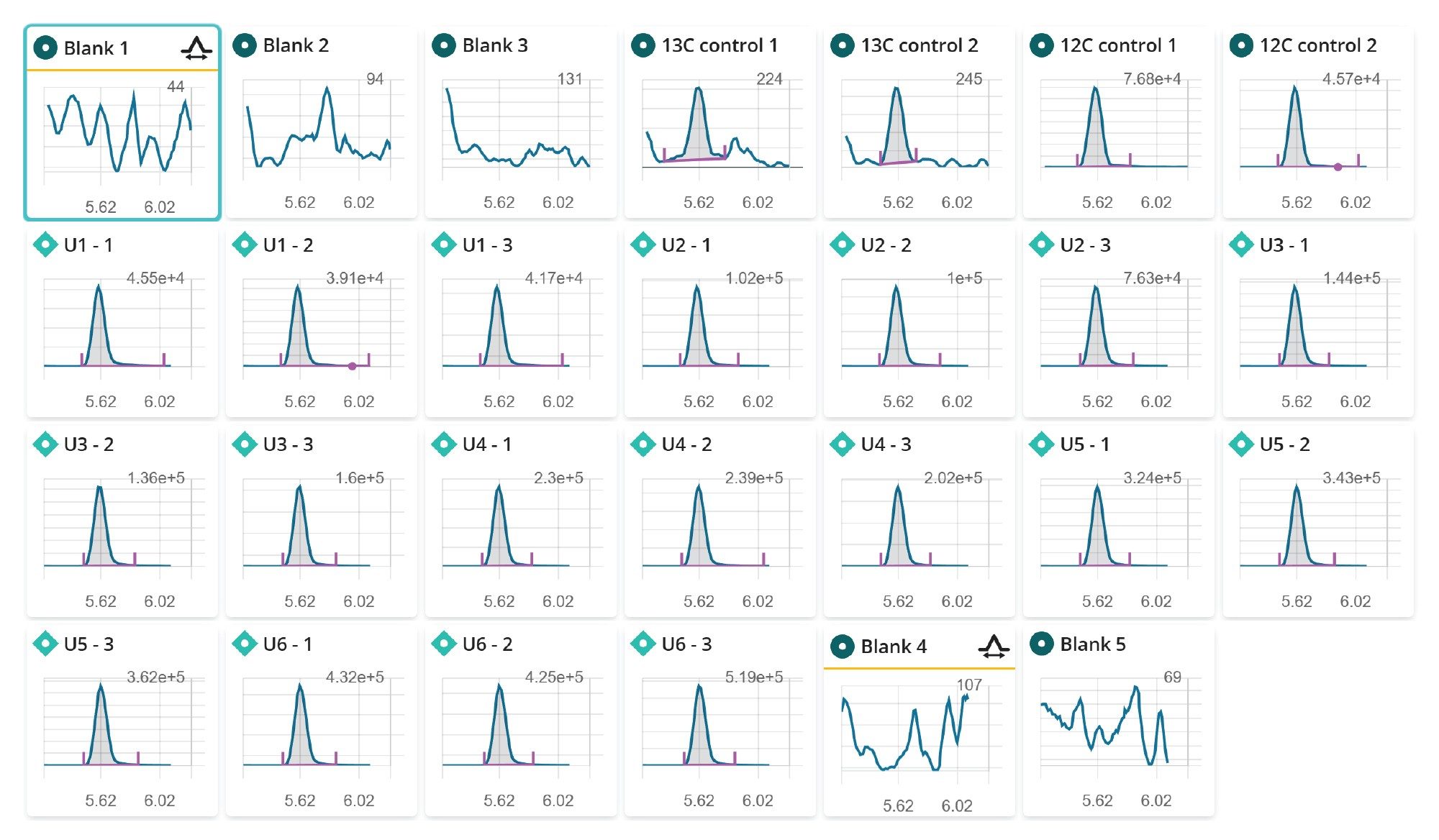
Quantitative data processing was performed using MS Quan Application within the waters_connect Software Platform, providing comprehensive quantitative processing capabilities and efficient data review. Chromatograms can be viewed for analytes detected across all samples analyzed, greatly simplifying data review for large panels of compounds. This is highlighted in Figure 4 which displays integrated chromatograms for L-methionine across all samples.
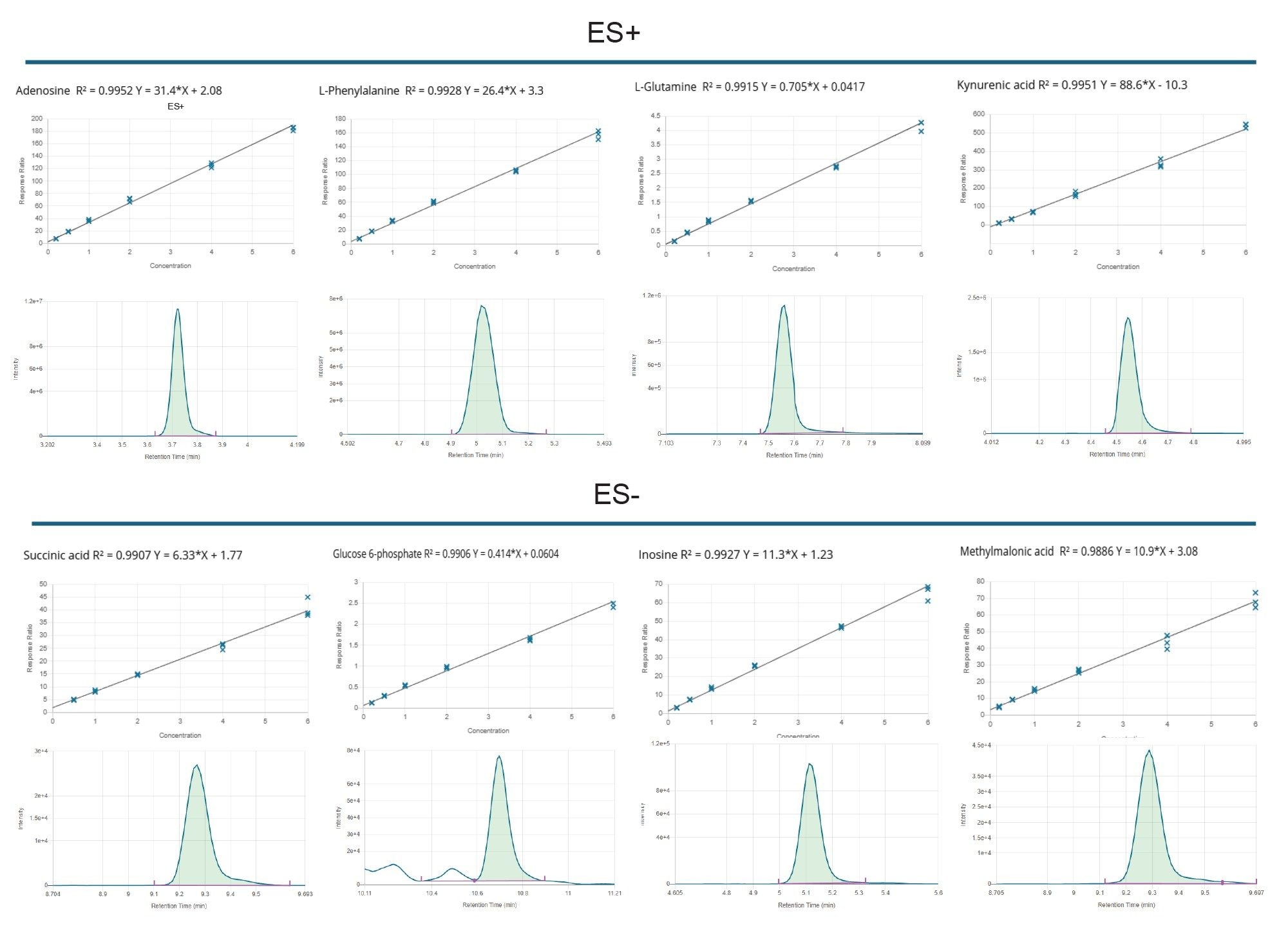
The majority of metabolites were detected with excellent sensitivity and linear response, consistent with previously reported results and detection criteria.4 In total, 48 compounds were identified with R2 = ≤ 0.90, with % CV ≤20 % for calibration standards (≤ 25% for LLOQ). Quantitative Tof MRM responses across the analyte SG range analyzed and chromatograms for the lowest level calibration standard monitored are shown in Figure 5. A number of representative metabolites analyzed in both positive and negative ion mode, are displayed, highlighting the excellent sensitivity and linearity observed across the SG relevant range. Calibration standards were injected in triplicate and showed high analytical precision and reproducible responses across replicate injections, demonstrating the performance of the instrument for targeted quantitative analysis.
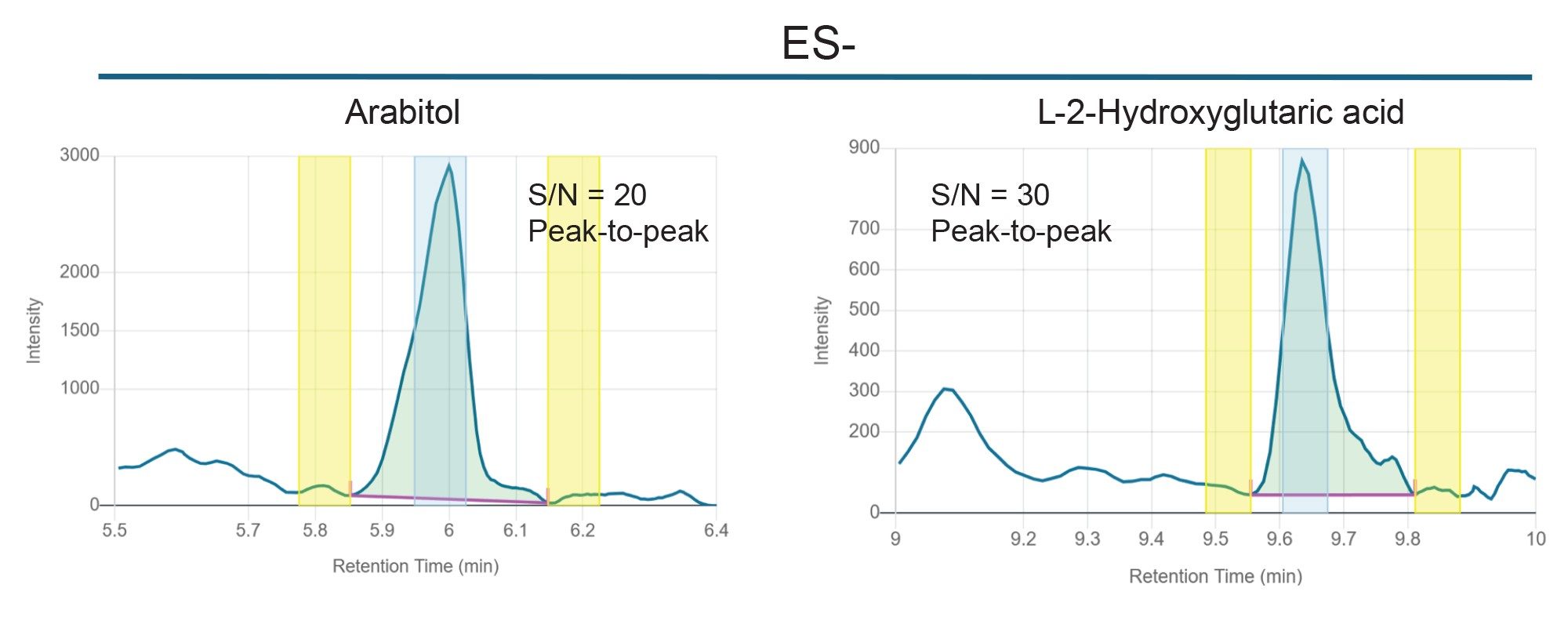
The high‑resolution and accurate‑mass capabilities of the Xevo MRT P10 Mass Spectrometer improves analytical specificity by effectively resolving target analyte signals from background matrix components, resulting in reduced interferences and improved signal‑to‑noise (S/N) compared with nominal‑mass tandem quadrupole MRM. This provides a significant advantage when monitoring low level metabolites present in complex biological matrices such as urine. This is demonstrated in Figure 6 which shows two metabolites acquired in negative ion mode that were detected at the lowest calibration level with high S/N = >20, even at relatively low signal intensity.
Conclusion
This study demonstrates the advanced performance of the Xevo MRT P10 Mass Spectrometer for the targeted analysis of metabolites in urine using Tof MRM mode of acquisition. The EDC provides significant gains in sensitivity to allow for multiplexed monitoring of metabolites covering a broad range of compound classes at clinically relevant concentrations. Excellent sensitivity and linearity was observed across the concentration range for the majority of compounds, supporting the applicability of this approach for targeted metabolic profiling in complex biological matrices. MRT‑based Tof MRM therefore provides a complementary analytical capability that extends metabolic coverage beyond single‑technology approaches and provides an alternative to tandem quadrupole MS for targeted applications.
Acknowledgements
The authors would like to thank Elizabeth O’Day, Massoumeh Dorrani & Jamie Humphries for providing the samples, gradient conditions and for the scientific discussions.
References
- Nagana Gowda, G.A.; Djukovic, D. Overview of Mass Spectrometry-Based Metabolomics: Opportunities and Challenges. Methods. Mol. Biol. 2014, 1198, 3–12.
- Verenchikov; et al. A Novel Compact Multi-Reflecting Time-of-Flight Mass Spectrometer. J Am Soc Mass Spectrom 2026 Mar 4;37(3):601-611.
- Tomcyzk, N.; Wallace, A.; Richardson, K.; Grzyb, A.; Wildgoose, J. Targeted High Resolution Quantification with Tof-MRM and HD-MRM, Application Brief, 720004728.
- Dorrani; et al. Olaris Global Panel (OGP): A Highly Accurate and Reproducible Triple Quadrupole Mass Spectrometry-Based Metabolomics Method for Clinical Biomarker Discovery. Metabolites. 2024 May 11;14(5):280.
720009387, June 2026


