
Method Development for the Forced Degradation of Next-generation Selective Estrogen Receptor Degrader Imlunestrant
Melissa Aiello, Christopher Collins, Thomas H. Walter
Waters Corporation, United States
Published on June 05, 2026

Abstract
With whole libraries of new therapy targets in development, quick and efficient analytical method development is key to providing breakthrough drugs to patients worldwide. However, it can be a daunting task to choose an appropriate analytical LC column and separation method. In this work, the Systematic Screening Protocol was used to develop an LC-UV impurity method for the forced degradation of imlunestrant, a breakthrough cancer drug approved by the FDA in 2025. The resulting method uses an ACQUITY™ Premier BEH™ C18 Column and provides excellent analyte retention, resolution of the API from impurities, and good peak shape.
Benefits
- An impurity method for imlunestrant was developed based on a forced degradation study
- The API is spectrally pure with sharp peaks and is well-resolved from all impurities
- Peak shape and resolution meet criteria under USP 621 Guidelines
Introduction
Estrogen receptors (ER) are proteins that respond to estrogen and estrogen-like hormones. They play an important role in activating transcription factors within the cell nucleus. Transcription factors facilitate the reading of certain genes resulting in the production of proteins that have powerful downstream effects both inside and outside the cell. For example, genes such as insulin-like growth factor-1 (IGF1R), anti-apoptotic BCL-2 protein, and vascular endothelial growth factor (VEGF) receptors code for proteins associated with cell proliferation and survival (anti-apoptotic).1
Currently, breast cancer is the most common cancer affecting women worldwide.1 Compared to healthy tissues, alpha estrogen receptors (ERα) are overexpressed in breast cancer tissues about 5-8X1, leading to excessive and abnormal receptor signaling, resulting in persistent signals for tumor growth and metastasis. As such, ERα is an important target for drug therapies through either modulation or degradation of the receptor. Unfortunately, there are many therapeutic challenges for currently available selective estrogen receptor degraders and antagonists. Drugs such as fulvestrant are potent estrogen receptor degraders, but tend to be poorly distributed in the body because they show preference for certain tissues.2 Additionally, desensitization to fulvestrant can occur due to mutations of the target estrogen receptor itself, leading to decreasing therapeutic response with time.2
In September 2025, the FDA approved imlunestrant as a next-generation selective estrogen receptor degrader (SERD). In-vivo and in-vitro studies have shown improved bioavailability compared to current SERDs on the market, and imlunestrant is unique in that it can cross the blood-brain barrier. This is crucial because brain metastases can occur in about 10% of patients and are associated with overall poor prognoses. Imlunestrant also demonstrated powerful therapeutic effect regardless of estrogen receptor mutation.2
In this application note, an LC-MS impurity method for imlunestrant was developed based on a forced degradation study. Forced degradation studies are important not only for the development of stability-indicating analytical methods for the drug substance and/or drug product, but also for elucidating major degradation pathways of the active pharmaceutical ingredient (API).3 The analytical method was developed using the systematic screening protocol (SSP).4 This involves three simple steps: (1) pH scouting, (2) solvent screening, and (3) optimization. The reasoning behind column and solvent selections, combined with the data-driven decision making, will be discussed in shaping the analytical method. Critical parameters of the analytical method such as analyte peak purity and peak shape, as well as degradant USP resolution and sensitivity, will be discussed.
Experimental
Sample Preparation
A 1 mg/mL solution of imlunestrant in 60:40 (v/v) acetonitrile/water was prepared. Two 0.9 mL portions of this solution were aliquoted into two separate glass vials labeled Acid and Base. A 0.1 mL volume of 1 N HCl was added to the Acid vial and 0.1 mL of 1 N NaOH was added to the Base vial. The vials were heated to 70 °C for 4 hours, then combined to quench the acid and base and placed on the instrument for analysis. QuanRecovery LC Vials with MaxPeak High Performance Surface (HPS) Technology (p/n: 186009186) were used for the LC-MS analysis.
Method Development Conditions
|
LC system: |
ACQUITY Premier QSM with Column Manager and ACQUITY PDA™ Detector |
|
Detection: |
UV @ 260 nm |
|
Columns: |
ACQUITY Premier BEH C18 Column 2.1 x 50 mm, 1.7 µm (p/n: 186002350) ACQUITY Premier BEH Phenyl Column 2.1 x 50 mm, 1.7 µm (p/n: 186010336) Waters Acquity Biphenyl RP Column with MaxPeak Premier Technology 2.1 x 50 mm, 1.7 µm (p/n: 186011744) ACQUITY Premier CSH Phenyl-Hexyl Column 2.1 x 50 mm, 1.7 µm (p/n: 186009474) ACQUITY Premier CSH C18 Column 2.1 x 50 mm, 1.7 µm (p/n: 186009460) |
|
Column temperature: |
30 °C |
|
Sample temperature: |
5 °C |
|
Injection volume: |
1 µL |
|
Mobile phase A: |
Water |
|
Mobile phase B: |
Acetonitrile |
|
Mobile phase C: |
Methanol |
|
Mobile phase D1: |
2% Formic acid in water |
|
Mobile phase D6: |
200 mM ammonium hydroxide |
|
System washes: |
60:40 (v/v) acetonitrile/water |
|
Flow rate: |
0.5 mL/min |
|
Gradient: |
5% of either D1 or D6 was used to maintain a constant modifier concentration. The initial condition of 5% organic was followed by a linear gradient to 95% organic over 6.86 minutes. The composition was held at 95% organic for 1.14 minutes then returned to the initial condition and held for 2.28 minutes to re-equilibrate. The total run time was 10.30 minutes. |
Optimized Method Conditions
|
LC system: |
ACQUITY Premier QSM with Column Manager and ACQUITY PDA™ Detector |
|
Detection: |
UV @ 260 nm |
|
Columns: |
ACQUITY Premier BEH C18 Column 2.1 x 100 mm, 1.7 µm (p/n: 186009453) |
|
Column temperature: |
65 °C |
|
Sample temperature: |
5 °C |
|
Injection volume: |
1 µL |
|
Mobile phase A: |
Water |
|
Mobile phase C: |
Methanol |
|
Mobile phase D1: |
2% Formic acid in water |
|
System washes: |
60:40 (v/v) acetonitrile/water |
|
Flow rate: |
0.5 mL/min |
|
Gradient: |
5% of D1 was used to maintain a constant modifier concentration. The initial condition of 40% methanol was followed by a linear gradient to 95% methanol over 6.86 minutes. The composition was held at 95% organic for 1.14 minutes then returned to the initial condition and held for 2.28 minutes to re-equilibrate. The total run time was 10.30 minutes. |
Data Management
|
Chromatography software: |
Empower 3 Software |
Results and Discussion
The first step in the systematic screening protocol is to assess analyte retention at high and low pH.4 Scouting mobile phase pH is usually performed using a C18 column with a wide pH stability range, such as the ACQUITY Premier BEH C18 Column. It is important to use a column with a wide pH stability range to prevent base-catalyzed degradation during testing. Based on ethylene-bridged hybrid (BEH) particles, BEH C18 Columns are stable up to pH 12, making them suitable for pH scouting. In addition, the trifunctional bonding of the C18 groups imparts exceptional low and high pH stability.5
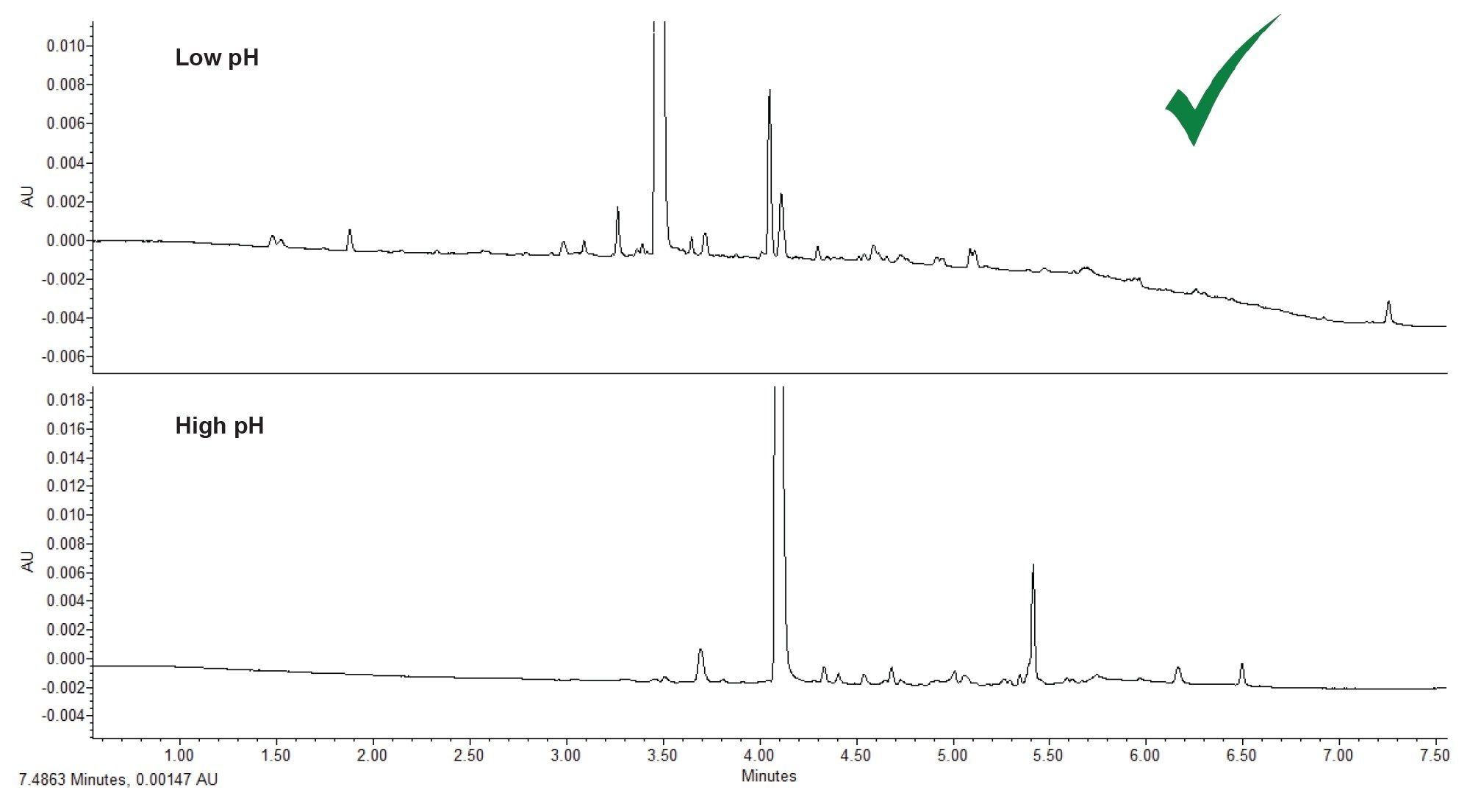
Using the BEH C18 Column, it can be seen in Figure 1 that imlunestrant and impurities are slightly more retained at high pH. However, the use of formic acid produced slightly better peak shapes and allowed a wider range of column stationary phases to be screened. For these reasons, 0.1% formic acid in water was used in subsequent method development steps.
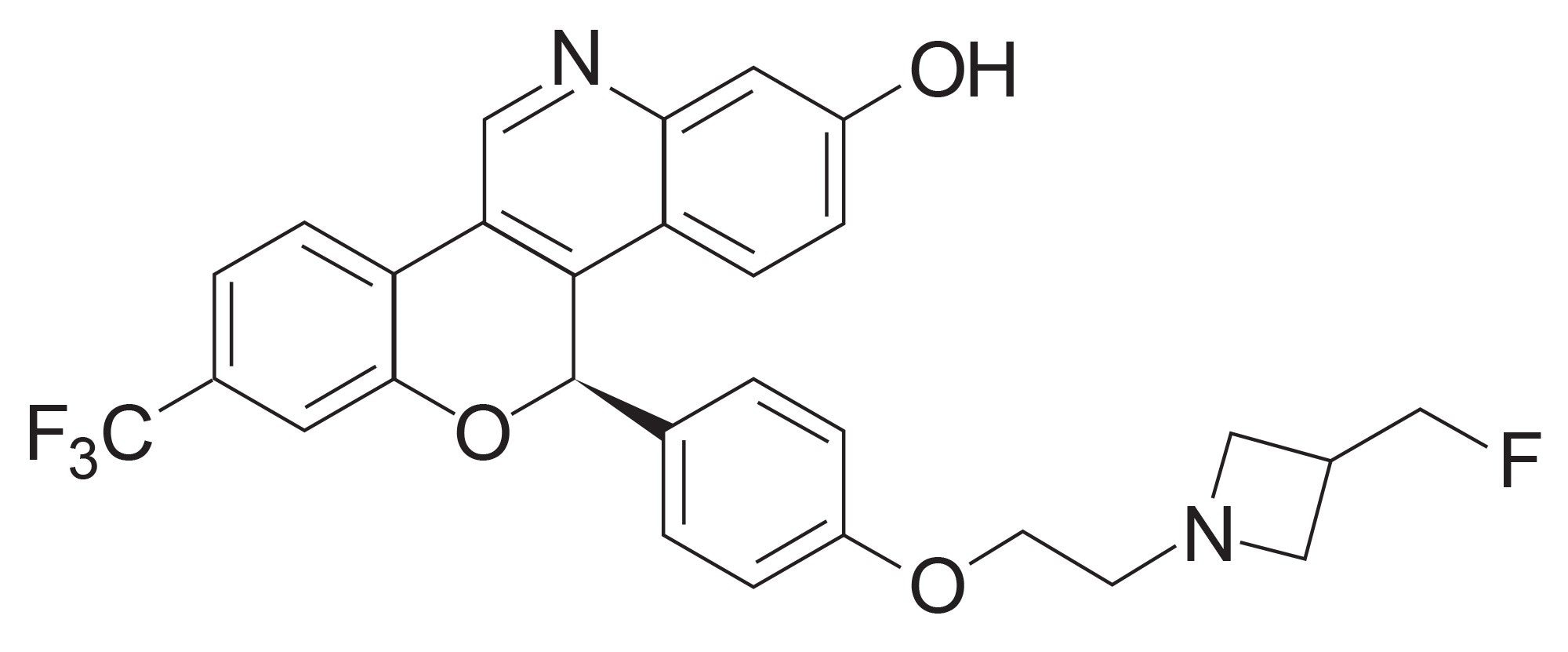
After pH scouting, the next step is to assess selectivity. By carefully choosing and screening 4–6 columns using both acetonitrile and methanol as mobile phase solvents, important information regarding analyte selectivity can be determined. Based on the structure of imlunestrant (Figure 2), and in addition to the previously tested BEH C18 Column, an ACQUITY Premier BEH Phenyl Column and Waters Acquity Biphenyl RP Column with MaxPeak Premier Technology were chosen. Imlunestrant has aromatic functionalities which could undergo pi-pi interactions with the phenyl functionality of the bonded phase, especially when using methanol as the organic solvent. The Acquity Biphenyl Column provides enhanced pi-pi interactions, with the benefit of extremely low UV-detected column bleed compared to other biphenyl columns.6
Another consideration when choosing columns for screening is the acid/base chemistry of the analyte. Asymmetrical peak shape and low loading capacity for basic analytes is a well-documented issue for many reversed-phase columns when using mobile phases containing formic acid.7 Imlunestrant has two amines and hence is basic, making it prone to these chromatographic issues. For this reason, the CSH Phenyl-Hexyl and CSH C18 Columns were chosen. The CSH (charged-surface hybrid) stationary phases contain basic groups that impart a slight positive charge, which can improve peak shape for basic analytes when using mobile phases containing formic acid.7
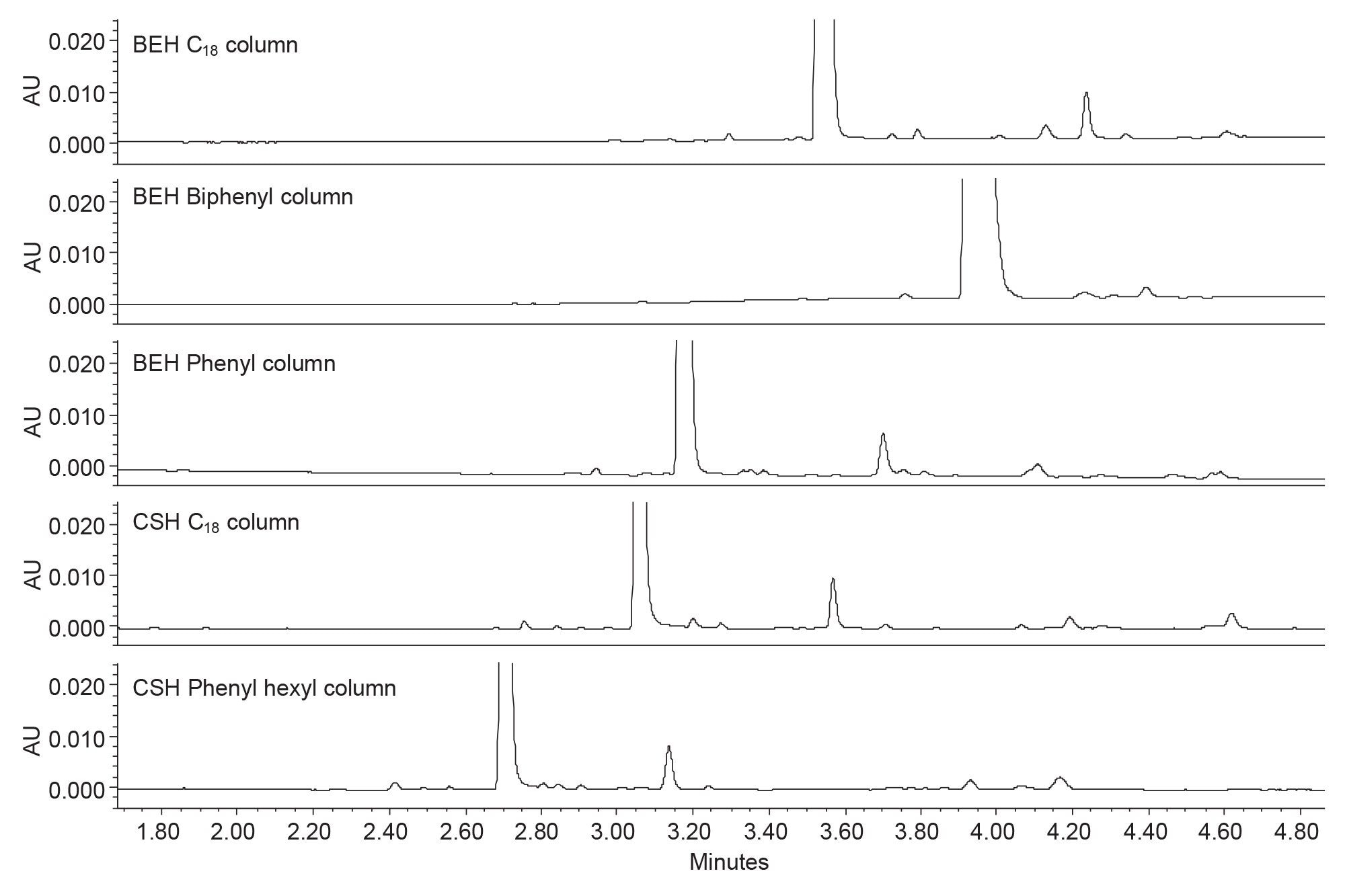
The results of column screening using acetonitrile and methanol are shown in Figures 3 and 4, respectively. The goal was to obtain enough selectivity to sufficiently separate imlunestrant from close-eluting degradants. When using acetonitrile, the BEH C18 Column provided the best separation of impurities from the main band, as well as resolving the impurities from one another. The separations obtained using the CSH C18, BEH Phenyl, Acquity Biphenyl and CSH Phenyl Hexyl Columns had closely eluting degradant peaks near the API peak, and some of the degradant peaks were close to one another.
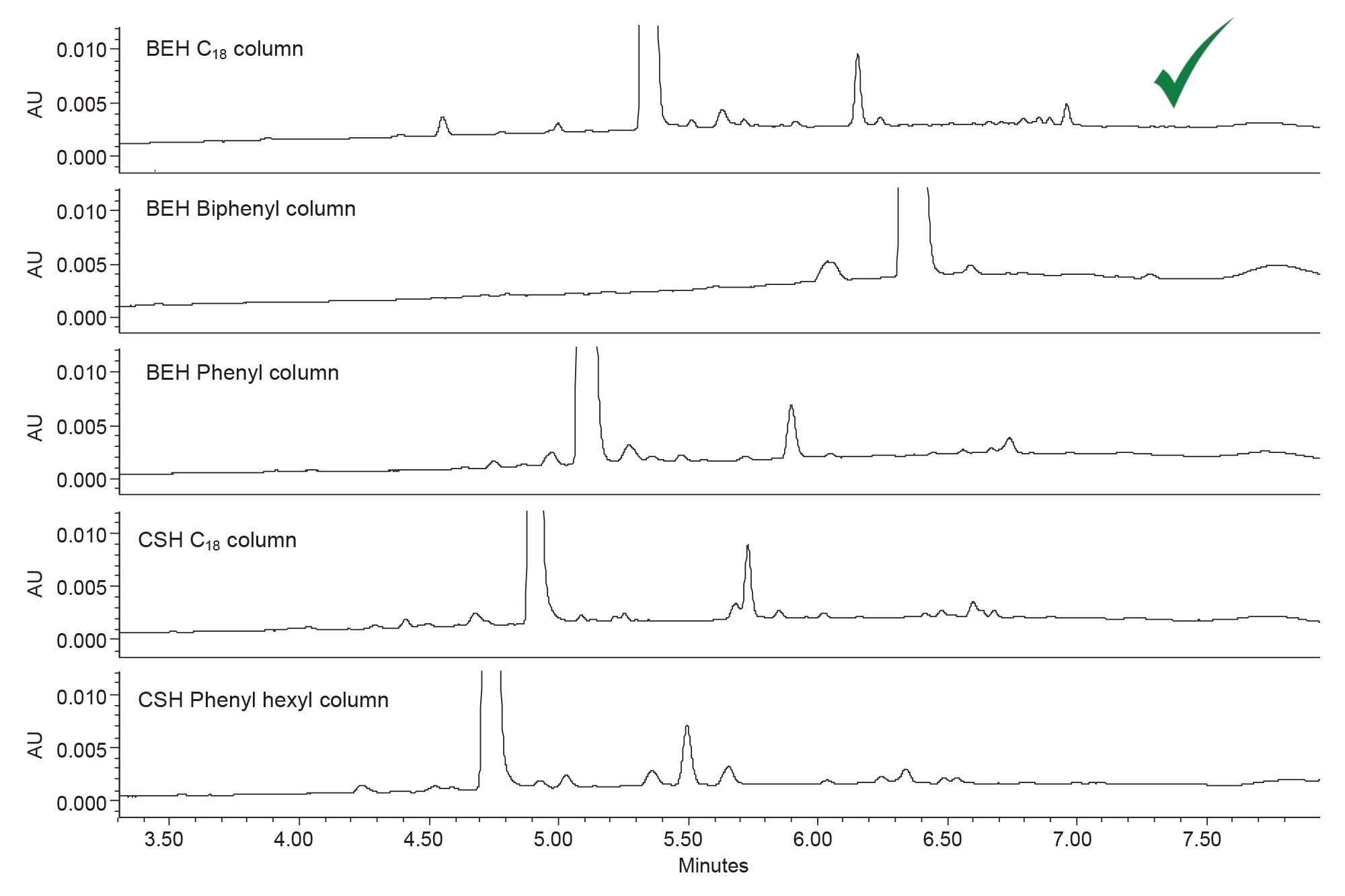
When using methanol as the strong solvent, the BEH C18 Column did the best job at separating the preceding and succeeding degradants from the API peak, and the degradants were resolved from one another. The CSH Phenyl Hexyl Column gave a moderate separation of the API peak and closely-eluting degradants, but the degradants themselves were not well-resolved from each other. The other columns showed coelutions and/or wider peaks. Because it showed the best separation of degradants from imlunestrant with good peak shape, the ACQUITY Premier BEH C18 Column with 0.1% formic acid and methanol were used going forward.
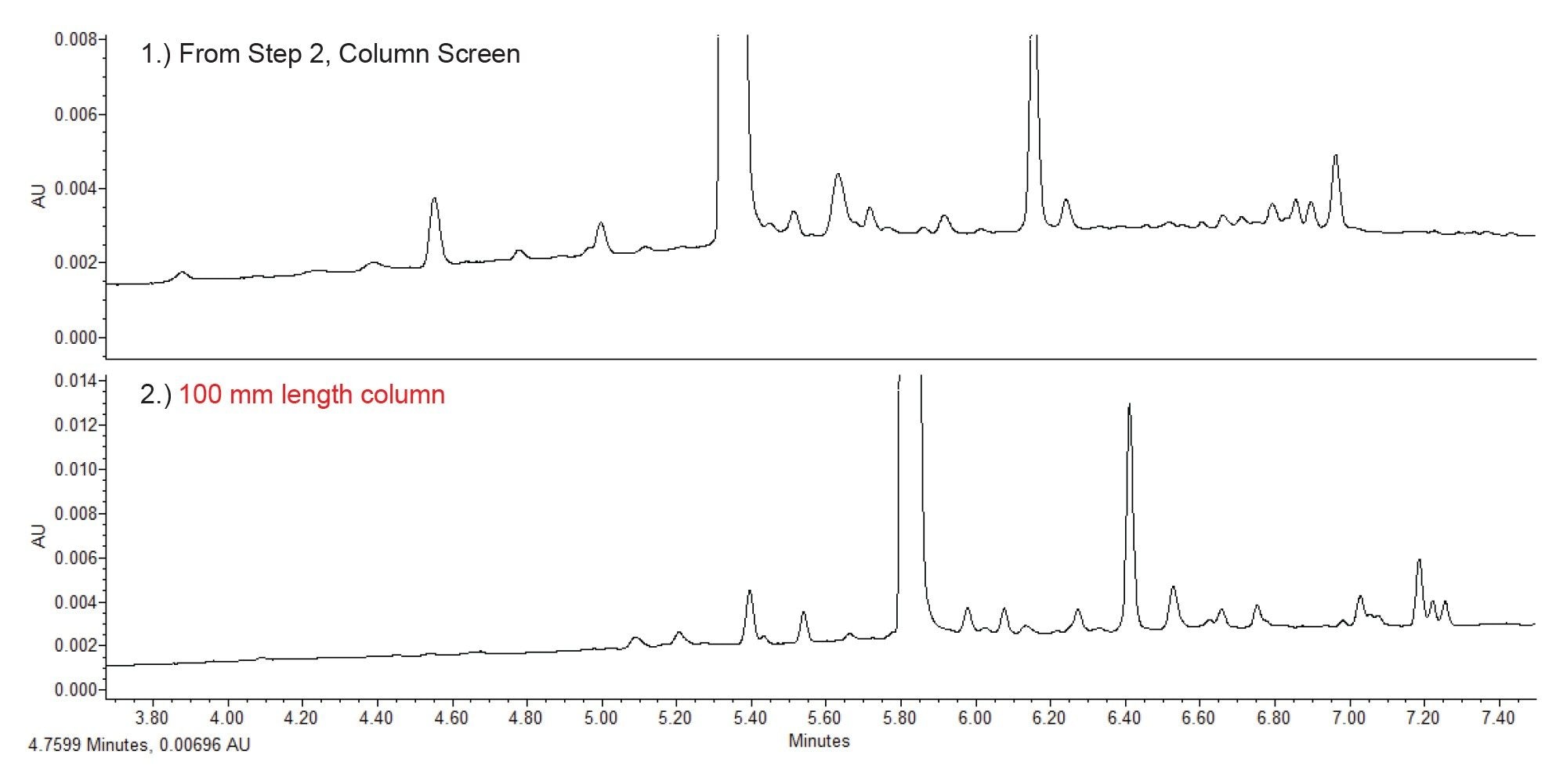
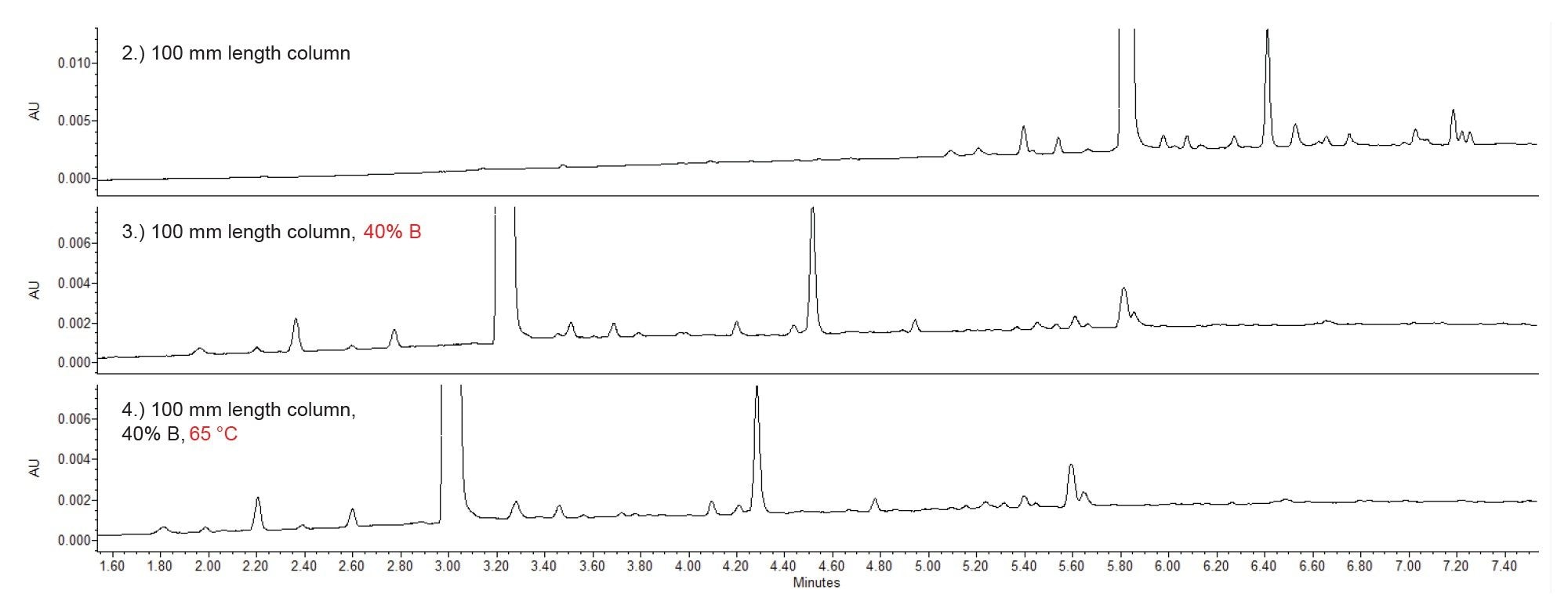
The last step in the SSP is method optimization. As shown in Figure 5 below, using a longer, 100 mm column increases the efficiency, allowing for better separation of the impurities from the API. Next, the starting percent organic was increased from 5% to 40%. This not only decreased the cycle time, but also reduced the gradient slope, allowing for a better separation (Figure 6).
Increasing column temperature can increase resolution as well as improve peak shape. By increasing the temperature to 65 °C, the impurities were better resolved and sharper, especially the closely-eluting impurities near 5.6 minutes (Figure 6). The final method conditions use an ACQUITY Premier BEH C18 Column 2.1 x 100 mm, 1.7 µm at 65 °C. The solvents used are 0.1% formic acid in water and methanol as the organic. The total run time is 10.30 minutes. These optimized conditions were used for the peak suitability and peak purity analyses.
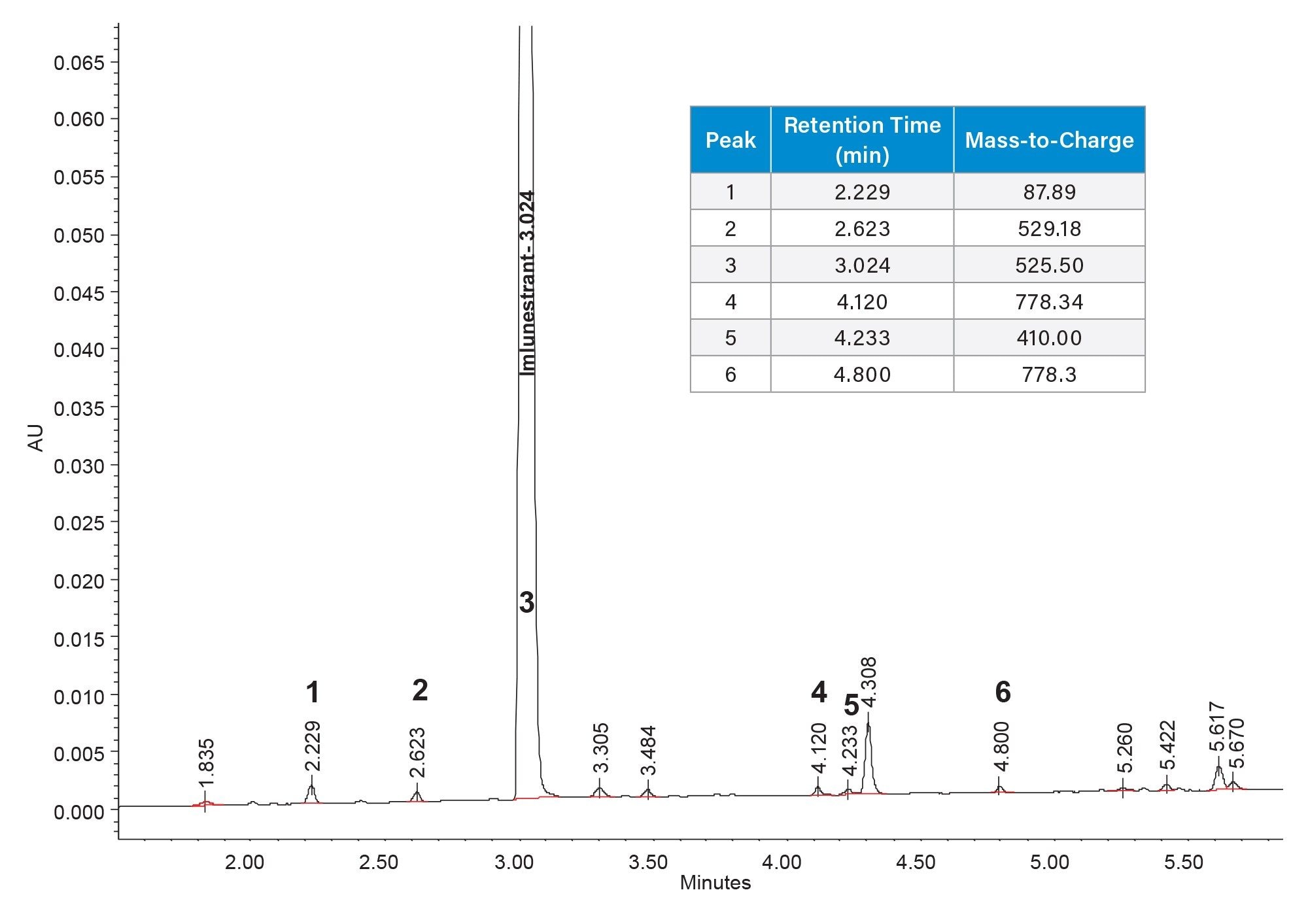
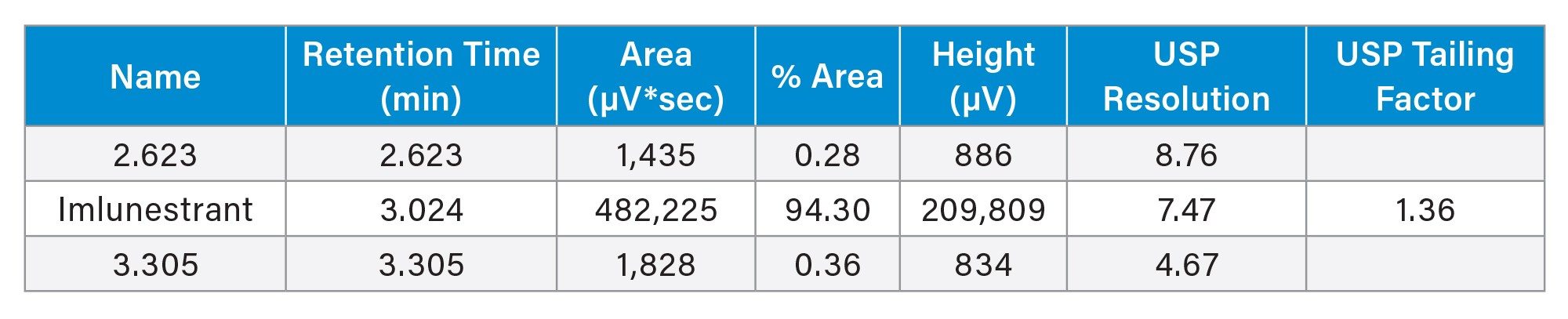
According to USP 621 Guidelines, resolution between two components should be no less than 2.0, and peak tailing should be between 0.8 and 1.8. As shown in Table 1, with the optimized method imlunestrant resolution meets these criteria with resolution of 8.76 and 4.67 from the two closest eluting degradants at 2.623 minutes and 3.305 minutes, respectively. Imlunestrant has acceptable peak shape with a tailing factor of 1.36. Therefore, the analytical impurity method is suitable under USP Guidelines.
Another important aspect to look at in the development of an impurity method is the API peak purity. This can be done spectrally using the UV PDA scan function or by the mass spectrometer. In this case, imlunestrant peak purity was determined using the ACQUITY QDa™ Mass Detector. In positive scan mode, mass spectral data was collected at the leading edge, apex, and trailing edge of the imlunestrant peak (Figure 8).
![Peak purity for imlunestrant using the QDa Positive Scan data. XIC = extracted ion chromatogram, PDA = photodiode array. The mass-to-charge ratio (m/z) for imlunestrant [M + H]+ is 525 and the [M + 2H]2+ is 263](/content/dam/waters/en/app-notes/2026/720009399/720009399en-f8.jpg.82.resize/img.jpg)
Looking at the upper window of Figure 8, it is evident that there are no other ion species other than the [M + 2H]2+ ion of 263 m/z as well as the API target ion of approximately 525 m/z for the leading, apex and trailing portions of the peak. This indicates that the imlunestrant peak is spectrally pure, and that there are no co-eluting species.
Conclusion
In this application note, an impurity method was developed for the next-generation SERD imlunestrant based on a forced degradation study. The method was developed efficiently using the SSP in three straightforward steps involving pH screening, column screening, and optimization. The resulting separation demonstrated excellent analyte retention, resolution of the API from degradants, and good peak shape meeting the peak shape and resolution requirements recommended by USP 621 Guidelines. The API peak was also determined to be spectrally pure based on mass spectrometry detection.
References
- Chen P; Li B; and Ou-Yang L. (2022) Role of Estrogen Receptors in Health and Disease. Front. Endocrinol. 13:839005 (2022).
- Bhagwat SV; et al. Imlunestrant is an Oral, Brain-Penetrant Selective Estrogen Receptor Degrader with Potent Antitumor Activity in ESR1 Wild-Type and Mutant Breast Cancer. Cancer Res. 2025 Feb 17;85(4):777-790.
- Zelesky, T; et al. Pharmaceutical Forced Degradation (Stress Testing) Endpoints: A Scientific Rationale and Industry Perspective. J. Pharm. Sci., 2023, 112(12), 2948-2964.
- Hong, P; McConville, P. A Complete Solution to Perform a Systematic Screening Protocol for LC Method Development. Waters White Paper 720005268. 2018.
- Wyndham KD; et al. A Review of Waters Hybrid Particle Technology Part 2. Ethylene-Bridged [BEH Technology] Hybrids and Their Use in Liquid Chromatography. Waters White Paper. 720001159. 2004.
- Zabala G; et al. A Highly Stable Biphenyl HPLC Stationary Phase Based on Ethylene - Bridged Hybrid Particles. Waters Application Note. 720009261. 2026.
- Iraneta PC; Wyndham KD; McCabe DR; Walter TH. A Review of Waters Hybrid Particle Technology Part 3. Charged Surface Hybrid (CSH) Technology and Its Use in Liquid Chromatography. Waters White Paper. 720003929. 2011.
- DeLano M; et al. Using Hybrid Organic-Inorganic Surface Technology to Mitigate Analyte Interactions with Metal Surfaces in UHPLC. Anal. Chem. 2021, 93(14), 5773-5781.
720009399, June 2026


