
Enabling Reliable Heparin Sodium Nucleotidic Impurity Analysis with the Alliance™ iS Bio HPLC System with PDA Detector
Kimberly Martin, Lise Gauthier, Paula Hong
Waters Corporation, United States
Published on July 27, 2026

Abstract
Heparin is a widely used anticoagulant that plays a critical role in reducing blood clotting and preventing the formation of clots. As a biological product, heparin is inherently more susceptible to nucleotidic impurities, which can compromise its safety, efficacy, and overall quality. These impurities pose significant risks, making rigorous regulatory standards and comprehensive testing essential to ensure product integrity. To address this, the United States Pharmacopeia (USP) has prescribed an HPLC method for detecting and quantifying nucleotidic impurities in heparin sodium, which includes enzymatic digestion within the LC system autosampler.
This study was carried out on an Alliance iS Bio HPLC System with PDA Detector configured with MaxPeak™ High Performance Surfaces (HPS) Technology for reduction of non-specific adsorption (NSA) of metal sensitive analytes, PDA sensitivity, and ability to control sample temperature within 1 ℃ — the latter which is required for enzymatic digestion.
Performance of the method on the Alliance iS Bio HPLC System with PDA Detector demonstrated high sensitivity and passing system suitability criteria. Furthermore, replicate sample preparations demonstrated highly reproducible enzymatic digestion and detection of low-level impurities.
Benefits
- The Alliance iS Bio HPLC System with PDA Detector meets USP system suitability requirements for peak area precision, resolution, and signal-to-noise (S/N).
- The Alliance iS Bio HPLC System with PDA Detector sample compartment provides the temperature control required to support reproducible enzymatic digestion at 37 °C prior to analysis.
Introduction
Heparin is a clinically important anticoagulant, but as a biologically derived product, it presents unique analytical challenges. Unlike synthetic drugs manufactured through tightly controlled chemical processes, heparin is sourced from animal tissues, typically porcine intestinal mucosa. This biological origin introduces inherent complexity and variability, increasing the risk of contamination and process-related impurities during extraction and manufacturing. Among these, nucleotidic impurities are of particular concern because they can affect product safety, efficacy, and overall quality. To address this, USP1 provides a method for detecting and quantifying nucleotidic impurities in heparin sodium, with defined acceptance criteria to support quality control and regulatory compliance.2
To measure these impurities, the USP method specifies a number of method conditions, including those required for enzymatic digestion of the sample, which states the sample/digestion mixture must be maintained in the autosampler at 37 °C for one hour prior to analysis. These method conditions place specific demands on HPLC system performance, including the need for accurate temperature control, low NSA, and sensitive UV detection. Based on these requirements and the need for a system fit for a regulated laboratory, the Alliance iS Bio HPLC System with PDA Detector was selected for measuring nucleotidic impurities in a heparin sample. The system incorporates MaxPeak HPS Technology to minimize NSA and provides precise sample manager temperature control together with sensitive PDA detection. The performance of the method on the Alliance iS Bio HPLC System with PDA Detector will be assessed with a focus on sensitivity, precision, and sample quantitation.
Experimental
Sample Preparation
All samples, stocks, and standard preparations followed procedure within the USP monograph for nucleotidic impurities of heparin. The adenosine stock solution was prepared at 0.25 mg/mL. by weighing 25 mg of USP adenosine reference standard into 100 mL of water. The standard solution (0.025 mg/mL) was prepared by taking 2.0 mL of the adenosine stock solution and mixing it with 200 mL of water. The system suitability solution was prepared by taking 2.0 mL of the standard solution and mixing it with 100 mL of water. The nucleoside identification solution (0.25 µg/mL final concentration) was prepared by weighing and transferring 25 mg of each of the following nucleosides, uridine, guanosine, cytidine, thymidine, 2’-deoxyadenosine, 2’-deoxyguanosine, 2’-deoxycytidine and 5-methyl-2’-deoxycytidine into 200 mL of water. The solution was then diluted 50x by taking 2 mL and diluting it to 100 mL in water.
The heparin sodium salt sample stock solution was prepared at 20 mg/mL in water. For the enzymatic digestion, 100 µl of the sample was transferred into a total recovery vial with 100 µl of the enzyme digest solution. This solution was capped and vortexed to mix. The vial was placed in the autosampler at 37 °C for at least one hour to allow for digestion.
LC Conditions
|
LC system: |
Alliance iS Bio HPLC System |
|
Detection: |
PDA Detector |
|
2D channel absorbance: |
260 nm Resolution 4 nm |
|
3D data: |
Enabled, 200–400 nm, Resolution 1 nm |
|
Data rate: |
5 Hz |
|
Vials: |
LCGC Certified Clear Glass 12 x 32 mm Screw Neck Vial, Total recovery with cap and PTFE/Silicone septum (not pre-slit) (p/n: 186000384C) |
|
Column(s): |
XSelect™ Premier CSH™ C18 Column, 3.5 µm 4.6 x 150 mm (p/n: 186010644) |
|
Column temperature: |
20 °C +/- 3 °C |
|
Sample temperature: |
37 °C +/- 1 °C |
|
Injection volume: |
10 µL |
|
Flow rate: |
1.143 mL/min (XSelect Columns) |
|
Mobile phase A: |
0.02 M Ammonium Acetate in Water |
|
Mobile phase B: |
Acetonitrile |
|
Mobile phase C: |
10:90 Acetonitrile:Water |
|
Mobile phase D: |
10:90 Acetonitrile:Water |
|
Sample manager wash and purge: |
10:90 Acetonitrile:Water |
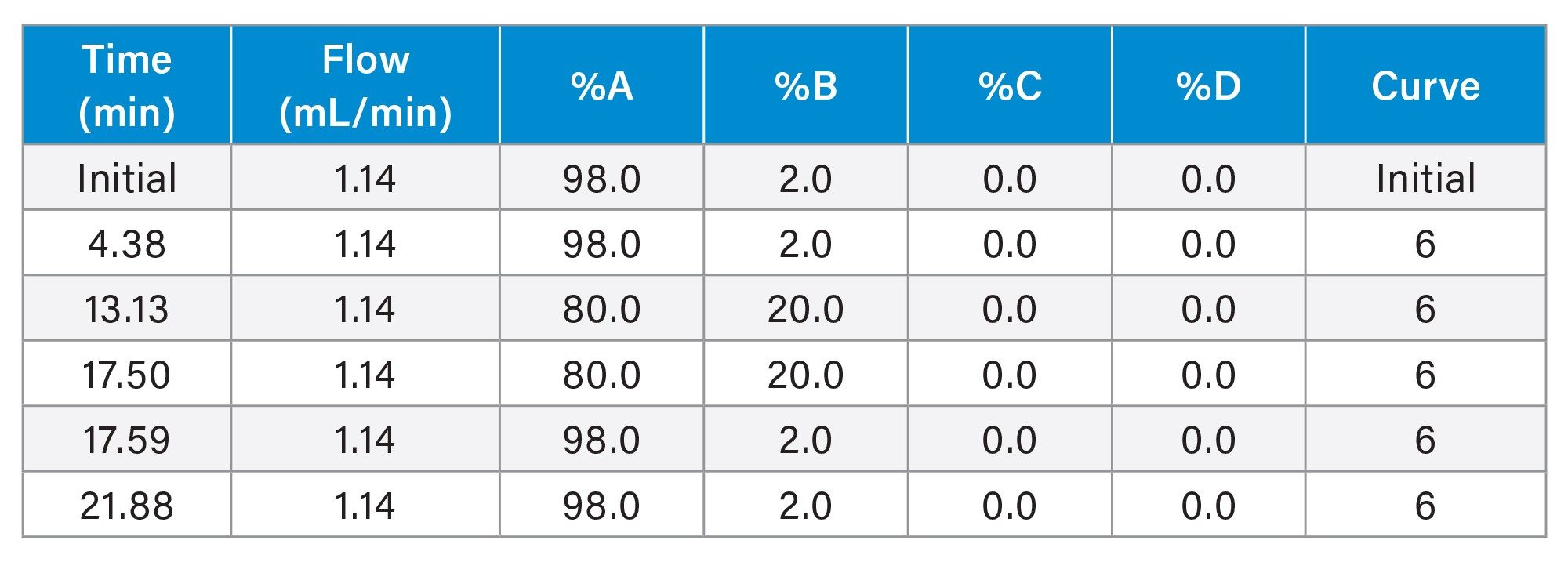
Adjusted Gradient Table (for 3.5 µm Columns)
Data Management
|
Chromatography data system: |
Empower™ Chromatography Data System |
Results and Discussion
System Suitability for the Analysis of Nucletoides on the Alliance iS Bio HPLC System with PDA Detector
As previously described, the USP method for nucleotidic impurities of heparin poses unique challenges for the HPLC system. In addition to the enzymatic digestion on system, the gradient method describes a 4.6 mm x 15 cm, 4 µm, L1 column. Initial testing indicated that the system suitability criteria were not met. The specified column particle size (4 µm) is limited in availability and available options produced excessive tailing impacting USP resolution criteria. Newer column packings, such as XSelect CSH C18 Column, provided improved peak shape and were available in 3.5 or 5 µm particles. Thus, a more modern column chemistry was selected and method adjustments (flow rate and injection volume) applied as described by the USP.1
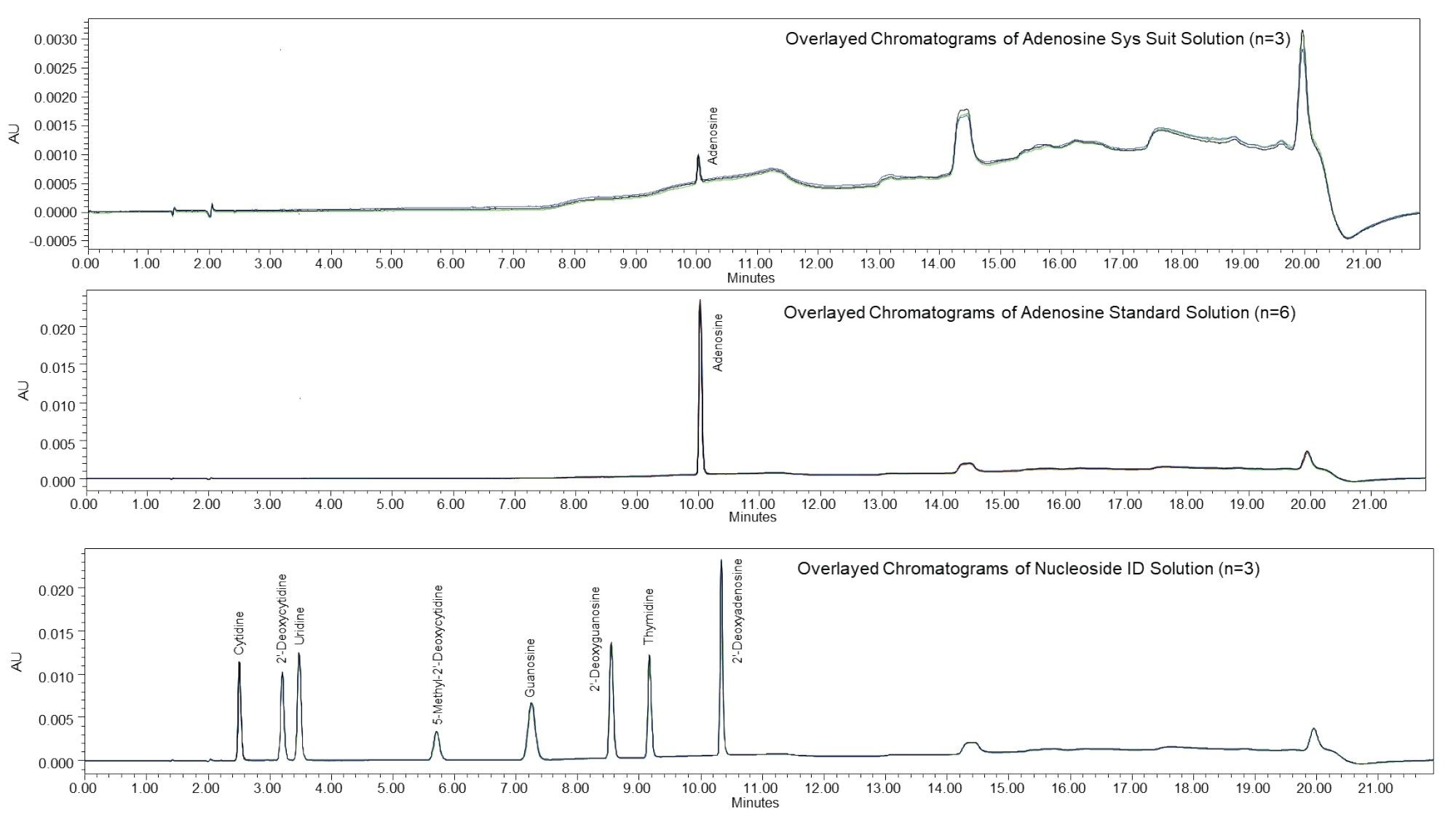
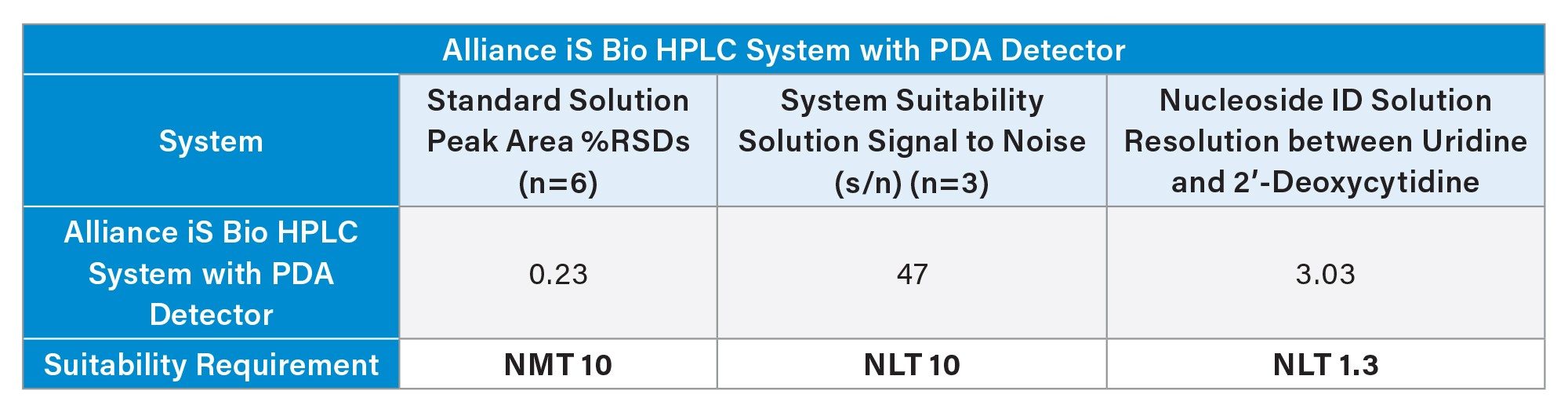
After method adjustment, the system suitability criteria were evaluated on Alliance iS Bio HPLC System with PDA Detector. The combination of column and system provided reduction of NSA for metal sensitive analytes. The adenosine standard solution was used to measure area precision and sensitivity. The nucleoside identification (ID) solution containing eight nucleosides—critical markers for impurity profiling—was used for USP resolution. The results of the overlaid chromatograms (Figure 1) demonstrate excellent repeatability, indicating consistent system performance under the established method conditions. This visual consistency is corroborated by the system suitability results summarized in Table 1, where all evaluated parameters met the USP acceptance criteria. In addition, the integrated PDA Detector provided good sensitivity (s/n = 47), easily meeting the S/N requirement (NLT 10). These results demonstrated the high performance of the Alliance iS Bio HPLC System with PDA Detector and ability to meet method requirements.
Eznymatic Digestion of a Heparin Sample on the Alliance iS Bio HPLC System with PDA Detector
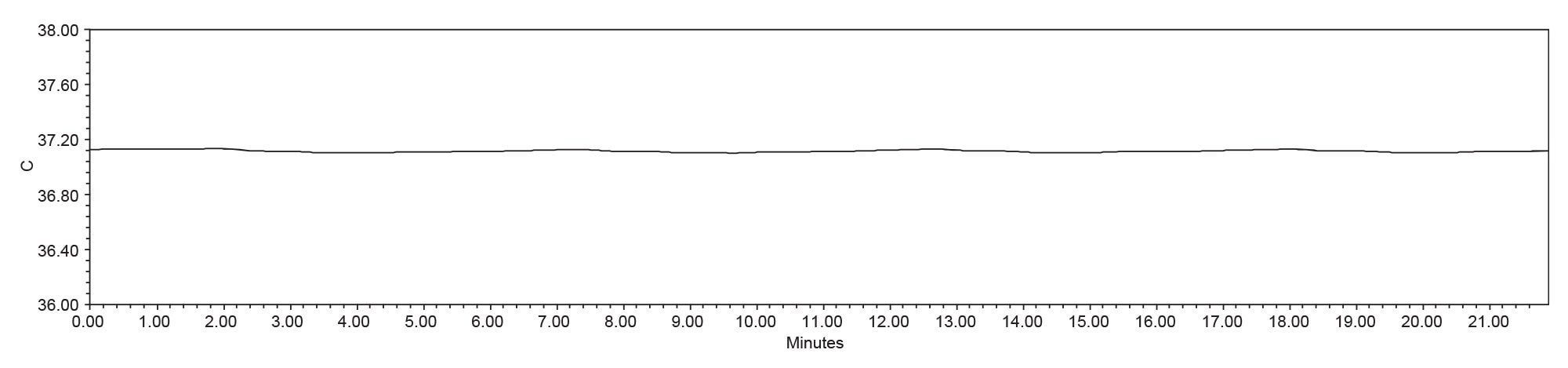
To measure the nucleotidic impurities within the sample as described in the USP method, enzymatic digestion was performed within the autosampler, through combining the digestion solution and sample in a vial and maintaining sample at 37 °C for at least one hour. Furthermore, the method required the sample temperature to be maintained within +/- 1 °C, a step critical for accurate, reproducible impurities analysis.
Temperature monitoring of the three enzyme digestion samples in Figure 2 confirmed robust thermal control, with all measured temperatures remaining well within the method specification of 37 °C ± 1 °C. Sample temperatures were tightly maintained between 37.085 and 37.120 °C, demonstrating excellent temperature stability during enzymatic digestion and supporting consistent digestion performance.
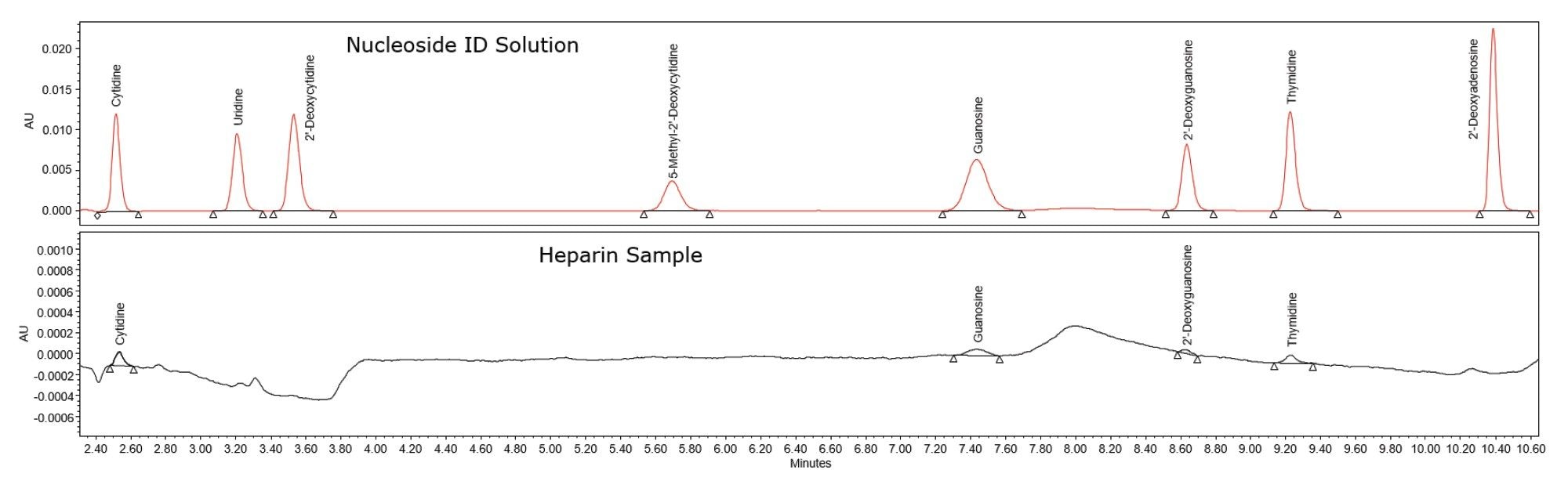
The sample was analyzed alongside a reference standard for confirmation and quantitation of nucleotidic impurity peaks. Representative chromatograms for both the nucleoside standard and the heparin sodium salt sample are shown in Figure 2. The sample chromatogram exhibited well-defined peaks with stable baseline performance. No significant interference or co-elution was observed for the analytes.
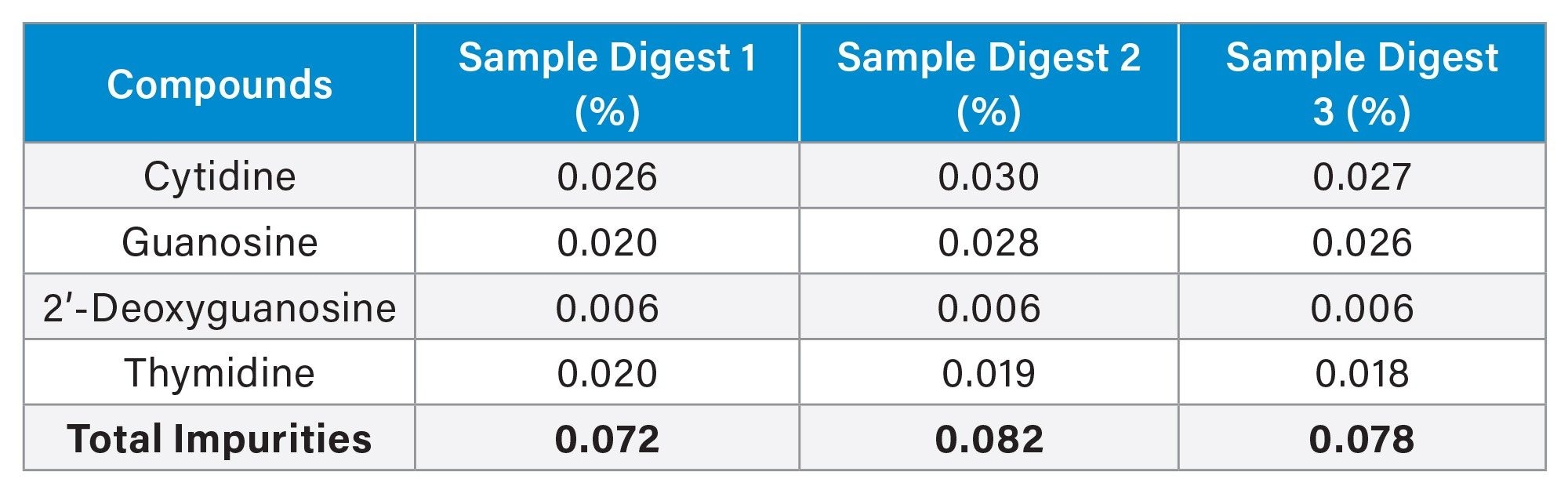
To assess the reproducibility of the digestion, three sample digestions were prepared in separate vials. The three analyses were performed in series, with all samples placed in the sample compartment at the same time. The results showed the presence of four nucleoside impurities. To calculate the impurities, the USP requires calculation of the area reject value, Q, based on S/N. Using Q along with the area of the adenosine standard, among other variables,2 the amount of each impurity was determined. For each digest, the individual impurity content was within 0.008%, and the total impurity content was within 0.010%, demonstrating consistent results across different sample preparations. These results indicate both consistency and adequate control of the sample temperature compartment, specifically at elevated temperatures required for this enzymatic digestion, and good sensitivity and easy peak integration.
Conclusion
Heparin, which is sourced from animal tissues, may require a number of methods for analysis in a regulated laboratory, including the measurement of nucleotidic impurities for safety and efficacy. However, the USP method for measuring nucleotidic impurities in heparin sodium salt formulations comes with its own challenges, requiring specific instrument attributes including a well-controlled sample temperature compartment for the enzymatic digestion. The Alliance iS Bio HPLC System with PDA Detector, with the ability to control the sample temperature compartment within +/- 1 °C, supports the method conditions. Testing of method system suitability requirements demonstrates acceptable performance of the system, including meeting area and retention time precision, sensitivity, and resolution requirements. Furthermore, analysis of three independently prepared digests showed consistent impurity profiles, with individual impurity levels within 0.008% and total nucleotidic impurities within 0.010%. These results demonstrate that the Alliance iS Bio HPLC System with PDA Detector provides the precision, sensitivity, resolution, and thermal control needed for reliable implementation of the USP method.
References
- The United States Pharmacopeia, USP-NF <621> Chromatography.
- The United States Pharmacopeia, Heparin Sodium – Nucleotidic Impurities.
Featured Products
720009512, July 2026


