
Analysis of Halogenated Flame Retardants Using Atmospheric Pressure Chemical Ionization GC-MS/MS
Douglas Stevensa, Peter Hancockb, Claudia Rathmannc
aWaters Corporation, United States
bWaters Corporation, United Kingdom
cWaters Corporation, Germany
Published on October 12, 2026

Abstract
Because they were produced in high volume and used in applications such as furniture and building materials, polybrominated diphenyl ether (PBDE) flame retardants were the focus of many early studies of the negative impacts they can have on human and environmental health. An additional range of halogenated flame retardants (HFRs) that do not fall neatly into a single chemical class were also being used in a wide range of applications as well and are subject to the same toxicity concerns as PBDEs. This led to the need for additional analyses and longer analyte lists to support the study of human exposure as well as environmental fate, occurrence and transport of multiple classes of flame retardants.
Magnetic sector gas chromatography high resolution mass spectrometry (GC-HRMS) using electron ionization (EI) has been the gold standard for the monitoring of HFRs due to performance characteristics such as its sensitivity and specificity. Its widespread use has been hindered by its cost to implement, complexity of operation, and relatively slow sampling rate. These limitations of GC-HRMS have, in retrospect, become regrettable in light of the goals of modern analytical methods to become more sustainable while also providing more versatile and confident data that is obtainable with reduced training requirements.
The modernization of an EI GC-HRMS reference method to a gas chromatography atmospheric pressure chemical ionization (GC-APCI) tandem quadrupole mass spectrometry (MS/MS) method that uses nitrogen (N2) carrier gas was investigated in this study. The same GC column dimensions were used for the helium-based (He) reference method and the updated N2 method. The goals of converting to N2 were to make the new method less susceptible to recurring cost spikes or supply disruptions and to reduce dependence on He which is a byproduct of petroleum refining. Furthermore, the sampling rate of the tandem quadrupole MS system used for this study easily accommodated the use of up to eight multiple reaction monitoring (MRM) transitions which results in a method that is more readily adaptable to different matrices or various sample preparation methods and presents the possibility of higher specificity through the use of multiple ion ratios for confirmatory purposes.
The optimized method has a 24.5 minute run time, compared to 28 minutes for the reference method, with the last-eluting analyte, decabromodiphenyl ethane (DBDPE), eluting at 20.8 min and demonstrating symmetric peak shape (a/b = 1.03) with a peak width of 9.7 s. Linear calibration curves were obtained for an analyte list of 21 compounds with an average r2 value of 0.9951 from 1 to 250 parts per billion (ppb).
Benefits
- The ability of the atmospheric pressure gas chromatography APGC™ ionization source on the Xevo™ TQ Absolute System to tolerate high carrier gas flow and an increased number of MRM transitions helps the implementation of the N2 carrier gas method using the same analytical column, reducing the need for re-analysis of samples, and contributes to a more matrix-independent method
- Operator training is reduced to weeks from months through conversion of the method from a magnetic sector to a tandem quadrupole mass spectrometer
- Use of a single, inexpensive, readily available gas for chromatographic separation, ionization and MS/MS fragmentation provides an overall simpler, more sustainable analysis
Introduction
Despite both voluntary and regulatory bans on the continued use of many HFRs, there remains a need to monitor for their presence in environmental matrices because of their previous widespread use, persistence, environmental transport, and potential toxicity. For decades, analysts have relied on magnetic sector EI GC-HRMS instruments for this work due to the sensitivity, specificity and dynamic range they provide. In recent years, however, these systems have increasingly been hindered by inherent limitations of the technology such as slow acquisition rates, operational complexity and a lack of adaptability to more sustainable methods.
Tandem quadrupole MS/MS is well established in its ability to perform highly accurate, precise and reproducible quantification of analytes in complex matrices across a wide dynamic range. Commercial GC-APCI systems have demonstrated highly sensitive analysis of persistent organic pollutants (POPs) for over a decade.1,2 Combining these two techniques in a single system has demonstrated the ability to replace magnetic sectors in challenging analyses such as dioxin and polychlorinated biphenyl (PCB) monitoring.3-5 In this work, a list of 21 HFRs was analyzed on a Xevo TQ Absolute Mass Spectrometer using the APGC ionization source with nitrogen (N2) carrier gas. A discussion of adapting existing methods for the use of N2 carrier gas is included, as well as a database of MRM transitions that were developed.
Experimental
Sample Preparation
Standard preparation was performed at Environment and Climate Change Canada’s (ECCC) Quebec Laboratory for Environmental Testing (QLET). A five-point, matrix-matched, calibration curve from 1–250 ppb with a linear fit was used to investigate linearity of the method.
The instrumental method for this work has been described previously.6 As in that method, a Xevo TQ Absolute tandem quadrupole mass spectrometer coupled with an 8890 gas chromatograph (Agilent) and fitted with the APGC ionization source was used for the measurements. The column was an Rtx®-1614, 15 m x 0.25 mm ID x 0.10 µm film (Restek) using an initial temperature of 110 °C then ramped to 210 °C at 10 °C/min, ramped to 260 °C at 20 °C/min held 1 minute, ramped to 310 °C at 10 °C/min, ramped to 330 °C at 40 °C/min with a final hold of 5 minutes for a total 24.5 minute runtime. One microliter pulsed splitless injections on the split/splitless (SSL) injector at 260 °C were used with a 0.5 minute pressure pulse to 20 psi. The use of a pressure pulse during injection is an important adaptation when converting He-based carrier gas methods to N2 carrier since the optimum linear velocity, and thus flowrate, for N2 is lower than He. The use of a pressure pulse increases the flowrate of N2 through the injection port during the injection cycle making it equally fast and efficient as He for sweeping the injection port liner completely and loading analytes onto the head of the column. After the injection cycle, the N2 carrier gas flow, initially set at 0.80 mL/min, was ramped to 4.1 mL/min at 0.4 mL/min/min and held at that flow rate until the end of the run. All analytes were determined using charge exchange (dry source), positive ion, MRM acquisitions and 4–8 transitions per analyte.
Results and Discussion
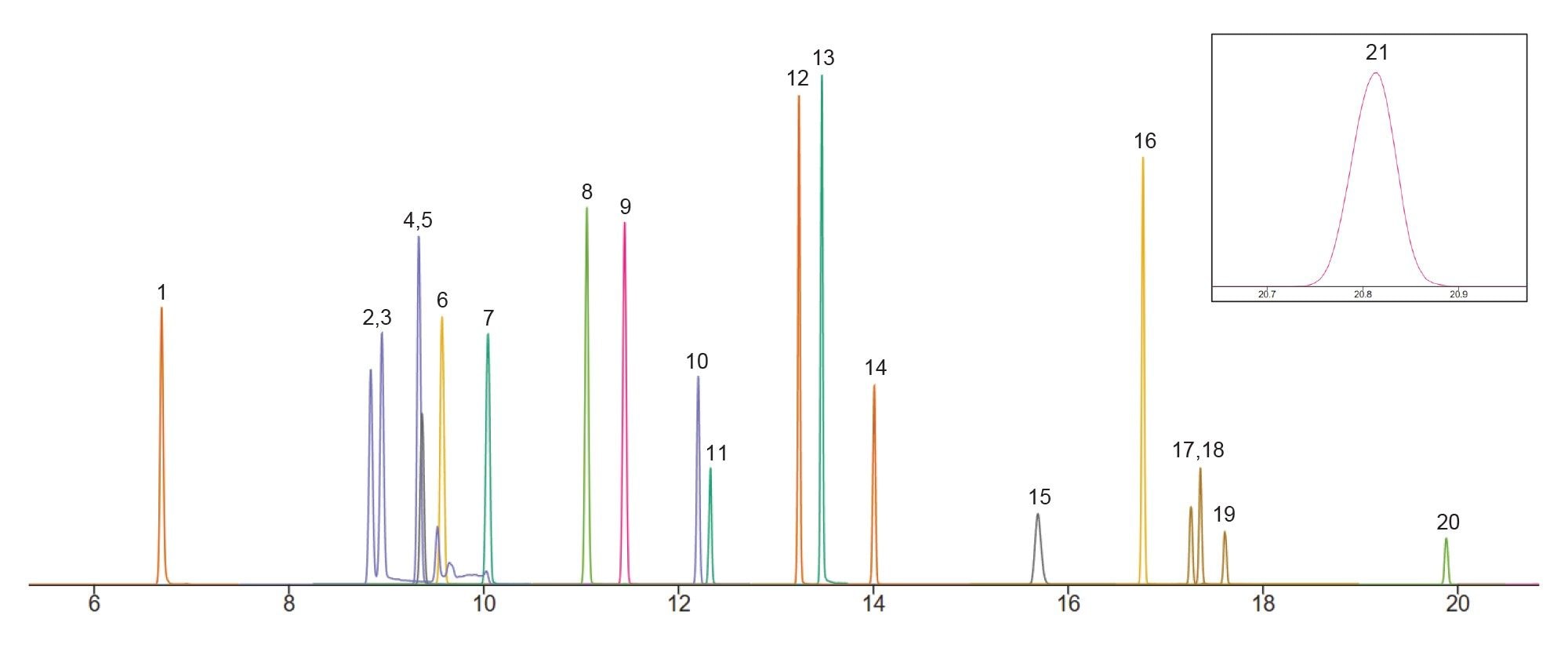
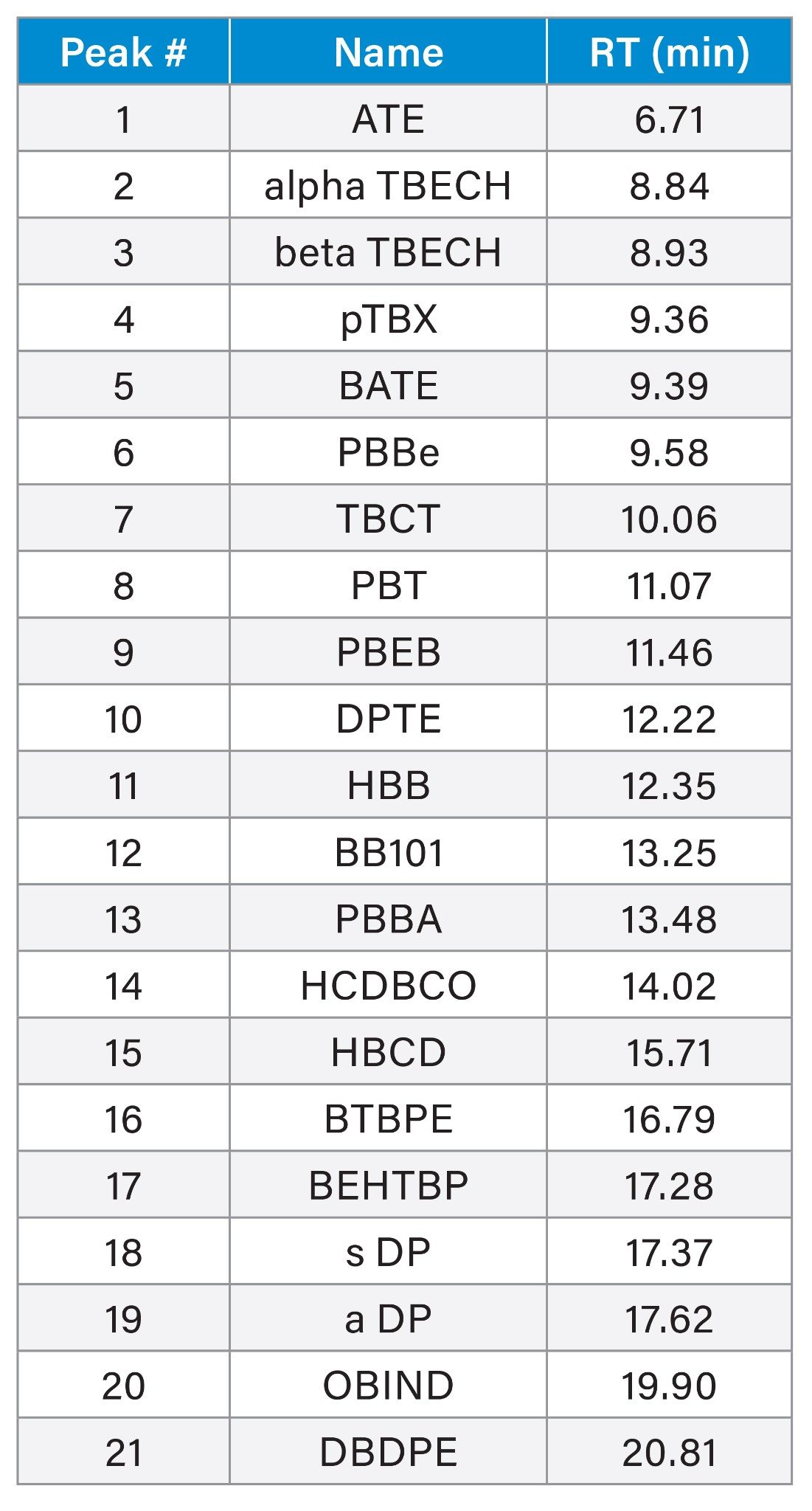
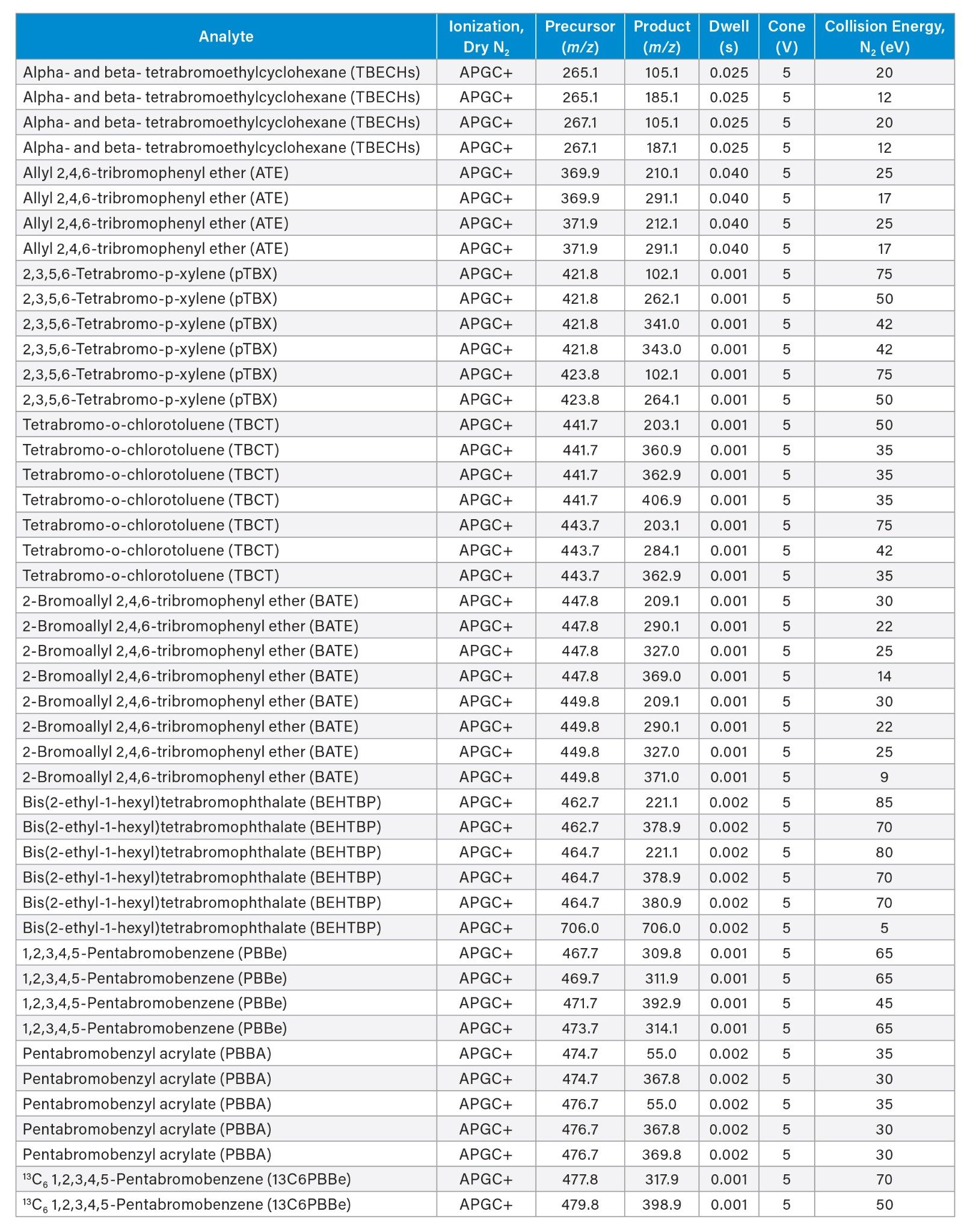
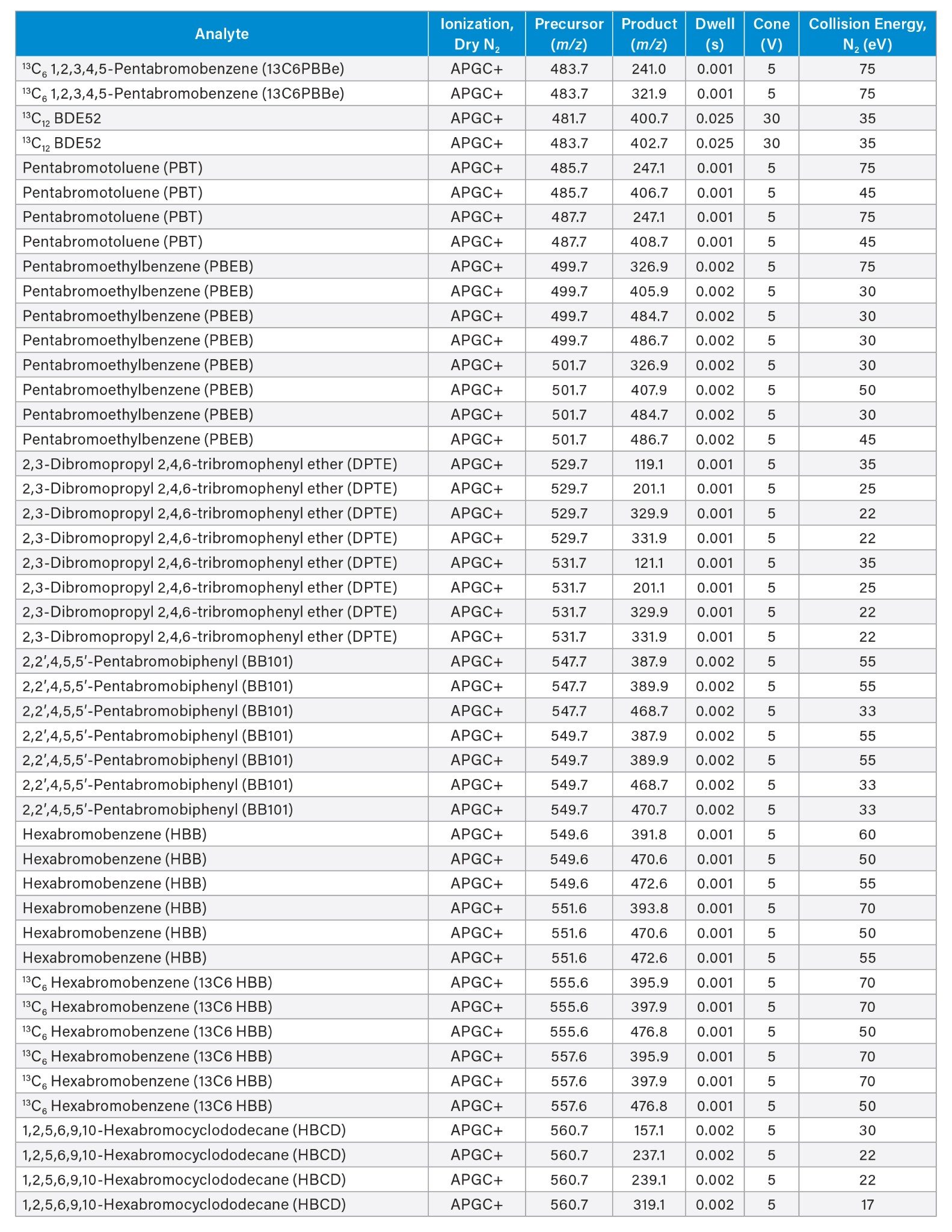
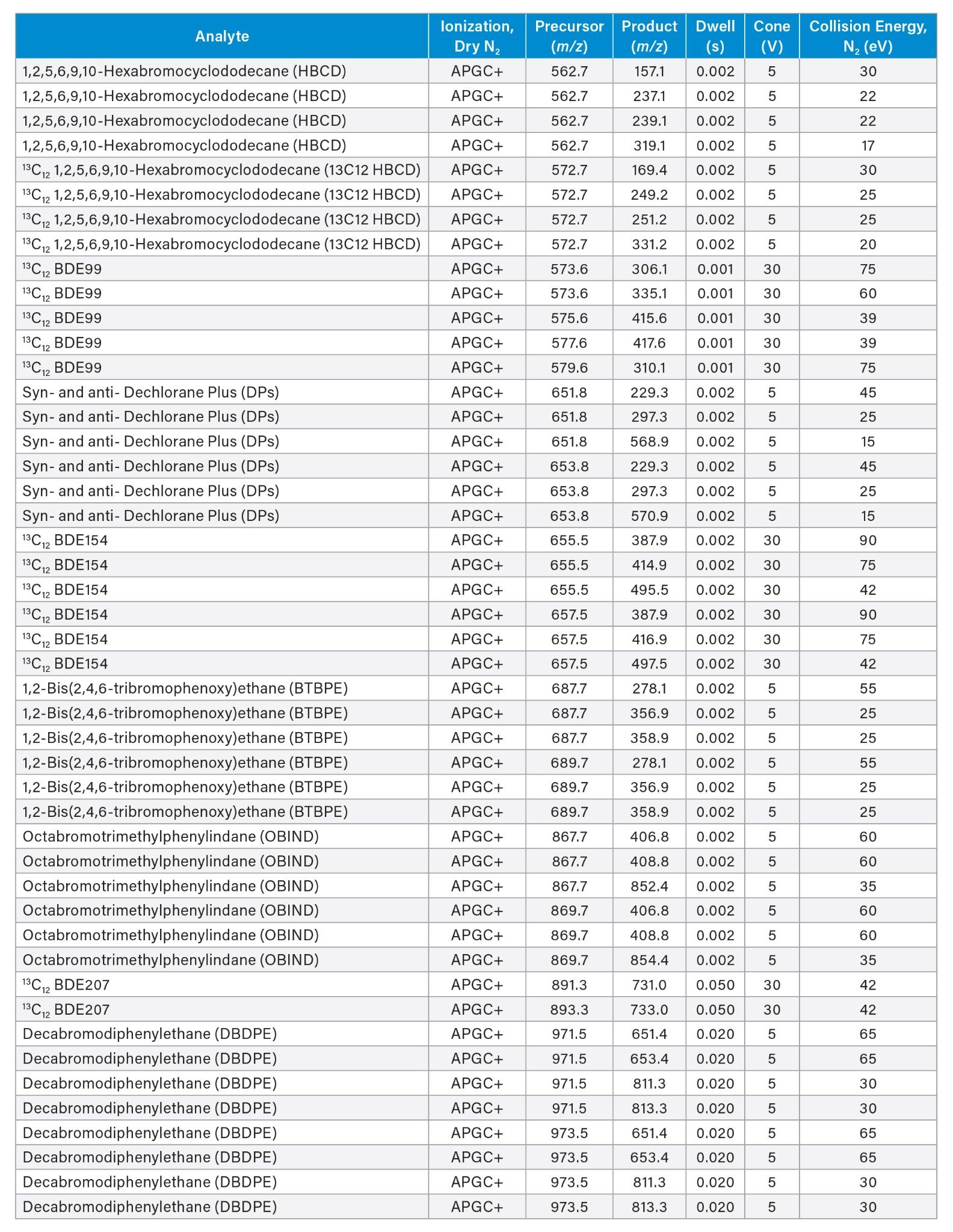
The adaptation of He carrier gas methods to the use of N2 carrier often involves the need for an alternative, scaled column of different dimensions. However, in this case, no appropriately scaled column was commercially available. Therefore, the first step in adapting the method was to use the reference method temperature program after substituting N2 flow set to the upper end of its optimum linear velocity range of 10–15 cm/s. This resulted in unacceptably wide chromatographic peaks for some analytes. A flow rate ramp was next employed to improve chromatographic peak widths. A final modification to the temperature program involved eliminating or reducing hold times at the start and in the middle of the run and adding time to the final hold. This resulted in a slightly shorter runtime for the N2 carrier method but with separation of critical pairs maintained. Figure 1 shows the separation of the 21 HFRs in just under 21 minutes with decabromodiphenylethane (DBDPE) magnified to show the peak symmetry (asymmetry = 1.03). Table 1 lists the abbreviated names of all 21 analytes and their retention times. Full analyte names along with MRM conditions are included in the Appendix.
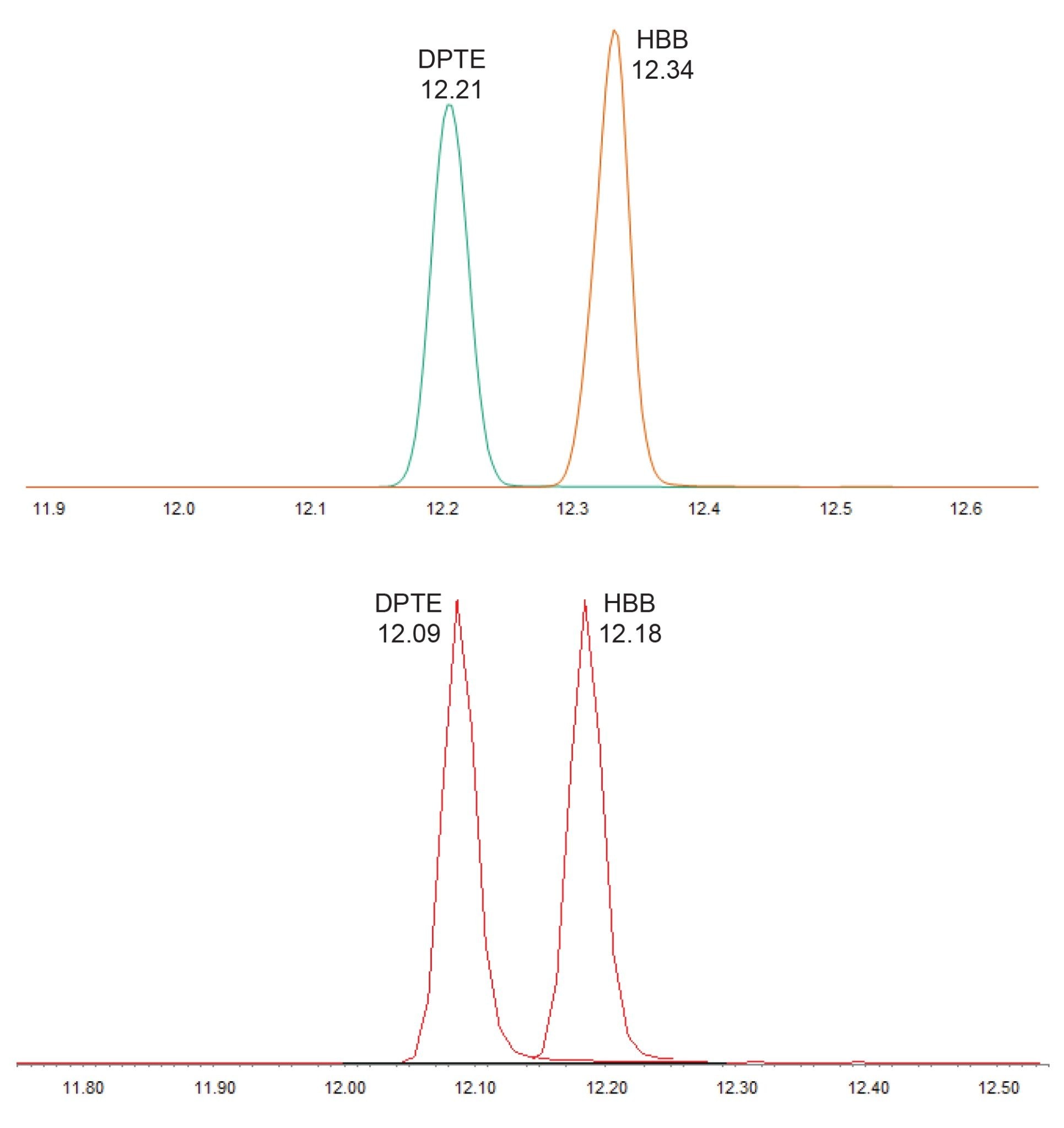
Data acquired using the reference method was obtained for further comparison of separation efficiency. Figure 2 shows the separation of a near-eluting pair of analytes 2,3-dibromopropyl 2,4,6-tribromophenyl ether (DPTE) and hexabromobenzene (HBB) using each method. This shows that the two separation methods are equivalent. Two additional critical pairs are present among the analytes with one example being slightly better in the He method and one slightly better in the N2 method. This is to be expected, and with this method, the other near-eluting pairs are separated by mass (m/z). In the adaptation of any He-based reference methods to N2 carrier gas, emphasis should be placed on optimizing chromatographic separation between any near-eluting isomeric pairs of analytes included in the method.
Optimization of the injection process involved the investigation of different temperatures in the range of 250 to 300 °C and splitless duration times from 0.25 to 1.5 minutes while keeping the pressure pulse amplitude fixed at 20 psi. Response and peak shape were used to ensure that the temperature was high enough and splitless duration long enough to completely load the least volatile analyte, decabromodiphenylethane (DBDPE), onto the column fully. Response and peak shape of the TBECH isomers was used to optimize the temperature necessary to minimize thermal decomposition effects on these labile analytes. The reference method uses a cool-on-column (CoC) injector that ramps from 110 to 290 °C at 100 °C/min after a 1 minute hold to minimize degradation of more labile HFRs. A programmable temperature vaporizing (PTV) injection port is another approach often used to better handle analytes prone to degradation in the injection port.7
Optimization of multiple MRM transitions for each analyte was performed using repeat injections of mid to high level standards. Because all the analytes in this study contain either bromine or chlorine, abundant naturally occurring isotope peaks are present for use as precursor masses in MRM transitions. Four to eight MRM transitions were optimized for each analyte. This increased number of MRM transitions, in contrast to the common acquisition of just two transitions, has multiple potential uses including summing of transitions during quantification, the use of multiple confirmatory traces and ratios and the use of alternative transitions in cases where certain sample preparation processes or matrices result in interferences on the usual primary quantification traces.
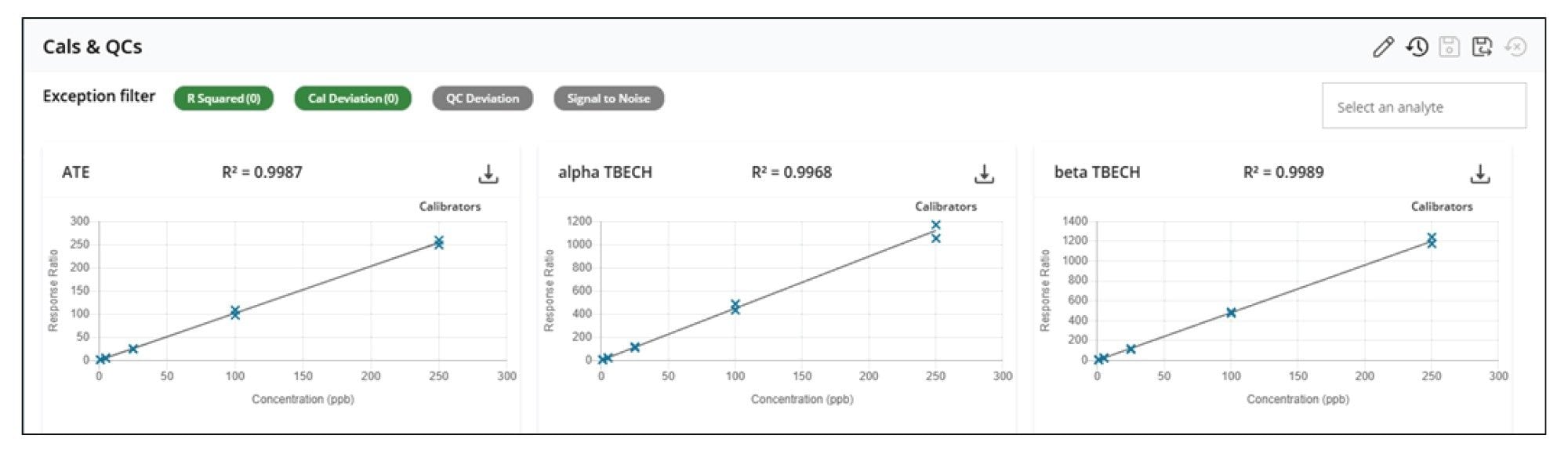
Data for standards was processed in waters_connect™ for Quantitation Software. Summed MRM transitions were used for all analytes. The average r2 value for all analytes was 0.9951 across the range of 1.01 to 250.08 ppb. Figure 3 shows example curves for the first three eluting analytes. The range and the linearity of response demonstrate performance indicating that this approach is potentially a suitable alternative to the reference method.
Conclusion
An all-nitrogen configuration with APGC on a Xevo TQ Absolute System was successfully applied to the analysis of HFRs by adapting a He carrier gas reference method previously used on magnetic sector EI GC-HRMS systems. Total runtime and separation efficiency of the N2 carrier gas method was comparable to the He-based reference method without the need for column scaling. This was achieved through the use of carrier gas flow ramping using flow rates that cannot be accommodated by conventional vacuum-source EI GC/MS systems.
The move to tandem quadrupole MS from high resolution MS updates the method for improved performance measures such as higher acquisition speeds and high specificity MS/MS while also requiring reduced training time and expertise as compared with magnetic sectors. Future work will investigate the method in more detail and explore the possible combination of HFRs and PBDEs into a single analytical method.
Acknowledgements
The authors would like to thank the Quebec Laboratory for Environmental Testing (QLET) at Environment and Climate Change Canada for providing the reference methods and samples for this study.
References
- Portolés, T.; et al. Novel Analytical Approach for Brominated Flame Retardants Based on the Use of Gas Chromatography-Atmospheric Pressure Chemical Ionization-tandem Mass Spectrometry with Emphasis in Highly Brominated Congeners. Analytical Chemistry 87.19 (2015): 9892-9899.
- Van Bavel, B.; et al. Atmospheric Pressure Chemical Ionization tandem Mass Spectrometry (APGC/MS/MS) - An Alternative to High-resolution Mass Spectrometry (HRGC/HRMS) for the Determination of Dioxins. Analytical Chemistry 87.17 (2015).
- Concha-Graña, Estefanía.; et al. "Proposal of a Procedure for the Analysis of Atmospheric Polycyclic Aromatic Hydrocarbons in Mosses." Talanta 134 (2015): 239-246.
- Bruce-Vanderpuije, P.; et al. "Background Levels of Dioxin-like Polychlorinated Biphenyls (dlPCBs), Polychlorinated, Polybrominated and Mixed Halogenated Dibenzo-p-dioxins and Dibenzofurans (PCDD/Fs, PBDD/Fs and PXDD/Fs) in Sera of Pregnant Women in Accra, Ghana." Science of The Total Environment 673 (2019).
- Simpson, A.K.; et al. Human Biomonitoring of Dioxins, Furans, and Non-ortho Dioxin-like Polychlorinated Biphenyls (PCBs) in Blood Plasma from Old Crow, Yukon, Canada (2019). Science of The Total Environment 923 (2024).
- Analysis of Polybrominated Diphenyl Ether Flame Retardants in Environmental Matrices Using Atmospheric Pressure Chemical Ionization GC/MS/MS, Document #720009524, Waters Corporation, (2026).
- Fan, X.; et al. Non-PBDE Halogenated Flame Retardants in Canadian Indoor House Dust: Sampling, Analysis, and Occurrence. Environmental Science and Pollution Research 23.8 (2016): 7998-8007.
Appendix
720009617, October 2026


