
Overcoming Non-Specific Adsorption in Oligonucleotide HILIC Analysis: A Comparison of Passivation and MaxPeak™ High-Performance Surfaces Technology
Corey E. Reed, Tony Reinhold, Paula Hong
Waters Corporation, United States
Published on July 26, 2026

Abstract
Oligonucleotides are essential tools in genetic research and therapeutic development, yet their analysis is often hindered by non-specific adsorption (NSA) to metal surfaces within liquid chromatography (LC) systems resulting in poor recovery, distorted peak shapes, and inconsistent quantification. This study evaluates the impact of NSA when using stainless-steel systems and columns versus their ACQUITY™ Premier System counterparts employing MaxPeak High-Performance Surfaces. Out-of-the-box and post-passivation performance were assessed using an oligodeoxythymidine standard with relative recovery serving as the key performance indicator. The ACQUITY Premier System and column combination consistently delivered the highest analyte recovery with low variability post-passivation, providing the most durable resistance to NSA. The stainless-steel components exhibited substantial analyte loss and rapid degradation of passivation effects. Analysis of a structurally diverse, mixed-base oligonucleotide further demonstrated that the ACQUITY Premier Platform supports high-quality chromatographic characterization for sequences representative of real-world research and development workflows. Collectively, these results highlight the critical role of surface-engineered hardware in mitigating NSA and establish the ACQUITY Premier System solution as a robust and reliable platform for oligonucleotide analysis.
Benefits
- The ACQUITY Premier System and column with MaxPeak High-Performance Surfaces Technology minimized analyte loss due to NSA, enabling accurate quantification even for adsorption-prone analytes
- The ACQUITY Premier Platform sustains high recovery and stable chromatographic behavior post-passivation without degradation over time
- The ACQUITY Premier Platform supports the analysis of mixed-base oligonucleotides representative of real-world analytes of interest
Introduction
Oligonucleotide therapeutics constitute a rapidly growing class of biotherapeutic agents under active investigation for a wide array of diseases, including cardiometabolic disorders and highly personalized n-of-1 treatments. These molecules are short, synthetic strands of DNA or RNA, typically comprising 10 to 100 nucleotides, which are often chemically modified to enhance their stability, optimize pharmacokinetic properties, or modulate their molecular interactions.1 The structural diversity of oligonucleotides - arising from sequence composition, chemical modifications, and secondary structure - presents significant analytical and chromatographic challenges. Oligonucleotides exhibit a pronounced tendency to adsorb onto metal surfaces, a behavior driven by their intrinsic chemical features. Their phosphodiester backbone imparts a high density of negative charge - one charge per nucleotide - that increases proportionally with oligonucleotide length.4 This strong polyanionic character facilitates electrostatic interactions with positively charged or partially charged metal oxide sites present throughout the chromatographic flow path, enabling Lewis acid–base interactions that result in surface binding. Additionally, many oligonucleotides adopt secondary structures such as hairpins or higher-order folds, which can either expose or shield charged regions, and in some cases, create steric hindrance that impedes efficient passage through narrow column pores.5 Chemical modifications commonly employed in therapeutic oligonucleotides, including phosphorothioate linkages or conjugation to ligands and hydrophobic moieties, further altering their charge distribution, hydrophobicity, and metal-binding propensity. Collectively, these factors make oligonucleotides particularly susceptible to non-specific adsorption (NSA) during chromatographic analysis.
NSA refers to unintended interactions between analytes and the wetted surfaces of the chromatographic flow path. These off-target interactions occur independently of the intended separation mechanism and can compromise analytical performance by causing peak tailing, reducing sensitivity, and increasing carryover. Historically, NSA has been mitigated using mobile phase additives or by passivating the instrument prior to analysis. Both strategies offer only short-term mitigation, highlighting the need for more durable and robust methods to control NSA.
To address these limitations, biocompatible LC systems have been developed using more inert materials such as MP35N®, titanium, and PEEK throughout the wetted flow path. These materials withstand extreme pH and salt conditions common in bioanalytical methods and significantly reduce reactive metal oxide formation. Although biocompatible systems improve NSA mitigation, they may still require mobile phase additives or conditioning injections when analyzing surface-active biomolecules. For these challenging analytes, MaxPeak High-Performance Surfaces (HPS) provides an additional layer of protection. MaxPeak HPS is a specialized surface modification applied to biocompatible hardware, further blocking residual reactive sites and offering maximal reduction of NSA. For demanding applications such as oligonucleotide analysis, MaxPeak HPS helps maintain peak shape and analyte recovery while minimizing carryover and peak tailing.
In this study, an oligonucleotide standard was analyzed using both a stainless-steel ultra-performance liquid chromatography (UPLC™) system and an ACQUITY Premier UPLC System equipped with MaxPeak HPS. Separations were performed on both a traditional stainless-steel column and an ACQUITY Premier Column of identical stationary phase chemistry to isolate the effects of hardware surface composition. A hydrophilic-interaction liquid chromatography (HILIC) method that does not employ ion pairing agents within the mobile phase to limit NSA was employed. Passivation injections were conducted for each system and column combination to evaluate their ability to maximize analyte recovery and maintain it following conditioning without the use of additives. The testing matrix illustrates practical considerations and recommended workflows for reliably analyzing challenging biomolecules such as therapeutic oligonucleotides.
Experimental
Sample Description
The Waters MassPREP™ OST Standard (p/n: 186004135) was prepared in a 20:80 (v/v) water:acetonitrile to various concentrations.
Method Conditions
|
LC systems: |
ACQUITY Premier UPLC System ACQUITY UPLC H-Class PLUS System |
|
Detection: |
TUV Detector PDA Detector |
|
Wavelength: |
260 nm |
|
Sampling rate: |
10 Hz |
|
Vials: |
Total Recovery Vials (p/n: 186000384C) |
|
Column(s): |
ACQUITY Premier BEH™ Amide Column, 1.7 µm, 2.1 x 100 mm (p/n: 186009505) ACQUITY UPLC BEH Amide Column, 1.7 µm, 2.1 x 100 mm (p/n: 186004801); |
|
Column temperature: |
60 °C |
|
Sample temperature: |
10 °C |
|
Standard injection volume: |
2 µL (40 pmol/µL), Waters IDT Oligo 1 µL (100 pmol/µL) |
|
Passivation injection volume: |
20 µL (80 pmol/µL) |
|
Flow rate: |
0.5 mL/min |
|
Mobile phase A: |
Water |
|
Mobile phase B: |
Acetonitrile |
|
Mobile phase C: |
50 mM Ammonium Acetate, pH = 6.7 |
|
Sample manager wash: |
20:80 (v/v) Water:Acetonitrile |
|
Sample manager purge: |
20:80 (v/v) Water:Acetonitrile |
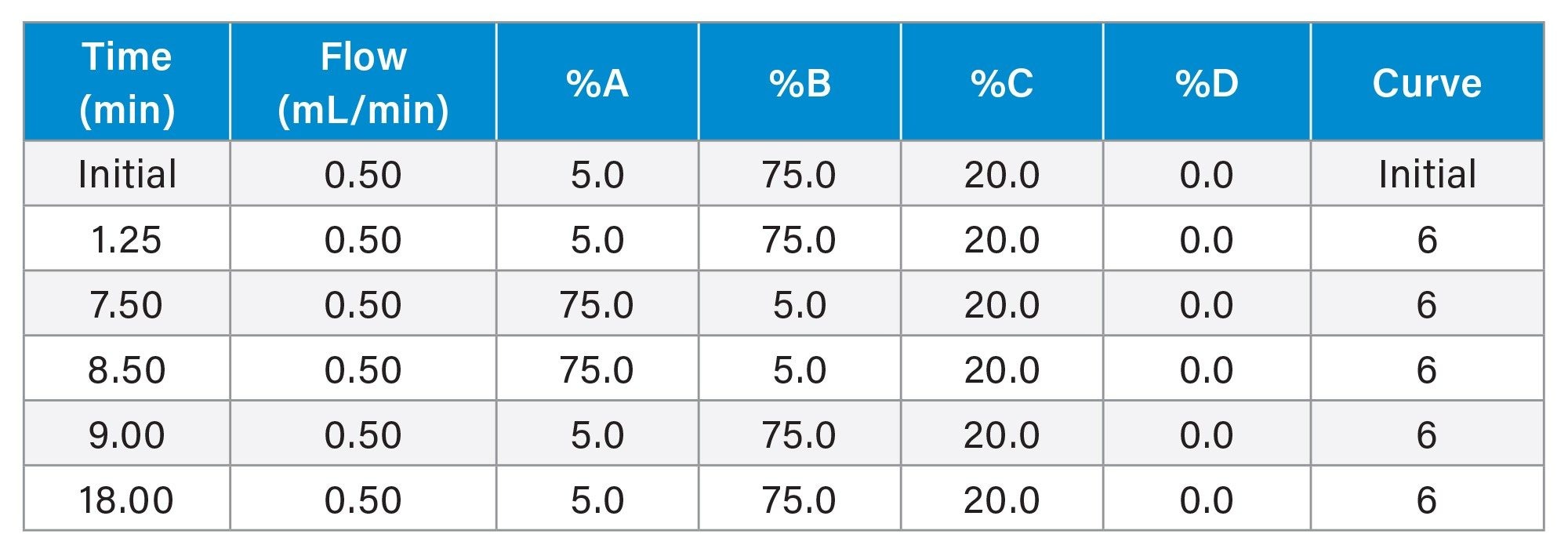
Gradient Table
Data Management
|
Chromatography data system: |
Empower™ 3.8.1 Chromatography Data System |
Results and Discussion
To evaluate how NSA influences oligonucleotide analysis, four system/column configurations were assessed, with particular attention to their out-of-the-box performance and their ability to maintain performance following passivation. An ACQUITY UPLC H-Class System and an ACQUITY Premier System were each paired with a stainless-steel and an ACQUITY Premier Column of identical stationary phase chemistry, enabling direct comparison of system and column surface technologies. Each configuration underwent a standardized evaluation workflow consisting of a 24-hour column equilibration at initial conditions, six pre-passivation injections of a standard oligonucleotide mixture, 20 passivation injections at twice the standard concentration, and six post-passivation standard injections. Percent recovery of the five target oligonucleotide species (dT₁₅, dT₂₀, dT₂₅, dT₃₀, dT₃₅) was calculated using the first post-passivation injection as the reference point. This approach allowed the quantification of the extent of NSA present before passivation as well as the assessment of how effectively each system/column combination mitigated adsorption related losses.
A comparison of the pre passivation chromatograms (Figure 1) highlights the pronounced influence of flow path surface chemistry on oligonucleotide recovery. Because a substantial portion of the analyte contacting surface area resides within the column frits, even small differences in surface reactivity can produce large analytical consequences. The data presented here illustrates an extreme case of this effect: the stainless steel column exhibited complete retention of all oligonucleotide species regardless of the system it was used on, demonstrating the strong propensity of these analytes to adsorb to unmodified metal surfaces. In contrast, substituting the stainless steel column with an ACQUITY Premier Column - while keeping all other conditions constant - resulted in a dramatic improvement in chromatographic performance. All five target oligonucleotide forms were detected when the ACQUITY Premier Column was used, regardless of whether the system itself was stainless steel (ACQUITY UPLC H Class PLUS System) or an ACQUITY Premier System. This outcome underscores that column surface technology plays a dominant role in mitigating NSA and enabling reliable oligonucleotide analysis, even before system level passivation is considered.
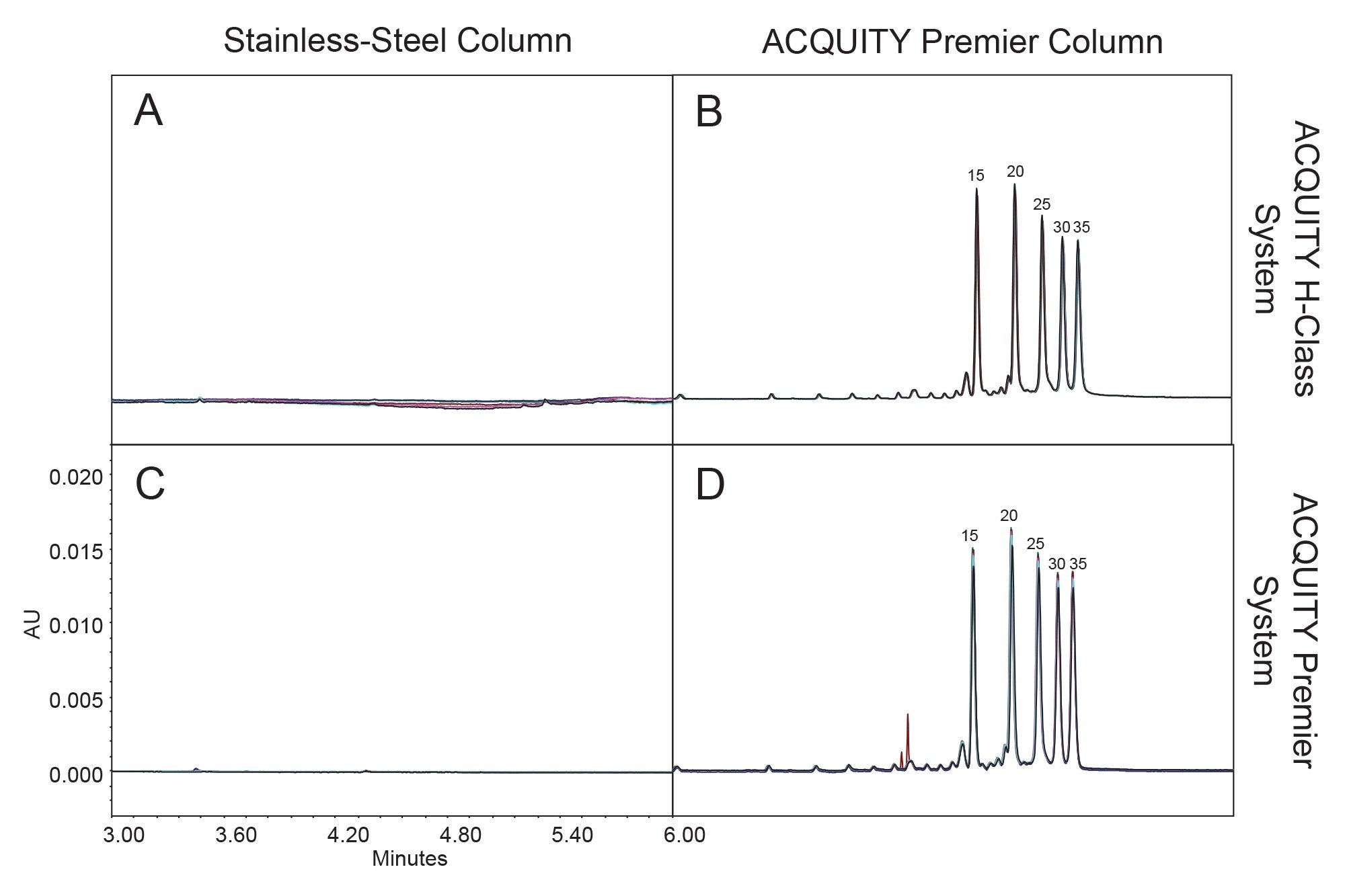
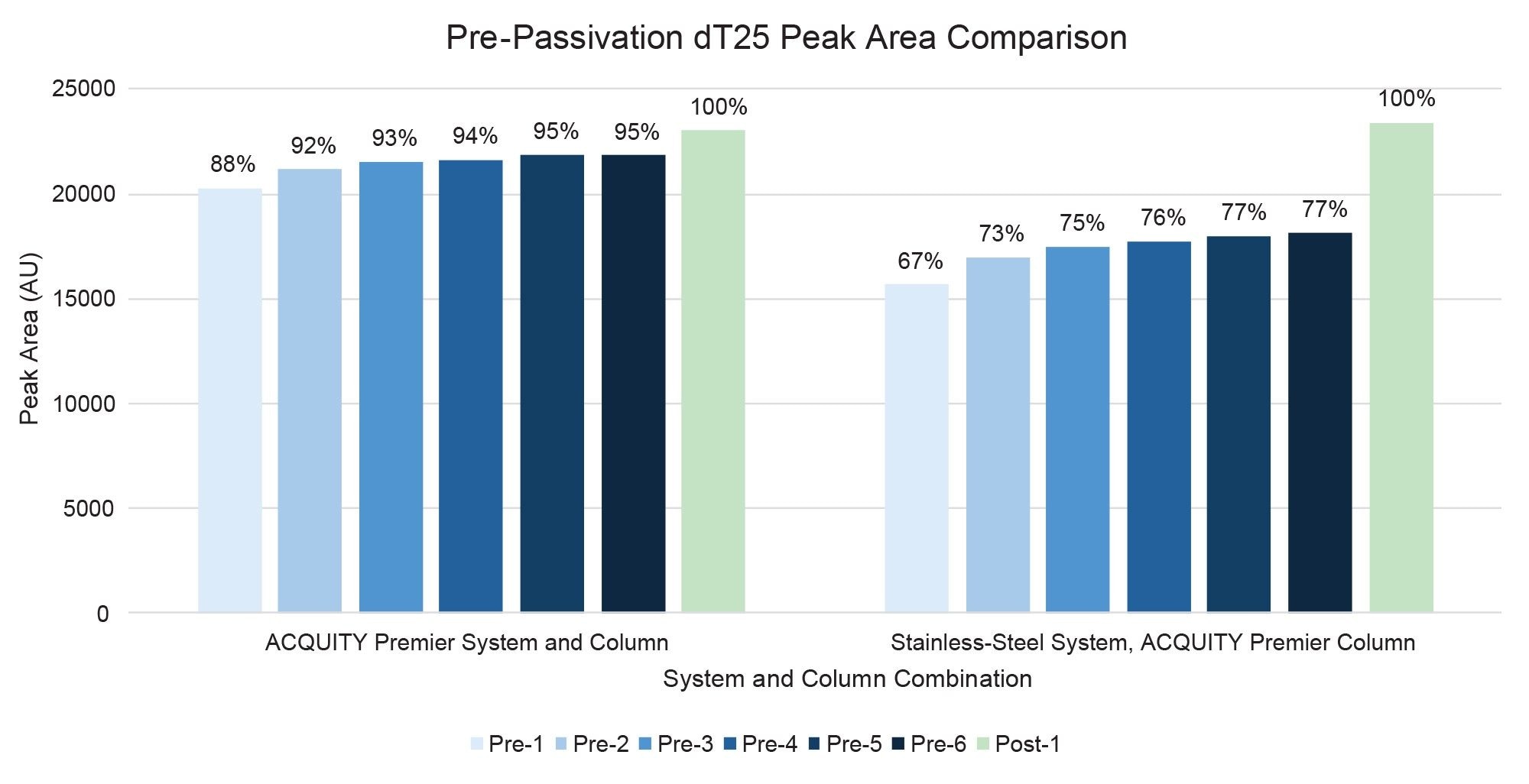
Figure 2 summarizes the percent recovery of the dT₂₅ oligonucleotide for both systems using only the ACQUITY Premier Column, as this configuration was the only one capable of producing measurable signals for all five analytes. dT₂₅ was selected as the representative species because its behavior closely reflected that of the other oligonucleotides in the standard in all tests. Consistent with the chromatographic observations, the ACQUITY Premier System again demonstrated a clear performance advantage over the stainless-steel ACQUITY UPLC H-Class PLUS System. Out-of-the-box, the ACQUITY Premier System paired with the ACQUITY Premier Column achieved 88% recovery on the first injection and increased to 95% by the sixth injection, indicating rapid stabilization and minimal NSA. In contrast, the ACQUITY Premier Column installed on the ACQUITY UPLC H-Class PLUS System yielded only 67% recovery initially and reached 77% by the sixth injection. These results show that even before any passivation or mitigation steps are applied, the ACQUITY Premier System substantially reduces NSA throughout the flow path, whereas the stainless-steel system continues to impose significant adsorption-related losses. This highlights the cumulative impact of system-level surface chemistry and reinforces the importance of mitigating NSA at every point of analyte contact.
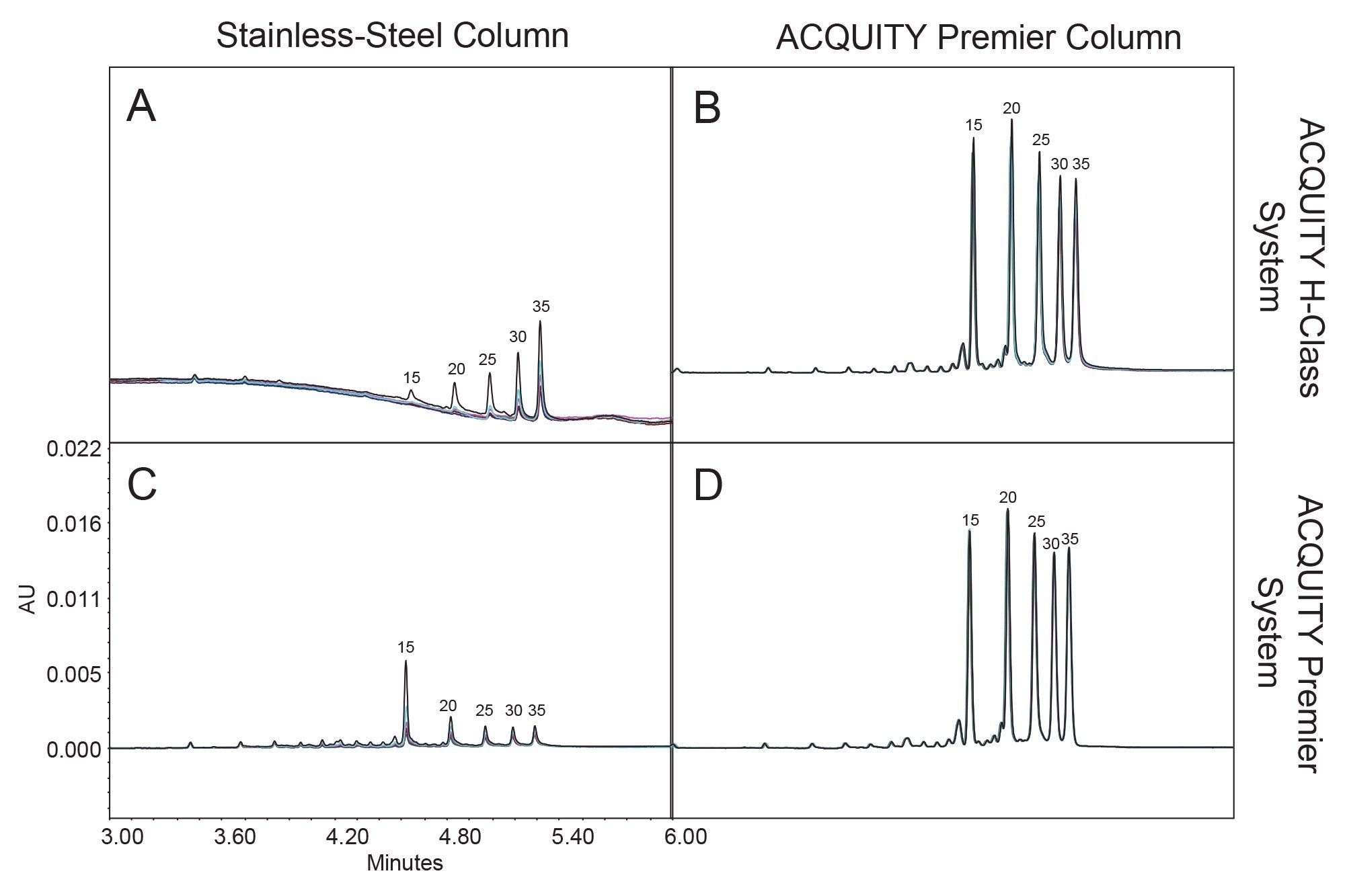
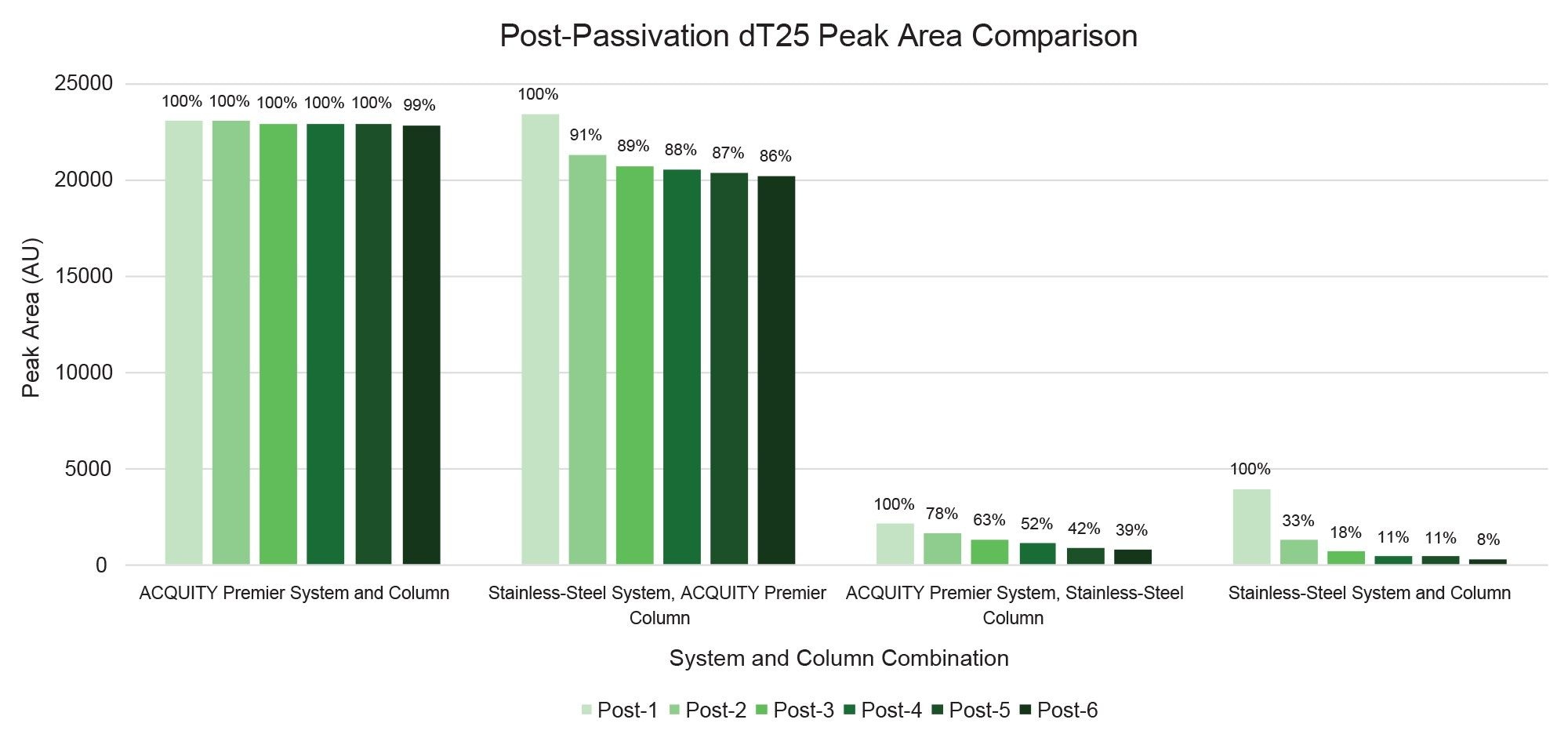
Post-passivation chromatograms for all system/column combinations are shown in Figure 3. Passivation substantially improved the performance of the stainless-steel column, enabling detection of all five oligonucleotide peaks on both systems; however, peak shape and recovery remained noticeably compromised. In contrast, the ACQUITY Premier Column continued to deliver superior chromatographic performance on both systems, with sharper peaks and higher, more consistent recovery. Percent recovery for each post-passivation injection, along with total peak area, is summarized in Figure 4 to quantify these differences more precisely.
The post-passivation recovery data reinforce the chromatographic observations: although passivation reduces NSA on stainless-steel surfaces, a substantial degree of adsorption persists. While the stainless-steel column shows a marked improvement relative to its pre-passivation state, its performance remains well below that of the ACQUITY Premier Column under all conditions. When the ACQUITY Premier Column is used, the first post-passivation injection yields roughly equivalent recovery on both systems, but the subsequent injections reveal a clear divergence. On the ACQUITY Premier System, the ACQUITY Premier Column maintains 100% recovery through five injections and only decreases slightly to 99% on the sixth, indicating stable and durable mitigation of NSA. On the ACQUITY UPLC H-Class PLUS System, however, recovery begins to decline immediately after the first injection, dropping to 91% on the second and reaching 86% by the sixth injection. The stainless-steel column exhibits an even more rapid loss of passivation, with recovery deteriorating sharply across injections. These trends highlight the transient nature of passivation when stainless-steel surfaces remain in the flow path and underscore the importance of system-level surface chemistry in sustaining low-NSA conditions. This is further reflected in the area percent relative standard deviation (%RSD) for dT₂₅: the ACQUITY Premier System with the ACQUITY Premier Column achieved exceptional reproducibility (0.3% RSD) across the six post-passivation injections, whereas the ACQUITY Premier Column on the ACQUITY UPLC H-Class Plus System showed higher variability (5.7% RSD). The stainless-steel column produced dramatically higher variability on both systems, with %RSD values of 37.3% on the ACQUITY Premier System and 118.0% on the ACQUITY UPLC H-Class PLUS System, confirming the instability and inconsistency associated with NSA on unmodified metal surfaces.
To further assess the analytical performance of the chromatographic platform, a custom synthesized oligonucleotide with greater structural and chemical diversity was evaluated. Unlike the Waters MassPREP Standard, which consists solely of thymine based oligodeoxythymidines, this sequence incorporated all four nucleobases - adenine (A), cytosine (C), guanine (G), and thymine (T). This broader nucleotide composition more closely reflects the sequence complexity encountered in research, development, and therapeutic applications, where secondary structure, base specific interactions, and mixed hydrophobicity can exacerbate NSA related challenges.
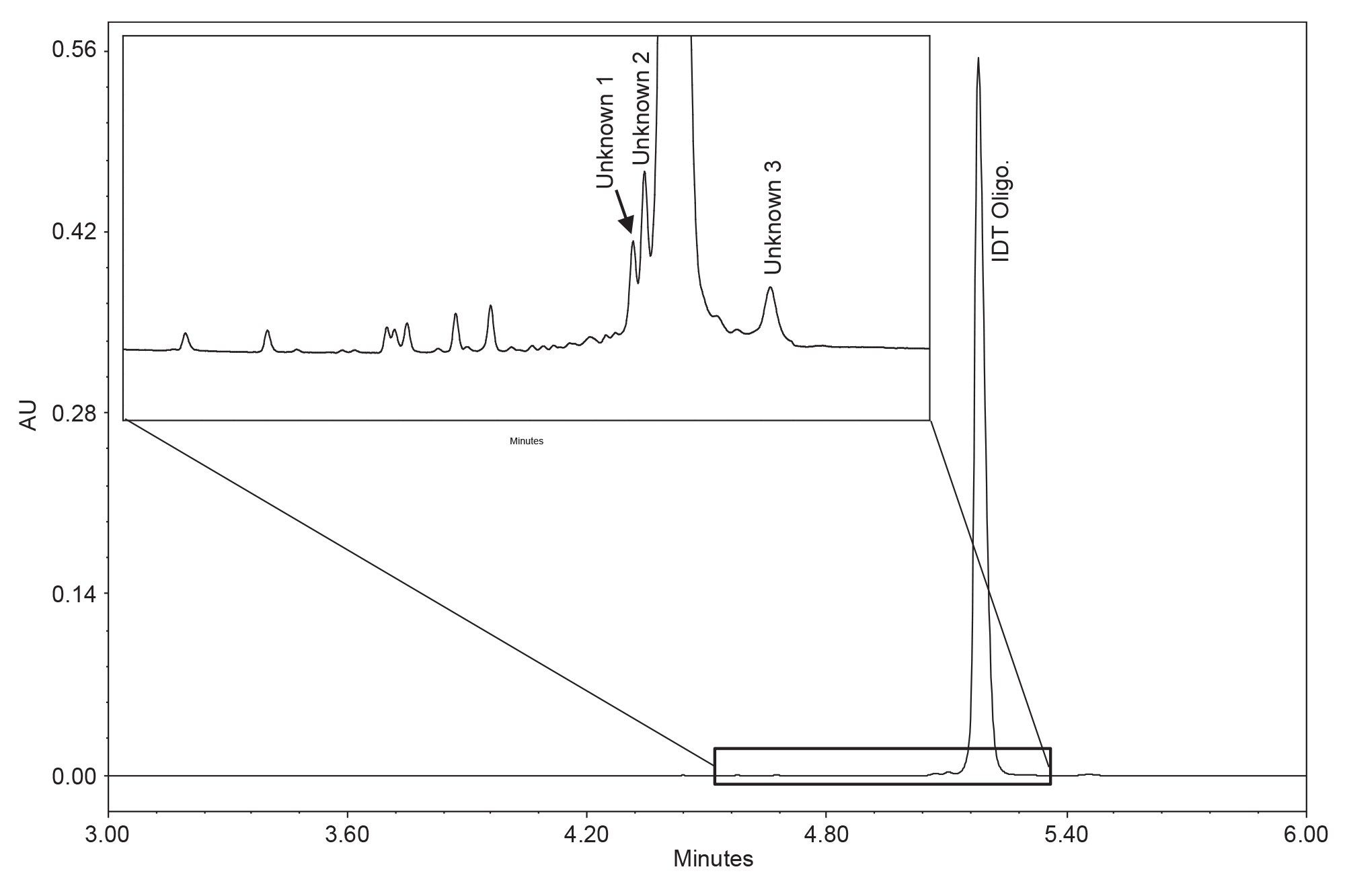
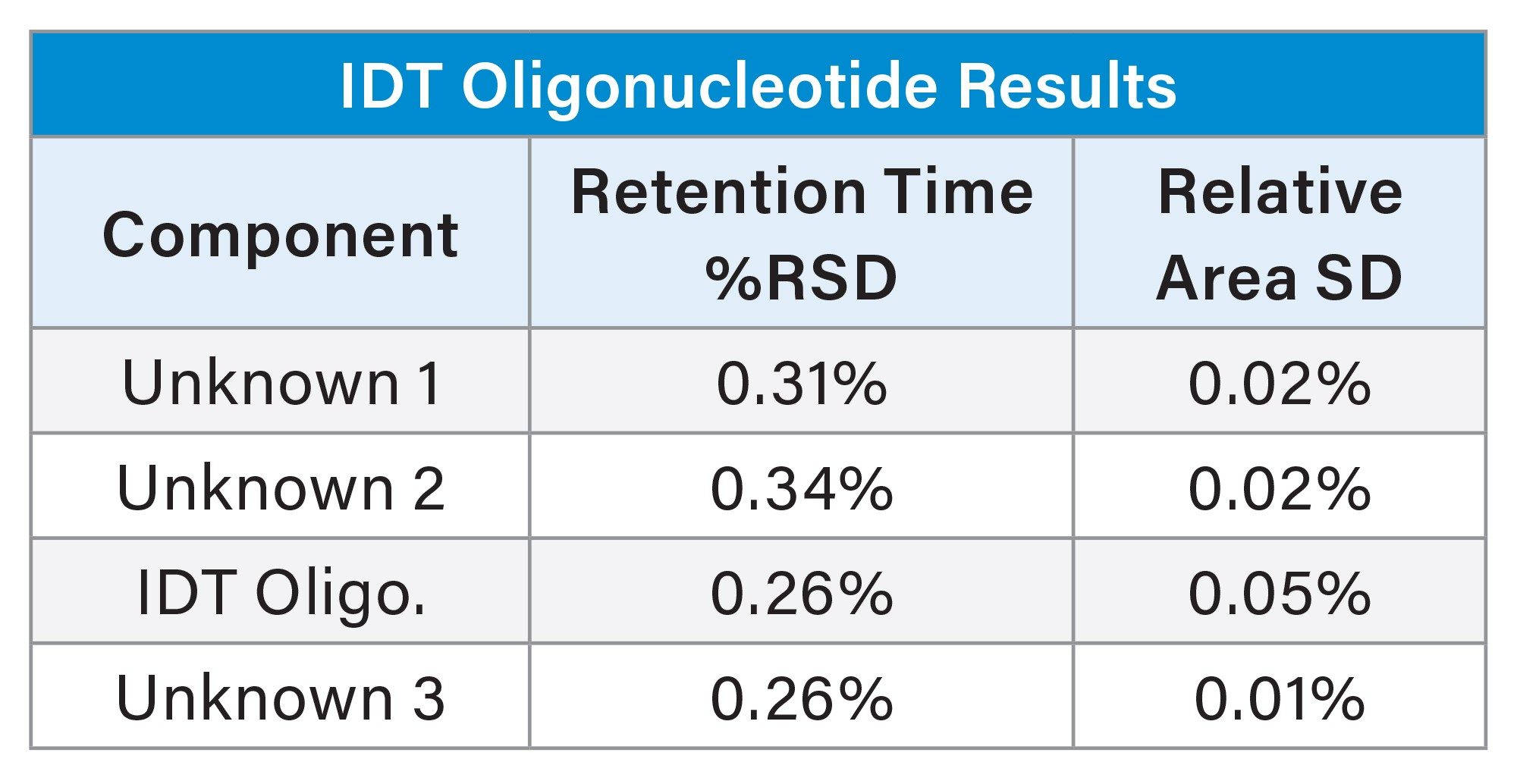
The custom sequence, 5′–TTA TCG CAC CCA TCT CTC TCC TTC TAG ACC GAA TT–3′, was analyzed on the ACQUITY Premier UPLC System equipped with an ACQUITY Premier Column. The resulting chromatographic profile (Figure 5) demonstrated a well resolved, symmetrical peak with no evidence of adsorption related distortion. Three unknown impurity peaks surrounding the main oligoform were monitored over the course of 12 injections. Retention time %RSDs of 0.34% or below were observed for all three impurities monitored and the main peak. Relative area standard deviations of 0.05% or less were observed for all peaks monitored (Table 1). These results illustrate that the ACQUITY Premier System and column combination not only mitigates NSA for simple homopolymeric oligonucleotides but also maintains high performance when challenged with more structurally diverse and application relevant sequences.
Conclusion
This study demonstrates that NSA remains a significant barrier to reliable oligonucleotide analysis when stainless-steel components are present anywhere in the chromatographic flow path. Across all experiments, the ACQUITY Premier System and ACQUITY Premier Column combination consistently delivered the highest analyte recovery, the most stable performance across injections, and the lowest variability, both before and after passivation. In contrast, stainless-steel columns and systems exhibited substantial analyte loss, distorted peak shapes, and rapid deterioration of passivation effects, underscoring the transient and incomplete nature of mitigation strategies applied to unmodified metal surfaces.
The data further shows that system-level surface chemistry plays a critical role in sustaining low-NSA conditions. Even when using an ACQUITY Premier Column, the stainless-steel ACQUITY UPLC H-Class PLUS System exhibited declining recovery across injections, whereas the ACQUITY Premier System maintained near-maximal recovery and exceptional reproducibility. These findings highlight the cumulative impact of every analyte-contacting surface and emphasize that effective NSA control requires a holistic approach rather than reliance on column-only solutions.
Finally, analysis of a structurally diverse, mixed-base oligonucleotide confirmed that the ACQUITY Premier Platform supports high-quality chromatographic characterization even for more complex sequences representative of real-world research and development applications. Together, these results establish that the ACQUITY Premier System and column technologies provide a robust, durable, and highly reproducible solution for oligonucleotide analysis, enabling confident quantification and characterization without the performance limitations imposed by NSA on traditional stainless-steel hardware.
References
- Eckstein, F. Phosphorothioates, Essential Components of Therapeutic Oligonucleotides. Nucleic Acid Ther. 2014, 24 (6), 374–387. https://doi.org/10.1089/nat.2014.0506.
- Khvorova, A.; Watts, J. K. The Chemical Evolution of Oligonucleotide Therapies of Clinical Utility. Nat. Biotechnol. 2017, 35 (3), 238–248. https://doi.org/10.1038/nbt.3765.
- Gilar, M.; Stoll, D. R. Challenges and Solutions in Oligonucleotide Analysis, Part I: An Overview of Liquid Chromatography Methods and Applications. LCGC Int. 2025, 2 (7).
- Apffel, A.; Chakel, J. A.; Fischer, S.; Lichtenwalter, K.; Hancock, W. S. Analysis of Oligonucleotides by HPLC−Electrospray Ionization Mass Spectrometry. Anal. Chem. 1997, 69 (7), 1320–1325. https://doi.org/10.1021/ac960916h.
- Crooke, S. T.; Witztum, J. L.; Bennett, C. F.; Baker, B. F. RNA-Targeted Therapeutics. Cell Metab. 2018, 27 (4), 714–739. https://doi.org/10.1016/j.cmet.2018.03.004.
- Goodchild, J. Conjugates of Oligonucleotides and Modified Oligonucleotides: A Review of Their Synthesis and Properties. Bioconjug. Chem. 1990, 1 (3), 165–187. https://doi.org/10.1021/bc00003a001.
Featured Products
720009477, June 2026


