
Leveraging the Base Stability of Waters XBridge™ Biphenyl RP Columns with MaxPeak™ Premier Technology for the Chromatographic Separation of Barbiturates
Bonnie A. Alden, Christopher Collins, Jim Cook, Weiqiang Gu, Daniel P. Walsh, Thomas H. Walter
Waters Corporation, United States
Published on August 24, 2026

Abstract
The chromatographic analysis of barbiturates presents significant challenges due to the structural similarity of many of these analytes. This application note demontrates the use of Waters XBridge Biphenyl RP Column with MaxPeak Premier Technology to separate a five‑barbiturate mixture which included the structural isomers amobarbital and pentobarbital. Biphenyl Columns offer alternative selectivity to C18 Columns by providing the potential for π‑π interactions. With the base stability of the XBridge Biphenyl stationary phase, afforded by the use of ethylene-bridged hybrid (BEH™) particles and trifunctional bonding, there was a possibility to explore the use of alkaline mobile phases to improve the separation of amobarbital and pentobarbital. The results demonstrate that the five barbiturates may be baseline resolved using a pH 9.3 mobile phase.
Benefits
- Alternative selectivity compared to C18 columns, enabling resolution of compounds that are difficult to separate
- Stability across a broad pH range (1.5 to 10) enabled by BEH particle technology and durable trifunctional bonding
- Use of an XBridge Biphenyl RP Column with a pH 9.3 mobile phase buffer provides baseline resolution of five barbiturates
Introduction
Barbiturates are powerful sedative‑hypnotic drugs that depress the central nervous system, and today their use is far more limited than in the past. They were once widely prescribed, but alternatives, especially benzodiazepines, have replaced them in most situations. Their decline is due to significant risks, including dependence, tolerance, dangerous interactions, and the potential for life‑threatening overdose. Despite these risks, barbiturates remain valuable in select settings where their long history, predictable effects, and unique pharmacology still offer advantages.1
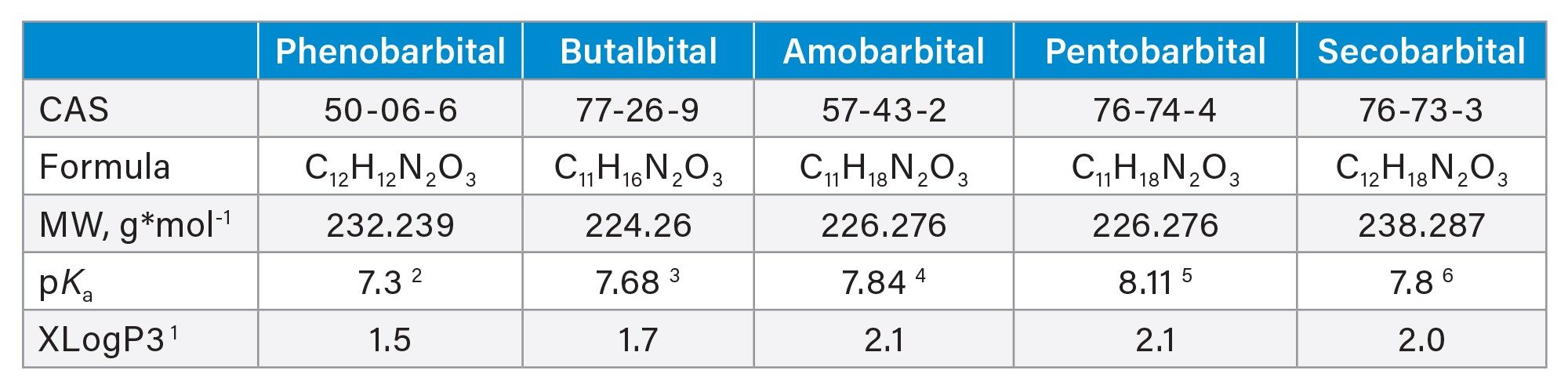
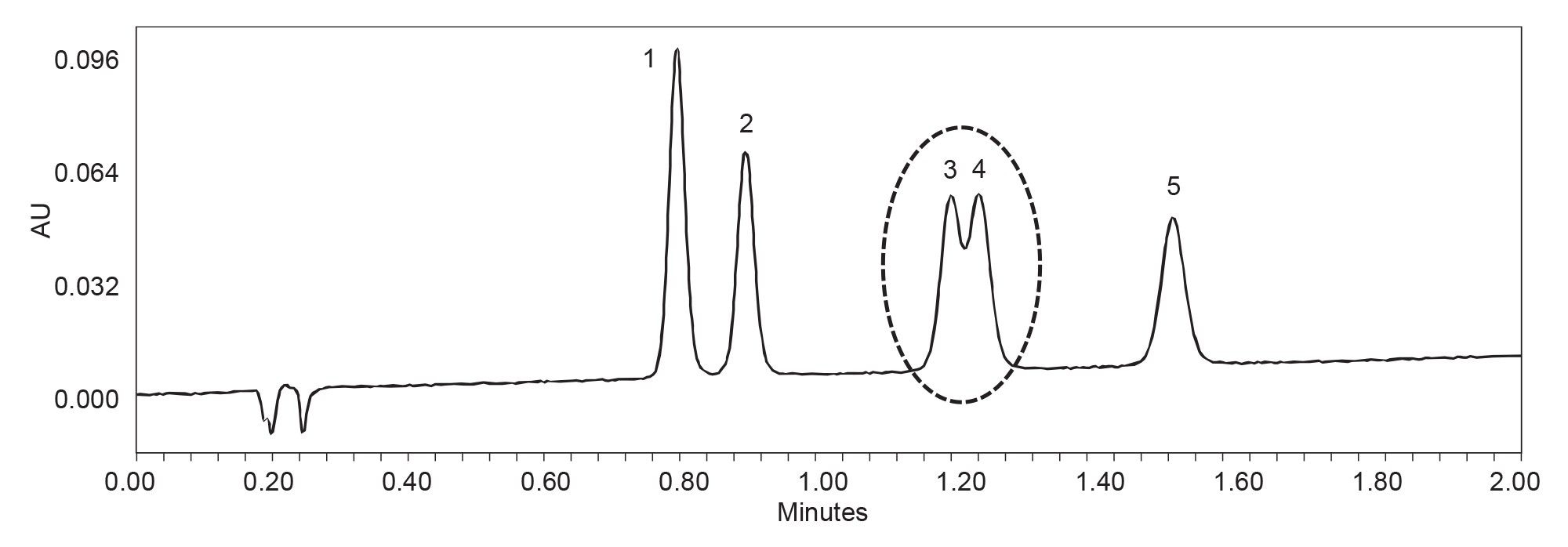
Many barbiturates are structurally similar, differing only in substituent branching, chain length, and electronic distribution (Figure 1 and Table 1). For example, amobarbital and pentobarbital are structural isomers that share the same molecular formula but differ in the arrangement of their carbon chains. Separations using common acidic mobile phase additives like formic acid show only partial resolution of these two isomers (Figure 2). Even though the apex retention times allow them to be identified, achieving complete baseline separation is critical for reliable quantification.
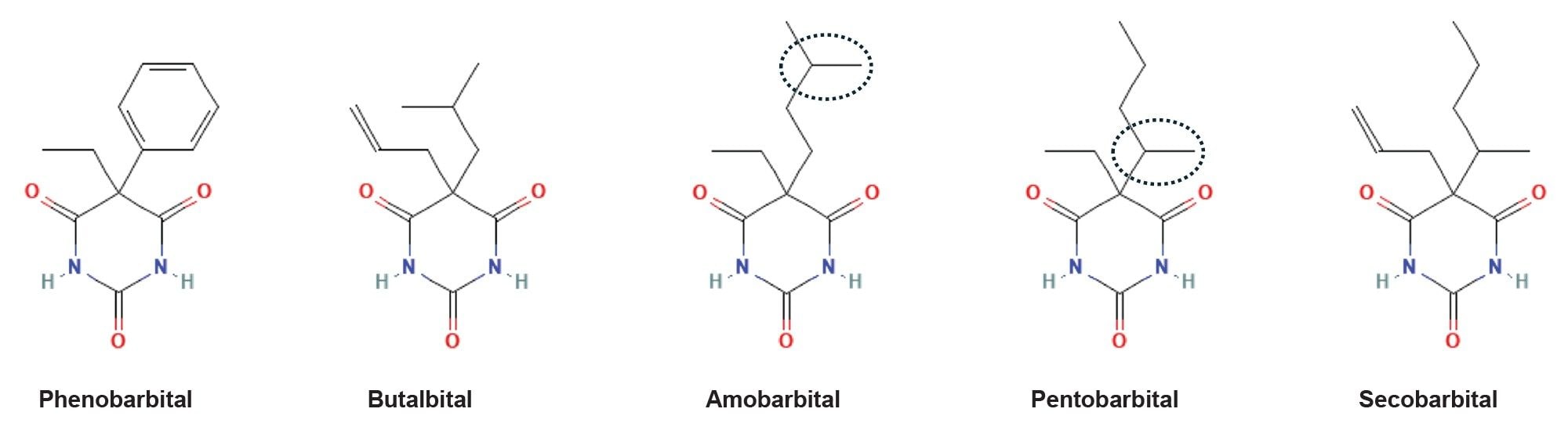
Table 1. Chemical and Physical Properties of Five Barbiturates
[2] DrugBank https://www.drugbank.ca/drugs/DB01174
[3] M. E. Krahl, J. Phys. Chem. 44, 449 (1940).
[4] DrugBank https://www.drugbank.ca/drugs/DB01351
[5] DrugBank https://www.drugbank.ca/drugs/DB00312
[6] DrugBank https://www.drugbank.ca/drugs/DB00418
This application note demonstrates the use of an XBridge Biphenyl RP Column for the separation of the five barbiturates shown in Figure 1. These columns have been shown to offer significantly different selectivity than C18 and phenyl columns. Uniquely among biphenyl columns, XBridge Biphenyl Columns are usable with basic mobile phases (up to pH 10) because they employ BEH organic/inorganic particles.2 This allows a wider range of mobile phase pH values to be explored during method development than with silica-based biphenyl columns (limited to a maximum pH of 8). Here, we leveraged this capability to develop a method to separate the target analytes.
Experimental
Sample Preparation
The samples were prepared at a concentration of 25 µg/mL by making a 1:10 dilution of the barbiturate mix-5 solution (Millipore-Sigma, p/n: B-041) with a diluent of methanol and the aqueous ammonium acetate mobile phase. Care was taken to match the sample diluent to the initial mobile phase composition.
Peak identifications were made using 100 µg/mL single component samples of each analyte prepared from 1:10 dilution with methanol and the aqueous ammonium acetate mobile phase. The individual analytes (phenobarbital solution (p/n: P-008), butalbital, (p/n: B-006), amobarbital ( p/n: A-020), pentobarbital ( p/n: P-010) and secobarbital ( p/n: S-002)) were purchased from Millipore-Sigma as certified reference materials from Cerilliant®.
LC Conditions
|
LC system: |
ACQUITY™ UPLC™ H-Class Bio System with BioQuaternary Solvent Manager (bioQSM), BioSample Manager-Flow-Through-Needle (bioSM-FTN), and single channel Column Heater |
|
Detection: |
ACQUITY Photodiode Array (PDA) Detector; 220 nm |
|
Vials: |
TruView pH Control LCMS Certified Clear Glass Vials, 12 x 32 mm, Screw Neck Vial, Total Recovery with Cap and Preslit PTFE/Silicone Septum, 1.5 mL Volume, 100/pk (p/n: 186005663CV) |
|
Column(s): |
Waters XBridge Biphenyl RP Column, MaxPeak Premier Technology, 2.5 µm, 130 Å, BEH, 2.1 x 50 mm, 1/pk (p/n: 186011750) |
|
Column temperature: |
30 °C |
|
Sample temperature: |
20 °C |
|
Injection volume: |
2 µL |
|
Flow rate: |
400 µL/minute |
|
Mobile phase A: |
10 mM Ammonium Acetate (aq) pH 9.3 |
|
Mobile phase C: |
100% Acetonitrile |
|
Mobile phase D: |
Methanol/100 mM, Ammonium Acetate pH 9.3, (90/10, v/v) |
|
Gradient 1: |
90% Mobile Phase-A /10% Mobile Phase-D to 100% Mobile Phase-D in 4.2 minutes using a linear gradient curve (*6); hold for 0.3 minutes at these conditions before a 0.5-minute transition to 100% Mobile Phase-C. Hold for 5 minutes then return to initial conditions of 90% Mobile Phase-A and 10% Mobile Phase-D. Run time: 25 minutes |
|
Gradient 2: |
75% Mobile Phase-A /25% Mobile Phase-D to 21.4% Mobile Phase-A / 78.6% Mobile Phase-D in 3.0 minutes using a linear gradient curve (*6); hold for 0.3 minutes at these conditions before a 0.5-minute transition to 100% Mobile Phase-C. Hold for 5 minutes then return to initial conditions of 75% Mobile Phase-A and 25% Mobile Phase-D. Run time: 15.5 minutes |
Data Management
|
Chromatography software: |
Empower™ Chromatography Data System (CDS) |
Results and Discussion
Since the goal of this study was to achieve resolution of the five barbiturates in the sample, the focus was to evaluate the parameters that would affect the selectivity of the separation, such as the mobile phase pH, organic modifier and stationary phase rather than those that affect run time, such as the flow rate and column length. Not all method variables were evaluated, as certain conditions were selected based on preliminary screening experiments.
An XBridge Biphenyl RP Column was selected due to its different selectivity relative to conventional C18 stationary phases and its stability across a broad mobile phase pH range. The primary interaction mechanism responsible for the utility of biphenyl stationary phases is π‑π interactions. Methanol was intentionally selected as the organic modifier, despite its disadvantages relative to acetonitrile (i.e., higher viscosity, weaker elution strength, and a higher UV cutoff),³ since it enhances these interactions.
Formic acid is a common additive in reversed–phase LC and LC–MS mobile phases because it provides effective pH control while maintaining compatibility with UV and mass spectrometric detection. However, Figure 2 demonstrates that a commercially available silica-based biphenyl column used with this low pH (2.7-2.8) mobile phase system was not successful in baseline separating amobarbital and pentobarbital. An XBridge Biphenyl RP Column, 2.5 µm (2.1 x 50 mm) was evaluated using these same conditions, producing a resolution (Rs) of 0.7 for this pair of analytes. This is considerably less than the Rs threshold of 1.5 which is required for baseline separation, where the peak overlap is small enough that quantification is accurate and reliable.
When analytes contain acidic or basic groups, the choice of pH determines whether they are ionized or neutral, making mobile phase pH the most important factor when separating ionizable compounds.4 Barbiturates are weak acids with pKa values around 7–8. At lower pH, barbiturates remain largely protonated and more hydrophobic, producing the greatest retention for the analytes. At pHs higher than the pKa values, the barbiturates become increasingly deprotonated, leading to shorter retention times. When barbiturates are ionized, differences in their interactions with the mobile phase and stationary phase become more pronounced, and a greater separation of closely related analytes may be achieved.
To evaluate the effect of pH on the separation, low and high‑pH mobile phases were prepared using ammonium acetate. This salt is a dual‑range buffer, capable of buffering near the pKa of acetic acid (~4.75) and ammonia (~9.25). A solution at the native pH of ammonium acetate (~6.9) was also included in the evaluation. Gradient 1, described in the LC Conditions section, was used for all pH studies. Ammonium acetate was chosen not only for its buffering versatility but also because it is volatile and compatible with both UV and MS detection. The results of this study are shown in Figure 3.
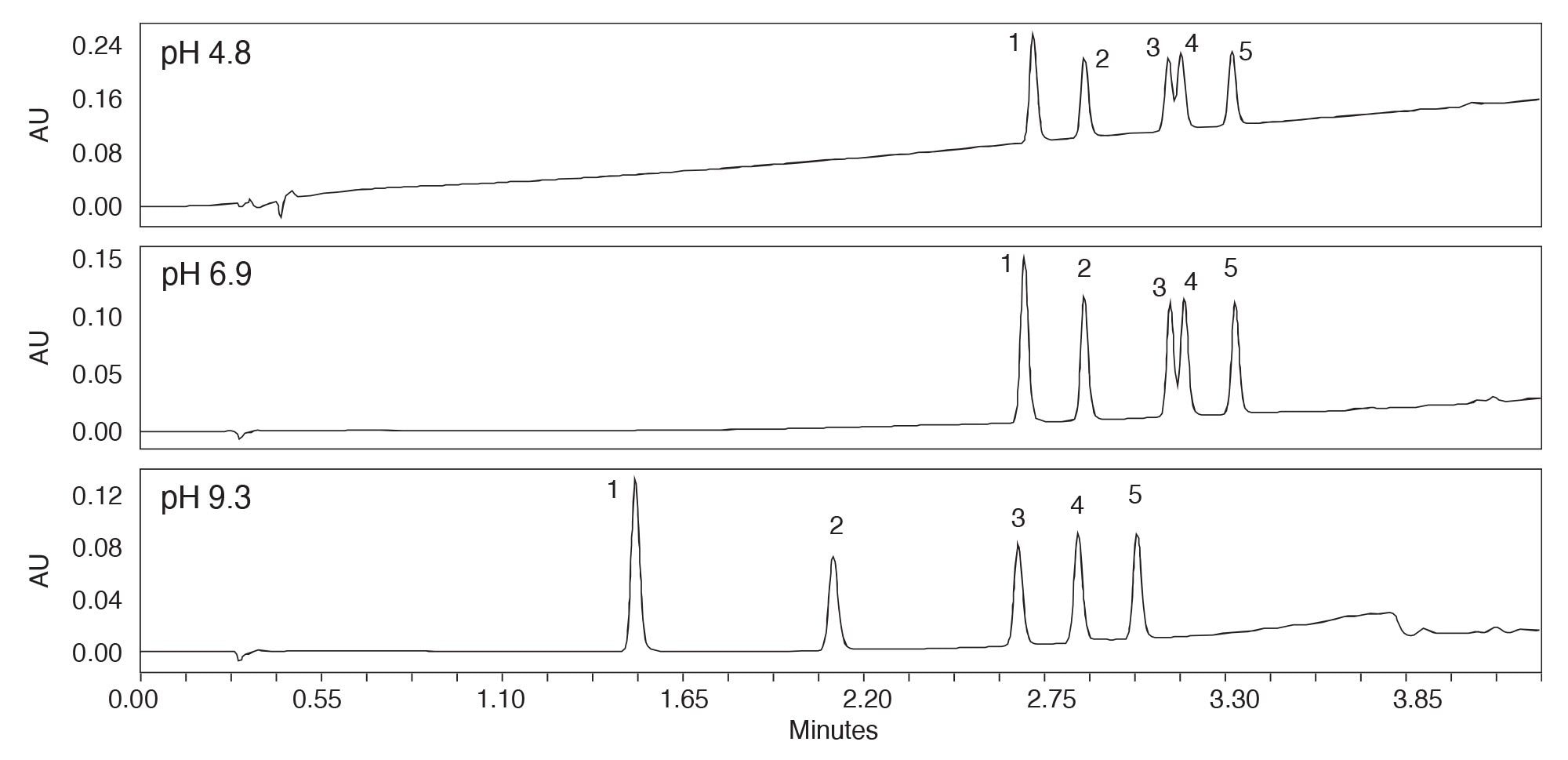
Using formic acid mobile phases, the Rs value for amobarbital (peak 3) and pentobarbital (peak 4) was 0.72, and it was only slightly better (0.79) using the ammonium acetate mobile phase system at pH 4.8. At pH 6.9, the Rs value increased to 0.96 for the isomer pair. Little difference in retention time was observed for the analytes, suggesting that their retention is dominated by hydrophobic interactions. A recent study reported using 10 mM ammonia in water (pH 9.2) and 10 mM ammonia in acetonitrile (pH 9.8) to separate the isomers,5 supporting earlier research by Feng, et al. Using ammonium acetate mobile phases at pH 9.3, above the pKa values for the barbiturates, the analytes are negatively charged. Retention decreased for all analytes, and baseline resolution was achieved for amobarbital and pentobarbital (Rs = 3.7).
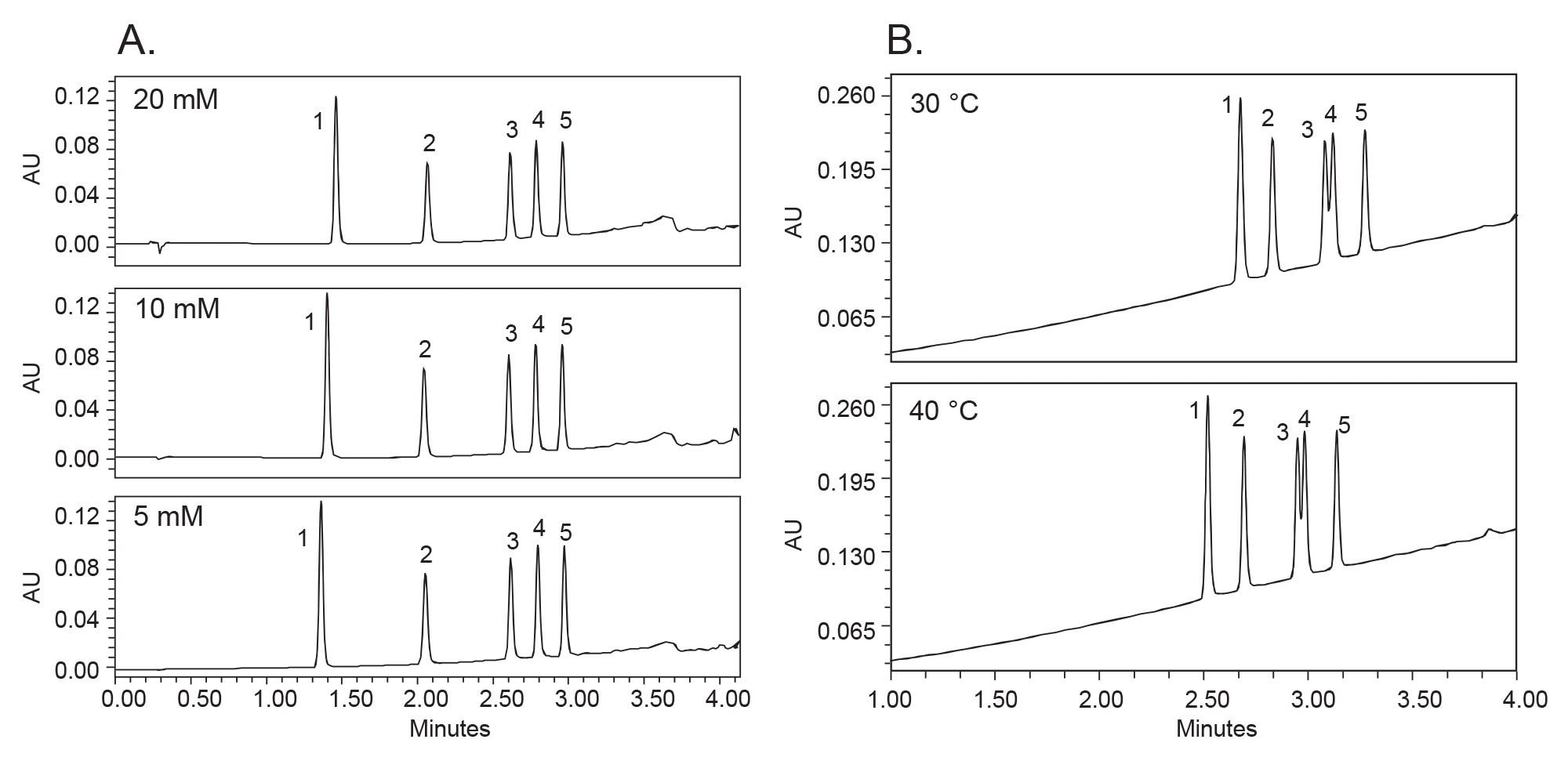
While mobile phase pH was the primary driver in achieving the desired separation, two additional parameters, buffer concentration and column temperature were evaluated. These factors can often influence the retention times of analytes; however, little change was observed for the barbiturate retention when the buffer concentration was reduced from 20 mM to 5 mM at pH 9.3 (see Figure 4A). This indicates that ion-exchange interactions aren’t a significant contributor to retention under these conditions. To ensure that the mobile phase system was robust while maintaining its compatibility with MS detection, an ammonium acetate concentration of 10 mM was used for the final separation conditions.
Early in the conditions screening, increasing column temperature was investigated as a parameter that may improve the resolution of amobarbital and pentobarbital. Column temperatures of 30 °C and 40 °C were evaluated using pH 4.8 mobile phases and no increase in the resolution of peaks 3 and 4 was observed (see Figure 4B). The Rs value was 0.79 at 30 °C, and 0.77 at 40 °C. There was a slight decrease in retention for the individual barbiturates (4-6%) at the higher temperature. Since increasing the temperature to 40 °C did not improve the separation, 30 °C was selected for the optimized method, as it is gentler on the column during long-term operation.
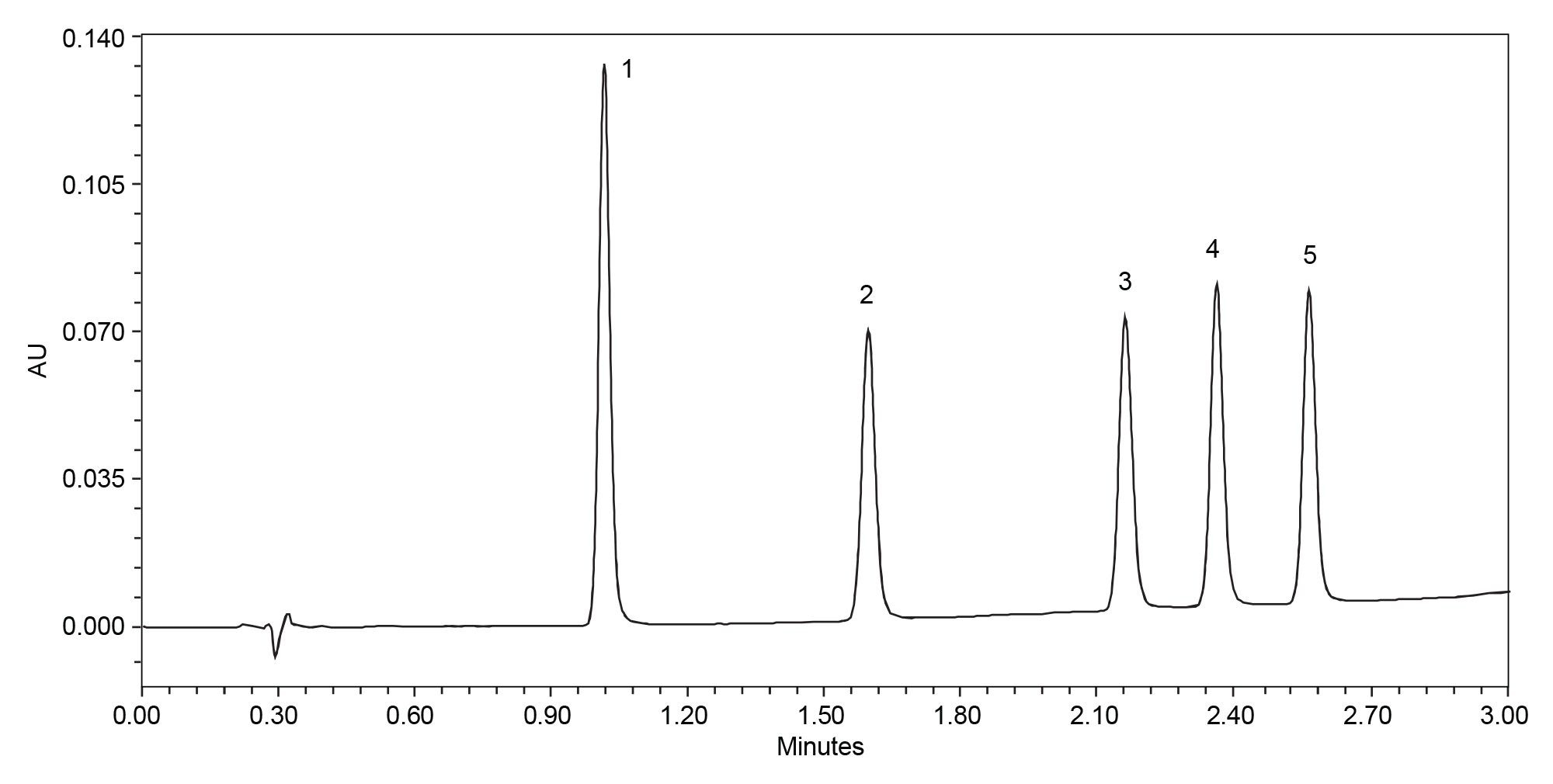
In addition to desiring to make the analysis compatible with MS workflows, gradient 2 (LC Conditions) was developed to center the separation around the five-barbiturate panel with an integral high organic wash step and column equilibration. The run time was reduced by approximately 10 minutes by increasing the initial mobile phase B amount from 10% to 25% and decreasing the gradient time from 4.2 to 3.0 minutes (see Figure 5).
Conclusion
Isomeric compounds, such as amobarbital and pentobarbital, present a significant separation challenge because they possess identical molecular formulas and may exhibit very similar properties, like hydrophobicity, polarity, and ionization behavior. Effective separation of isomers may require stationary phases like XBridge Biphenyl Column that provide additional interaction mechanisms such as π‑π interactions to exploit subtle structural differences.
By using base-stable BEH particles, the XBridge Biphenyl stationary phase affords the ability to operate at elevated pH (up to pH 10). This expands the range of method development options, making Waters XBridge Biphenyl RP Columns a valuable option for challenging separations. For the separation of the barbiturates panel investigated in this work, the use of a basic mobile phase (pH 9.3) provided baseline separation for all five analytes.
References
- Cleveland Clinic; https://my.clevelandclinic.org/health/treatments/23271-barbiturates.
- Zabala, G.; et al. A Highly Stable Biphenyl HPLC Stationary Phase Based on Ethylene-Bridged Hybrid Particles. Waters Application Note. 720009261. February, 2026.
- Dinesh, D.; Gokulapriya, K.; Gowsalya, K.; Hariharasuthan, V.; Harini. T. A Comprehensive Review: Role of Acetonitrile and Methanol as Mobile Phase Solvents in RP-HPLC. IJRPR 2025. 6(9):1188–93.
- Neue, U.D.; Mendez, A. Selectivity in reversed-phase separations: General influence of solvent type and mobile phase pH. J. Sep. Sci. 2007, 30, 949–963.
- Wachełko, O.; Tusiewicz, K.; Zawadzki, M.; Szpot, P. New approach for barbiturates, phenytoin, methyprylon and glutethimide determination and fragmentation (UHPLC-MS/MS). J. Pharm. Biomed. Anal. 2023, 228:115318. doi: https://doi.org/10.1016/j.jpba.2023.115318.
720009526, August 2026


