
Deciphering Phosphorothioate Isomerism in Synthetic Oligonucleotides Using the Unique Geometry of the Cyclic IMS P20 Mass Spectrometer
Jo-Anne Riley, Jonathan Fox, Lisa Towers, Dale Cooper-Shepherd
Waters Corporation, United Kingdom
Published on November 06, 2026

This is an Application Brief and does not contain a detailed Experimental section.
Abstract
Modification of the natural nucleic acid backbone with a phosphorothioate (PS) linker introduces a chiral center, which can adopt either an R or S configuration. PS stereochemistry can affect the pharmacodynamic and pharmacokinetic properties of oligonucleotide therapeutics, creating a need for advanced analytical approaches to support characterization and quality control in line with regulatory guidelines.
An innovative approach, exploiting the unique geometry of the Cyclic™ IMS P20 Mass Spectrometer, has been developed for characterizing PS stereochemistry at individual linker sites. The method uses Cyclic ion mobility to separate internal dimer fragment ions, each comprising of two nucleotides joined by one PS linker, which is typically a stereo-random mixture of R and S diastereomers. Using an antisense oligonucleotide (ASO) standard, R and S diastereomers were separated, allowing quantification of the relative R:S ratio at the individual linker level. This approach could be extended to characterization of individual linkers in siRNA and sgRNA, as well as fully phosphorothioated therapeutic ASOs.
Benefits
- Track and control phosphorothioate isomerism in oligonucleotide products with high resolution Cyclic IMS
- Reveal and quantify unresolved isomer ratios through the unique geometry of the Cyclic IMS P20 Mass Spectrometer
- Support evolving regulatory expectations with advanced, high-resolution measurement technologies
Introduction
Oligonucleotide therapeutics have emerged as a novel class of medicines capable of treating a variety of diseases including spinal muscular atrophy, Duchenne muscular dystrophy, hereditary transthyretin amyloidosis, and rare metabolic disorders. Development of chemical modifications to the natural nucleic acid structure was key to overcoming the initial hurdles of efficacy and in vivo stability. One of the most common modifications used is the PS linker, which swaps a non-bridging oxygen for a sulfur atom (Figure 1) to improve the properties of the drug. This introduces a chiral center at the phosphorus atom, with each nPS linker having either Rp or Sp configuration, leading to the formation of 2n diastereomers. R and S are right- (rectus) and left- (sinister) handed configurations, respectively, and the p denotes the phosphorus atom. For example, for siRNA type molecules with one, two or three PS linkers, this would mean two, four or eight diastereomers, respectively, and so on. For a fully phosphorothioated 20-mer such as an antisense oligonucleotide, there would be 219 = 524,288 isomers.
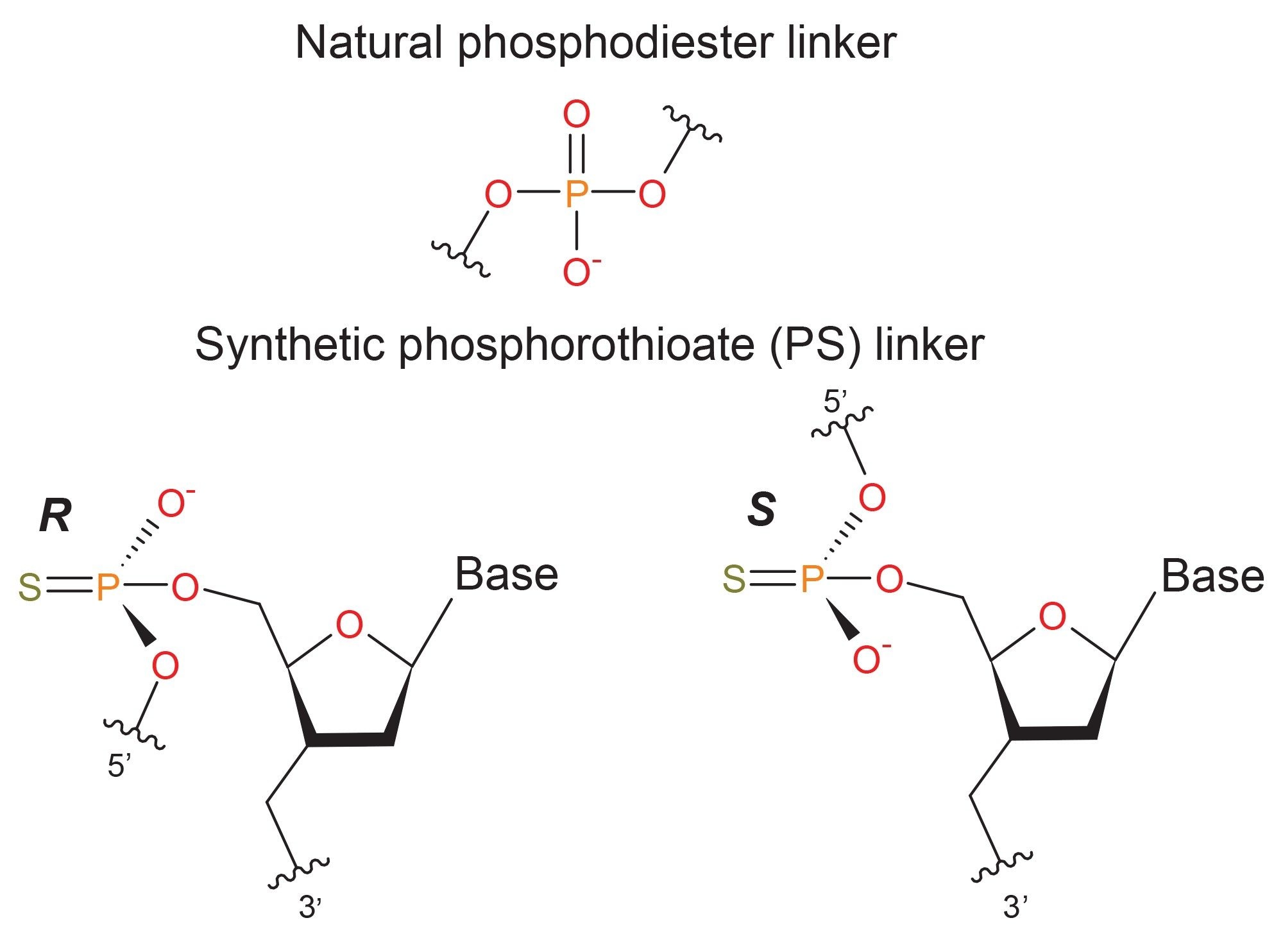
The stereochemistry of the PS linkers can affect biological activity, with stereopure versions showing improved biological activity compared to their stereorandom equivalents.1,2 Aligning with the biological importance, oligonucleotide stereochemistry is under increased scrutiny from regulatory authorities meaning a control strategy is increasingly likely to be required for late phase clinical studies and biosimilars.3,4
Current approaches include chromatographic separation with ion-pair reversed phase,5 HILIC6 or anion exchange,7 and NMR has also been shown to enable characterization.8 Limitations to these approaches include dependence on base sequence, and number and position of PS linkers.
Recent publications have demonstrated that the high-resolution Cyclic ion mobility and the geometry of the Cyclic IMS P20 Mass Spectrometer enables separation and quantification of phosphorothioate diastereomers in therapeutic oligonucleotides from siRNA to sgRNA.5,9,10-12 In this application brief, the attributes of the Cyclic IMS P20 Mass Spectrometer are highlighted for the determination of stereochemistry ratios at individual PS linkers through the high-resolution ion mobility separation of dimeric internal fragment ions. This novel approach is demonstrated using a 16 nt ASO standard and can easily be extended to therapeutic oligonucleotides.
Results and Discussion
Experimental Strategy
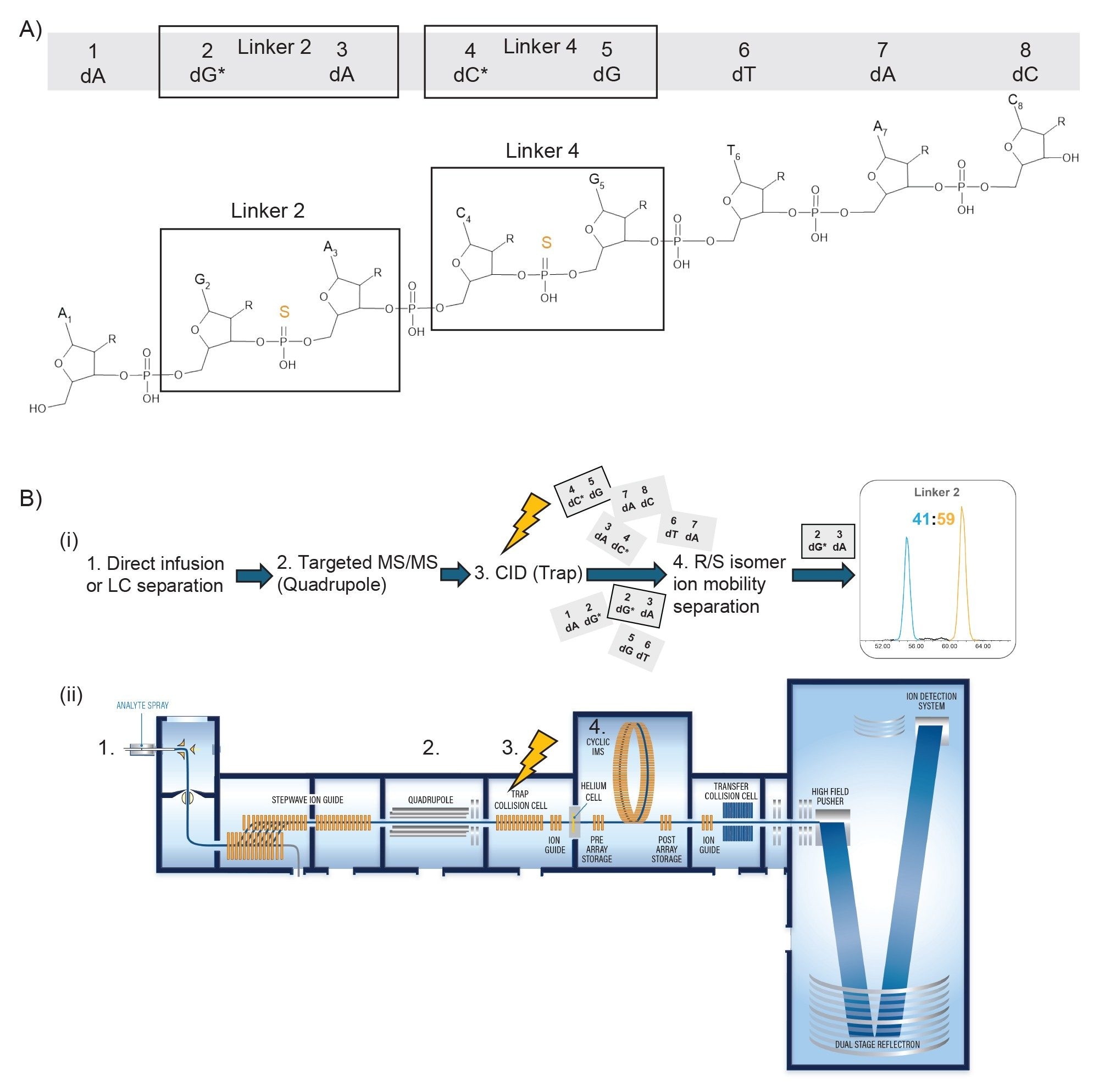
MS/MS is the gold standard for oligonucleotide sequence confirmation by observation of mass ladders built from either end of the oligo, therefore initial investigations into PS chirality naturally focused on these mass ladder fragments. However, terminal fragments such as these can contain multiple linkers, meaning the number of isomers can present a challenge to characterization. The approach in this application brief relies on the generation of internal fragments, formed by cleaving at two sites along the nucleic acid backbone and typically by applying collision energy higher than the optimum required for terminal fragment sequence coverage. The generation of internal fragments presents an opportunity to characterize smaller and more tractable isomer species. Indeed, dimeric fragments, containing only one phosphorothioate, can be observed, providing the opportunity to measure individual PS linker sites.
Figure 2 explains the experimental strategy and shows an example of eight-residue oligonucleotide with two PS linkers, one at linker 2 and one at linker 4. To characterize these linkers, tandem MS is performed on the intact oligo to generate internal fragment ions corresponding to residues 2-3, i.e. dG*dA, and 3-4, i.e. dC*dG. The detected fragment ions are then subjected to multipass ion mobility to separate their Rp and Sp isomers and determine their ratios. Crucially, this characterization relies on the unique geometry of the Cyclic IMS Instrument, with MS/MS fragmentation being performed in the trap collision cell, situated upstream of the Cyclic ion mobility device.
Characterizing Individual Linkers with CID-Cyclic IMS
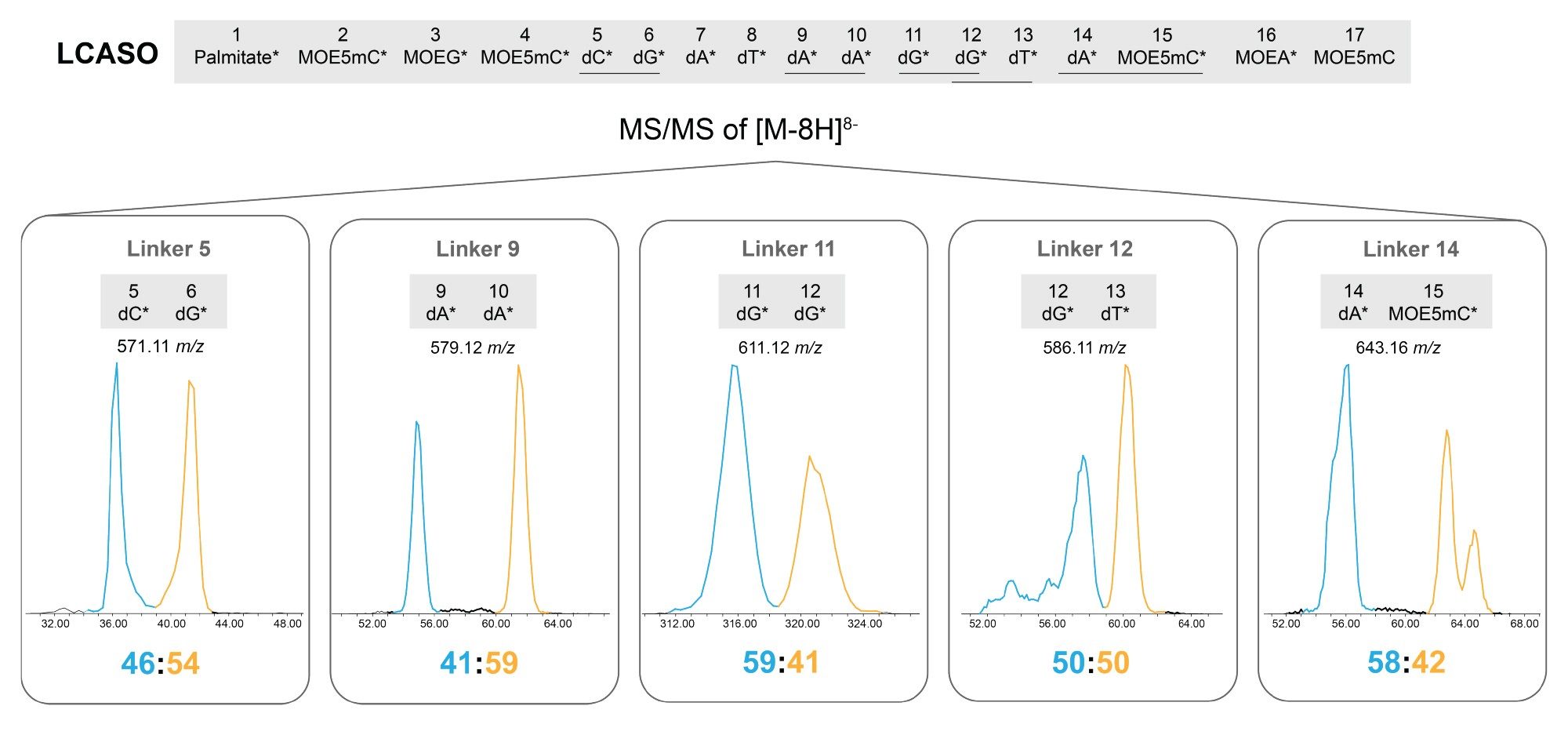
This approach was applied to the Waters Lipid Conjugated Antisense Oligonucleotide (LCASO) LC-MS Standard (Waters, p/n: 186010747) with representative results shown in Figure 3. Experiments were performed by direct infusion following an offline desalting step, with the possibility to couple the analysis to LC. The full-length oligonucleotide was fragmented in the trap collision cell, and ion mobility settings were optimized to separate the diastereomers of each dimer, enabling characterization of individual PS linkers. Peak areas of the separated diastereomers were determined in MassLynx™ Software and used to determine the relative ratios of Rp and Sp isomers at each linker. It should be noted that absolute assignment of mobility peaks to the corresponding Rp or Sp diastereomer would require analysis of stereopure standards or evaluation using computational modelling.
Separating and Assigning Isomeric Dimer Fragments
With only a limited number of residues present in nucleotide products, interrogation of dimeric fragments increases the likelihood of encountering identical or isomeric sequence motifs. For example, a sequence may contain multiple AG as well as GA motifs, each with identical m/z.
When this occurs the unique geometry of the Cyclic IMS System with pre-IMS fragmentation is crucial for determining the location of each motif within a sequence. An example from the LCASO is the dimers containing linker 6 or linker 10; these both contain dG linked to dA, with the m/z 595.1242.
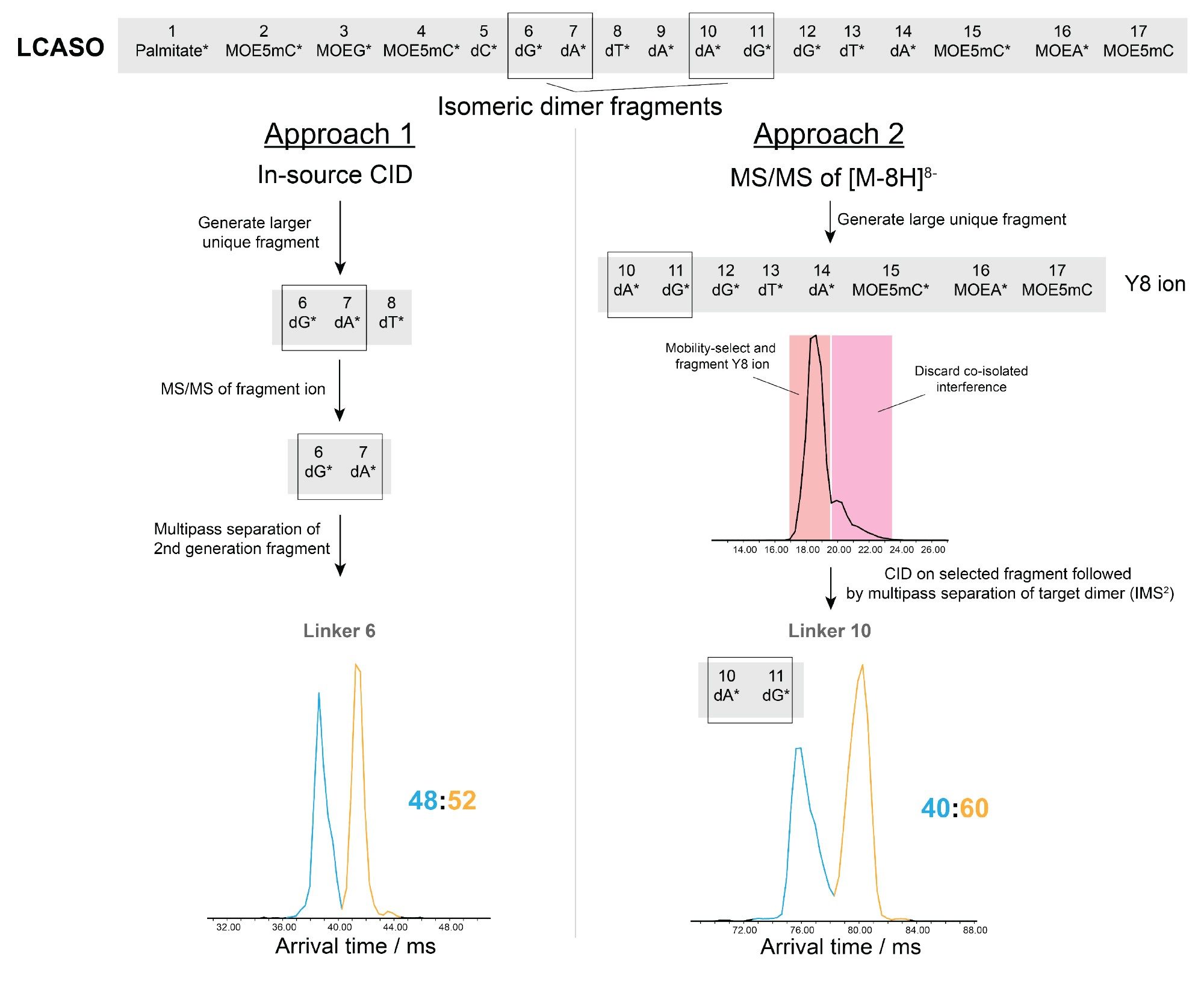
There are two approaches for differentiating these isomeric fragment pairs, both of which rely on the generation of larger, unique-in-mass fragment ions that are further dissociated in pseudo-MS3 experiments. Fragmentation can be performed either by in-source CID followed by MS/MS or MS/MS followed by IMSn slicing. Figure 4 shows the two approaches available for uniquely characterizing each individual isomeric linker.
The in-source CID approach utilizes the instrument cone voltage to fragment the oligonucleotide into first-stage product ions, for which the masses can be calculated. Using the quadrupole, these first-stage ions can then be selected based upon their unique mass and further fragmented within the collision cell to break them into second-stage fragments, including dimers. These dimers are then passed into the Cyclic IMS Device for ion mobility separation. Using this approach, the entire charge state distribution of the LCASO was dissociated, followed by mass-selection of first-stage fragment, dG*dA*dT* - which contains only linker 6 and not linker 10 for further fragmentation in the collision cell. It was then possible to separate the Rp and Sp diastereomers of the dG*dA dimer corresponding to linker 6, determining an isomer ratio of 48:52 ratio (Figure 4, left).
Approach 2 for this isomer pair employed MS/MS of the [M-8H]8- ion using the quadrupole and trap collision cell. In this case, the unique first-generation terminal fragment Y8 was detected and taken forward for investigation. The Y8 ion contained interference, which was removed using mobility selection through IMSn slicing. Slicing followed by a second round of dissociation generated the dA*dG* dimer corresponding to linker 10, which was then subjected to multipass ion mobility separation and Rp/Sp ratio determination.
Conclusion
Understanding and monitoring PS stereochemistry can provide valuable insight throughout oligonucleotide drug development and commercialization. Characterizing diastereomer composition could help correlate stereochemistry with biological activity, supporting the design of therapeutics with optimized efficacy, improved potency and potentially reduced dosing levels. During process development and scale-up, monitoring stereochemistry can also support process optimization, batch-to-batch consistency and confidence in safe, reliable clinical performance.
These benefits are enabled by the unique geometry of the Cyclic IMS Mass Spectrometer, which allows fragment generation and selection prior to high-resolution, multipass ion mobility separation. The novel approach described here uses this capability to characterize individual PS linker sites through analysis of dimer fragment ions and can be applied across a range of oligonucleotide therapeutics, including antisense oligonucleotides, siRNA and sgRNA.
By combining pre-IMS fragmentation with high-resolution multipass ion mobility separation, the unique Cyclic geometry provides a powerful approach to PS stereochemistry characterization, supporting greater understanding and control of oligonucleotide drug substances and drug products as regulatory expectations evolve.
Trademark Statement
Cyclic and MassLynx are trademarks of Waters Corporation or its affiliates.
References
- Byrne, M.; et al.Stereochemistry Enhances Potency, Efficacy, and Durability of Malat1 Antisense Oligonucleotides In Vitro and In Vivo in Multiple Species. Trans. Vis. Sci. Tech. 2021;10(1):23. https://doi.org/10.1167/tvst.10.1.23.
- Liu, W.; et al.Impact of Stereopure Chimeric Backbone Chemistries on the Potency and Durability of Gene Silencing by RNA Interference. Nucleic Acids Research, Volume 51, Issue 9, 22 May 2023, Pages 4126–4147, https://doi.org/10.1093/nar/gkad268.
- European Medicines Agency, Development and manufacture of Oligonucleotides, EMA/CHMP/CVMP/QWP/262313/202424, https://www.ema.europa.eu/en/development-manufacture-oligonucleotides-scientific-guideline.
- FDA, Draft Guidance on Nusinersen Sodium, February 2022, https://www.accessdata.fda.gov/drugsatfda_docs/psg/PSG_209531.pdf.
- Bill, M.K.; et al.Separation of PS Diastereomers in GalNAc-conjugated siRNA—A Comparative Study of Chromatographic and Ion Mobility Mass Spectrometry Approaches. Anal Bioanal Chem 417, 6313–6325 (2025). https://doi.org/10.1007/s00216-025-06123-4.
- Lardeux, H.; et al.Unravelling the Link Between Oligonucleotide Structure and Diastereomer Separation in Hydrophilic Interaction Chromatography. Analytical Chemistry 2024 96 (24), 9994-10002, DOI: 10.1021/acs.analchem.4c01384.
- Togawa, H.; et al.Separation of the Diastereomers of Phosphorothioated siRNAs by Anion-exchange Chromatography Under Non-denaturing Conditions. J Chromatogr A. 2024 Apr 26;1721:464847. DOI: 10.1016/j.chroma.2024.464847.
- Mir, B.; et al. et al. NMR Characterization of the Diastereomeric Composition of a Model Therapeutic Oligonucleotide, Journal of Pharmaceutical Sciences, Volume 114, Issue 8, 2025, 103861, ISSN 0022-3549, DOI: 10.1016/j.xphs.2025.103861.
- Sharon, E.M.; et al.Diastereomer Characterization of PS-Modified Synthetic Oligonucleotides Using Cyclic IMS-MS. Analytical Chemistry 2024 96 (38), 15304-15312 DOI: 10.1021/acs.analchem.4c02836.
Featured Products
720009658, November 2026


