
Column Robustness Across 2000 Injections of a Small Molecule Glucagon-like Peptide-1 Receptor Agonist (GLP-1 RA) Orforglipron Formulation
Melissa Aiello, Kenneth Berthelette, Christopher Collins, Thomas H Walter
Waters Corporation, United States
Published on August 10, 2026

Abstract
Preclinical drug formulations such as oral gavages are challenging to analyze by liquid chromatography due to excipients present in the formulation. These matrix components can lead to aberrant chromatography such as peak distortion and tailing as well as system pressure and column lifetime issues. At the same time, pre-clinical animal studies are crucial to drug development and require reliable and robust analytical methods.
In this application note, a 5-minute reversed-phase HPLC-UV method was developed as a high-throughput formulation QC method. To study the robustness of the column, an orforglipron formulation was injected 2000 times and attributes such as the USP tailing factor and the peak width were recorded. System pressure was monitored as well. Across the 2000 injections, the tailing factors and peak widths were consistent and were within 1% and 5% differences from the initial values, respectively. The system pressure was also consistent and well within system pressure limits, attesting to the robustness of the system and the column.
Benefits
- A 5-minute HPLC-UV method was developed to analyze an orforglipron formulation
- The method uses an XBridge™ Premier BEH™ C8 3.5 µm Column and is specific, reproducible, and robust
- The USP tailing factor, peak width, and system pressure were consistent across 2000 injections
Introduction
Preclinical toxicity studies are an important stage of the drug development process. Mandated by the FDA1, the goal of these studies is to screen for pharmacological activity and toxicity potential of drug substances. This is typically accomplished through animal studies using complex drug formulations with oral gavages or intravenous injections to determine safe dosing ranges and organ system-specific effects.
Animal studies can be expensive and require a great deal of time. An important consideration is that the drug should be stable in the formulation vehicle for the duration of the study. Analytical QC methods that confirm the dose concentration are crucial to the success of preclinical studies. To assess this, it is important that the HPLC instrument and column have acceptable lifetimes and robustness.
The goal of this work was to study the robustness of an XBridge Premier BEH C8 3.5 µm Column when used to analyze an orforglipron formulation. Specifically, the formulation was injected 2000 times and attributes such as the tailing factor and the peak width were recorded. In addition, the chromatographic system pressure was observed in order to monitor fouling of the column and system.
Experimental
Sample Preparation
The orforglipron formulation was prepared as 0.7 mg of active pharmaceutical ingredient (API) per mL of vehicle. Assuming an average male Wistar Han rat size of 0.217 kg2, and the optimal dose volume for the animal being 5 mL/kg or less3, a reasonable dose volume would be 1.09 mL or less.
A previous orforglipron animal study with male Wistar Han rats set the threshold dose for significant clinical weight loss of 3.0 mg/kg/day.4 This should equate to a 0.651 mg dose for the 0.217 kg rat. Using the formulation, this translates to a 0.93 mL dosage volume, which is an appropriate dose volume according to guidelines. After preparation, formulation was aliquoted into a Waters Essential Sample Vial (p/n: 186011407) and placed on the instrument for analysis.
Analytical Method Conditions
|
LC system: |
Arc™ HPLC System with Quaternary Solvent Manager (QSM), Flow-Through-Needle (FTN) Sample Manager and 2998 Photodiode Array (PDA) Detector |
|
Detection: |
UV @ 254 nm |
|
Column(s): |
XBridge Premier BEH C8 Column, 3.5 µm, 4.6 mm x 50 mm (p/n: 186010950) |
|
Column temp.: |
50 °C |
|
Injection volume: |
1 µL |
|
Mobile phase A: |
0.1% Formic acid in water |
|
Mobile phase B: |
0.1% Formic acid in acetonitrile |
|
System washes: |
60:40 (v/v) acetonitrile and water |
|
Flow rate: |
2 mL/min |
|
Gradient: |
Initial condition of 40% organic was followed by a linear gradient to 100% organic over 2 minutes. The composition was held at 100% organic for 1 minute then returned to the initial condition over 1 minute and held for 1 minute to re-equilibrate. The total run time was 5 minutes. |
|
Formulation: |
0.7 mg API per mL of Vehicle: 10% polyethylene glycol 400 /10% propylene glycol /80% glycine buffer (100 mM glycine, 64 mM NaOH, pH 10) |
Data Management
|
Chromatography software: |
Empower™ Chromatography Data System (CDS) |
Results and Discussion
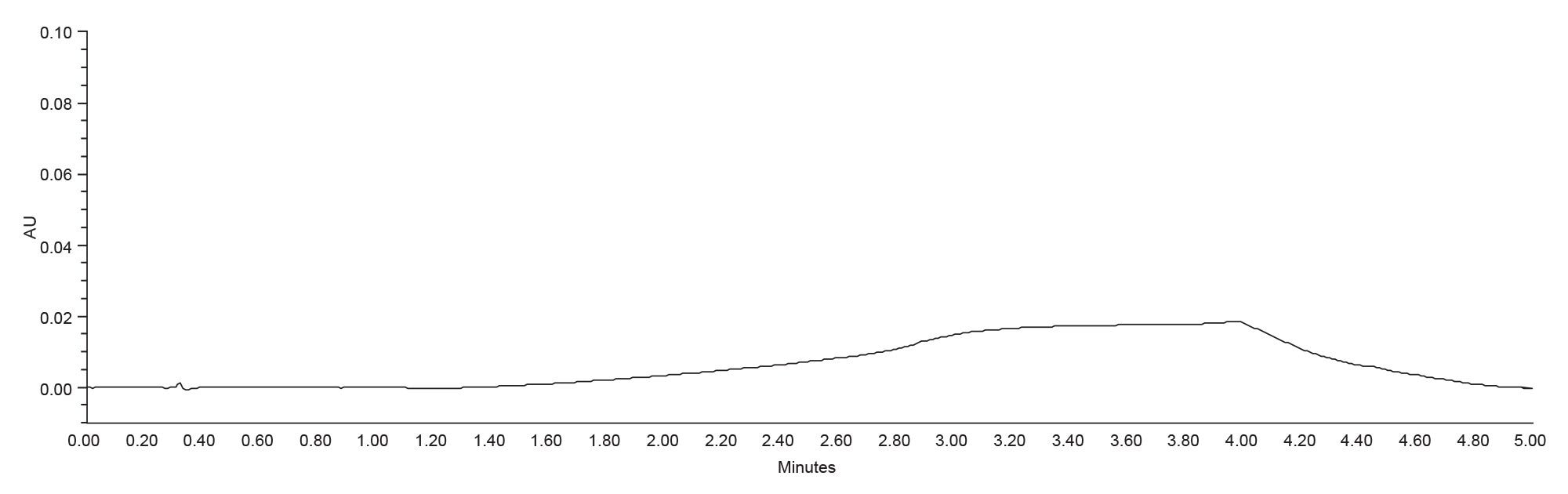
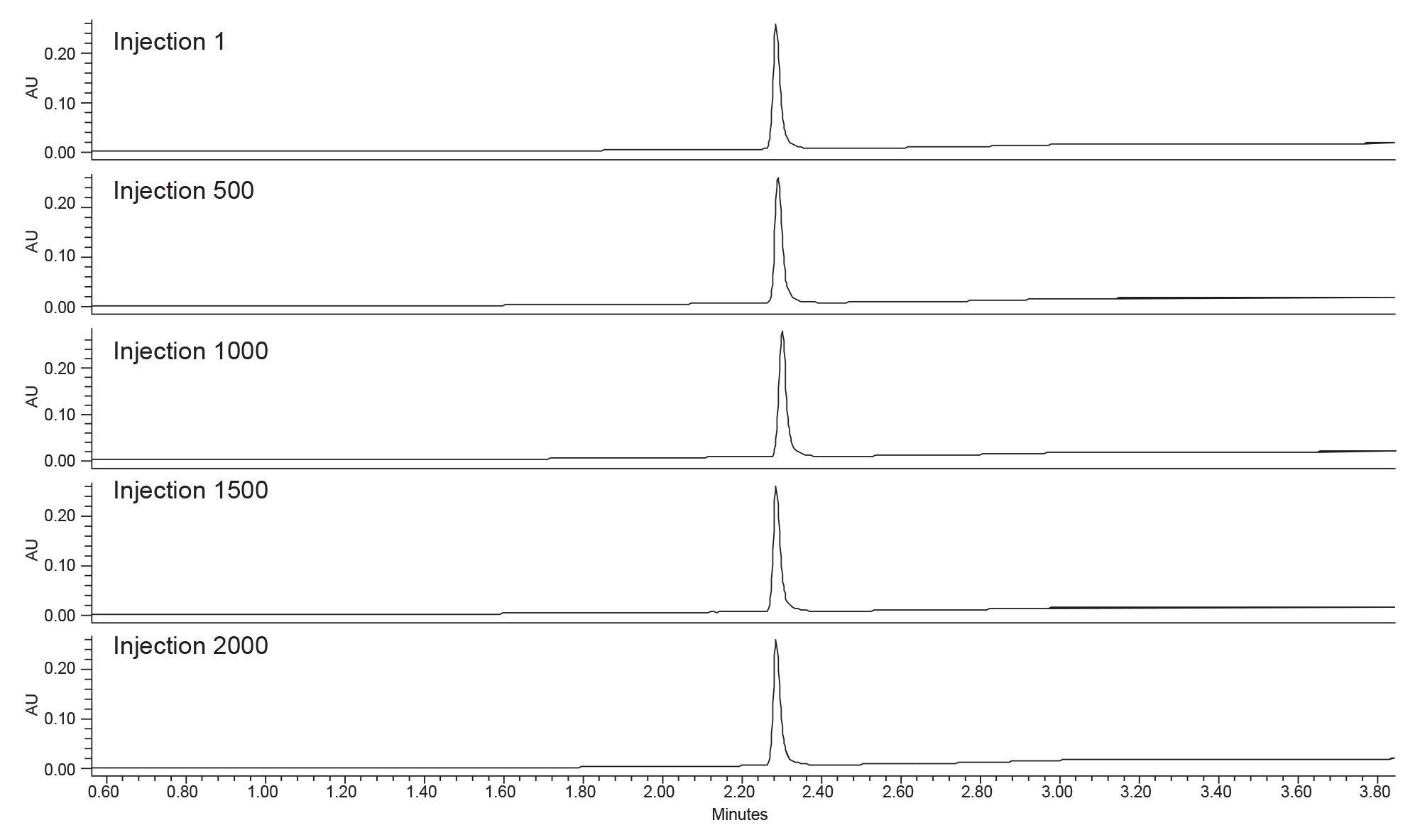
In Figure 1, a UV chromatogram of the vehicle blank is shown. Because there are no interfering peaks from the matrix, the method is determined to have specificity. The orforglipron formulation was injected 2000 times and attributes including the USP tailing factor, peak width, and system pressure were monitored every 10 injections. Looking at the chromatograms at injections 1, 500, 1000, 1500 and 2000 in Figure 2, the orforglipron peaks remained consistent in shape, height, and retention time.
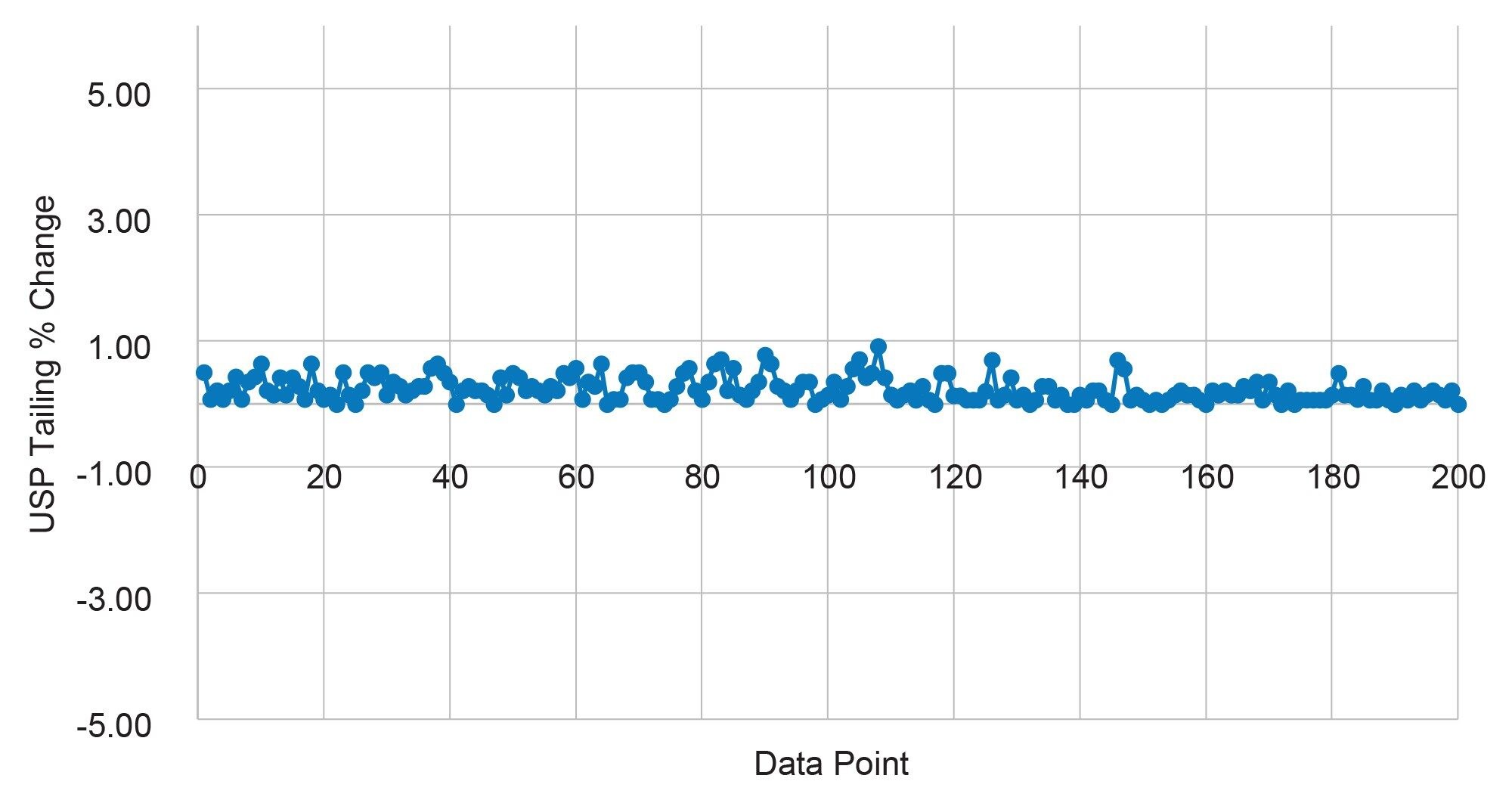
Peak shape can be affected not only by matrix effects, but also from degradation of the stationary phase with excessive use, especially at elevated temperature. Despite the method being run at 50 °C and with a complex sample matrix, no peak distortion was observed over 2000 injections. Figure 3 shows a plot of the percent change in USP tailing factor over the 200 data collection points. The USP tailing factor remained highly precise with a change from the previous value of less than 1% and an overall percent RSD of 0.80%.
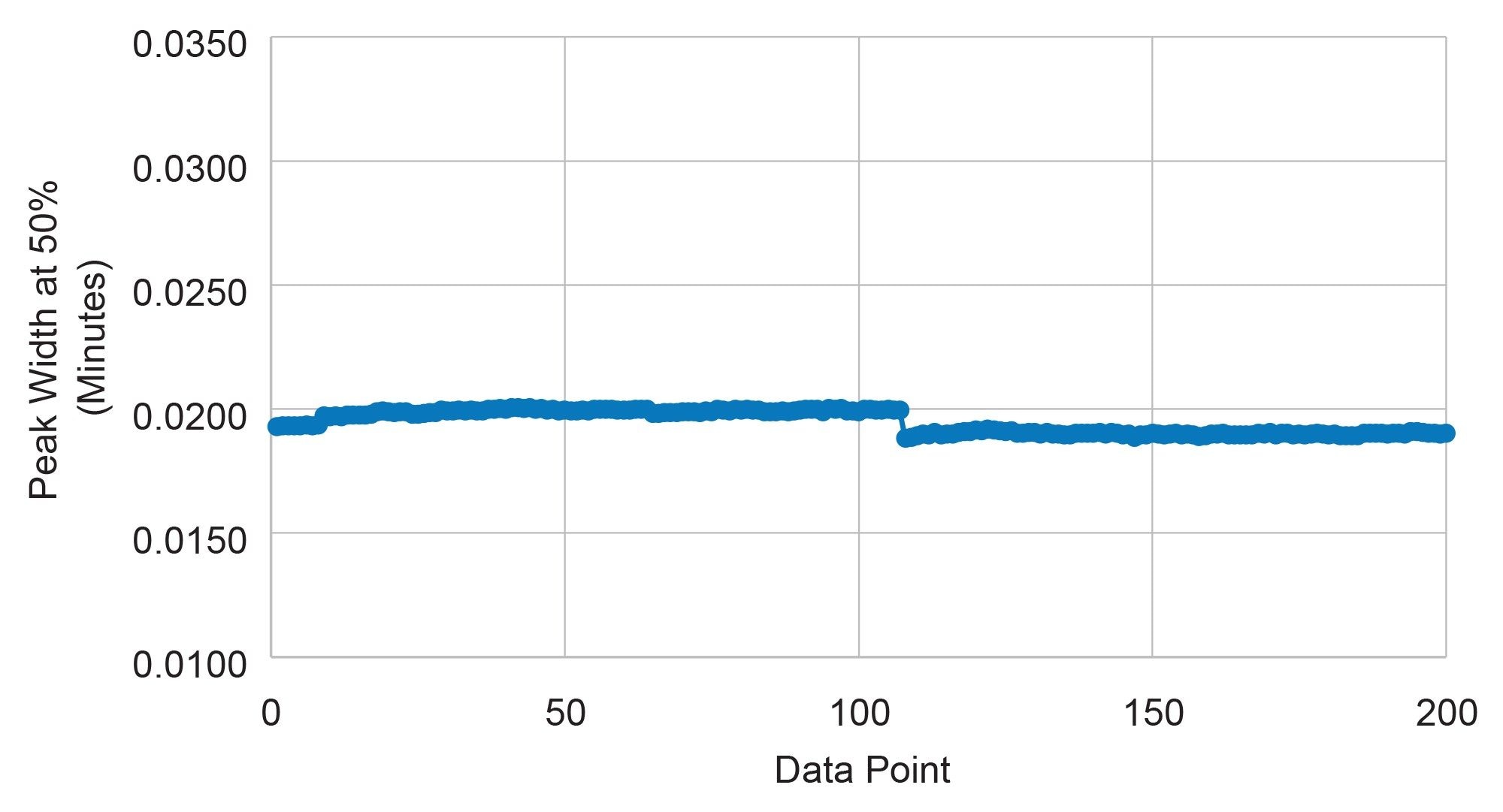
Another aspect that can be affected by complex matrices is the peak width. As shown in Figure 4 the peak widths at 50% across the 2000 injections remained consistent with percent change from the initial T0 less than 5%. The overall percent RSD was 2.35%.
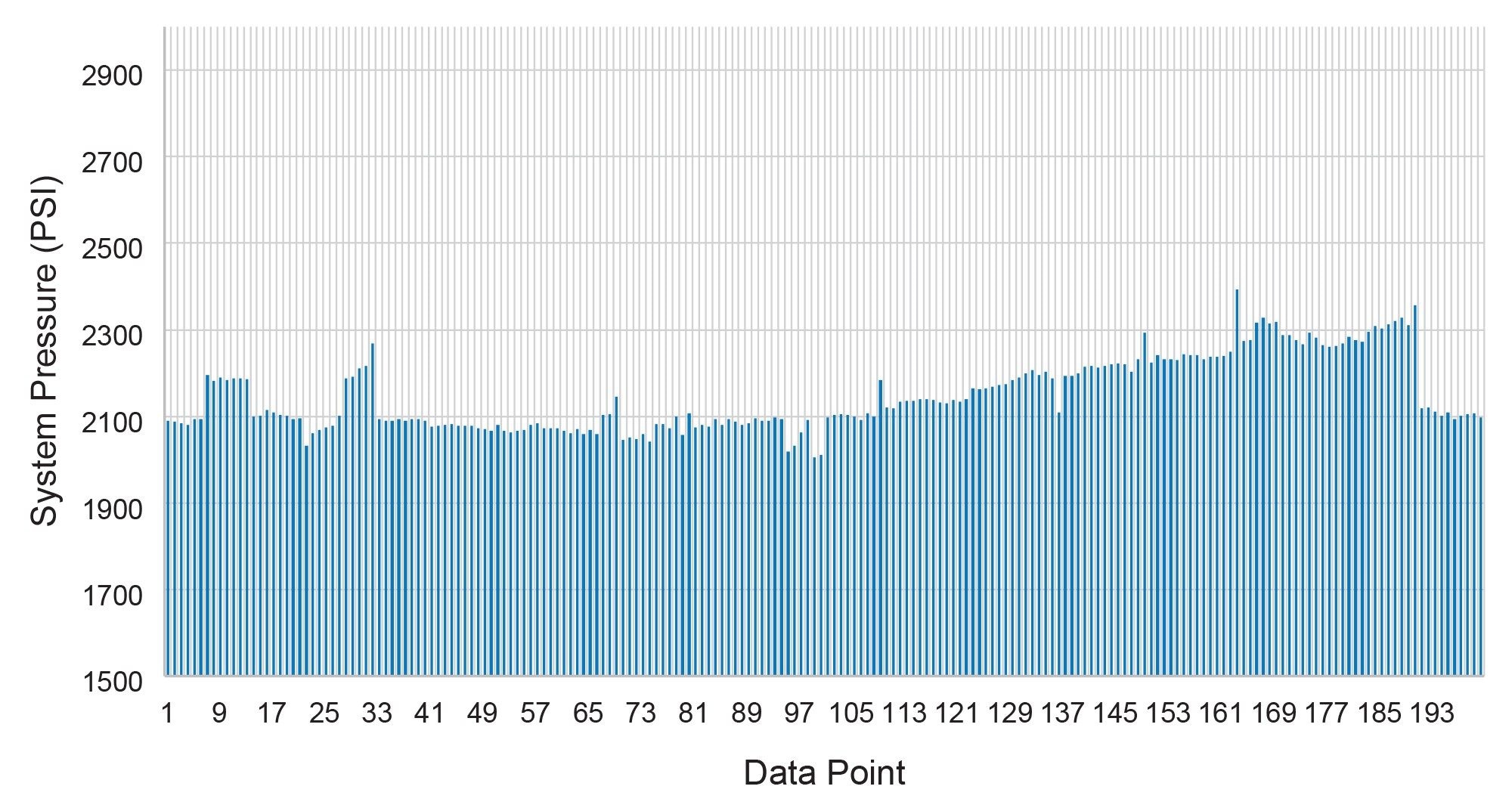
The orforglipron formulation was analyzed using an Arc HPLC System, which has a maximum system operating pressure of 9500 psi. The formulation excipients consisted of polyethylene glycol 400 and propylene glycol, which are highly viscous co-solvents intended to increase the water solubility of orforglipron when introduced into an animal. Despite the viscosity of these additives, the system pressure remained less than 2400 PSI, well below the overpressure limit of the instrument. This attests to the column robustness and the ability to run high-throughput methods on an Arc HPLC System with a very challenging sample.
Conclusion
A rapid, 5-minute reversed-phase HPLC-UV method was developed to analyze an orforglipron drug formulation. Despite the complex sample matrix, the method was determined to be highly specific, reproducible, and robust, with attributes such as peak tailing factor and peak width remaining within 5% of the initial value. The chromatographic system pressure also remained steady and well below the maximum operating pressure of 9500 PSI. This provides evidence that the column and the system were resistant to fouling over the 2000 injections.
References
- Parasuraman, S. Toxicological screening. J. Pharmacol. Pharmacother. 2011, Apr;2(2):74–79. doi: 10.4103/0976-500X.81895. PMID: 21772764; PMCID: PMC3127354.
- Institutional Animal Care and Use Committee (IACUC) Policy for Dose Volumes in Laboratory Animals. Indiana University.
- Tianwu, X.; Habib, Z. Age-Dependent Small-Animal Internal Radiation Dosimetry. Mol. Imaging 2013, 12: 364-75. DOI 10.2310/7290.2013.00053.
- Sloop, K. W., Willard, F. S., Cardona, G. R., Alsina-Fernandez, J., Vieth, M., Cao, J., ... & Emmerson, P. J. (2024). The Pharmacological Basis for Nonpeptide Agonism of the GLP-1 Receptor by Orforglipron. Science Translational Medicine, 16(777), eadp5765. doi.org.
720009549, August 2026


