
Higher Throughput Intact Mass Confirmation and Impurity Screening of GLP-1 Analogues Using Multi-Reflecting TOF Technology and INTACT Mass 1.9 Application
Jonathan Fox, Scott J Berger, Laetitia Denbigh, Ying Qing Yu
Waters Corporation, United States
Published on July 14, 2026

Abstract
High-quality analysis of glucagon-like peptide 1 (GLP-1) analogues is essential to support process control, ensure product integrity, maintain batch-to-batch consistency, and meet regulatory expectations throughout development and commercialization. GLP-1 molecules generate complex intact mass profiles, making traditional LC–MS workflows slow and review intensive. This application note describes a higher throughput intact mass workflow using the ACQUITY™ Premier UPLC™ System, Xevo™ MRT Mass Spectrometer, and waters_connect™ INTACT Mass 1.9 Application. The approach delivers rapid main species mass confirmation, automated purity calculations, and targeted impurity assignments in under one minute per sample.1,3 High resolution mass data combined with BayesSpray mass spectral deconvolution enables consistent sub-ppm mass accuracy and reliable detection of impurities as low as 0.03% relative abundance. This integrated workflow reduces manual data review, improves result consistency, and supports scalable screening and QC analysis of GLP-1s and other synthetic peptides.
Introduction
GLP-1 therapeutics present significant analytical challenges due to their length, sequence complexity, and the diverse chemical modifications that are required to optimize pharmacokinetics and clinical performance. Many analogues incorporate chemical features such as lipidation for half-life extension or albumin binding, as well as reactive sites prone to oxidation, deamidation, and other degradative pathways. Manufacturing strategies further contribute to complexity: solid phase peptide synthesis can introduce truncated or incomplete sequences, while recombinant expression may co-purify host cell derived species.
Together, these factors produce heterogeneous samples with challenging chromatographic behavior and intricate mass spectral profiles.2 In addition, GLP-1 analysis can require higher throughput, as process development screening, in-process testing, and complex formulations/stability analysis matrices, can generate large time-sensitive sample sets.1
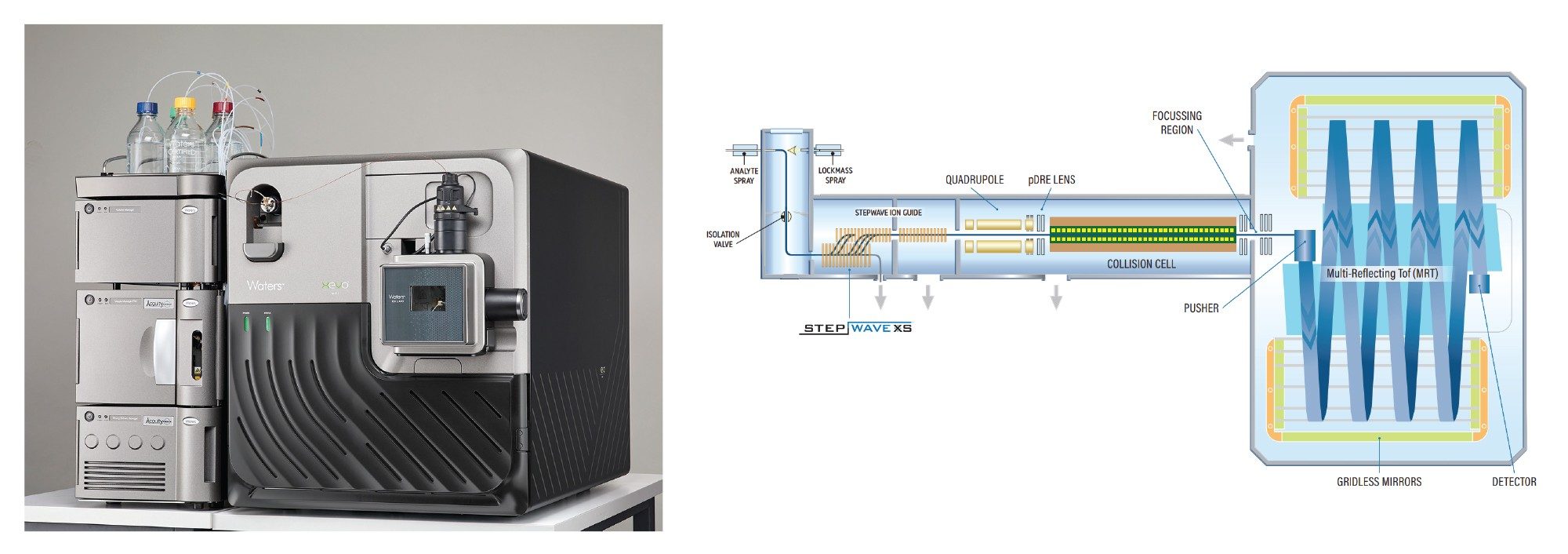
Effective characterization requires instrumentation capable of delivering high mass accuracy, sufficient resolving power, and wide dynamic range to address lower-level impurities while maintaining necessary throughput. The Xevo MRT Mass Spectrometer meets and exceeds these demands through multi-reflecting TOF technology, providing ~100,000 FWHM resolution, consistent sub-ppm mass accuracy,4 over a broad dynamic range (Figure 1). These capabilities enable confident confirmation of main species and reliable detection of impurities below typical reporting levels. UPLC technology utilizing sub 2-µm particles enabled higher efficiency separations than a conventional HPLC, so that ballistic or short gradients can be performed while still resolving the impurities from the main product.
Across discovery, development, and QC workflows, analysts must routinely confirm molecular identity, assess purity, and establish defensible impurity profiles. These requirements intensify in higher throughput environments, such as when tens to hundreds of peptide, process, or formulation variants may be screened routinely. This challenge extends to data processing and analysis where LC-MS approaches often rely on manual peak detection and spectral deconvolution parameter setting, creating bottlenecks and introducing potential for human error.
To address these data processing needs for higher throughput LC-MS analysis, the waters_connect INTACT Mass 1.9 Application was employed, with a platform workflow method capable of plate-based analysis of multiple GLP-1 analogues. This workflow automates LC peak detection, intact mass spectral deconvolution for confident main species confirmation, and performs embedded (relative) purity calculations that properly address any peak adducts, all while assigning targeted impurities and using main peak delta mass determinations to communicate newly observed peaks. The INTACT Mass App generated standardized summary and per-sample reports from the results generated from this platform method, eliminating per sample variation and needs for external spreadsheet driven review. These results, generated in just over a minute from each sample injection, can accelerate decision making by delivering main species confirmation, purity assessment, impurity assignment, and standardized reporting with minimal manual intervention.
Experimental
A one-minute reversed phase LC-MS platform method was developed to support higher throughput intact mass confirmation of synthetic peptides without requiring per sample optimization of sample preparation or data analysis. To demonstrate method robustness, a panel of commercially available GLP-1 analogues including tirzepatide (Eli Lilly and Company), semaglutide (Novo Nordisk), and liraglutide (Novo Nordisk) were diluted in water 0.1% formic acid to concentrations ranging from 0.1 mg/mL to 0.001 mg/mL. No additional sample cleanup was required prior to analysis.
The reversed-phase LC method employs a short gradient optimized to maintain sufficient separation between the main component and closely related impurities. Despite the accelerated conditions, chromatographic performance remained fit for purpose, delivering reproducible retention times, narrow peak widths, and adequate resolution for impurity screening. This approach allows rapid screening of large sample sets while preserving mass spectrometric sensitivity and data quality required for confident intact mass confirmation and relative impurity assessment.
The workflow enabled integrated acquisition and processing of multiple GLP-1 family analogues within a single batch, providing rapid and reliable mass confirmation and impurity screening. Data were acquired using MSE (data-independent acquisition) to simultaneously collect precursor and fragmentation information from a single run. While routine screening relies on MS1 intact mass measurements, the inclusion of MSE provides optional orthogonal structural information enabling, where desired, more in-depth interrogation and increased confidence in product identity through retrospective sequence confirmation without the need for repeat analysis.
LC Conditions
|
LC system: |
Waters ACQUITY Premier UPLC System with Binary Solvent Management (BSM) |
|
Detection: |
Waters Tunable UV (TUV) Detector 214 nm |
|
Vials: |
Waters QuanRecovery™ with MaxPeak™ High Performance Surfaces (HPS) 12 x 32 mm Screw Neck Vials (p/n: 186009186) |
|
Column: |
ACQUITY Premier CSH™ C18 Column, 130 Å, 1.7 µm, 2.1 x 50 mm (p/n: 186009460) |
|
Column temperature: |
60 °C |
|
Sample temperature: |
6 °C |
|
Injection volume: |
1 µL |
|
Flow rate: |
0.8 mL/min |
|
Mobile phase A1: |
H2O 0.1% formic acid |
|
Mobile phase B1: |
ACN 0.1% formic acid |
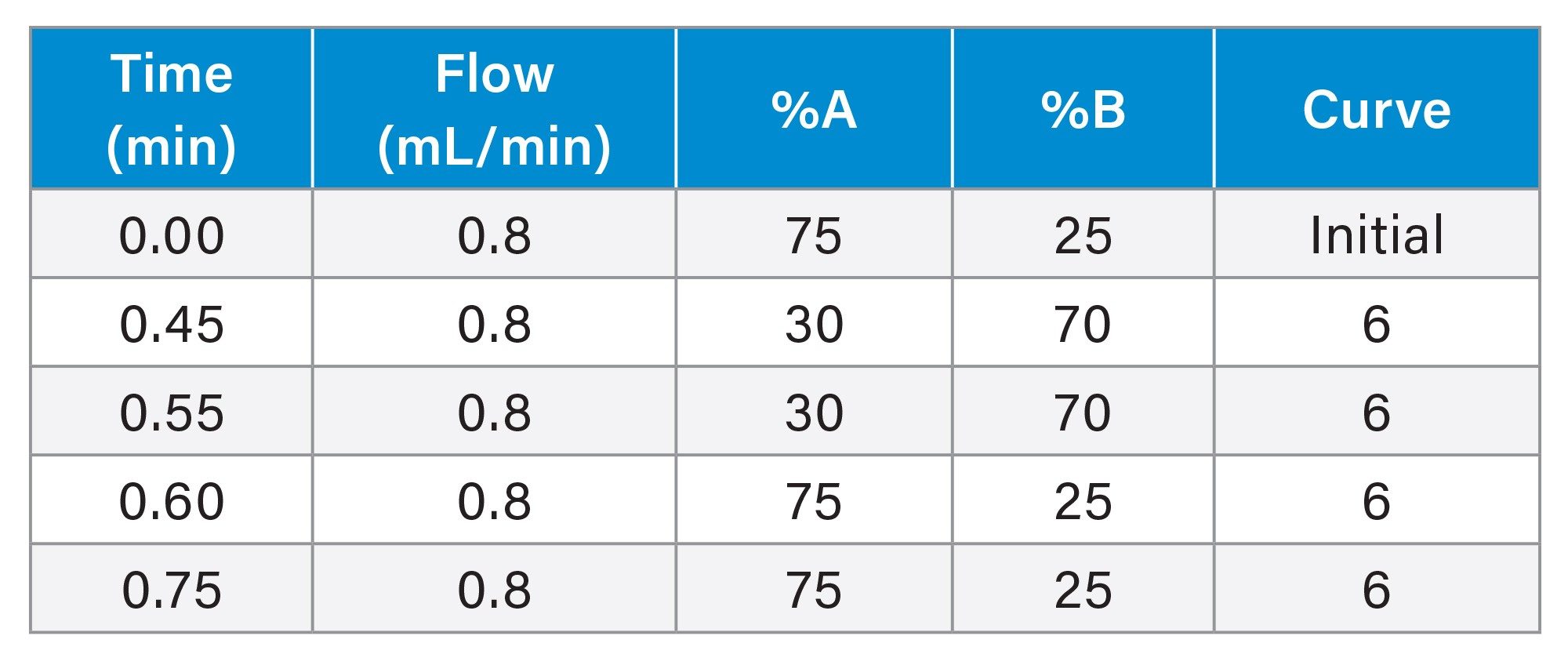
Gradient Table
MS Conditions
|
MS system: |
Waters Xevo MRT Mass Spectrometer |
|
Mode: |
MSE |
|
Mass range: |
50–2000 m/z |
|
Polarity: |
Positive |
|
Scan rate: |
10 Hz |
|
Cone voltage: |
30 V |
|
Source temperature: |
120 °C |
|
Desolvation temperature: |
550 °C |
|
Capillary voltage: |
2.8 kV |
|
MSE Collision energy ramp: |
30–50 eV |
Results and Discussion
Platform methods supporting higher throughput intact mass analysis introduce challenges that extend beyond those encountered during single sample characterization. Software must accommodate diverse analytes within the analysis batch while avoiding excessive method complexity. Combining the high separation capacity of UPLC separations with sufficient resolution of peptide products and their impurities in a short separation, enables application to a diverse range of products.
The use of the ACQUITY Premier UPLC System and premier chemistries with MaxPeak HPS technology and charged surface hybrid (CSH) stationary phases improves robustness by minimizing secondary interactions, enhancing peak shape, and maintaining chromatographic performance across diverse peptide chemistries. This also increases system throughput by reducing the need for system stabilization runs and improves assay performance, particularly for lower pI products that may otherwise interact with stainless steel flow paths.
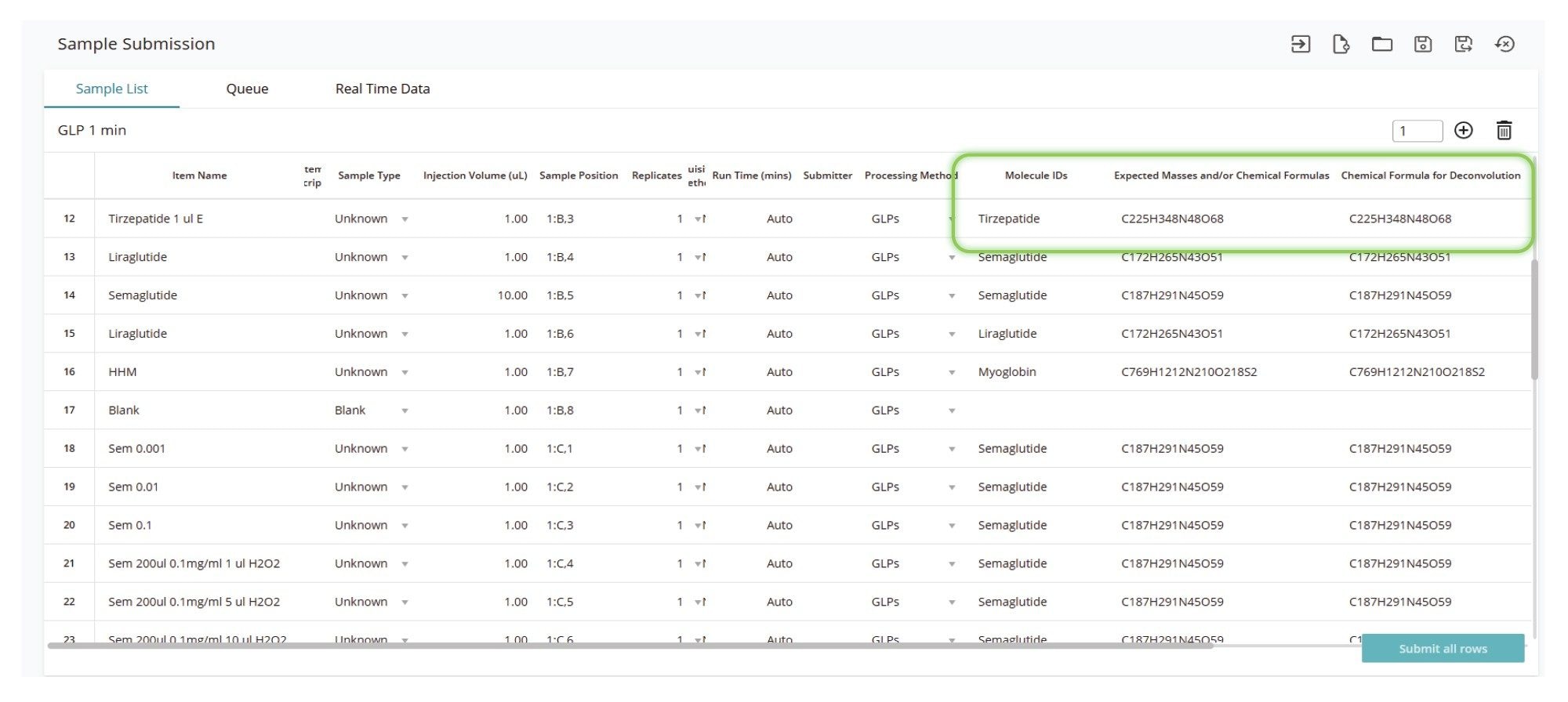
The waters_connect INTACT Mass 1.9 Application, combined with enhancements in the sample submission app (v2.7.0), addresses the needs of platform methods by allowing users to specify expected masses or chemical formulas directly in the sample list (Figure 2). This simplifies batch setup and removes the requirement for compound specific processing methods.
The workflow supports higher throughput batch analysis with parallel data processing, enabling acquisition and processing to occur concurrently. This allows results to be generated and reported in near real time as the batch progresses, rather than after completion of all injections. As a result, a series of samples can be screened within minutes, providing rapid turnaround and enabling timely decision-making in process development and routine screening workflows.
BayesSpray deconvolution (monoisotopic mass output) produced high precision mass measurements for all synthetic peptide samples and enabled accurate discrimination of impurities and closely related variants. If greater diversity of samples was present, use of the chemical formulas would produce better results, by enabling optimised deconvolution models per sample in the analysis
Review and Reporting of Results
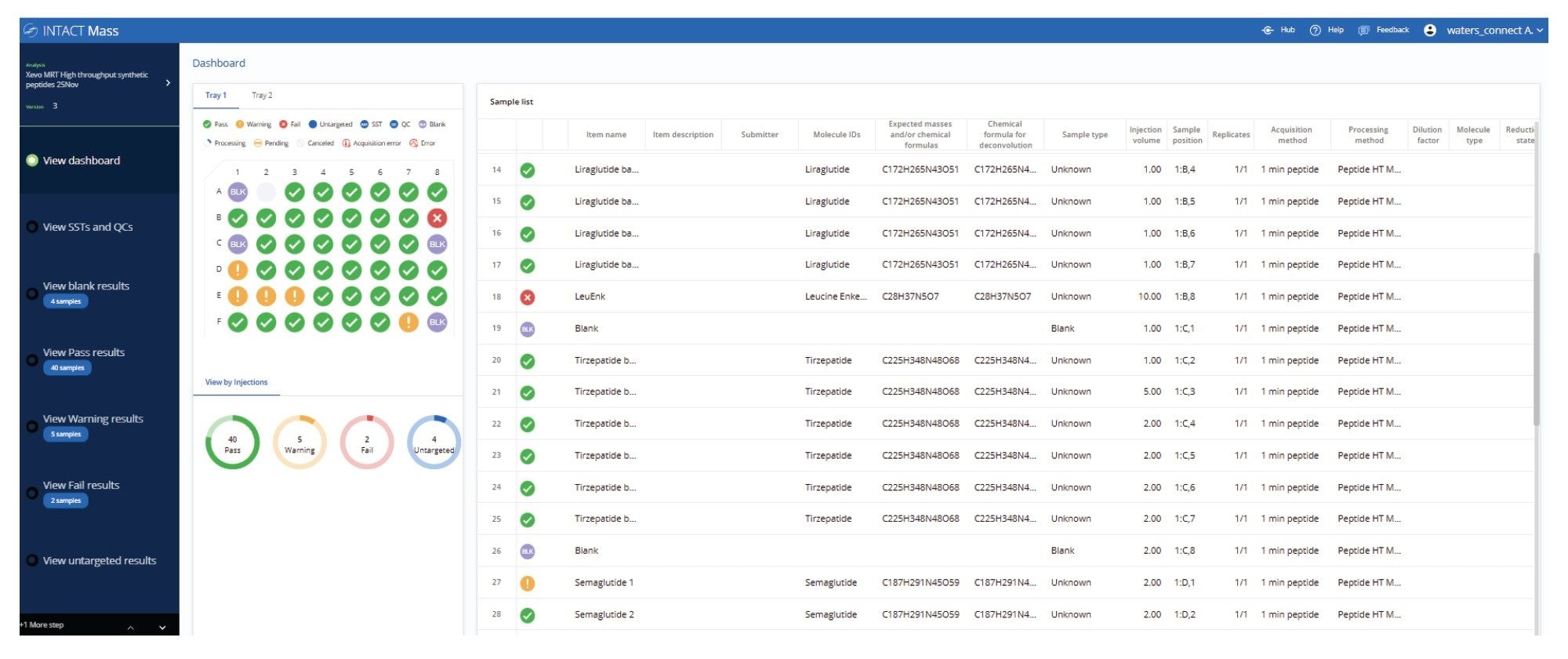
Data review is often a bottleneck in higher throughput intact mass workflows, particularly when manual intervention is required, but the INTACT Mass Application interface minimizes this burden through automated parameter determinations, and the production of clear graphical summaries and intelligent flagging of outlier results. The plate analysis view (Figure 3) provides an immediate overview of sample status, enabling users to distinguish pass, warning, and fail results immediately. A real time dashboard updates throughout acquisition and processing, with color coded indicators highlighting samples that deviate from predefined purity or mass accuracy thresholds. This rule-based flagging by exception criteria efficiently focuses analysts on purity failures, main product mass deviations, and newly detected peaks, guiding analysts directly to results that require further attention, avoiding the need to manually inspect each injection, reducing overall review time and improving consistency across large batches.
- Green (Pass): Mass and purity within expected limits
- Orange (Warning): Mass error or reduced purity
- Red (Fail): Unmatched mass or purity below threshold
Product Identification and Purity Calculations
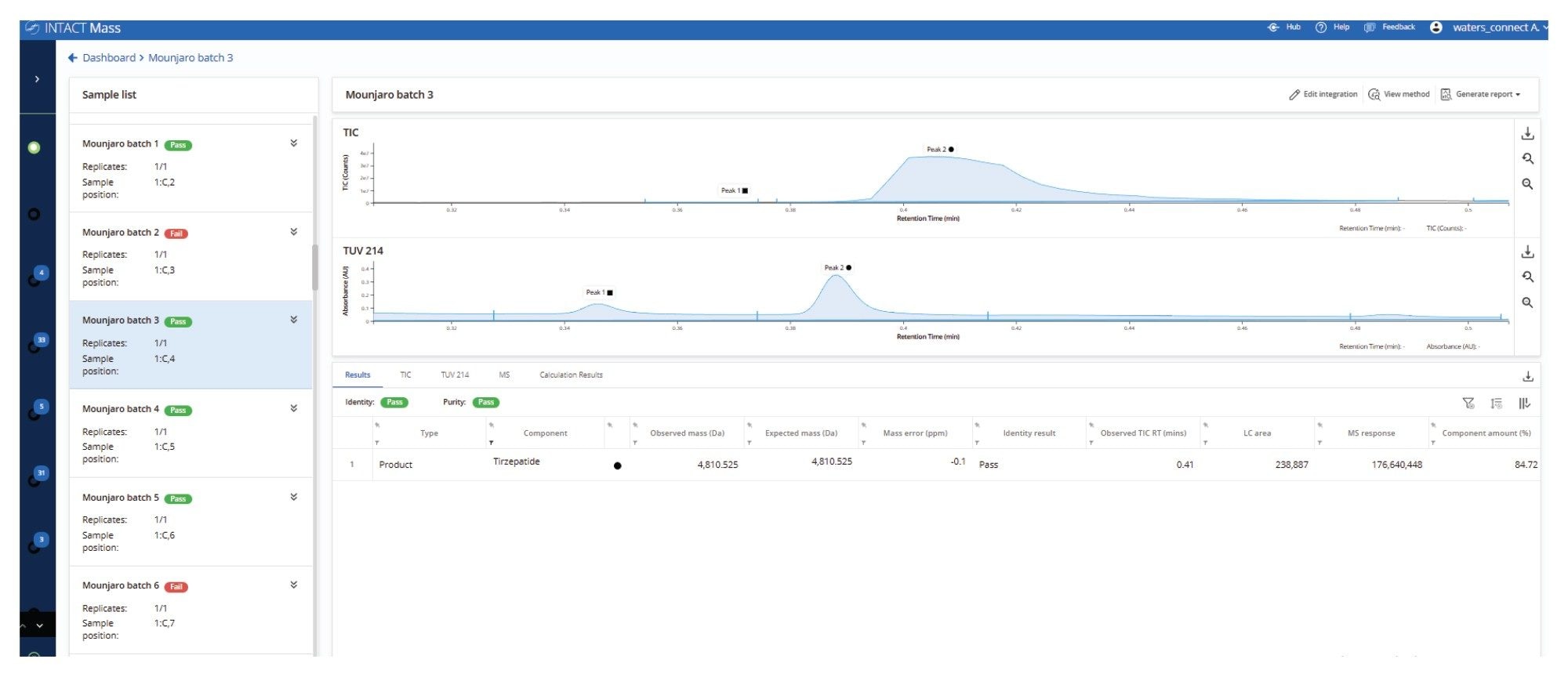
BayesSpray based intact mass analysis on Xevo MRT Mass Spectrometer data achieved sub-ppm mass accuracy and reliable main species identification; In the Tirzepatide example below (Figure 4), the observed monoisotopic mass error was 0.1 ppm from the predicted monoisotopic mass.
Purity was calculated using integrated Adduct Consolidation Algorithms that ensured any mobile phase adduct intensity were merged into a single component for that species. This capability promoted method robustness for potential issues of sample quality/formulation, preventing artificial inflation of impurity levels and providing consistent, accurate purity values.
Impurity Assignments
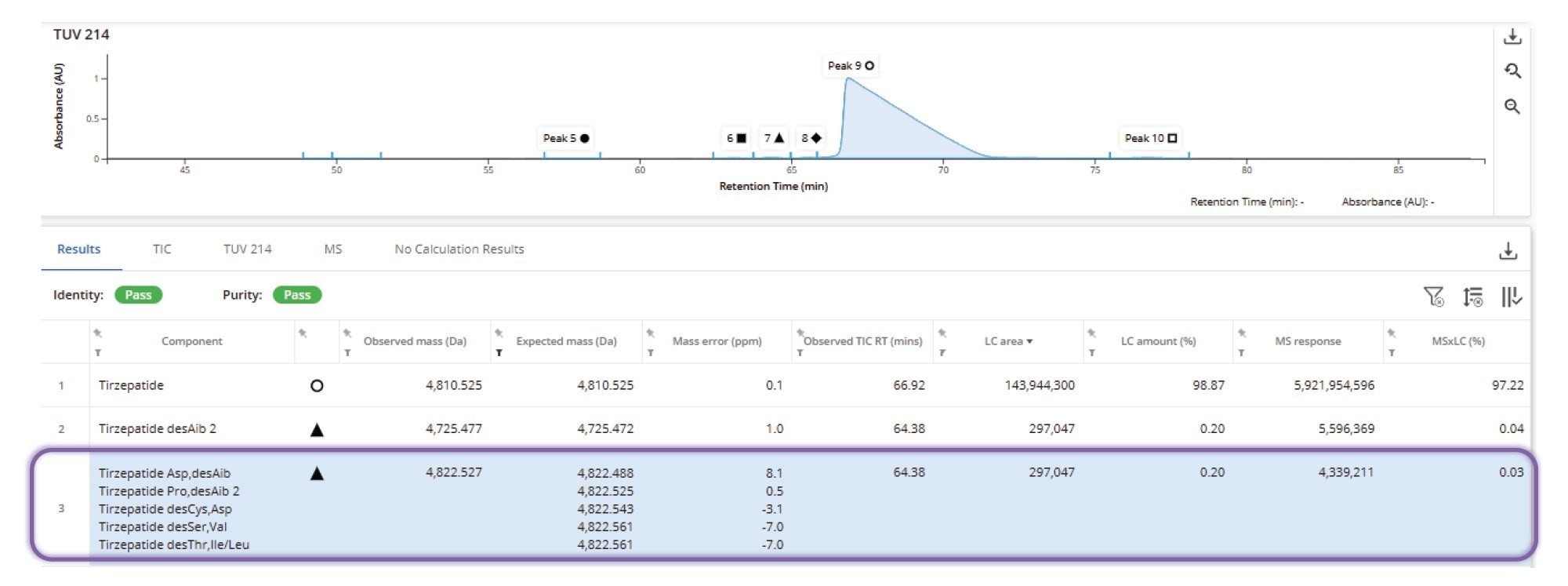
Targeted impurities such as known truncations, deletions, degradation products, and amino acid substitution variants can be predefined within the processing method and automatically annotated during analysis. Newly detected components are also flagged and referenced by their delta mass values relative to the main reported species, which also can accelerate and focus the analyst on any follow up characterization activities.
These high mass accuracy Xevo MRT Mass Spectrometer measurements enabled confident discrimination among closely related substitution variants that shared similar theoretical masses. In the Tirzepatide dataset (Figure 5), the workflow correctly assigned a +Pro, desAib substitution, while alternative candidates were excluded based on higher ppm errors. Minor impurities found in this analysis were quantified down to 0.03% relative abundance to the main peak, demonstrating both the sensitivity and selectivity of the approach.
Reporting
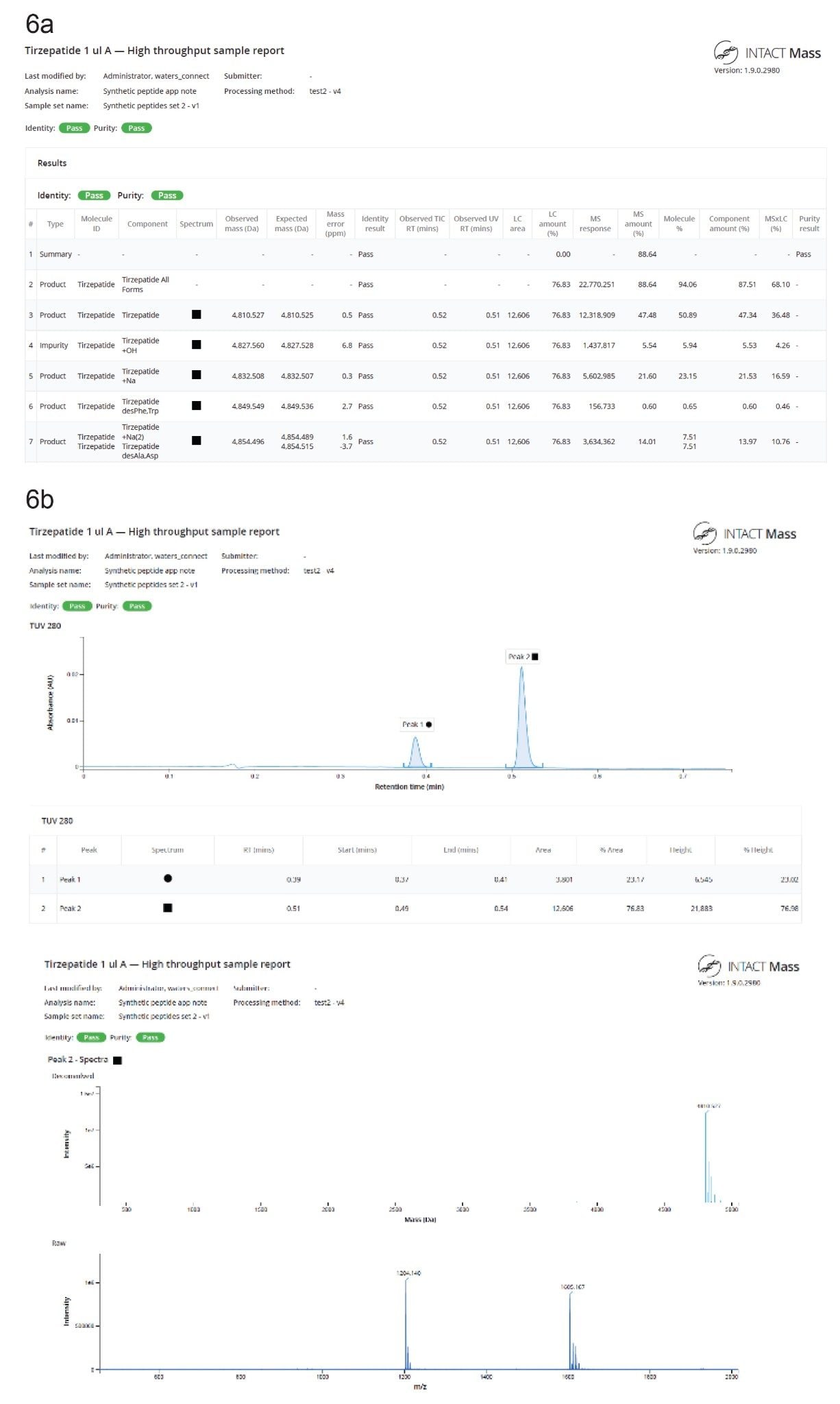
Automated reports generated by the INTACT Mass Application ensure traceable, consistent documentation for every sample processed. When reporting was enabled as part of the acquire and process method, the software generated a PDF report for each injection, containing all relevant chromatographic, spectral, and processing outputs (Figure 6). These reports include TIC and UV chromatograms with integrated peaks, deconvoluted mass spectra, component assignments with associated modifications, and calculated purity and mass accuracy metrics.
Conclusion
As regulatory expectations and data integrity requirements grow in GLP-1 analysis, workflows that deliver consistent, audit-ready results are essential. The waters_connect INTACT Mass Application meets these needs through automated reporting and standardized purity assessments that streamline regulatory submissions.
The fast RPLC-MS workflow enables rapid, reliable intact-mass confirmation and impurity screening of synthetic peptides with minimal manual intervention. By combining the high-resolution, sub-ppm mass accuracy of the Xevo MRT Mass Spectrometer with fully automated data processing in INTACT Mass Application, analysts achieve confident main-species identification, consistent purity measurements, and accurate impurity assignment across peptide panels.
BayesSpray monoisotopic deconvolution supports fast pass/fail decisions, while embedded adduct-management logic and targeted impurity detection reduce manual handling and the risk of misassignment. Dashboard-driven, color-coded “review-by-exception” evaluation focuses on analyst attention only where needed, and standardized, audit‑ready reporting maintains traceability from discovery through development into QC.
Together, these capabilities support a universal LC-MS method that processes high-throughput peptide batches in under one minute per sample, accelerating decision making, improving data consistency, and scaling with increasing sample demand. The combination of high-resolution performance and intelligent impurity logic strengthens confidence in QC outcomes and underpins robust regulatory documentation.
References
- Fox, J.; Denbigh, L.; Berger, S. J.; Pittman, N. Accelerating GLP‑1 Development with High‑Throughput LC-MS Using the BioAccord™ LC‑MS System and the INTACT Mass™ Application. Waters Application Note. 720009176. 2025. [1]
- Ahmad, S.; Singh, N.; Pargaonkar, A.; Vig, D.; Knierman, M. LC/MS-Based Characterization of GLP-1 Therapeutic Peptide Liraglutide and Its Impurities. Agilent Application Note, 2023. [2](https://www.agilent.com/cs/library/applications/an-liraglutide-impurities-characterization-5994-7727en-agilent.pdf)
- Ranbaduge, N.; Shion, H.; Yu, Y. Q. Streamlined LC-MS Analysis of Stress-Induced Impurities of a Synthetic Peptide Using the BioAccord™ System and the waters_connect™ INTACT Mass™ Application. Waters Application Note. 720007752. 2022. [3]
- Waters Corporation. Xevo™ MRT Mass Spectrometer – Product Information and Technical Overview. Waters, 2024. [4]
Waters, ACQUITY, UPLC, Xevo, waters_connect, MaxPeak, QuanRecovery, and CSH are trademarks of Waters Corporation or its affiliates
Featured Products
720009499, July 2026


