

For research use only. Not for use in diagnostic procedures.
- Main
-
For research use only. Not for use in diagnostic procedures.
Douglas Stevensa, Peter Hancockb, Claudia Rathmannc
a Waters Corporation, United States
b Waters Corporation, United Kingdom
c Waters Corporation, Germany
Published on August 12, 2026
For research use only. Not for use in diagnostic procedures.
Polybrominated diphenyl ether (PBDE) flame retardants are transported through the environment over long distances via repeated cycles of volatilization and deposition. This process, known as the grasshopper effect, tends to move these compounds from warmer to colder regions of the globe where they can accumulate in air, soil, water, and biota. So, even though PBDEs may never have been manufactured in a region, their historic, global use combined with their persistence in the environment has led to their inclusion in the Stockholm Convention. This gives the analysis of PBDEs in environmental matrices broad relevance as the EU and 185 additional individual countries have ratified this agreement which includes requirements for monitoring for PBDEs as well as other persistent organic pollutants (POPs).
Because the need for trace level measurement of PBDEs in complex matrices requires high specificity and high sensitivity, capillary gas chromatography (GC) with high resolution magnetic sector mass spectrometers (HR-MS) using electron ionization (EI) was originally used for their determination. However, the use of EI GC-HRMS is steadily declining due to characteristics of the technique such as high operational cost and user expertise requirements and its frequent and time-consuming maintenance needs. In this work, the performance of GC atmospheric pressure chemical ionization (GC-APCI) combined with tandem quadrupole (TQ) mass spectrometry (MS/MS) was evaluated as an alternative to EI GC-HRMS. Performance characteristics of TQ GC-APCI MS/MS include improved speed and robustness with equal to or better specificity and sensitivity than EI GC-HRMS for these analytes. Furthermore, the instrument used for this work employed a single supply of nitrogen for carrier gas, reagent gas and collision induced dissociation (CID) gas making it better aligned with recent efforts towards improving the sustainability of analytical methods.
The optimized method had the same 27 minutes run time as the reference method with the last eluting analyte, BDE 209, at 22 minutes with symmetric peak shape (a/b = 0.993) and a width of 10.3 s. Linear calibration curves were obtained for an analyte list of 25 compounds with an average r2 value of 0.999885 across over three orders of magnitude dynamic range with parts per trillion (ppt) limits of quantitation (LOQs).
With the 2001 signing of the Stockholm Convention, the stage was set for global harmonization of efforts to monitor for POPs in the environment.1 By 2004, when countries began implementing the convention, measures aimed at reducing or eliminating intentional and unintentional release of POPs into the environment were supported by annexes that defined the different chemical classes of highest interest which included PBDEs. To date, 185 states plus the European Union have joined in this effort which includes requirements for monitoring for POPs in multiple environmental matrices. Because the implications of unintentional or intentional non-compliance may be subject to enforcement action, high confidence data is needed to support surveillance and reporting efforts. Furthermore, high sensitivity analysis is required due to the possibility of steadily increasing trace levels of PBDEs across years of time through transport in the environment that tends to increase concentrations of persistent organic pollutants such as these in cooler Arctic regions of the globe through the grasshopper effect.2 These requirements initially led to the development of gas chromatography electron ionization high resolution magnetic sector based analytical methods. The performance of EI GC-HRMS in the hands of a well-trained operator and a lab with rigorous quality control procedures has proven to provide the sensitivity and specificity required of the forensic data used in legal actions, for compliance reporting and for providing the greatest protection to populations and the environment.
However, GC-HRMS has several limitations, including extensive education and training requirements, slow acquisition speeds, and significant laboratory space demands. In contrast, more modern techniques such as tandem quadrupole (TQ) mass spectrometry (MS/MS) offer broad improvements in these areas. Additionally, limitations imposed by EI such as frequent source maintenance and shortcomings caused by carrier gases other than helium hamper this time-honored technique. The more recent combination of APCI with TQ has demonstrated promise in overcoming these limitations while providing data of equivalent confidence to EI GC-HRMS.
After having been deployed in many labs, GC-APCI has continued to contribute to the study of PBDEs in multiple matrices and applications. An evaluation of the first generation of GC-APCI MS/MS, analyzing PBDEs in marine and food samples, reported higher response for higher brominated (Br8-10) congeners than GC-EI-HRMS.3 Later work reported GC-APCI MS/MS LODs comparable or better than EI MS/MS for plasma extracts.4 Recent work reported on the use of GC-APCI HRMS (QTof) as part of the continuation of a 20 year study analyzing aquatic organisms to evaluate environmental PBDE trends.5
In this work, 24 PBDEs plus hexabromobiphenyl were analyzed on a XevoTM TQ Absolute Tandem Quadrupole Mass Spectrometer using the APGC ionization source.
Sample preparation was performed at Environment and Climate Change Canada’s (ECCC) Quebec Laboratory for Environmental Testing (QLET). Samples and standards included a five-point calibration curve, blanks, and samples of water and sediment. Curve levels were 0.05–100 ppb for the tri- through penta-, 0.10-200 ppb for the hexa- through octa- and 0.25-501 ppb for the nona- and deca- substituted PBDEs.
|
GC system: |
8890 (Agilent Technologies, Inc.) |
|
Column: |
Rtx®-1614, 15 m x 0.25 mm ID x 0.10 µm film (Restek Corporation) |
|
Injection: |
SSL injection port, 1 µL pulsed splitless at 260 °C, 20 psi for 1.2 minutes, 4 mm ID single taper liner with wool |
|
Temperature program: |
110 °C ramp to 190 °C at 30 °C/min, ramp to 220 °C at 3 °C/min, ramp to 280 at 20 °C/min hold 3 minutes, ramp to 310 at 30 °C/min hold for 7 minutes. 27 minutes runtime. |
|
Carrier gas program: |
Nitrogen at 0.80 mL/min, ramp to 2.1 mL/min at 0.2 mL/min/min, ramp to 4.1 mL/min at 2.0 ml/min/min, hold to end of run |
|
Vials: |
Amber Glass Screw Top Vials with 300 µL insert (p/n: 186001130C) |
|
MS system: |
Xevo TQ Absolute Mass Spectrometer |
|
Ionization source: |
APGC at 150 °C |
|
Heated transfer line: |
300 °C |
|
Corona current: |
1.0 µA |
|
Cone gas: |
260 L/hr, Nitrogen |
|
Auxiliary gas: |
200 L/hr, Nitrogen |
|
Makeup gas: |
350 mL/min, Nitrogen |
|
Collision gas: |
0.40 mL/min, Nitrogen |
|
Detector gain: |
0.20 |
|
Acquisition: |
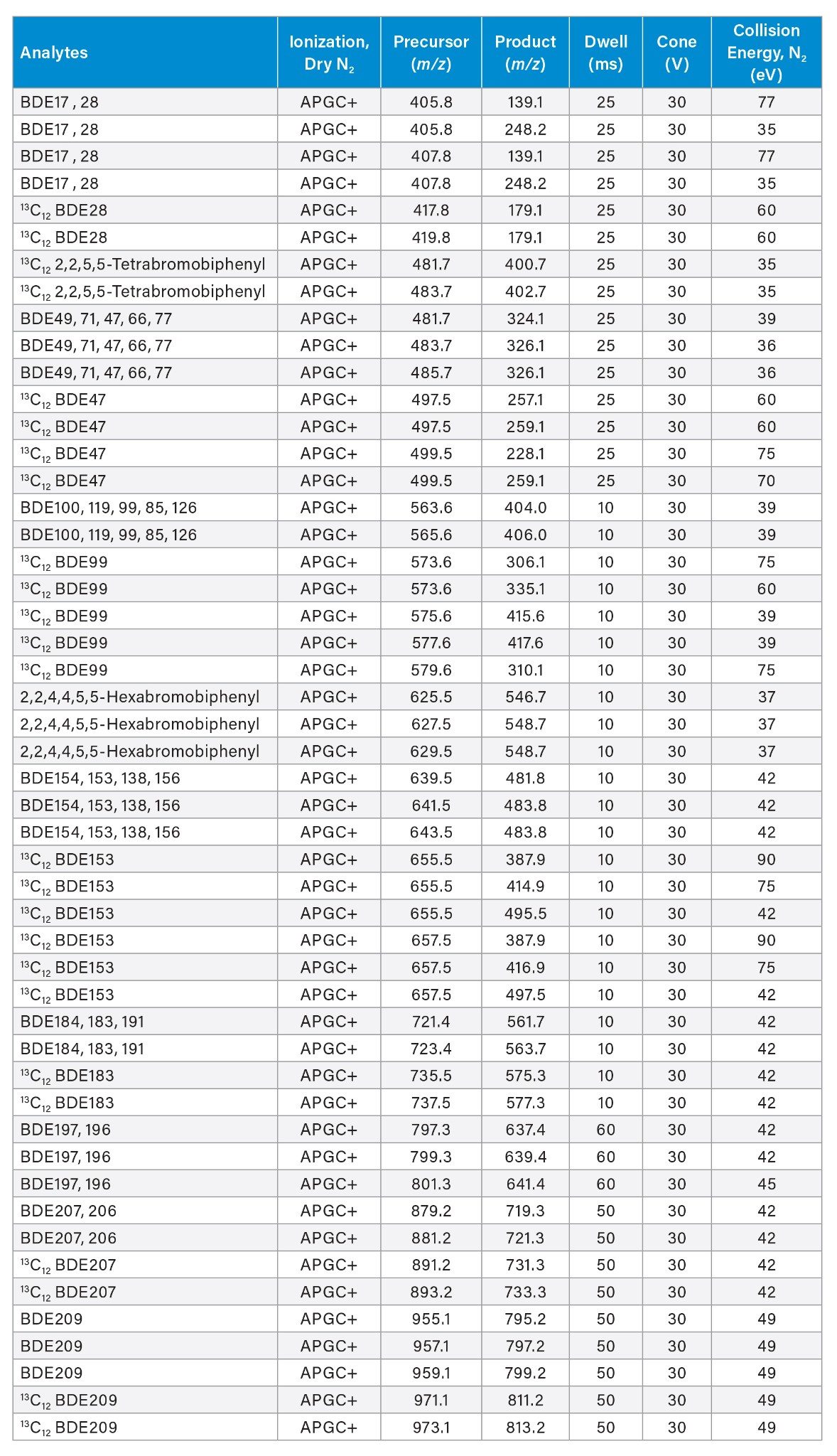
See Appendix for MRM details |
|
Software: |
waters_connect™ for Quantitation Software |
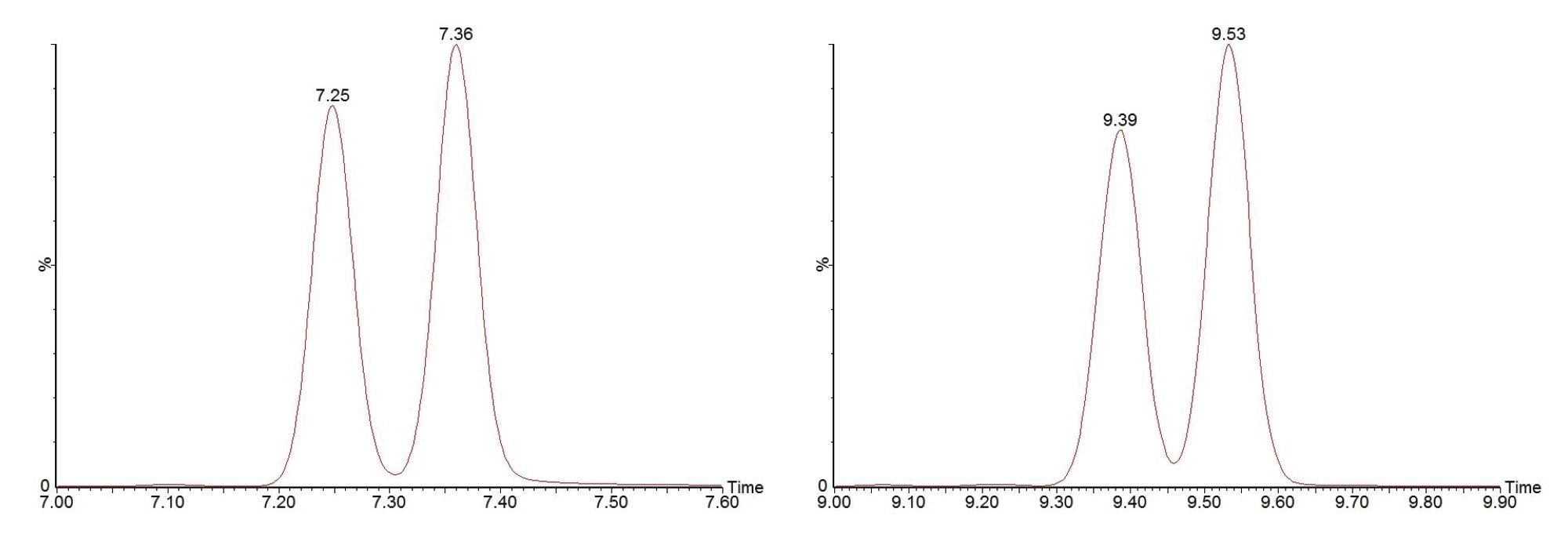
When converting legacy GC-MS methods that use helium to the use of nitrogen carrier gas, it is often recommended to scale the column dimensions to keep the chromatographic separation as the same with each gas.6 However, in this instance, no scaled column was commercially available. Therefore, after first reproducing the reference method using helium carrier gas, the same column was converted to the use of nitrogen. Figure 1 shows the separation between BDE 49 and 71 using the helium carrier method, with a 3% valley separating the two (left), and the same critical pair separation in the nitrogen method (right) with a 5% valley. Although this pair is shifted approximately 2 minutes later, the total runtime for the method is unchanged with the last eluting peak actually eluting slightly earlier in the nitrogen method due to the use of flowrate ramping. Across all 25 analytes, the elution order and resolving power between peaks was well preserved in the nitrogen method.
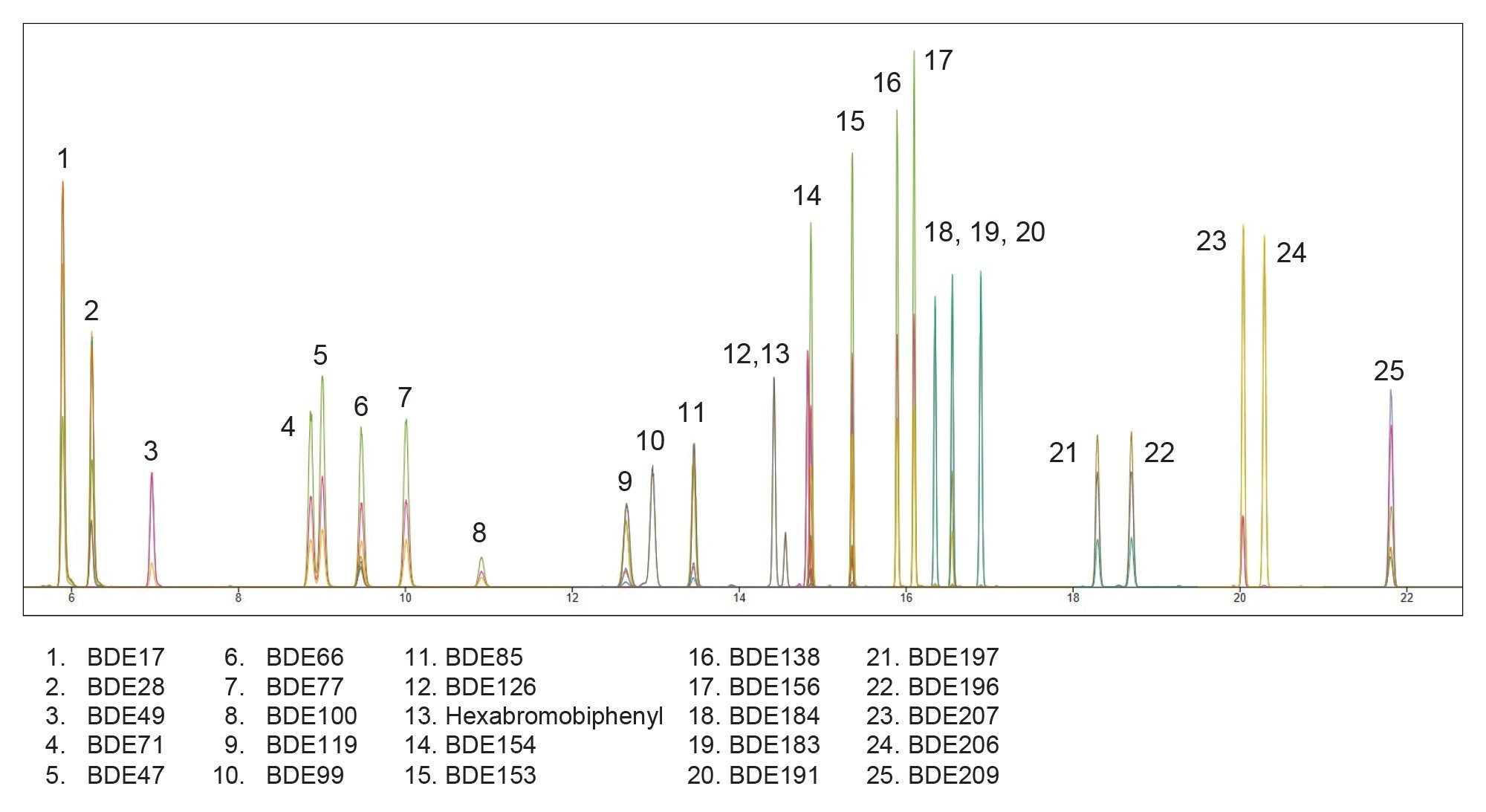
Method development of MRM transitions using nitrogen CID gas was performed on multiple precursors for each analyte. The quadrupoles were operated at unit mass resolution with a peak width of 0.9 Da at half height measured on the 417.8 Da peak for 13C12 BDE 28 and the 971.1 Da peak for 13C12 BDE 209. Because the analytes investigated contain from three to ten bromines per molecule, each had multiple, abundant, naturally-occurring isotopes to use as precursors. As many as six MRM transitions were developed for some analytes. Because this method of just 35 peaks, 25 native analytes and 10 labeled species, is a short analyte list for modern tandem quadrupole instrumentation, the inclusion of more than two MRM transitions per analyte is easily accommodated with no compromise in sensitivity and with a corresponding increase in flexibility and troubleshooting capability. Figure 2 shows the overlaid MRM TICs for the complete analyte list.
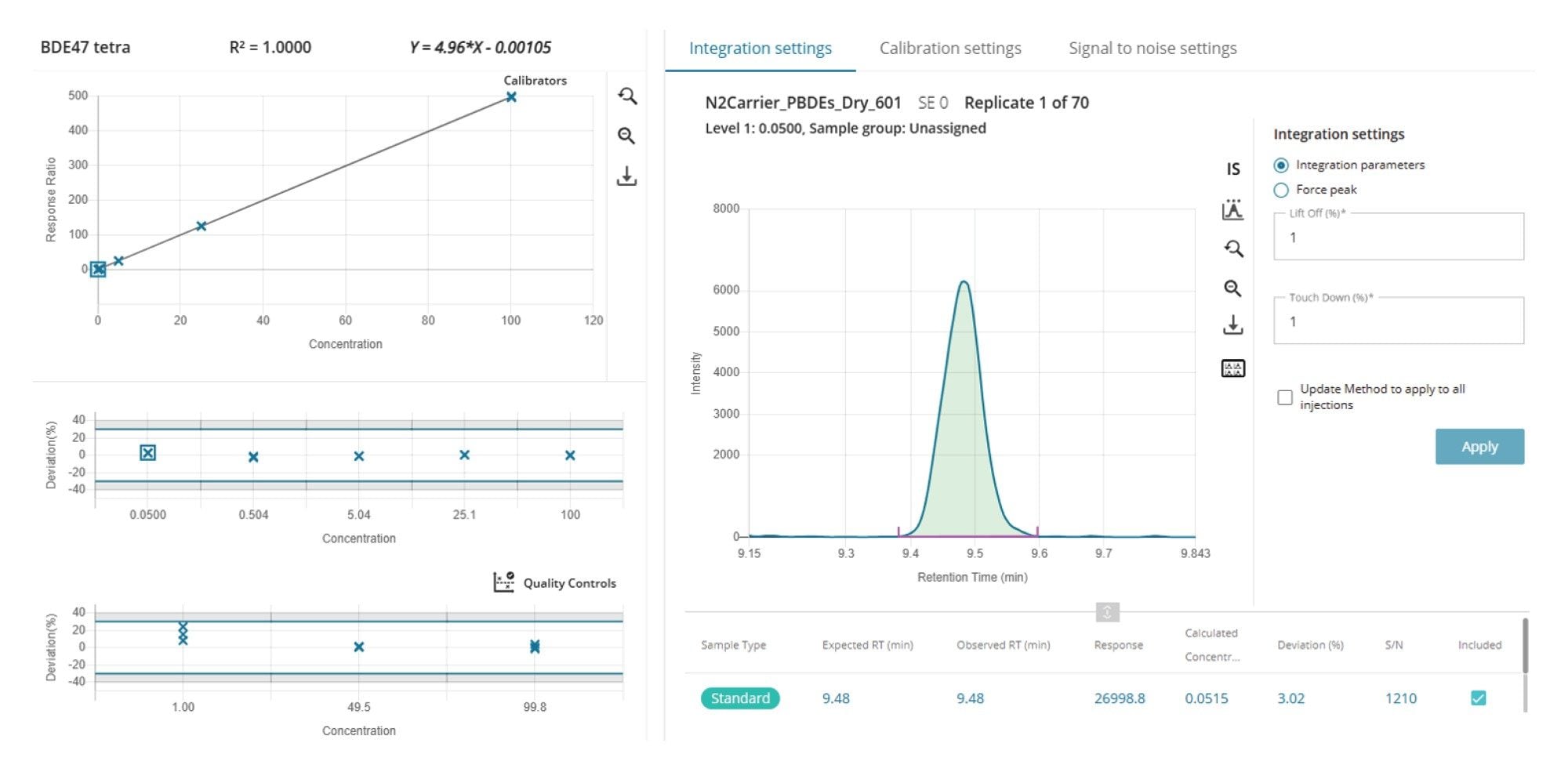
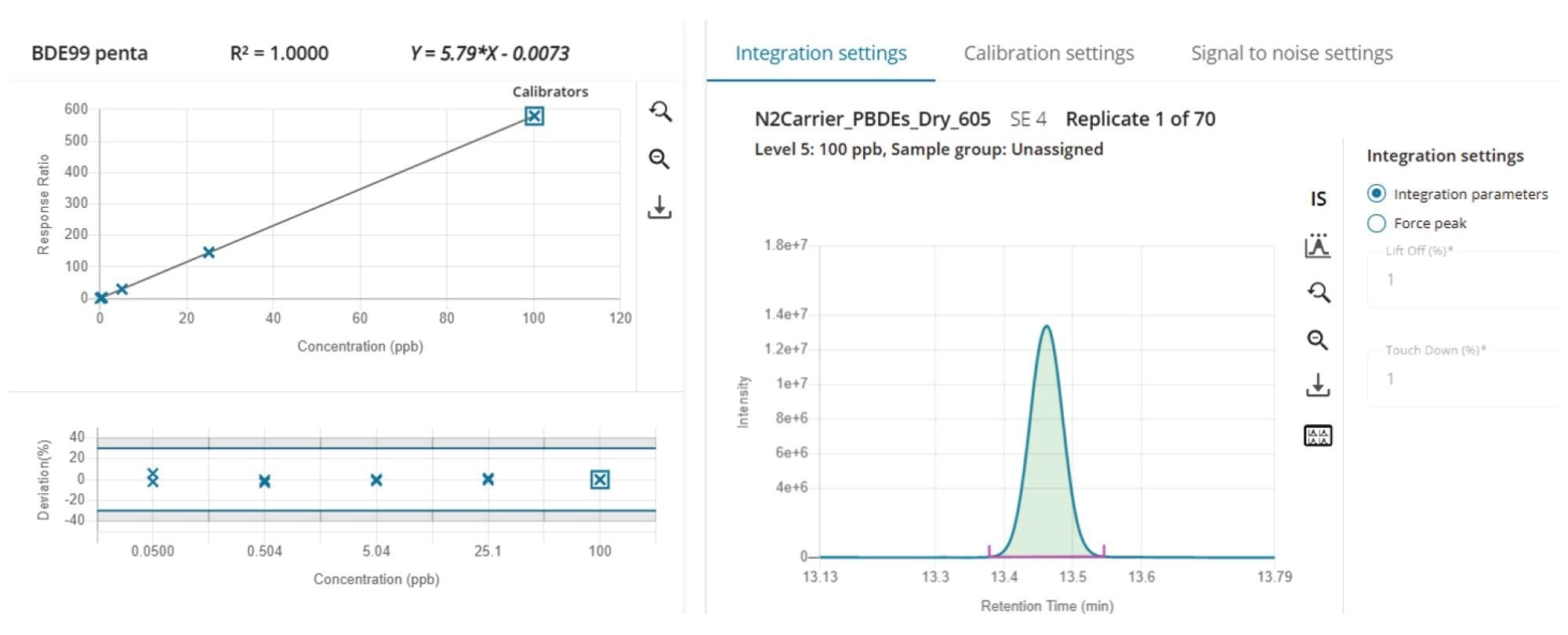
A linear fit was observed for all analytes across over three orders of magnitude dynamic range with an average r2 value of 0.999885 and no value less than 0.999584. Across the four labeled recovery standards in the method, all had a %RSD lower than 10% (mean 8.29). The six labeled internal standards had an average %RSD of 1.55% with none higher than 2.5%. Figures 3 and 4 show a couple of example chromatograms and quantitation calibration curves for a tetra- and penta- substituted PBDEs.
Among the analytes in this method, the deca- substituted BDE 209 is known to present analytical challenges due to its high boiling point and the small difference between its boiling point and the temperature at which it thermally degrades.7 This can lead to problems with the injection or elution process that cause chromatographic peak shape distortions. To prevent issues with the injection, the split/splitless (SSL) temperature was kept at 260 °C and a pressure pulsed injection at 20 psi for 1.2 minutes was used to sweep the volatilized sample out of the injection port and onto the head of the column quickly and efficiently. It is also known that increasing carrier gas flow reduces the elution temperature for an analyte.8 As a result, the nitrogen carrier gas, which was at 0.8 mL/min at the start of the analysis was ramped to 4.1 mL/min by the time of the elution of BDE 209 with the aim of also reducing the exposure time of this labile analyte to the heated transfer line at 300 °C.
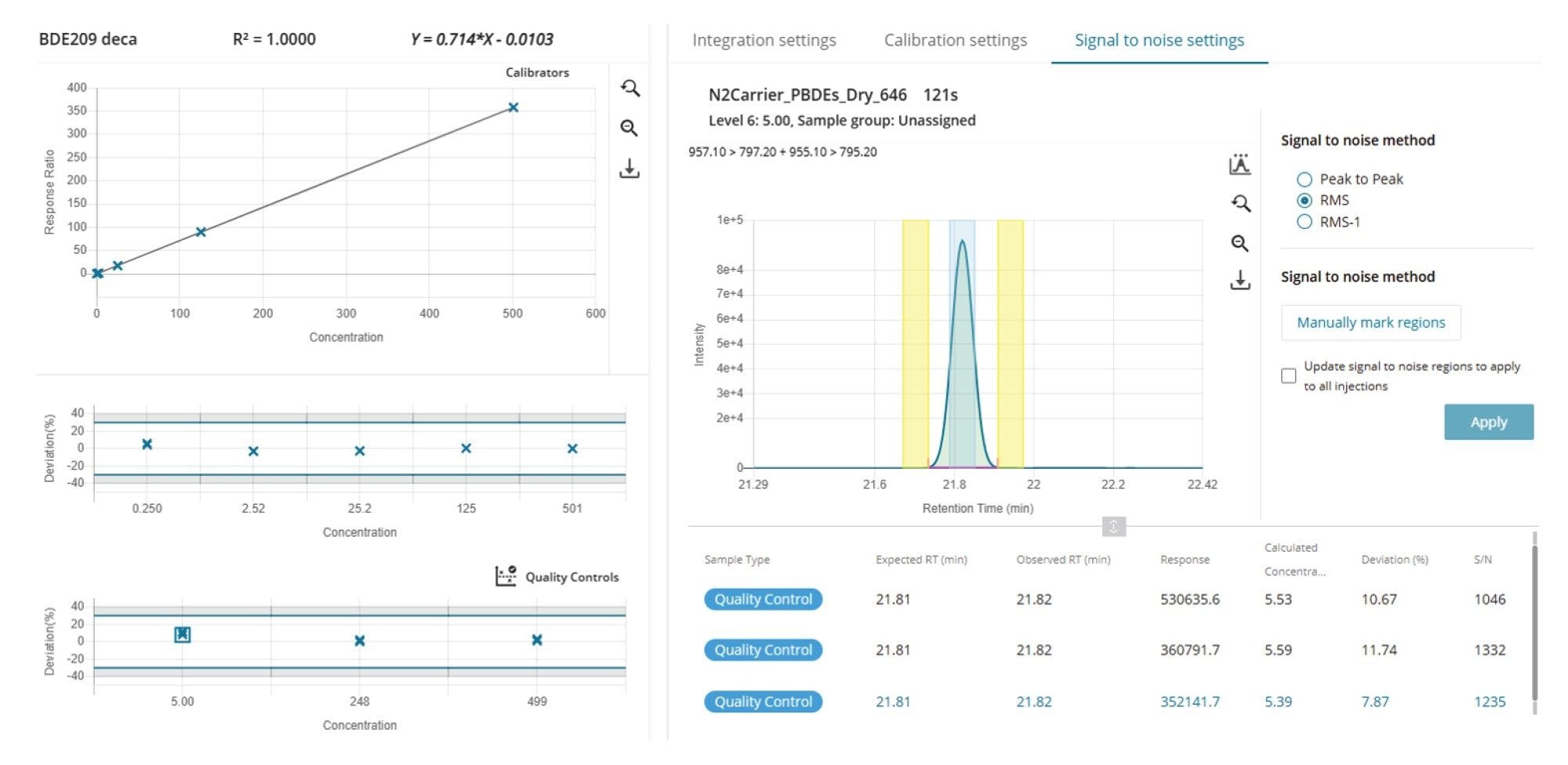
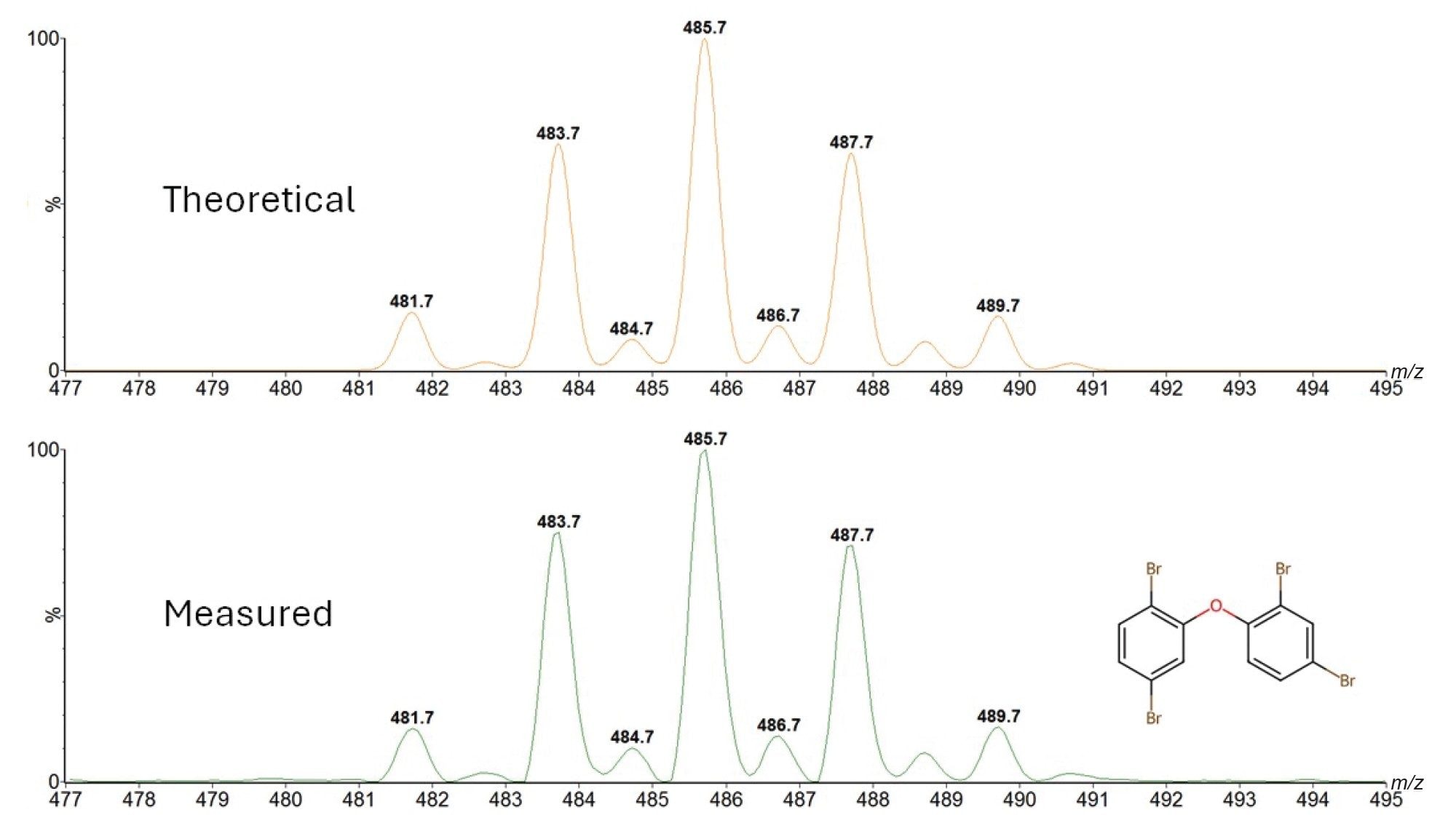
Figures 5 and 6 show the peak symmetry for a standard at 0.25 ppb at the start of the batch and for a sample spiked at 5 ppb at the end of the batch 21 hours apart. The asymmetry value for the sample is within 3% of that for the average of the ten standard injections and indicates good peak symmetry. For the same data, the ion ratio of MRM transitions from the average for the standards as compared with the sample data agree within <1%. The reference method requires ion ratios to be within 15% of the reference value for confirmatory purposes. Ion ratios for this work were calculated by ratioing the most intense MRM transition to the sum of the two most intense transitions. This resulted in ion ratios in the range of 1.0 to 2.0 due to the significant abundance of naturally occurring isotopes for these multiply brominated analytes. An example of the bromine isotope pattern for one of the tetra-brominated analytes, BDE 49, is shown in Figure 7.
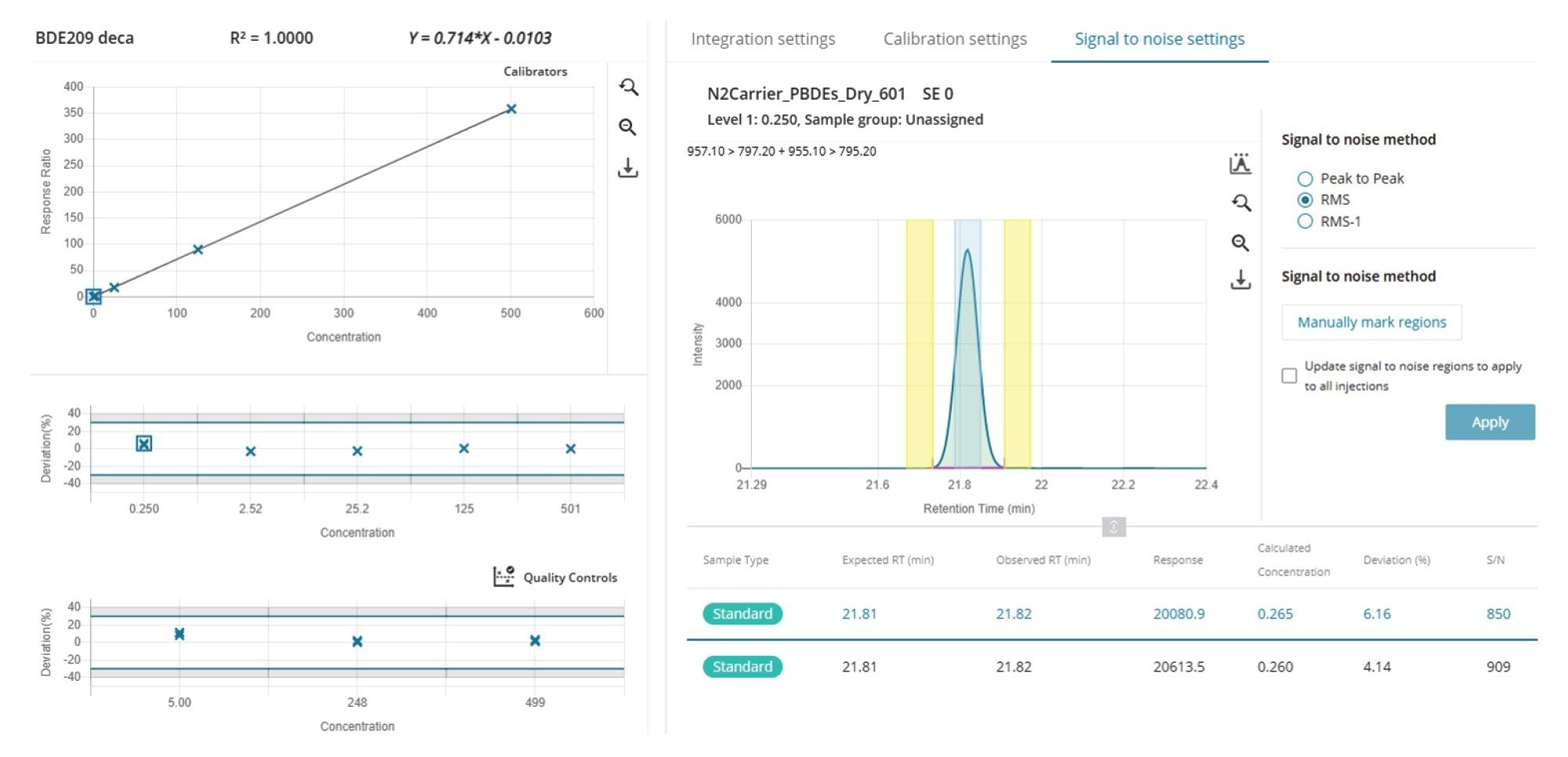
Figure 5. BDE 209 calibration curves (n = 2) and QCs (n = 3). Chromatogram for lowest curve point 0.250 ppb. Average asymmetry from standards = 1.0125. Ion ratio average 1.237.
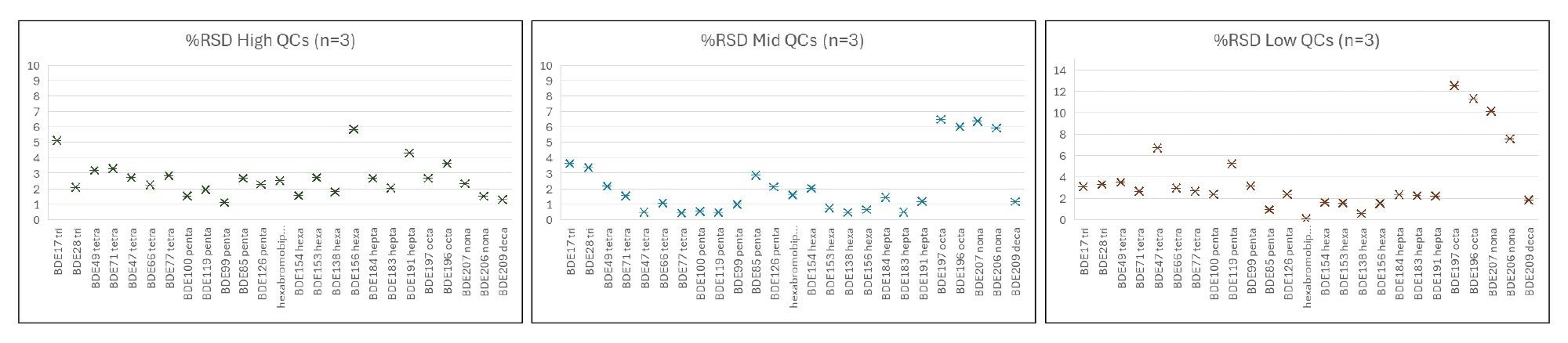
To create high-, mid- and low-level QCs for the analysis, blank sample extracts were spiked with different levels of the full set of analytes. For the tri - penta, hexa - octa, and nona - deca substituted PBDEs, the concentrations were as follows: high = 100, 200 and 499 ppb; mid = 50, 99 and 248 ppb; and low = 1, 2 and 5 ppb. Figure 8 shows %RSDs for n = 3 for QCs at each level. Precision for the high and mid-level QCs <10% RSD while all analytes at all levels achieved <15 %RSDs. Accuracy across all QC levels was within the reference method range of 70–130% with the exception of BDEs 196, 197, and 207 which each fell outside this range in two injections of the lowest level QC. A duplicate mid-level spike of one of the extracts was also prepared. All calculated concentrations for the spike and its duplicate were within an average of 1.9 ppb of each other and within 3.1 ppb of the known spiked amount.
An all-nitrogen configuration for APGC on Xevo TQ Absolute Mass Spectrometer was successfully applied to the analysis of PBDEs in environmental matrices by adapting a reference method previously used on magnetic sector EI GC-HRMS. All performance criteria were equal-to or better-than those typically achieved by magnetic sector which demonstrates feasibility of GC-APCI MS/MS as an alternative for the most challenging regulatory and standard analytical methods. Furthermore, the change from a vacuum source to the atmospheric ionization source makes the use of high nitrogen carrier gas flow practical which has advantages for operating cost versus helium while achieving similar chromatographic separation and sensitivity. The move to tandem quadrupole mass spectrometry from high resolution mass spectrometry updates the method for improved performance measures such as higher acquisition speeds and high specificity MS/MS while also requiring reduced training time and expertise as compared with magnetic sectors.
The authors would like to thank the Quebec Laboratory for Environmental Testing (QLET) at Environment and Climate Change Canada for providing the reference methods and samples for this study.
Secretariat of the Stockholm Convention. Stockholm Convention – Home Page. Basel, Rotterdam and Stockholm Conventions (POPs), United Nations Environment Programme. Accessed 20 Oct. 2025. https://www.pops.int/Home/tabid/10001/Default.aspx
Goldberg, E. D. Synthetic Organohalides in the Sea. Proceedings of the Royal Society of London. Series B. Biological Sciences 1975, 189 (1096), 277–289.
Portolés, T.; et al. Novel analytical approach for brominated flame retardants based on the use of gas chromatography-atmospheric pressure chemical ionization-tandem mass spectrometry with emphasis in highly brominated congeners. Analytical Chemistry 2015, 87 (19), 9892–9899.
Fang, J.; et al. Evaluation of gas chromatography-atmospheric pressure chemical ionization tandem mass spectrometry as an alternative to gas chromatography tandem mass spectrometry for the determination of polychlorinated biphenyls and polybrominated diphenyl ethers. Chemosphere 2019, 225, 288–294.
La Guardia, M. J.; et al. Twenty years later: PBDEs in fish from US sites with historically extreme contamination. Chemosphere 2024, 351, 141126.
Stevens, D.; et al. Converting Semivolatile GC‑MS/MS Methods from Helium to Nitrogen Carrier Gas with APGC, an Atmospheric Pressure Ionization Source. Peak Scientific, 6 Oct. 2023. www.peakscientific.com/discover/articles/converting-semivolatile-gc-msms-methods-from-helium-to-nitrogen-carrier-gas-with-apgc-an-atmospheric-pressure-ionization-source/
Stapleton, H. M. Instrumental methods and challenges in quantifying polybrominated diphenyl ethers in environmental extracts: a review. Analytical and Bioanalytical Chemistry 2006, 386 (4), 807–817.
Jennings, W. G.; Adam, S. Gas chromatography: Elution temperature, speed of analysis, and separation efficiency as influenced by rate of temperature programming and carrier gas velocity in open tubular glass capillary columns. Analytical Biochemistry 1975, 69 (1), 61–69.
720009524, August 2026


