
Automated Measurements of Zeta Potential and Size
Chris Siefe, Paul Velander, Braden Hahn, Richard Chung, Sophia Kenrick
Waters Corporation, United States
Published on June 24, 2026

Abstract
Traditional, manual zeta potential measurements can be time consuming and labor-intensive. In addition, manual measurements typically require large sample volumes to ensure adequate sample loading and prevent the accidental introduction of bubbles. However, the DynaPro™ ZetaStar™ instrument, when coupled with a Waters Arc™ HPLC System, enables automated measurements of zeta potential (ζ) and hydrodynamic radius (Rh), effectively combatting these limitations. The DYNAMICS™ Software provides easy-to-use automation control to optimize measurement conditions while HPLC CONNECT™ Software provides seamless control of the pump and autosampler. This application note demonstrates this automation workflow applied to nanoparticle samples of different sizes and surface charges. Even after 96 independent sample injections, excellent data quality and precision is preserved with negligible carryover.
Benefits
- Automated, hands-free zeta potential measurements to save time and improve workflow efficiency
- Simultaneous particle size and zeta potential analysis in a single measurement
- Improved reproducibility and standardized operation to support compliance with ISO 22412:2005
Introduction
Measurements of hydrodynamic radius and zeta potential have been shown to be highly valuable for understanding the colloidal stability of biotherapeutics, polymers, and many other molecules and particles. The measurement of electrophoretic mobility, and from that zeta potential (ζ), is an incredibly fast way to understand the stability of a sample in its specific solvent or buffer environment. However, these measurements tend to be difficult or low-throughput, requiring significant time and effort to prepare samples and properly measure with electrophoretic light scattering (ELS), especially for screening studies involving large quantities of different samples.
The DynaPro ZetaStar instrument offers a simple and easy solution for combined dynamic and electrophoretic light scattering (DLS and ELS) measurements to characterize macromolecular solutions and nanoparticle suspensions in the desired environments of interest. When performing manual injections into the ZetaStar instrument flow cell, the flow cell is manually flushed with buffer or solvent between sample measurements to ensure there is no carryover of sample and to reduce the presence of noise or contamination. While easy to do with the ZetaStar instrument, this can be challenging when screening several sample or buffer parameters for colloidal stability or other ELS-related data collection.
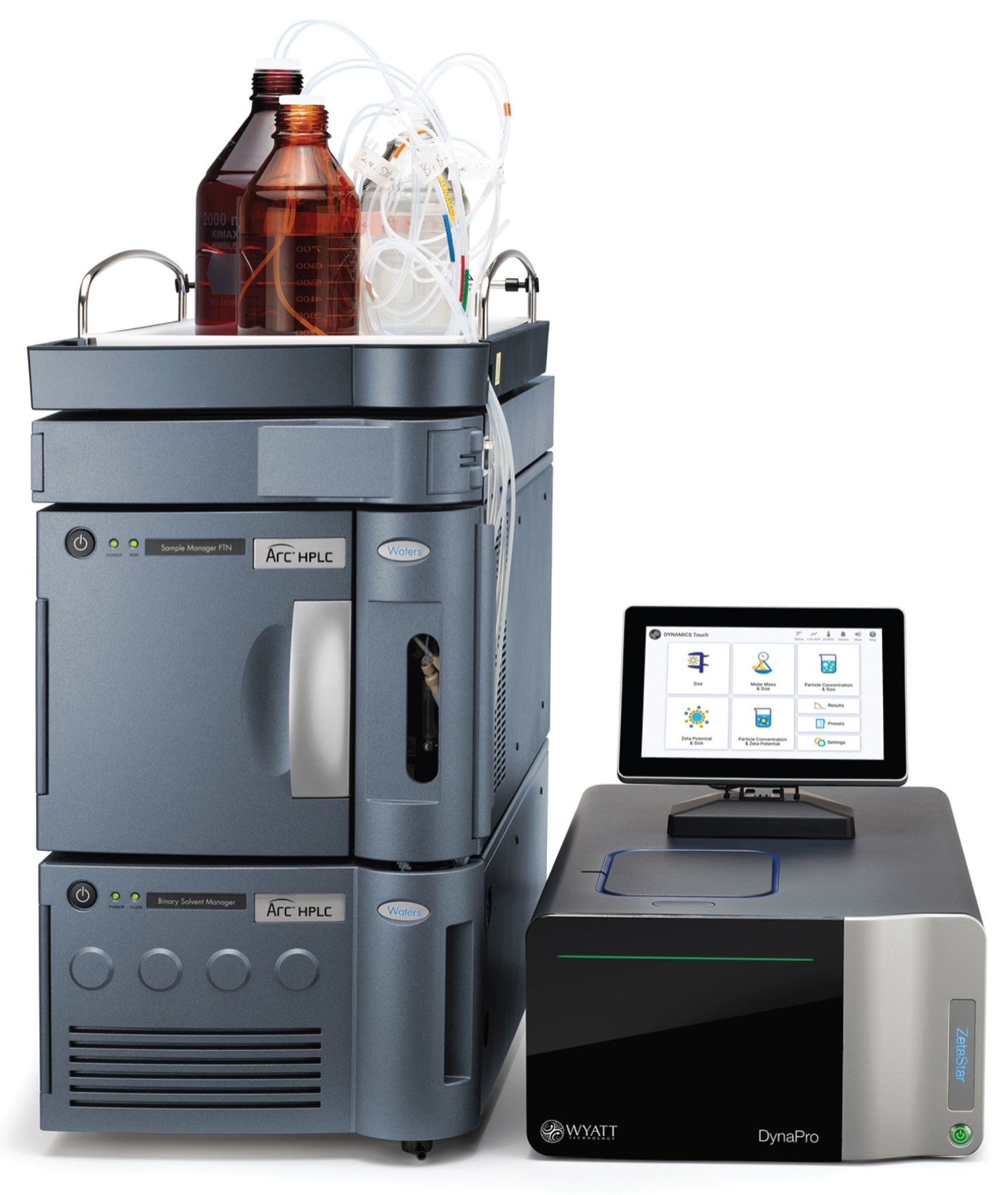
When coupled with Waters Arc HPLC System using the DYNAMICS and HPLC CONNECT Software, the DynaPro ZetaStar instrument can be implemented to perform automated measurements of zeta potential (ζ) and hydrodynamic radius (Rh) with high efficiency and minimal setup (Figure 1). This dramatically reduces the preparation time and supervision of combined DLS and ELS measurements with the ZetaStar instrument. The DYNAMICS and HPLC CONNECT Software work together to automate injections and ELS/DLS measurements within the ZetaStar instrument flow cell to provide an easy, consistent way of streamlined data collection.
Experimental
Materials and Methods
The ZetaStar instrument was connected to a Waters Arc HPLC Quaternary Solvent Manager and Sample Manager configured with two ANSI-48 Vial, 2 mL holders, loaded with LCGC Certified preslit 2 mL Vials. The Sample Manager was plumbed to the flow cell with standard PEEK tubing and a 500-psi backpressure regulator was installed after the flow cell to pressurize the system. The HPLC modules and ZetaStar instrument were controlled by the DYNAMICS Software and HPLC CONNECT Software together via the ZetaStar instrument Experiment Designer.
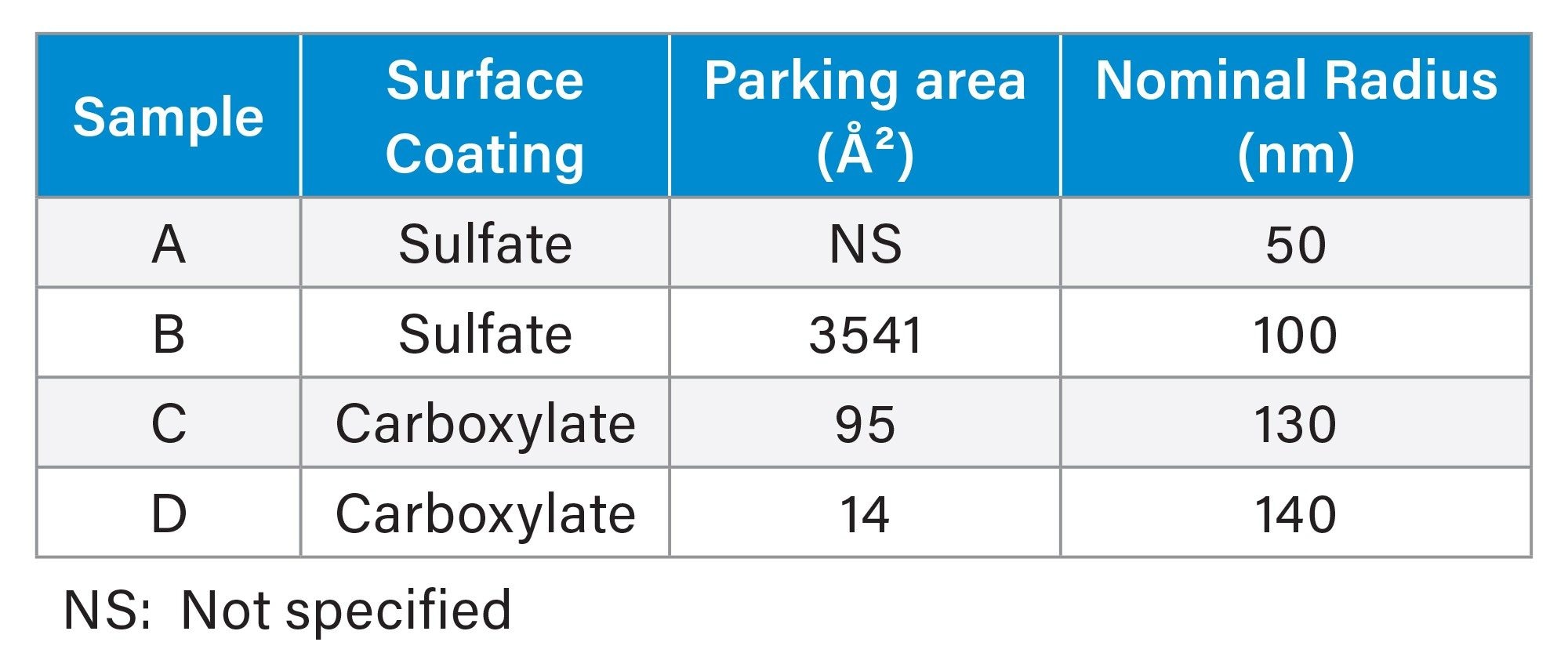
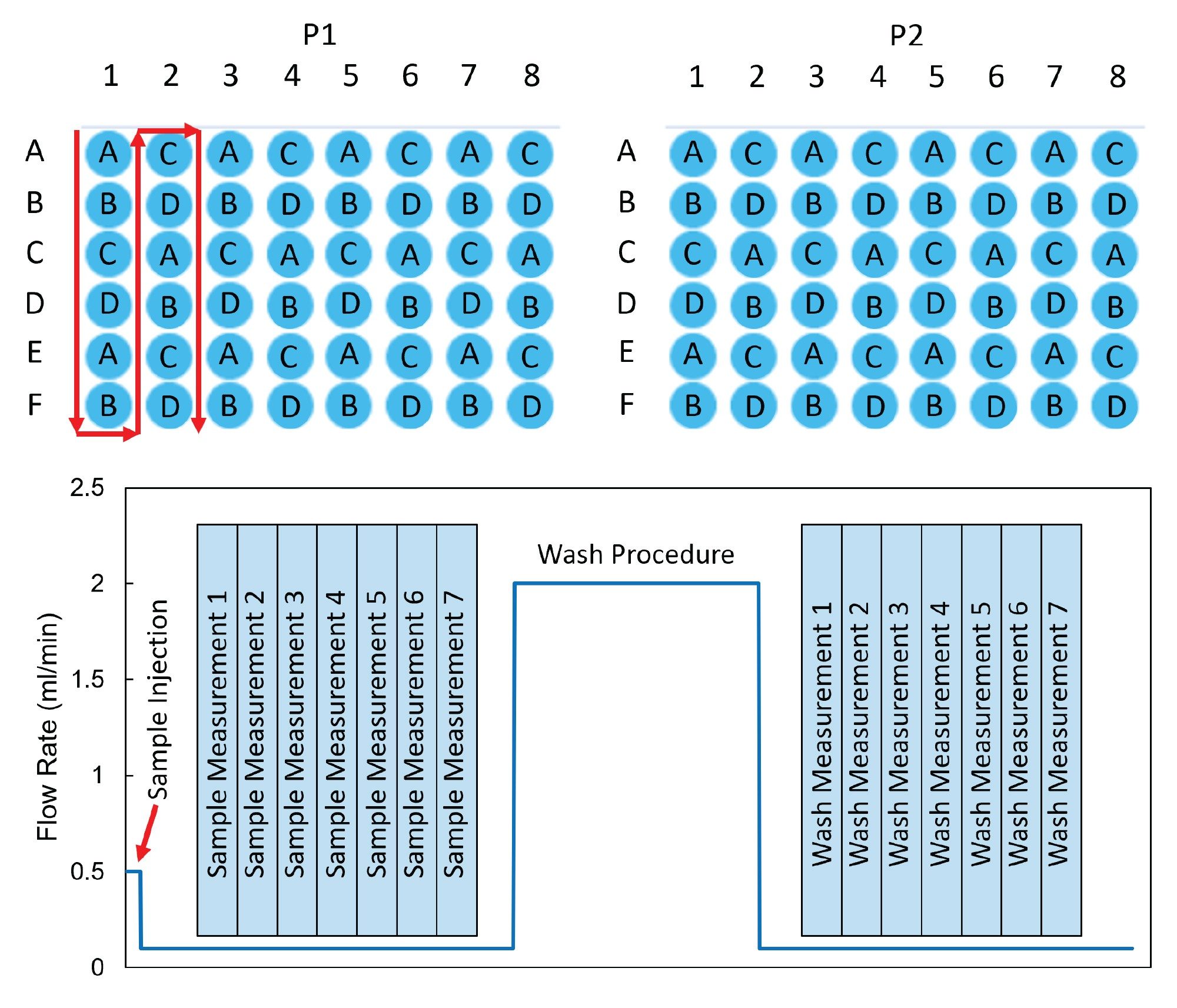
The samples consisted of four polystyrene latex (PSL) spheres with different sizes and surface coatings purchased from Thermo Fisher Scientific, as described in Table 1. Samples were 1000x diluted from the original concentrated standards with 10 mM phosphate buffer (4 mM Na2HPO4, 6 mM NaH2PO4). For each sample, 24 identical autosampler vials were arrayed in the two ANSI-48 Vial, 2 mL holders, filling all available positions as shown in Figure 2. The wash buffer was the same 10 mM phosphate.
For each data point, 900 µL of sample was injected and seven measurements of zeta potential with simultaneous DLS measurements of hydrodynamic size were collected. Each measurement consisted of thirty 1-second acquisitions for ELS data collection and ten 1-second acquisitions for DLS data collection. ZetaStar instrument electrophoretic mobility data were acquired using an ELS Detector and hydrodynamic radius data were acquired using a back-scatter DLS Detector, with ELS and DLS data acquired simultaneously. Adaptive collection mode was used to collect ELS data with the ZetaStar instrument, using the default electric field strength setting of medium. Zeta potential (ζ) was calculated from the measured electrophoretic mobility using the Henry model and known ionic strength in the DYNAMICS Software. After each sample injection, the flow cell and sample loop were washed with 10 mL of wash buffer at 2 mL/min. An additional seven wash measurements were taken to ensure the sample was completely removed from the flow path. Figure 2 illustrates how the flow profile is controlled for a single injection, designating when sample and wash measurements are collected in the flow cell.
Injections were performed beginning with Sample A, followed by Samples B, C, D, and cycling back to Sample A to demonstrate that there were no issues with carry-over. Samples were injected repeatedly to test for consistency and repeatability of data collection.
Results and Discussion
For each sample injection, the seven replicate measurements performed provided excellent statistics to illustrate confidence in the result. The repeatability of both the size and zeta potential measurements of a single injection was equivalent or better than result expected of replicate measurements made manually in a single cuvette or flow cell.1,2 Specifically, the relative standard deviations (RSD) across the seven repeat measurements of both size and zeta potential were <2% for nearly every injection and never >5%. This level of reproducibility was carried forward across all 24 replicate injections for each sample. For all sample injections, the RSD across measurements of hydrodynamic radius was within 4%. For example, the first injection of Sample A resulted in Rh = 51.1 ± 0.5 nm (1% RSD) and ζ = -58.1 ± 1.2 mV (2% RSD). The measurements of Rh and ζ for the final injection of Sample A (injection #93 in the overall sequence) were 51.5 ± 1.7 nm (3% RSD) and -57.5 ± 1.7 mV (3% RSD), respectively.
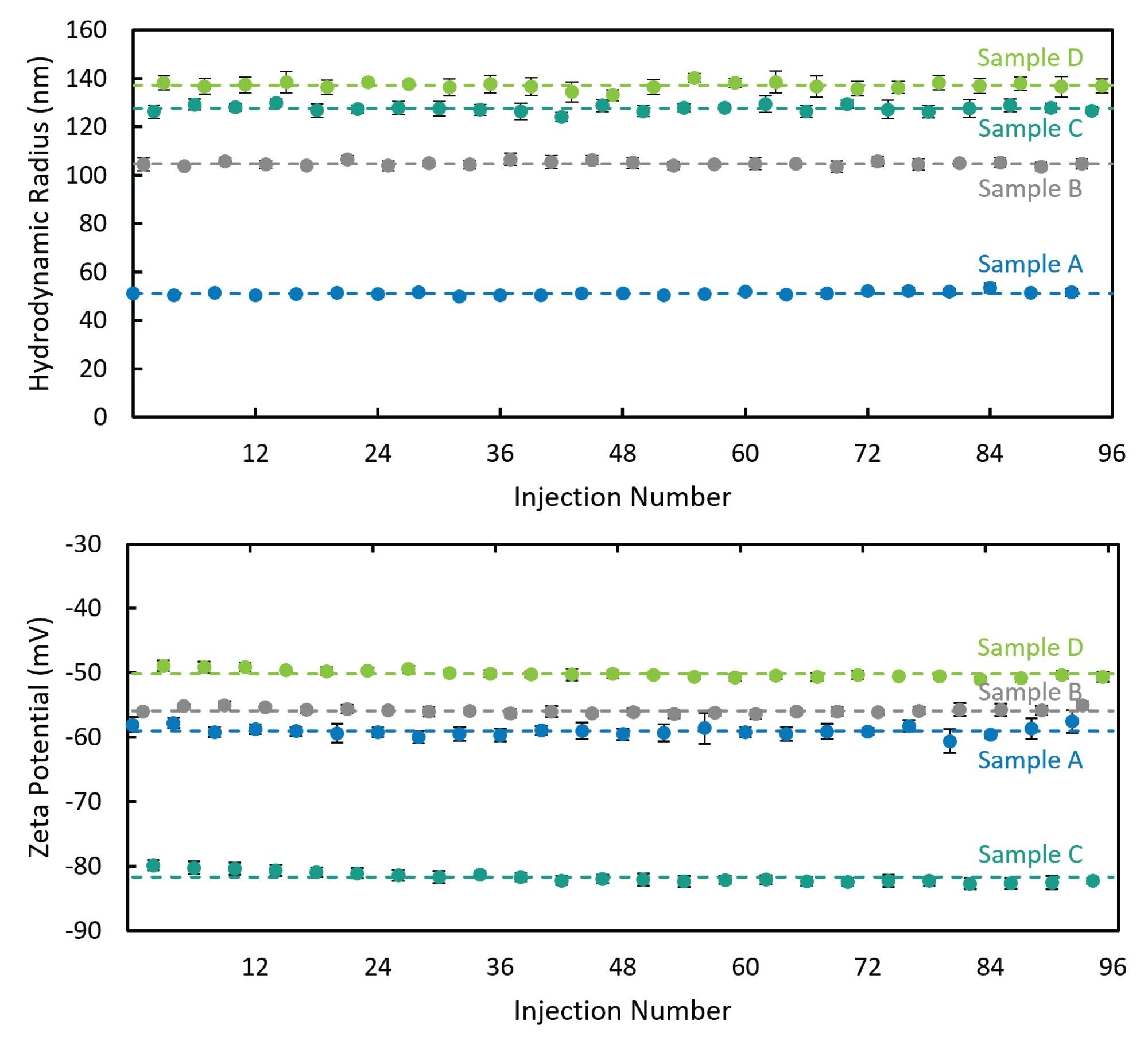
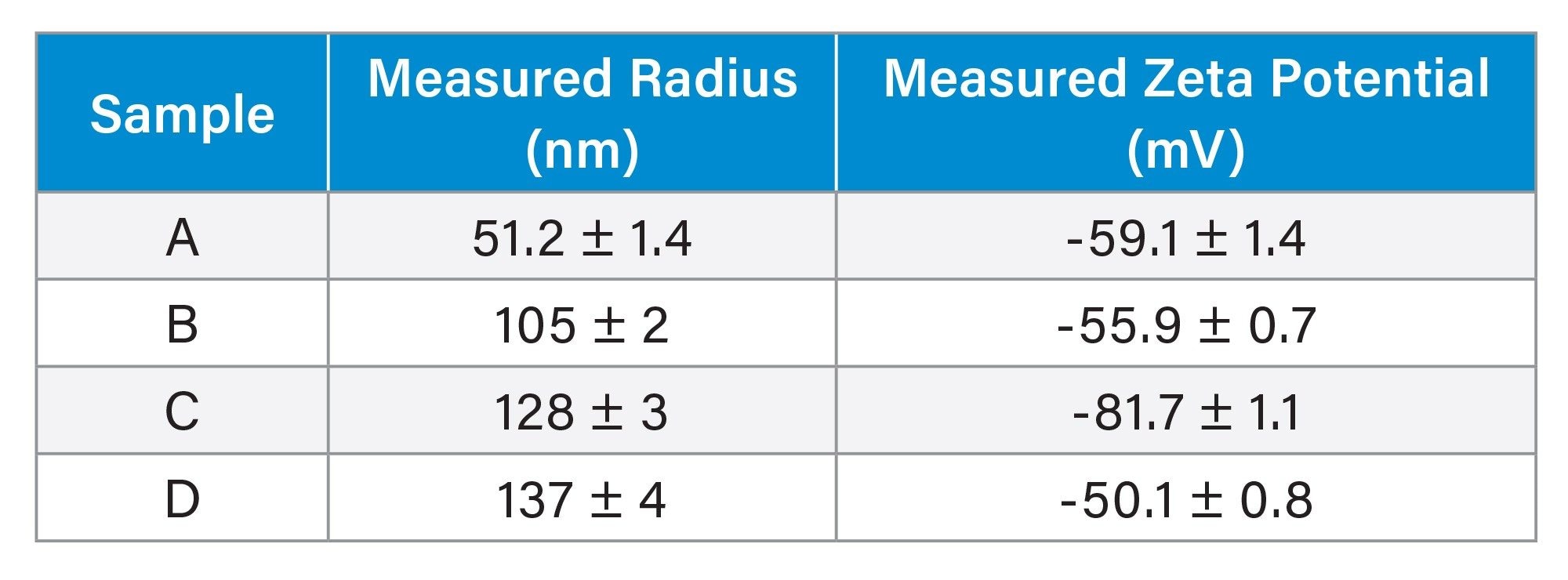
This minimal variation is maintained throughout the entire study across multiple injections of the same sample. Figure 3 provides a summary of the measured hydrodynamic radii and zeta potential for each sample of polystyrene latex spheres. Guidelines reflecting the average value for each sample are shown to help illustrate the minimal variation across all data sets collected. The RSD across all 168 measurements (seven measurements per injection, 24 injections per sample) is similar to the RSD obtained for a single injection (Table 2). This affirms the robustness and reproducibility of automated DLS and ELS measurements with the DynaPro ZetaStar instrument coupled with a Waters Arc HPLC System. Further, the reproducibility provides evidence that the method set up via the ZetaStar instrument Experiment Designer sufficiently washes away sample between injections to minimize carry-over. The ISO standard pertaining to methods for zeta potential determination designates that the coefficient of variation for the mean electrophoretic mobility should be less than 10%.2 The measurements obtained in this work easily exceed this expectation.
Zeta potential (ζ) provides a measure of the electrostatics at the surface of a sample, often for the purpose of assessing colloidal stability. Many factors can impact zeta potential including surface chemistry, sample size, as well as the sample environment. Here, Samples A and B are both functionalized with sulfate groups and show relatively similar zeta potential values. In contrast, Samples C and D are both functionalized with carboxylate groups yet show significantly distinct measured zeta potential, which likely stems from the difference in sample size and surface density of carboxylate groups (Table 1). The subtleties that impact zeta potential can be more readily understood due to the high precision and reproducibility offered by ZetaStar instrument automation.
Conclusion
The unique combination of a ZetaStar instrument with Waters Arc HPLC System modules to automate sample delivery into a flow cell creates a powerful, robust characterization system. The versatility of the ZetaStar instrument hardware and combined DYNAMICS and HPLC CONNECT Software make it simple to measure the zeta potential and hydrodynamic radius for a variety of samples in solution—virtually unattended.
This automation setup enables studying and screening numerous samples or parameters without the need of manual intervention. Measurements of samples under different formulation conditions, sample preparations, and more can be investigated without sacrificing user time or sample data quality. With such high precision, ZetaStar instrument automation can benefit and expedite biotherapeutic development, formulation, and quality control for a variety of applications interested in electrostatics or colloidal stability. Automated ZetaStar instrument measurements provide an easy and reproducible workflow for measuring large quantities of samples accurately and without concern for carry-over impact.
References
- International Organization for Standardization. (2025). Particle size analysis – Dynamic light scattering (DLS) (ISO Standard No. 22412:2025). https://www.iso.org/standard/85505.html.
- International Organization for Standardization. (2025). Colloidal systems – Methods for zeta-potential determination (ISO Standard No. 13099-2:2025). https://www.iso.org/standard/86762.html.
Featured Products
720009475, June 2026


