
Improved Recovery of Polysorbate 80 by Charged Aerosol Detection: Enhancing Performance with a Double Valve Configuration
Pawel Bigos, Xiangsha Du, Robert E. Birdsall, Nikhil Bhiwankar
Waters Corporation, United States
Published on October 07, 2026

Abstract
Accurate quantification of polysorbates in monoclonal antibody (mAb) formulations is critical for monitoring product quality and formulation stability throughout biopharmaceutical development and manufacturing. However, the high concentration of mAb relative to polysorbate excipients presents analytical challenges, requiring effective removal of the protein matrix prior to analysis. One approach to removing the protein matrix is a trap-and-elute workflow, which selectively retains polysorbates while diverting the mAb to waste prior to detection. In this study, Polysorbate 80 (PS80) quantification using charged aerosol detection (CAD) was used as a representative application to evaluate the impact of valve configurations on trap-and-elute workflow performance.
Two different valve configurations were evaluated while maintaining consistent chromatographic conditions to assess their impact on reducing protein coelution. The double valve configuration improved performance compared with the conventional single valve configuration by enabling more effective flushing of the protein matrix from the system fluidics. This resulted in reduced protein coelution and more accurate quantitative analysis of PS80, particularly at lower concentrations. These results demonstrate that valve configuration is an important consideration in the design of trap-and-elute workflows and that a double-valve configuration can provide a practical approach for minimizing protein coelution without requiring changes to the underlying chromatographic method.
Benefits
- Reduced coelution and improved protein removal through more effective flushing of the system fluidics with a double-valve configuration
- Improved quantitative accuracy for low-level polysorbate analysis by reducing protein coelution and matrix interference
Introduction
Polysorbates are widely used as nonionic surfactants in mAb formulations, where they help stabilize therapeutic proteins and protect against interfacial and aggregation-related stresses.1 Accurate quantification of polysorbates is therefore important throughout biopharmaceutical development and manufacturing. However, their analysis is complicated by the large excess of protein matrix relative to the relatively low concentrations of polysorbate typically present in formulations. Because polysorbates lack strong chromophores, CAD provides a useful detection approach. However, effective removal of protein matrix prior to detection is an important consideration for obtaining reliable quantitative results.
Trap-and-elute workflows provide an effective means of separating polysorbates from mAb formulations prior to detection by CAD. In this approach, the sample is injected onto an Oasis™ MAX Column under aqueous, acidic conditions which allows the polysorbate to retain on the column while the protein matrix is electrostatically repulsed from the stationary phase and diverted to waste.2 Following the protein removal step, the mobile phase is switched to a high-organic composition with 100% isopropanol (IPA) to elute the retained polysorbates as a single peak for detection. During method development, a response associated with the protein matrix was observed when the mobile phase was switched to IPA. The appearance of this response suggests that a portion of the protein matrix may remain within the system fluidic path during the trapping and washing steps and subsequently be released during the high-organic elution step. Residual protein within the unswept fluidic volumes can contribute to coelution and interfere with subsequent analyzes, particularly when analyzing low concentrations of polysorbate.
Because the chromatographic conditions were otherwise maintained, the observed coelution indicated that the system flow path and valve configuration could be contributing to incomplete removal of residual matrix. Therefore, optimizing the valve configuration represents a potential approach for improving trap-and-elute performance without modifying the underlying chromatographic method. This application note evaluates two valve configurations for polysorbate analysis in mAb formulations and demonstrates the impact of valve configuration on carryover and overall quantitative performance.
Experimental
A 20 mg/mL PS80 stock solution was prepared in water and used to prepare calibration standards ranging from 0.02 to 0.50 mg/mL in water. PS80 was purchased from Sigma Aldrich and NISTmAb RM 8671 (10 mg/mL) was purchased from NIST SRM. PS80 was spiked at concentrations of 0.1, 0.3, and 0.5 mg/mL into a 50 mg/mL research-grade monoclonal antibody and NISTmAb RM 8671.
LC Conditions
|
LC system: |
ACQUITY™ Premier System with Binary Solvent Manager (BSM) |
|
Column: |
Oasis MAX Column, 30 µm, 2.1 x 20 mm (p/n: 186002052) |
|
Detection: |
TUV, λ = 280 nm |
|
Vials: |
QuanRecovery™ with MaxPeak™ High Performance Surfaces (HPS) Vial and pre-slit PTFE silicone cap (p/n: 176004434) |
|
Column temperature: |
30 °C |
|
Sample temperature: |
10 °C |
|
Injection volume: |
30 µL |
|
Mobile phase A: |
2.0% formic acid in water |
|
Mobile phase B: |
2.0% formic acid in isopropanol |
CAD Settings
|
Sampling rate: |
5 Hz |
|
Time constant: |
Normal |
|
Ion trap: |
600 V |
|
Evaporator temperature: |
40 °C |
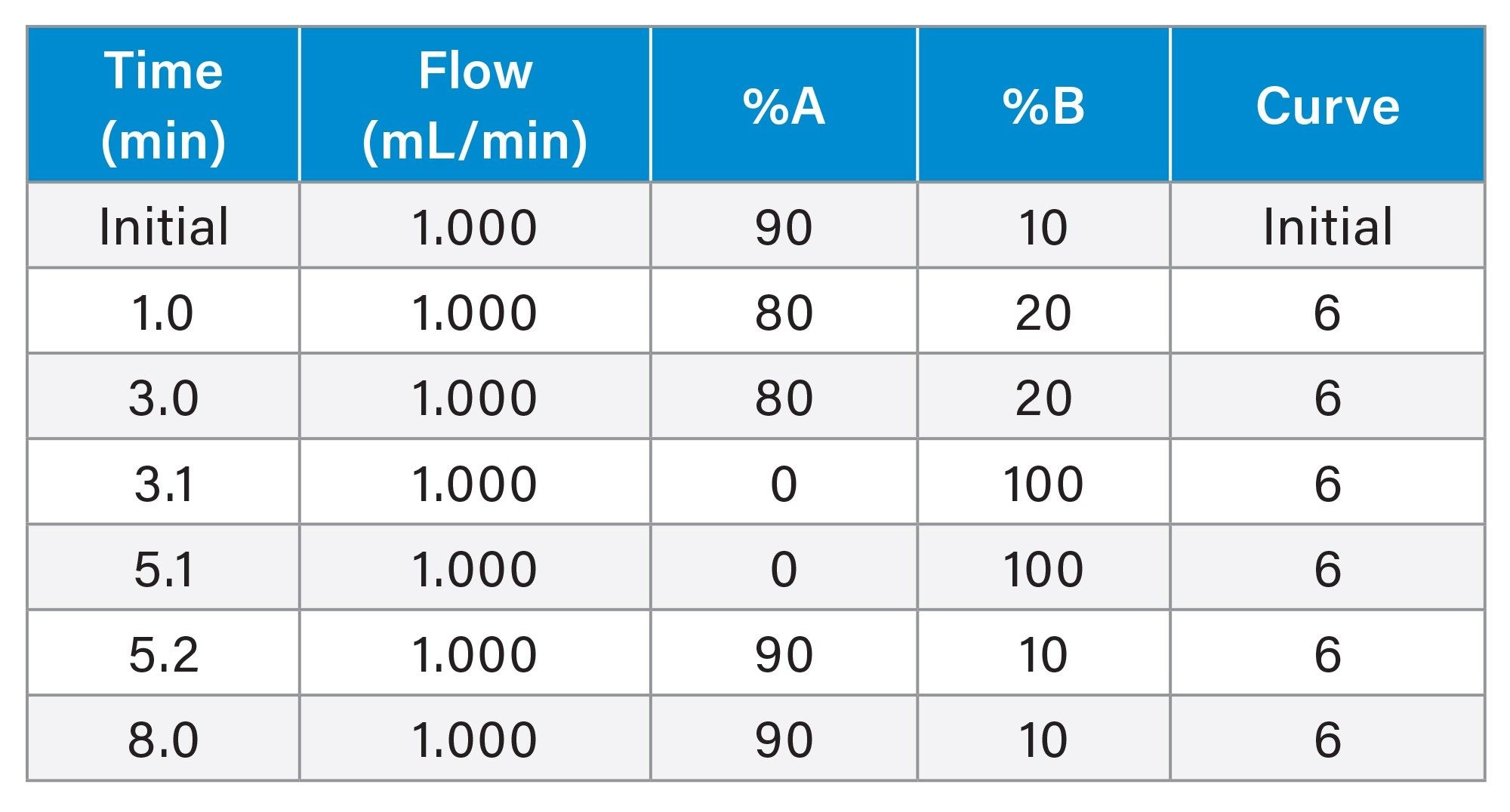
Gradient Table
Results and Discussion
Valve Configurations
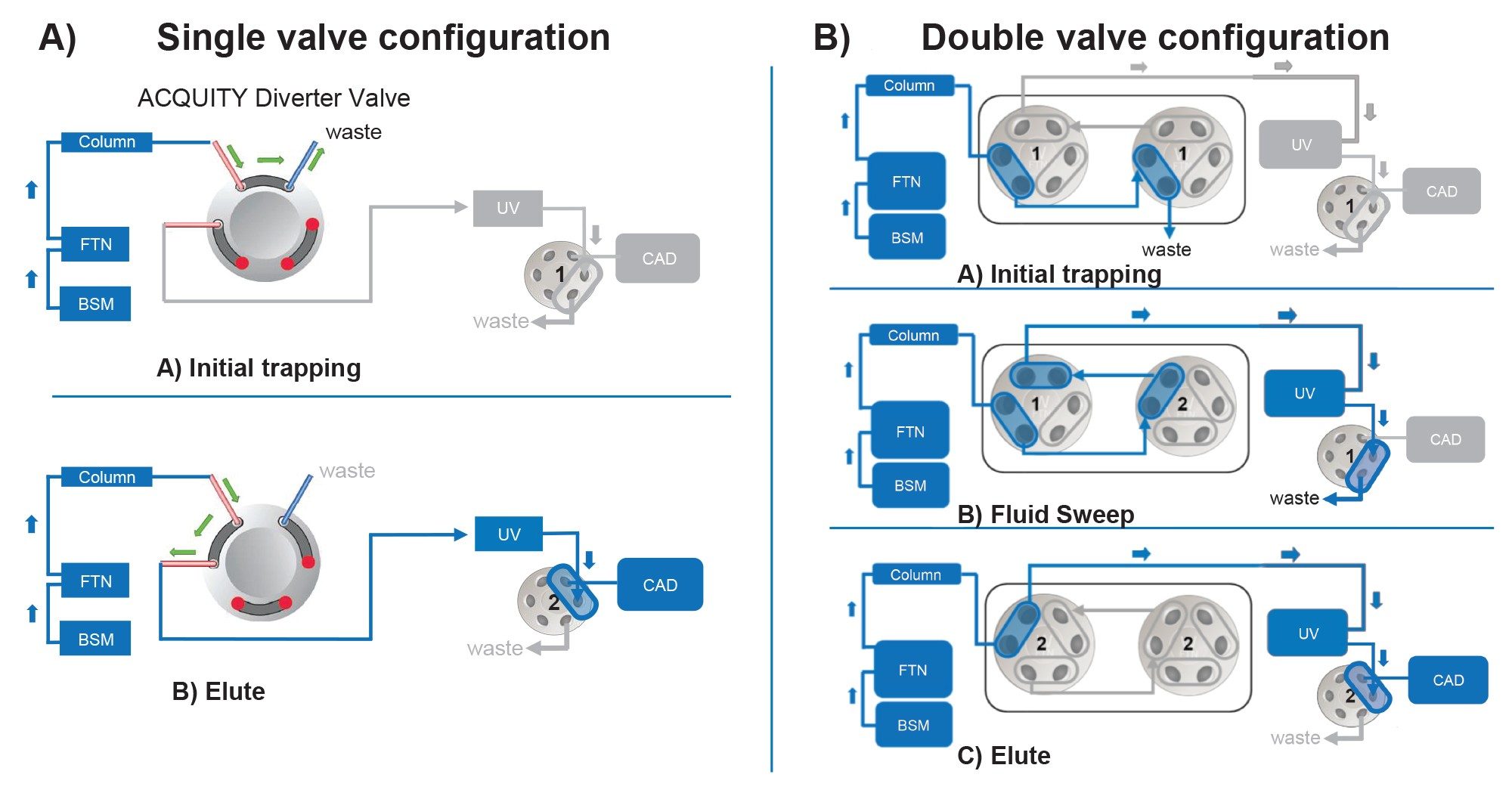
In this study, two valve configurations were evaluated using a trap-and-elute method discussed in a previous application note for polysorbate quantification.3 The two valve configurations will be referred to as a single valve configuration and a double valve configuration (Figure 1). The single valve configuration uses a titanium Waters ACQUITY Diverter Valve that is supplied as an optional accessory to the ACQUITY QDa™ and QDa II Mass Detectors (p/n: 186008845).4 The valve switching events can be controlled through the events tab in either the ACQUITY QDa Mass Detector or the Solvent Manager instrument method editor in Empower™ Chromatography Data System (CDS). The column temperature in this configuration was controlled using an ACQUITY UPLC™ Active Column Heater (CH-A). During the initial trapping step of the single valve configuration, the mAb sample is injected onto the Oasis MAX Column under aqueous, acidic conditions. The ACQUITY Diverter Valve is positioned to direct the column effluent to waste, allowing the protein matrix to be diverted from the detection path while the PS80 is retained on the column. Following the trapping step, the valve is switched to direct the column effluent through the TUV Detector and CAD modules and the mobile phase is changed to 100% IPA to elute the retained PS80 from the Oasis MAX Column for detection as a single peak.
The double valve configuration incorporates the use of Waters ACQUITY UPLC Column Manager (CM-A), utilizing two separate 2-position, 6-port valves. This configuration provides an additional flow path switching step between the initial trapping and polysorbate elution. During initial trapping, the column effluent is directed to waste similarly to the single valve configuration. Following the trapping step, the valve positions are changed to initiate a fluid sweep step, in which the flow path downstream of the Oasis MAX Column is flushed before PS80 elution. This additional sweep is intended to remove residual protein matrix from the system fluidics and reduce the potential for protein remaining in unswept volumes. After the fluid sweep, the valves are returned to the appropriate positions for elution, allowing the retained PS80 to be transferred through the TUV Detector and CAD. The primary difference between the two configurations is therefore the ability of the double valve configuration to incorporate a dedicated fluid sweep step between protein removal and PS80 elution. This additional step provides greater control over the system flow path and is intended to minimize residual protein matrix and associated coelution during CAD detection.
Evaluation of Protein Matrix Coelution
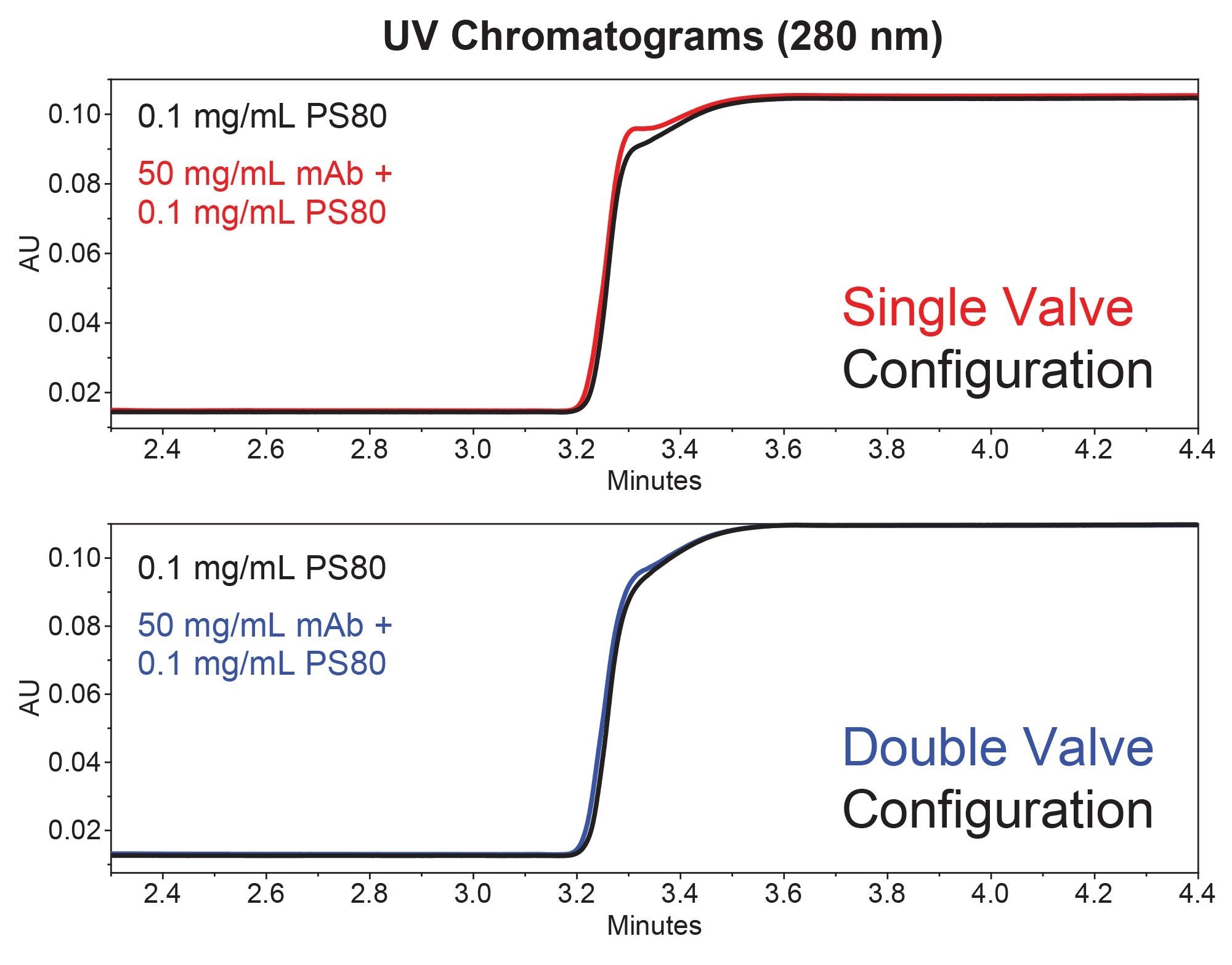
The ACQUITY Premier System configuration used in this study is equipped with a TUV Detector, enabling monitoring of protein coelution through UV absorbance at 280 nm. This detection approach provides a complementary means of evaluating the effectiveness of the trap-and-elute workflow, particularly for assessing the extent to which the mAb is removed from the stationary phase and flow path prior to PS80 elution. PS80 does not contain significant UV-active chromophores and therefore does not produce a measurable response at 280 nm, whereas the mAb exhibits strong UV absorbance at this wavelength primarily due to its aromatic amino acid residues. Consequently, the UV chromatogram can be used to qualitatively assess residual protein matrix present during the PS80 elution window. As shown in Figure 2, the single valve configuration produces a larger UV peak during the elution step compared with the double valve configuration, indicating a greater amount of mAb coeluting with the PS80. In contrast, the reduced UV response observed with the double valve configuration demonstrates more effective removal of mAb from the flow path prior to PS80 elution.
Spike-recovery Analysis
The TUV Detector data demonstrated that the single valve configuration resulted in greater protein coelution during the PS80 elution window, while the fluid sweep incorporated into the double valve configuration effectively reduced residual protein coelution. To determine whether this reduction in protein coelution translated into improved analytical performance, quantitative PS80 measurements were further evaluated using CAD-based spike-recovery experiments. Because CAD is a mass-sensitive detector, residual mAb eluting with PS80 has the potential to contribute to detector response and bias quantification results. Spike-recovery analysis therefore provides a practical assessment of whether the improved protein removal observed by UV monitoring leads to more accurate PS80 measurements.
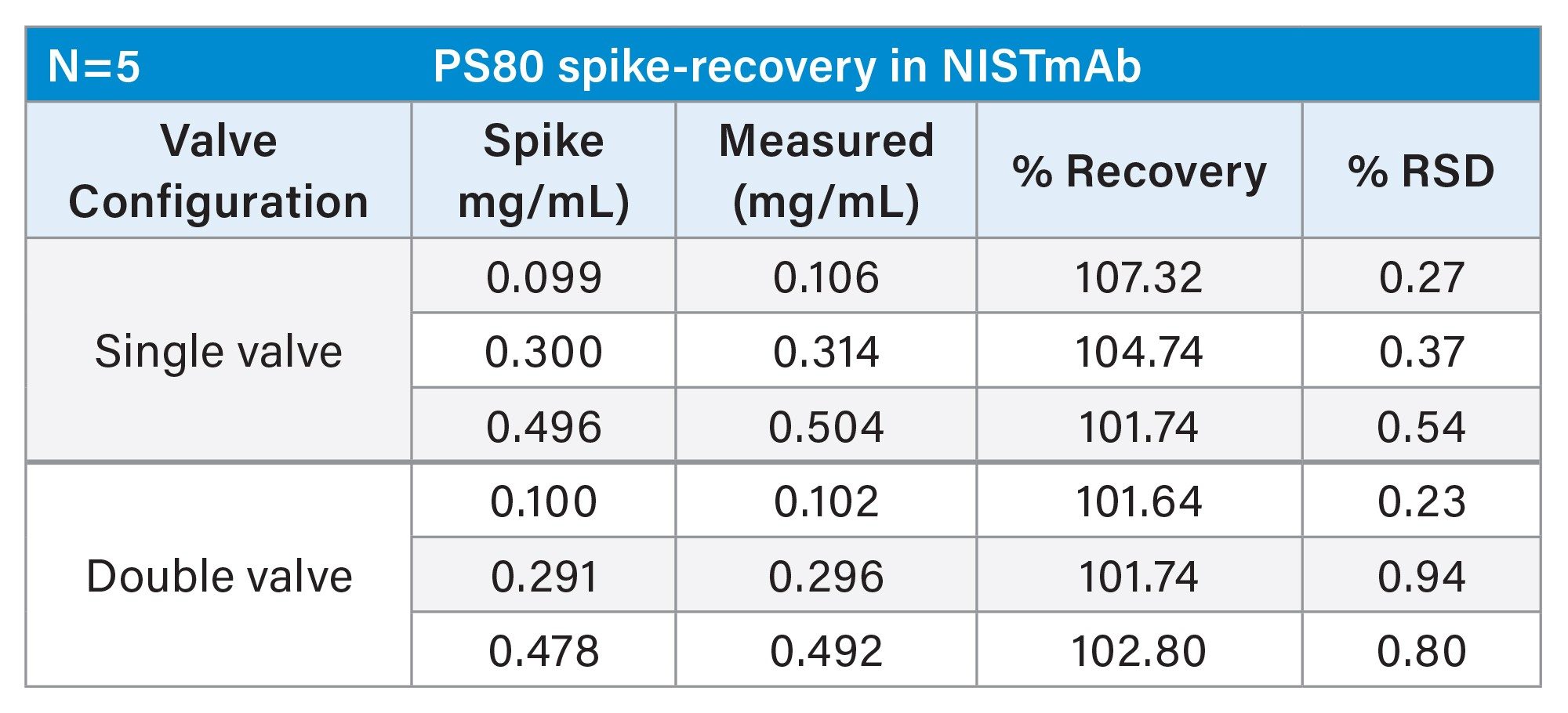
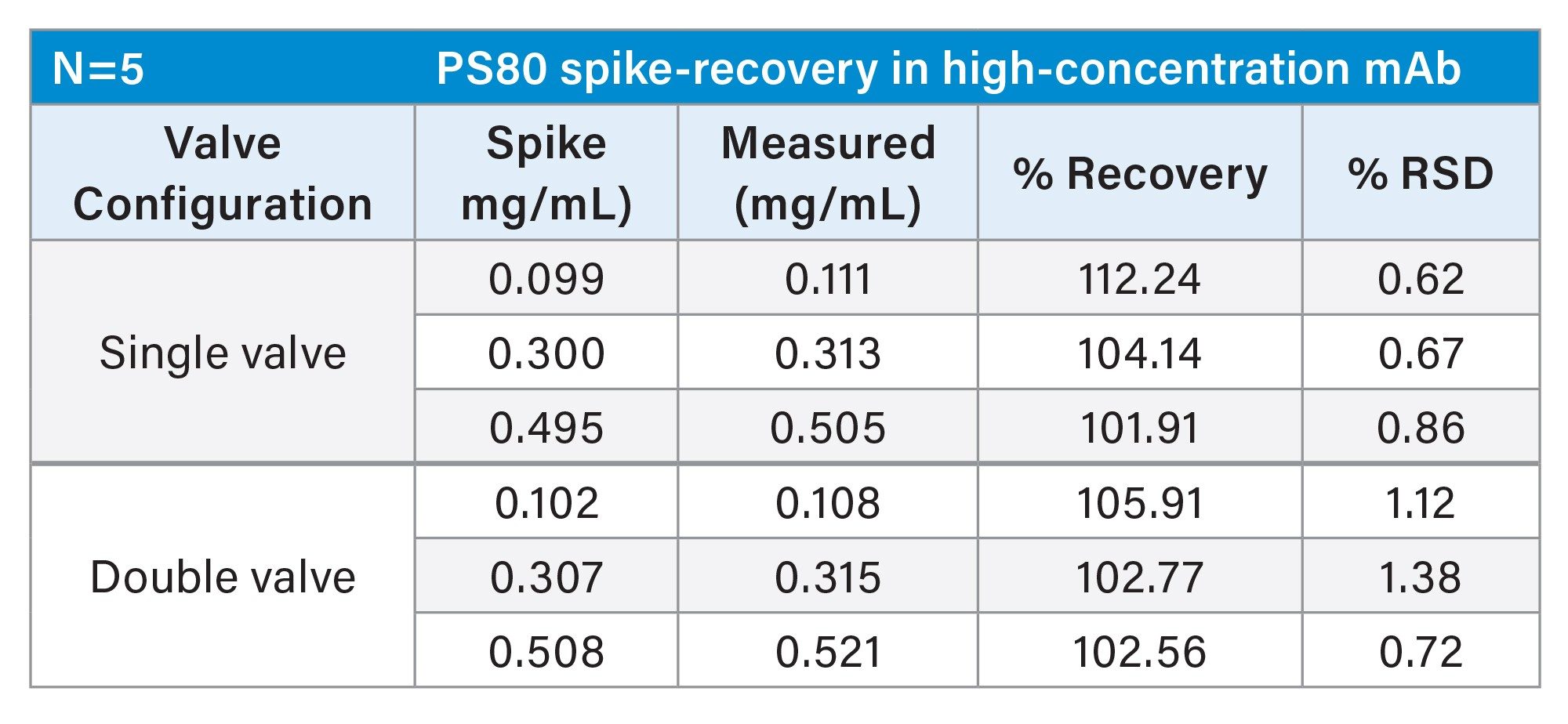
As an initial evaluation, PS80 spike-recovery experiments were performed using NISTmAb RM 8671, a well-characterized mAB reference material frequently used for analytical method development and performance assessment. NISTmAb RM 8671 was initially analyzed as a representative mAb sample, and the resulting recovery data was compared with results previously reported in an application note.3 Across the concentration range evaluated, both valve configurations demonstrated acceptable recovery and excellent precision, with %RSD values below 1% (Table 1). However, the double valve configuration consistently produced recovery values closer to the expected 100% target. At the lowest spike level, the single valve configuration yielded a recovery of 107.3%, whereas the double valve configuration produced a recovery of 101.6%, indicating improved analytical accuracy. Similar trends were observed at the medium and high spike levels. Although this comparison provides useful context for evaluating method performance, the experiments were performed using a different LC System, CAD, and chromatographic column, which introduces additional sources of variability and limits the ability to directly attribute differences in recovery to the valve configuration alone.
To provide a more controlled comparison and better reflect the high protein concentrations encountered in biopharmaceutical formulations, a second spike-recovery study was performed using a concentrated mAb sample at 50 mg/mL. In this experiment, the same LC System, CAD module, and Oasis MAX Column were used to evaluate both valve configurations, eliminating potential variability arising from differences in instrumentation or column hardware. In addition, the elevated protein concentration represents a more challenging matrix, in which the mass ratio of mAb to PS80 is substantially increased, placing greater demands on the trap-and-elute workflow to effectively remove protein prior to PS80 elution. The results shown in Table 2 further support the advantages of the double valve configuration. At the lowest spike level (~0.1 mg/mL PS80), the single valve configuration produced a recovery of 112.2%, while the double valve configuration reduced recovery to 105.9%, a value notably closer to the expected concentration. Similar improvements were observed at the intermediate and high spike levels, where the double valve configuration delivered recoveries of 102.8% and 102.6%, respectively, compared with 104.1% and 101.9% for the single valve configuration. While both configurations demonstrated acceptable precision, the recoveries obtained using the double valve arrangement remained consistently closer to 100% across the concentration range evaluated.
Conclusion
The evaluations of single and double valve configurations demonstrated that valve configuration can have a measurable impact on protein coelution and quantitative performance in trap-and-elute PS80 analysis. TUV Detector monitoring at 280 nm provided orthogonal evidence of increased mAb coelution with the single valve configuration, while the addition of a dedicated fluid sweep step in the double valve configuration reduced mAb coelution. CAD spike-recovery experiments further demonstrated that the reduced protein coelution associated with the double valve configuration translated to recovery values closer to the expected concentrations, including in a controlled evaluation using a 50 mg/mL mAb matrix analyzed on the same LC System, CAD module, and Oasis MAX Column. Collectively, these results support the double valve configuration as a better approach for minimizing protein coelution and improving the quantitative reliability of trap-and-elute polysorbate analysis in concentrated mAb formulations.
References
- Martos, A.; et al. Trends on Analytical Characterization of Polysorbates and Their Degradation Products in Biopharmaceutical Formulations. J Pharm Sci. 2017 Jul 106(7) 1722-1735.
- Hewitt, D.; Zhang, T.; Kao, T. Quantitation of Polysorbate 20 in Protein Solutions Using Mixed-mode Chromatography and Evaporative Light Scattering Detection. Journal of Chromatography A. 2008 Nov 1215(1-2) 156–160.
- Bigos, P.; et al. Quantification of Polysorbates Using the Waters Charged Aerosol Detector. Waters Application Note. July 2026. 720009297.
- ACQUITY QDa and QDa II Detectors - Waters ACQUITY Diverter Valve Configuration. Waters User Manual, Ver. 02. 715005336.
720009608, October 2026


